Definitive Diagnostic and Management Guide for Fruit Canker
Introduction to Fruit canker
Fruit canker, scientifically known as a disease caused by fungi in the Neofabraea genus (primarily Neofabraea malicorticis and Neofabraea perennans), is a pervasive fungal pathogen that strikes fruit orchards worldwide, particularly targeting pome fruits such as apple and pear. This disease manifests as necrotic lesions or 'cankers'—sunken, discolored areas on branches, twigs, and fruits—that girdle tissues, disrupt nutrient flow, and cause premature fruit drop or deformed produce. In commercial settings, fruit canker can slash yields by 20-50% in severe outbreaks, making it a top concern for orchard managers seeking high-quality harvests.
First identified in the early 20th century in Europe and North America, fruit canker spreads through splashing rain, wind-driven spores, and contaminated tools, overwintering in mummified fruits and bark lesions. Unlike bacterial cankers, which ooze gum, fungal fruit cankers produce spore masses under moist conditions, aiding rapid dissemination. Early detection is crucial, as advanced infections lead to dieback and tree decline over multiple seasons. This guide equips growers with professional diagnostic tools, lifecycle insights, organic treatments, and prevention strategies to safeguard crops like cherry and stone fruits such as peach.
Understanding fruit canker's biology is key to integrated pest management (IPM). The pathogen enters through wounds from pruning, frost cracks, or insect damage, colonizing woody tissues and producing acervuli—fruiting bodies—that release conidia. In organic systems, where synthetic fungicides are off-limits, cultural practices become paramount. Recent studies from agricultural extensions highlight that timely pruning and debris removal can reduce inoculum by up to 90%. For small farms and commercial operations alike, mastering fruit canker control boosts profitability and fruit quality. Dive into symptoms, lifecycle, and proven management below to protect your orchard.
Identifying Symptoms & Damage
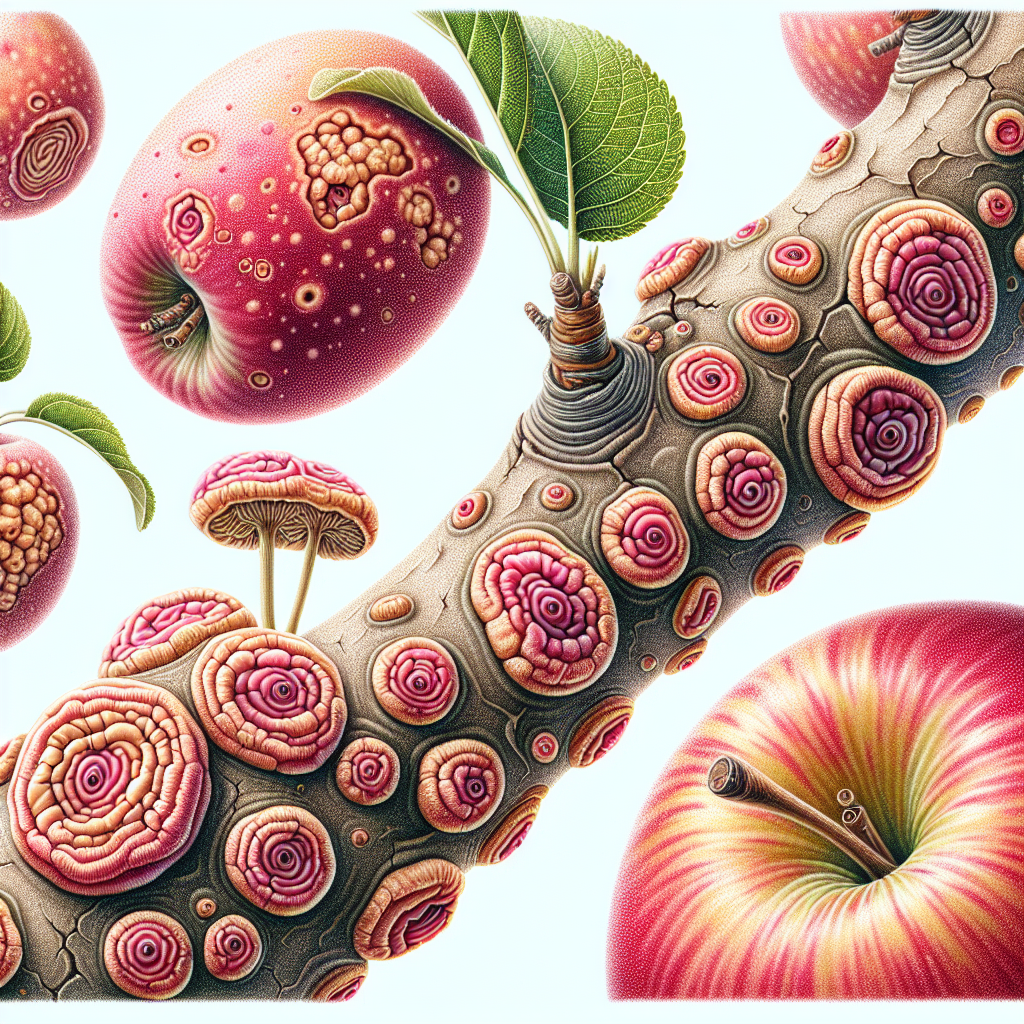
Accurate diagnosis of fruit canker hinges on recognizing its distinctive symptoms, which evolve from subtle spots to severe cankers. On fruits, initial signs appear as small, reddish-brown spots (1-3 mm) during mid-summer, expanding into sunken, elliptical lesions with darker margins and lighter centers. These lesions often feature concentric rings, resembling target spots, and may ooze pinkish spore masses in wet weather. Severely affected fruits crack, rot prematurely, or drop, rendering them unmarketable—losses can exceed 30% in wet seasons.
On branches and twigs, fruit canker causes elongated, sunken cankers with cracked bark edges, often starting at leaf scars or wounds. In spring, these produce creamy spore tendrils during rain, confirming fungal activity. Twigs wilt and die back, with 'shepherd's crook' tips. On trunks, larger cankers girdle limbs, leading to sudden branch death. Differentiate from similar diseases: unlike fire blight, no wilting shoots or amber ooze; compared to cytospora canker, less gum and more defined acervuli.
Microscopic confirmation involves observing septate conidia (10-20 μm) from lesion surfaces under a 400x lens. Damage extends beyond aesthetics: cankers weaken trees, inviting secondary invaders like borers. In pear orchards, fruit lesions reduce pack-out grades, while in apple, they mimic bitter rot but lack the sporulation. Scout weekly post-bloom, using a hand lens for early spots. Yield impacts are profound—untreated infections correlate with 15-40% fruit cull rates, per USDA data. Photograph suspects for expert verification and track progression to inform treatments.
Lifecycle and Progression of Fruit canker
The fruit canker lifecycle is tightly synced with cool, moist periods, spanning 12-18 months. Primary inoculum overwinters as mycelium in cankers on branches and mummified fruits, or as pseudosclerotia in bark. In spring (bud break to petal fall), rain activates conidia production from acervuli, splashing onto leaves, fruits, and wounds. Infection requires 8-12 hours of leaf wetness at 10-20°C (50-68°F), with optimal at 15°C.
Conidia germinate within 6-12 hours, penetrating via stomata or wounds, forming appressoria. Incubation lasts 2-4 weeks, yielding visible lesions by mid-summer. Secondary cycles occur as new conidia from fruit lesions spread via wind/rain, infecting nearby tissues. Autumn sees pycnidia formation for overwintering. Progression accelerates in dense canopies with poor air flow, expanding 1-2 cm/month. In cherry, rapid fruit colonization leads to bull's-eye rot; in plum, twig cankers predominate.
Sporulation peaks during prolonged dew or rain, with 10^6 spores/canker daily. Systemic spread via vascular tissues causes tree decline over 3-5 years if girdling occurs. Understanding this enables precise timing: prune post-harvest to minimize inoculum before spring rains. Lifecycle models predict outbreaks using weather data, aiding IPM.
Environmental Triggers & Risk Factors
Fruit canker flourishes in temperate climates with cool, wet springs and falls (500-1000 mm annual rain). High humidity (>85%) and temperatures 12-18°C trigger infection windows lasting 10+ hours. Poor drainage, heavy clay soils, and low-lying orchards exacerbate spread via standing water. Dense planting (<3m spacing) traps moisture, increasing risk by 3x.
Wounds from late pruning, hail, or aphids provide entry points. Susceptible varieties like Golden Delicious apple or Bartlett pear amplify damage. Excessive nitrogen promotes succulent growth, ideal for fungal colonization. Read more on Why 80% of Small Farms Battle Weather Disasters - And How Hyper-Local AI Forecasts Can Save Your Harvest for predictive tools. Overwintering debris raises inoculum 50-fold; irrigation overhead doubles splash dispersal.
Organic Control & Treatment Plans
Organic management emphasizes sanitation, cultural tweaks, and biofungicides. Step 1: Sanitation—remove/prune cankers >10cm, destroy debris (burn/compost hot). Prune 20-30cm below lesions in dry weather. Step 2: Copper sprays—apply Bordeaux mixture or fixed copper at green tip, petal fall, and cover sprays (3-5x/season), respecting PHI. Step 3: Biocontrols—Bacillus subtilis (Serenade) or Trichoderma at 7-14 day intervals during high-risk windows.
Treatment Protocol: Scout biweekly; at 5% incidence, apply copper + hort oil. Follow with sulfur post-bloom. Thin fruits for airflow. For peach, integrate kaolin clay barriers. Efficacy: 70-85% control with IPM vs. 40% sanitation alone. Rotate modes to prevent resistance. Monitor with sticky traps for spore counts.
Preventing Fruit canker in the Future
Prevention beats cure: plant resistant rootstocks (e.g., Geneva series for apple). Space 4-5m for ventilation; orient rows N-S. Mulch to suppress splash but avoid trunk contact. Prune annually post-harvest for open canopies. Soil test; balance N at 50-80 kg/ha. Avoid wounds—sanitize tools with 10% bleach. Cover crops like clover reduce erosion/spread. Learn from Soil Health Mastery: 5 Proven Strategies for Small Farms to Build Fertile Ground Without Breaking the Bank. Annual monitoring and weather-based sprays cut incidence 80%.
Crops Most Affected by Fruit canker
Primarily pome fruits: apple (40% global reports), pear (30%), quince. Stone fruits: cherry, plum, peach. Minor: Hass Avocado, mango. Susceptible cultivars: McIntosh apple, Comice pear. Economics: $100M+ annual US losses.