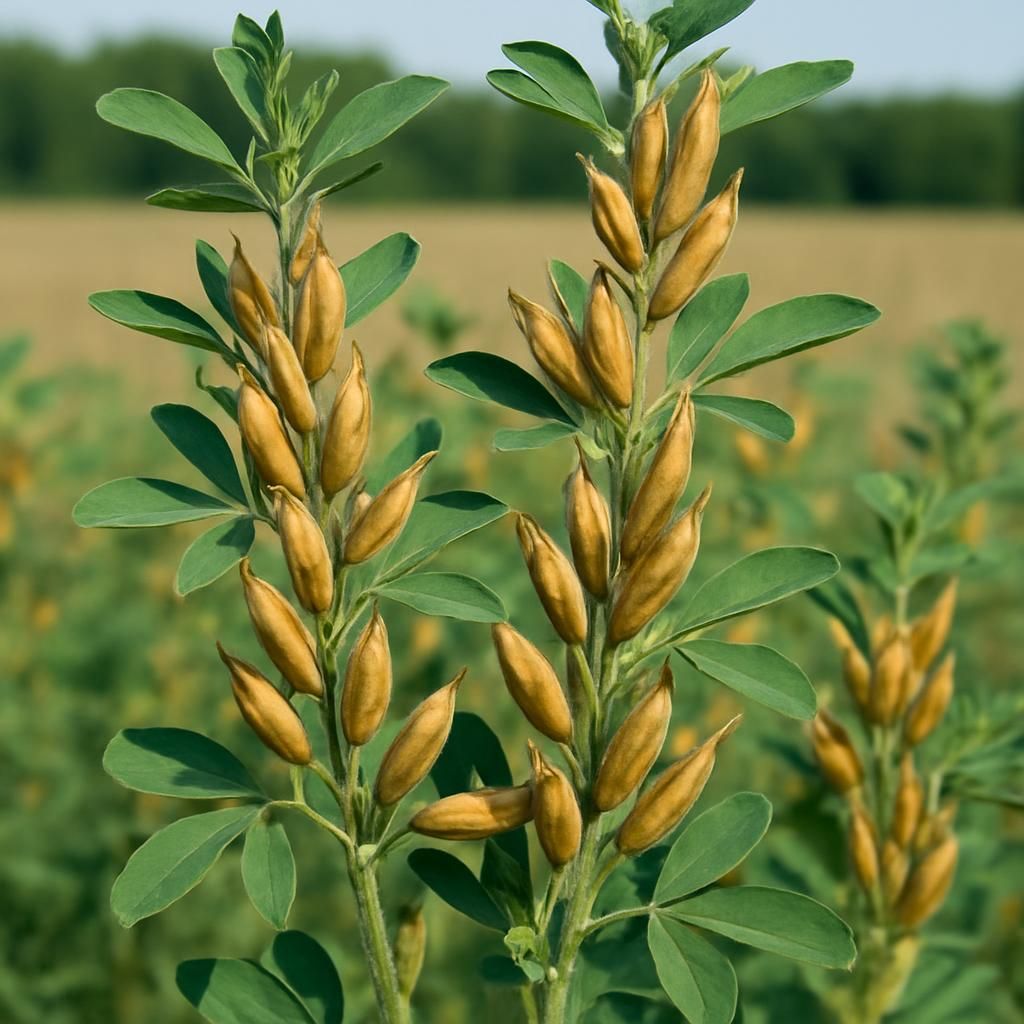
Introduction to Fenugreek Seed
Fenugreek (Trigonella foenum-graecum) is one of the oldest cultivated crops, valued for thousands of years for its distinctive maple-like aroma and slightly bitter flavor in seeds and leaves. The plant belongs to the Fabaceae family and serves multiple roles as a spice, medicinal herb, green manure, and forage crop. Its seeds are rich in soluble fiber, protein, and bioactive compounds such as diosgenin and trigonelline, making them popular in both traditional medicine and modern functional foods. Because it matures quickly and improves soil nitrogen levels, fenugreek is an excellent rotation crop for small farms and home gardeners seeking sustainable production.
Botanical Profile of Fenugreek Seed
Fenugreek is an erect, aromatic annual reaching 30–60 cm in height with trifoliate leaves that resemble clover. Small white or pale-yellow flowers appear in the leaf axils and develop into long, narrow pods containing 10–20 angular, golden-brown seeds. The plant exhibits a deep taproot system that aids drought tolerance once established. As a legume, fenugreek forms symbiotic relationships with Rhizobium bacteria, enabling biological nitrogen fixation that benefits subsequent crops. Seed size typically ranges from 3–5 mm, and the characteristic curry aroma develops during seed maturation and drying.
Soil, pH, and Climate Requirements for Fenugreek Seed
Fenugreek performs best in well-drained, fertile loamy soils with moderate organic matter. It tolerates a wide pH range but yields highest between 6.0 and 7.5. The crop prefers cool temperatures during vegetative growth and warm, dry conditions during seed maturation.
| Parameter | Ideal Range | Notes |
|---|---|---|
| Soil Type | Loam to sandy loam | Avoid heavy clay or waterlogged soils |
| Soil pH | 6.0–7.5 | Slightly acidic to neutral; liming if <5.8 |
| Temperature | 15–25 °C (day) | Cool season crop; frost tolerant to –2 °C |
| Rainfall | 400–750 mm | Even distribution; reduce irrigation at maturity |
| Altitude | 0–1500 m | Higher altitudes may delay maturity |
Step-by-Step Planting & Propagation
- Select certified, disease-free seed and test germination (minimum 85 %).
- Prepare seedbed by incorporating well-rotted compost or aged manure at 5–8 t/ha.
- Sow seeds directly 1–2 cm deep in rows 20–30 cm apart with 8–10 cm between plants.
- Optimal sowing dates are early spring or autumn in temperate climates; avoid summer heat.
- Inoculate seed with Rhizobium leguminosarum if planting in new fields.
- Maintain soil moisture at field capacity until emergence (7–10 days).
- Thin seedlings to final spacing once they reach 5 cm height.
Care & Maintenance regimes for Fenugreek Seed
Consistent moisture and balanced nutrition are essential during vegetative growth, while irrigation should be reduced at flowering and seed set to prevent disease.
| Growth Stage | Water Schedule | Fertilizer Application | Pruning / Other Care |
|---|---|---|---|
| Pre-sowing | Irrigate to field capacity | 20 kg N, 40 kg P₂O₅, 20 kg K₂O/ha | Incorporate green manure or compost |
| Seedling (0–30 days) | Light irrigation every 4–5 days | Side-dress 15 kg N at 20 days | Weed control; mulch to retain moisture |
| Vegetative (30–60 days) | Moderate irrigation weekly | Foliar micronutrients if deficiency | Remove weeds; avoid excess nitrogen |
| Flowering & Pod (60–90 days) | Reduce to every 7–10 days | Stop nitrogen; maintain P & K | Monitor for lodging; support if needed |
| Maturation (90+ days) | Withhold irrigation 2 weeks before harvest | None | Allow pods to dry on plant |
Pests, Diseases & Organic Management
Common insect pests include Aphids, cutworms, and pod borers. Diseases such as powdery mildew, root rot, and charcoal rot may occur under humid or poorly drained conditions. Implement cultural controls first: crop rotation with non-legumes, removal of crop residues, and use of certified seed. Beneficial insects such as lady beetles and lacewings help suppress aphids. For fungal issues, apply neem oil or potassium bicarbonate sprays at early symptom onset. Avoid overhead irrigation to reduce leaf wetness and disease pressure.
Harvesting, Curing & Optimal Storage
Harvest when lower pods turn brown and seeds rattle inside (approximately 100–120 days after sowing). Cut plants at ground level and bundle for field drying 4–7 days. Thresh by gentle beating or mechanical methods, then winnow to remove chaff. Further sun-dry seeds to 8–10 % moisture content. Store in airtight containers or jute bags in a cool, dry place away from direct sunlight. Properly cured seeds retain viability and flavor for 12–18 months.
Companion Planting for Fenugreek Seed
Fenugreek pairs well with Coriander, Cabbage, and Carrot because its aromatic foliage repels certain pests. It also benefits Tomato and Eggplant when grown as an understory or rotation crop due to nitrogen fixation. Avoid planting near Onion and Garlic as alliums may inhibit legume nodulation. Interplanting with Marigold further reduces nematode populations and enhances biodiversity in the cropping system.