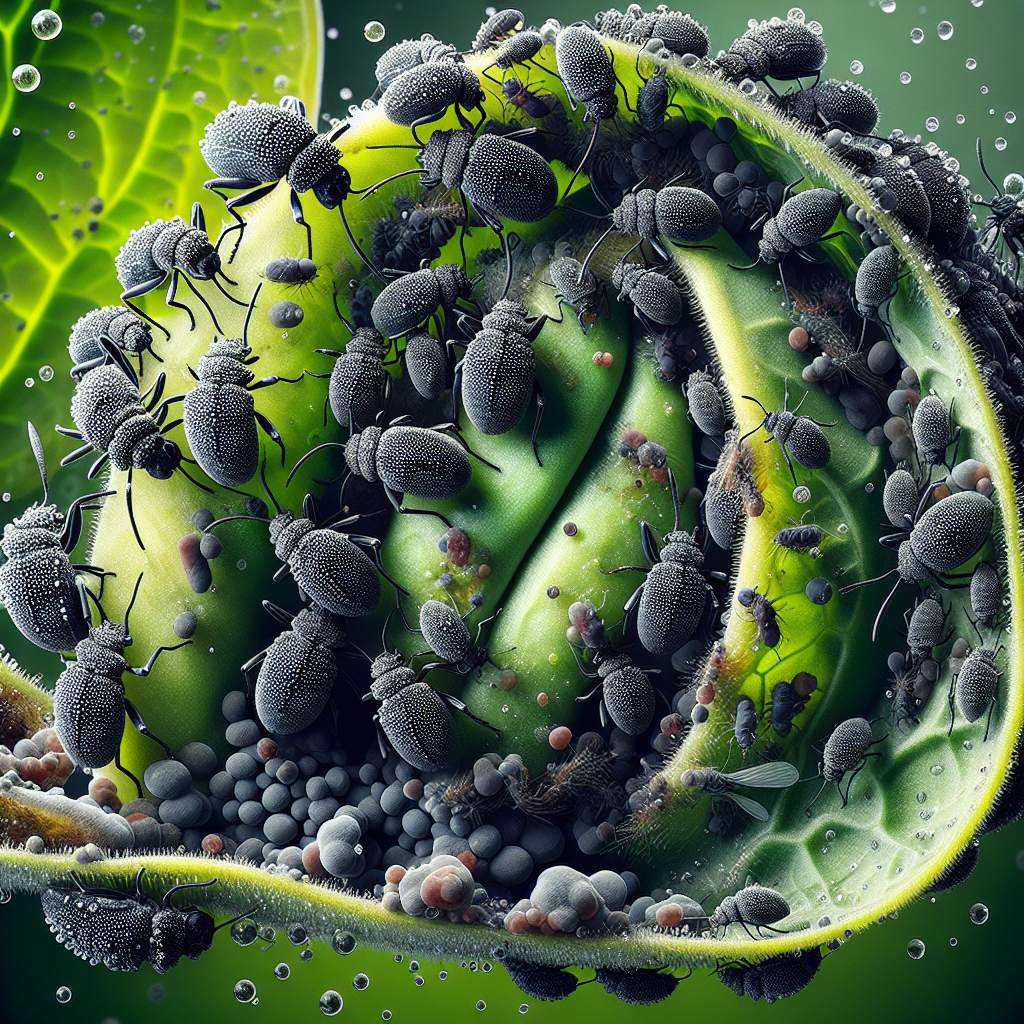
Introduction to Black bean aphid
The black bean aphid, scientifically known as Aphis fabae, is one of the most notorious pests in agricultural settings worldwide, particularly infamous for its devastating impact on legume crops and a wide array of vegetables. These small, shiny black insects (nymphs and wingless adults measure 1.5-3 mm) cluster on the undersides of leaves, new shoots, and stems, piercing plant tissues to extract sap. Native to Europe but now cosmopolitan, black bean aphids thrive in temperate climates and can cause significant yield losses through direct feeding damage, honeydew excretion that promotes sooty mold, and transmission of over 30 plant viruses including beet mosaic and potato leafroll virus.
Farmers and gardeners encounter black bean aphids from spring through fall, with peak infestations in late summer. Unlike lighter-colored aphid species, their dark coloration makes them relatively easy to spot once colonies form, but early detection is crucial as populations explode parthenogenetically—females give birth to live nymphs without mating, producing up to 50 offspring per week. In commercial agriculture, black bean aphids can reduce bean yields by 40-100% if unmanaged, while in home gardens, they distort broad beans, peas, and spinach. Understanding their biology enables proactive integrated pest management (IPM), minimizing reliance on synthetic chemicals. This guide provides diagnostic tools, lifecycle insights, organic treatments, and prevention strategies tailored for small farms and organic operations. For broader context on aphid pests, see the comprehensive Aphids wiki page.
Identifying Symptoms & Damage
Black bean aphid infestations manifest through distinct visual cues and plant responses, allowing for rapid diagnosis. Primary symptoms include clusters of black, pear-shaped insects congregating on tender growth—new leaves, shoot tips, and flower stems. Aphids are soft-bodied with two cornicles (tailpipes) at the rear; heavy infestations cause leaves to curl upward, cup, or distort, stunting plant height and reducing photosynthesis.
Direct feeding depletes plant sap, leading to yellowing (chlorosis), wilting, and premature leaf drop. On legumes like broad beans, stems may thicken abnormally with shiny black coatings. The most telltale sign is honeydew—a sticky, sugary exudate—that coats leaves, stems, and soil below, attracting ants and fostering sooty mold fungus, which blackens foliage and reduces light interception by up to 30%. Severe cases transmit viruses, causing mottled leaves, stunted growth, and brittle stems.
Differentiate from other pests: unlike whiteflies (powdery white), black bean aphids are dark and sedentary; mites cause stippling without honeydew; scale insects form hard shells. Use a hand lens to confirm: aphids move sluggishly when disturbed and leave behind cast skins (exuviae). Damage escalates quickly—light infestations (<50 aphids/leaf) cause minor stress, but >200 aphids/leaf lead to 20-50% yield loss. Scout weekly by checking 20-25 plants per field quadrant, focusing on undersides. Early symptoms mimic nutrient deficiency or drought, so confirm with visual inspection. In peas and broad beans, pod deformation and seed shriveling signal advanced damage.
Lifecycle and Progression of Black bean aphid
Aphis fabae exhibits a complex holocyclic lifecycle with asexual and sexual phases, completing 10-20 generations annually depending on climate. Overwintering as black eggs on woody hosts like spindle (Euonymus europaea) or philadelphus. In spring (March-April), eggs hatch into fundatrices (stem mothers) that reproduce parthenogenetically, birthing 20-50 wingless nymphs each over 2-3 weeks.
Nymphs (4 instars, 7-10 days) mature into apterous (wingless) adults, continuing rapid clonal reproduction. As colonies densify or plants senesce (June-July), alatae (winged) forms develop, dispersing to summer hosts like beans, beets, and spinach. Winged migrants produce 1-2 nymphs daily for 10-20 days before dying. Peak populations occur in late summer; cooler fall triggers sexual forms—oviparous females and males mate, laying overwintering eggs.
Lifecycle duration: 8-12 days at 20°C, accelerating to 5-7 days above 25°C. One female lineage can yield 10^12 descendants in a season under ideal conditions. Progression stages: eggs (winter), fundatrix (spring), virginoparae (summer asexual), gynoparae/oviparae/males (fall sexual). Monitor transitions via winged forms signaling spread risk. Cold (<5°C) halts development; drought stresses hosts, prompting dispersal. Understanding this enables timed interventions, like targeting nymphal peaks.
Environmental Triggers & Risk Factors
Black bean aphids flourish in mild, humid conditions: optimal 15-25°C, RH >60%. Warm springs accelerate egg hatch; prolonged mild falls extend generations. High nitrogen fertilization promotes tender sappy growth, ideal for feeding—fields with excess N see 3x higher infestations. Crowded plantings (>30 cm spacing violation) and weeds (e.g., fat hen) serve as reservoirs.
Risk spikes near overwintering hosts or from wind-blown alates. Ants exacerbate by farming aphids for honeydew, protecting from predators. Poor airflow in dense canopies traps humidity, favoring outbreaks. Climate change extends seasons, increasing viral vectoring. Vulnerable crops in cool-wet regions (UK, Pacific Northwest) face chronic pressure; irrigated fields mimic optima. Scout after rain or >18°C spells. For small farms battling variable weather, check Spring Pest Patrol: Organic AI Strategies to Shield Your Crops from Common Invaders.
Organic Control & Treatment Plans
Organic management prioritizes IPM: prevention, monitoring, biologicals, then mechanical/organic sprays. Biological: Introduce ladybugs (Coccinellidae, 1-2/week per 100m²), lacewings (Chrysoperla), hoverflies, and parasitic wasps (Aphidius colemani)—release at first nymphs for 80-95% control. Encourage natives with flowering borders (marigold, yarrow).
Cultural: Remove weeds, rogue infested plants (>20% colonies), space properly for airflow. Reflective mulches deter alatae; interplant repellents like garlic or nasturtium. Mechanical: Blast with strong water jets (daily, undersides) dislodges 70%; prune/destroy tips.
Organic Sprays: Insecticidal soap (1-2% potassium salts, weekly, evenings) suffocates on contact (90% mortality); neem oil (0.5-1%, azadirachtin disrupts hormones); horticultural oil smothers eggs/nymphs. Rotate to prevent resistance. For heavy outbreaks: pyrethrum or spinosad (OMRI-approved, target nymphs). Apply at dusk, coverage critical. Monitor 3-5 days post-treatment; combine with predators for synergy. Avoid broad-spectrum to preserve beneficials. Success metrics: <10 aphids/leaf threshold.
Preventing Black bean aphid in the Future
Prevention hinges on cultural resilience: select resistant varieties (e.g., 'Aquadulce' broad bean), rotate crops (avoid legumes 2-3 years), maintain soil health via cover crops like clover. Time planting to miss peaks (post-May in temperate zones). Enhance biodiversity: companion plant thai basil, onions; mulch suppresses weeds. Monitor with yellow sticky traps (10/acre), threshold scouting.
Boost predators year-round: birdhouses, insect hotels. Sanitize tools, destroy volunteers. Fall cleanup removes eggs. Organic soil amendments reduce N flush. Long-term: diverse rotations cut reservoirs by 60%. Track via apps for hyper-local forecasts.
Crops Most Affected by Black bean aphid
Primary hosts: legumes—broad beans (Vicia faba), peas, soybeans, runner beans, clover. Vegetables: spinach, beets, lettuce, cabbage, potatoes. Ornamentals: dahlias, nasturtiums. Secondary: tomato, sweet potato, fruits like apple. Legumes suffer most (up to 100% loss); spinach yields drop 50%. Over 200 species recorded, favoring nitrogen-rich, tender plants.