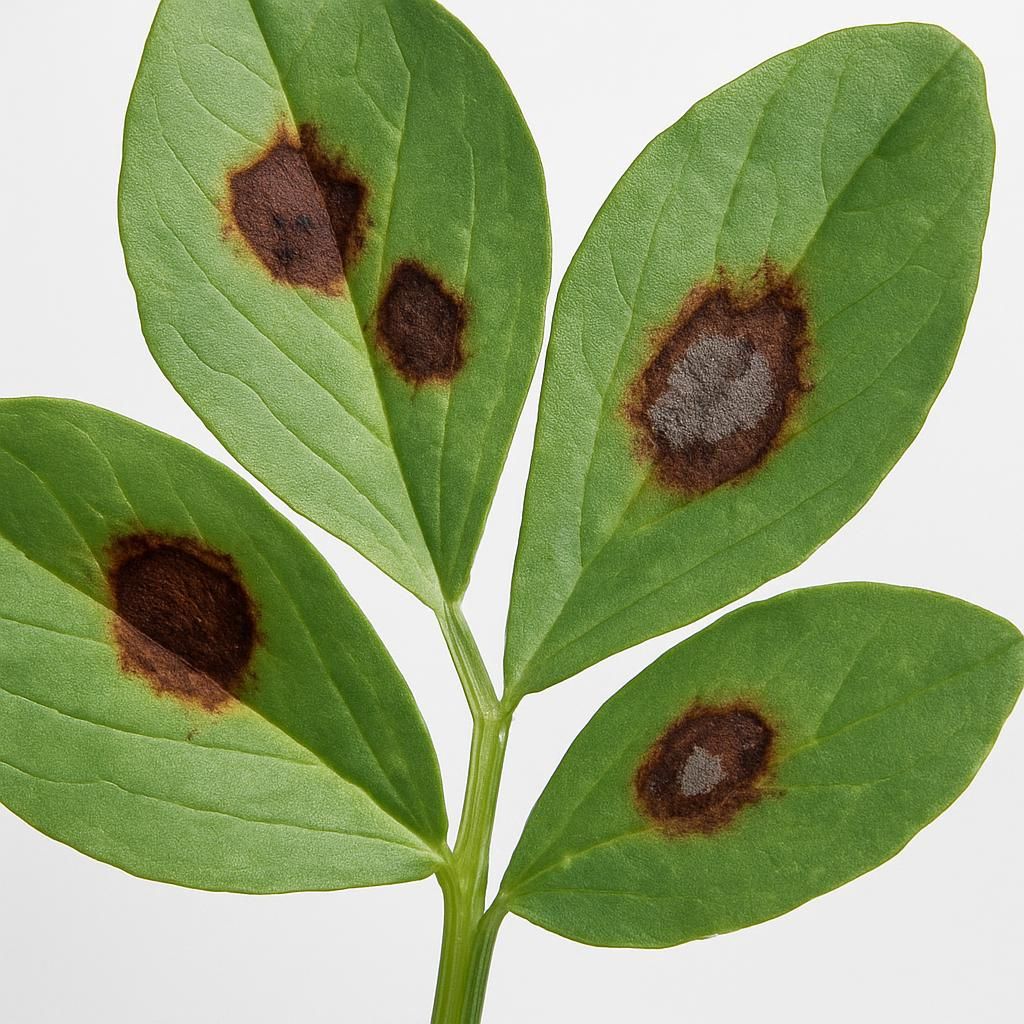
Introduction to Botrytis fabae
Botrytis fabae is the causal agent of chocolate spot, a major foliar and pod disease of faba bean (Vicia faba) and related legumes worldwide. The pathogen produces abundant grey-brown conidia on infected tissues that spread rapidly under cool, humid conditions. Economic losses arise from reduced photosynthesis, premature defoliation, stem girdling, and direct pod infection that lowers both yield and seed quality. Professional growers integrate host resistance, cultural sanitation, and targeted fungicide programs to maintain profitable production.
Identifying Symptoms & Damage
Early lesions appear as small, reddish-brown spots on lower leaves that expand into irregular chocolate-brown patches up to 2 cm in diameter. Severe infections produce concentric rings of sporulation and cause tissues to turn grey-brown with fuzzy conidiophores visible under magnification. Stem lesions are elongated, sunken, and may girdle the plant, leading to lodging. Pod infections manifest as dark, water-soaked areas that later develop grey mould and sclerotia. Yield components most affected include number of pods per plant, seeds per pod, and individual seed weight.
Lifecycle and Progression of Botrytis fabae (MUST INCLUDE A MARKDOWN TABLE OF LIFECYCLE STAGES)
The pathogen survives as sclerotia in crop debris and soil for multiple seasons. Primary infection occurs via wind-dispersed conidia or ascospores that germinate on wet leaf surfaces. Secondary cycles repeat every 5–10 days under favourable weather, rapidly building inoculum pressure. Pod infection typically occurs late in the season when humidity remains high.
| Stage | Description | Duration | Key Conditions |
|---|---|---|---|
| Overwintering | Sclerotia in debris and soil | 6–12 months | Cool, dry storage |
| Primary Infection | Conidia/ascospores land on wet foliage | 3–7 days | 10–20 °C, >85 % RH |
| Lesion Expansion | Mycelial growth and sporulation | 4–8 days | Leaf wetness >6 h |
| Secondary Cycles | Repeated conidial production and dispersal | 5–10 days per cycle | Frequent rain or dew |
| Pod Infection | Direct penetration of maturing pods | 7–14 days | High humidity at pod fill |
| Sclerotia Formation | Survival structures produced on dead tissue | 2–4 weeks | Drying after sporulation |
Environmental Triggers & Risk Factors
Disease severity peaks at temperatures of 15–20 °C combined with prolonged leaf wetness exceeding 8 hours. High plant density, narrow row spacing, and excessive nitrogen that promotes lush canopies increase humidity within the crop. Continuous legume cropping without rotation builds soil inoculum. Late-season rainfall during pod fill is particularly damaging. Fields with poor air circulation or located in low-lying areas experience higher incidence.
Organic Control & Treatment Plans (MUST INCLUDE A MARKDOWN TABLE OF TREATMENT OPTIONS AND FREQUENCIES)
Organic management begins with resistant cultivars, 3–4 year rotations away from legumes, and removal of infected residue after harvest. Copper-based sprays and biological agents provide moderate suppression when applied preventively. Cultural practices such as increased row spacing and timely irrigation scheduling reduce canopy humidity. Regular scouting from vegetative stages onward is essential.
| Treatment Option | Active Ingredient / Product | Application Frequency | Rate / Notes |
|---|---|---|---|
| Resistant Varieties | Chocolate-spot tolerant faba bean lines | At planting | Choose certified seed |
| Crop Rotation | 3–4 years non-host crops | Annual planning | Avoid consecutive legumes |
| Sanitation | Removal of crop residue | Post-harvest | Deep plough or burn |
| Copper Hydroxide | Organic-approved copper fungicide | Every 7–10 days | 1.5–2.0 kg/ha, begin at first sign |
| Bacillus subtilis | Biological fungicide | Every 7–14 days | 2–4 L/ha, tank-mix compatible |
| Potassium Bicarbonate | Contact fungicide | Every 7 days during high risk | 2–3 kg/ha, pH 7.0–8.5 spray water |
| Increased Spacing | 40–50 cm rows | At sowing | Improves airflow |
Preventing Botrytis fabae in the Future
Long-term prevention relies on integrated strategies including selection of resistant Fava Bean (Broad Bean) cultivars, strict rotation intervals, and destruction of volunteer plants. Monitor weather forecasts and apply protective treatments before extended wet periods. Maintain balanced nutrition to avoid excessive vegetative growth. Store seed in cool, dry conditions to reduce carry-over inoculum. Regular field mapping helps identify persistently high-risk zones for targeted management.
Crops Most Affected by Botrytis fabae
While faba bean is the primary host, Botrytis fabae also infects Chickpeas, Lentils, Peas, and occasionally Soybeans under favourable conditions. Related Botrytis species cause similar symptoms on Tomato, Strawberry, and Grapes, requiring differentiated diagnostic approaches.