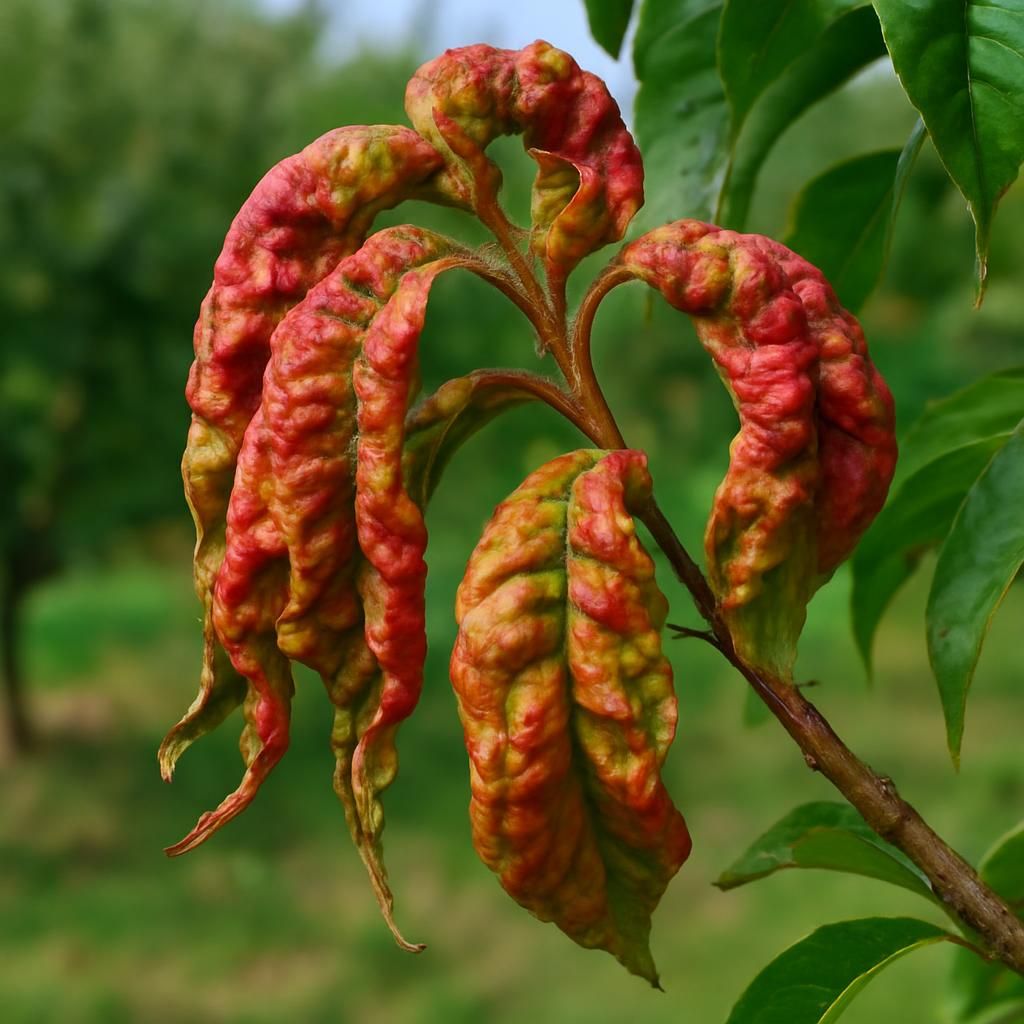
Introduction to Taphrina deformans
Taphrina deformans is an ascomycete fungus responsible for peach leaf curl, one of the most recognizable and economically important diseases of peach (Prunus persica) and related stone fruits. The pathogen overwinters on the tree as spores on bud scales and bark, infecting new growth in early spring when temperatures and moisture are favorable. Once established, it causes severe leaf distortion, premature defoliation, and reduced fruit yield, making it a critical target for both commercial orchards and home gardeners.
The disease is particularly problematic in temperate regions with cool, wet springs. Infected trees experience reduced photosynthetic capacity, leading to weakened growth, smaller fruit, and increased susceptibility to secondary stresses. Because the fungus completes its life cycle rapidly and produces large numbers of spores, proactive management is essential. Understanding its biology and environmental triggers allows growers to implement precise, cost-effective control programs.
Identifying Symptoms & Damage
Early symptoms appear in spring as young leaves emerge. Infected leaves become thickened, puckered, and curled, often displaying a reddish or yellowish discoloration before turning brown and necrotic. Severely affected leaves drop prematurely, exposing fruit and branches to sunburn and reducing overall tree productivity. In heavy infections, shoots may also become distorted and stunted.
Fruit symptoms are less common but can include raised, warty lesions on the skin that reduce marketability. Twig infections may cause dieback in young trees. Diagnosis is confirmed by the characteristic leaf curling combined with the absence of powdery mildew or other foliar pathogens. Laboratory confirmation involves microscopic examination of asci and ascospores on leaf surfaces.
Lifecycle and Progression of Taphrina deformans (MUST INCLUDE A MARKDOWN TABLE OF LIFECYCLE STAGES)
Taphrina deformans has a unique life cycle that relies on overwintering spores and early-spring infection. The pathogen produces ascospores that are released during bud swell, infecting expanding tissues before protective cuticles form.
| Lifecycle Stage | Timing | Key Events | Environmental Requirements |
|---|---|---|---|
| Overwintering | Late fall to early spring | Ascospores and blastospores survive on bud scales and bark | Cool, dry conditions; spores remain viable for months |
| Spore Release & Infection | Bud swell to early leaf expansion | Ascospores infect young leaves and shoots | Temperatures 10–16 °C with prolonged leaf wetness (≥12 hours) |
| Symptom Development | 2–4 weeks post-infection | Leaf thickening, curling, and color change | Continued cool, moist weather accelerates symptom expression |
| Spore Production | Late spring to early summer | New asci form on leaf surfaces, releasing fresh ascospores | Warm temperatures (18–24 °C) and moderate humidity |
| Secondary Spread | Summer | Limited; most new infections occur only on highly susceptible tissue | Rare under typical summer conditions |
| Return to Dormancy | Late summer to fall | Spores lodge in bud scales and bark crevices | Cool nights and shortening day length trigger overwintering |
Environmental Triggers & Risk Factors
Cool, wet weather during bud break is the primary driver of severe outbreaks. Prolonged leaf wetness at temperatures between 10 °C and 16 °C allows spores to germinate and penetrate host tissue. Orchards located in low-lying areas or with poor air circulation experience higher humidity and slower drying, increasing infection risk. Susceptibility is highest in young, vigorously growing shoots.
| Factor | Optimal Range for Disease | Management Implication |
|---|---|---|
| Temperature | 10–16 °C during bud swell | Time dormant sprays before this window |
| Leaf Wetness Duration | ≥12 hours | Improve canopy airflow and drainage |
| Soil pH | 6.0–7.0 (indirect effect via tree vigor) | Maintain optimal pH for healthy growth |
| Tree Age | Young trees and vigorous cultivars | Prioritize protection of new plantings |
| Rainfall Frequency | Frequent light rains in spring | Schedule protective fungicides accordingly |
Organic Control & Treatment Plans (MUST INCLUDE A MARKDOWN TABLE OF TREATMENT OPTIONS AND FREQUENCIES)
Organic management centers on dormant-season applications of copper-based fungicides and cultural practices that reduce inoculum. Because the fungus is only vulnerable during a narrow window before bud break, timing is critical. Multiple applications may be needed in high-pressure areas.
| Treatment Option | Active Ingredient | Application Timing | Frequency | Notes |
|---|---|---|---|---|
| Copper Hydroxide | 1.5–2.0 lb metallic copper/acre | Dormant (late fall) and delayed dormant (pre-bud swell) | 1–2 applications | Most effective when applied before infection window |
| Copper Sulfate + Lime (Bordeaux mixture) | 4–6 lb copper sulfate + 4–6 lb hydrated lime/100 gal | Dormant and delayed dormant | 1–2 applications | Traditional organic option; avoid phytotoxicity on tender tissue |
| Sulfur (micronized) | 6–8 lb/acre | Delayed dormant only if copper unavailable | Single application | Less effective than copper; use as supplement |
| Horticultural Oil + Copper | 1–2% oil + copper | Dormant | Once | Improves coverage and penetration of copper |
| Cultural Sanitation | Removal of fallen leaves | Post-harvest through dormancy | Continuous | Reduces overwintering inoculum; combine with sprays |
Preventing Taphrina deformans in the Future
Long-term prevention relies on resistant cultivars, strategic pruning, and consistent dormant sprays. Selecting cultivars with lower susceptibility, such as certain clingstone peaches, reduces disease pressure. Annual removal of infected leaves and proper disposal prevents spore buildup. Maintaining balanced nutrition and avoiding excessive nitrogen fertilization promotes tree resilience.
Improving orchard microclimate through wider spacing and selective thinning enhances airflow and speeds leaf drying. Regular monitoring during the critical bud-swell period allows growers to adjust spray schedules based on weather forecasts. Integrating these practices creates a sustainable management system that minimizes chemical inputs while protecting yield.
Crops Most Affected by Taphrina deformans
Peach (Peach) is the primary host, but the pathogen also affects Nectarine (often listed under peach), Almond, and occasionally Apricot. Related Prunus species may show mild symptoms under high disease pressure. No significant infection occurs on pome fruits or other stone fruits outside the Prunus genus.
For more detailed cultivar resistance information, consult university extension resources or refer to Crop Diseases Under the Microscope: 9 Organic Fixes for Small Farm Resilience.