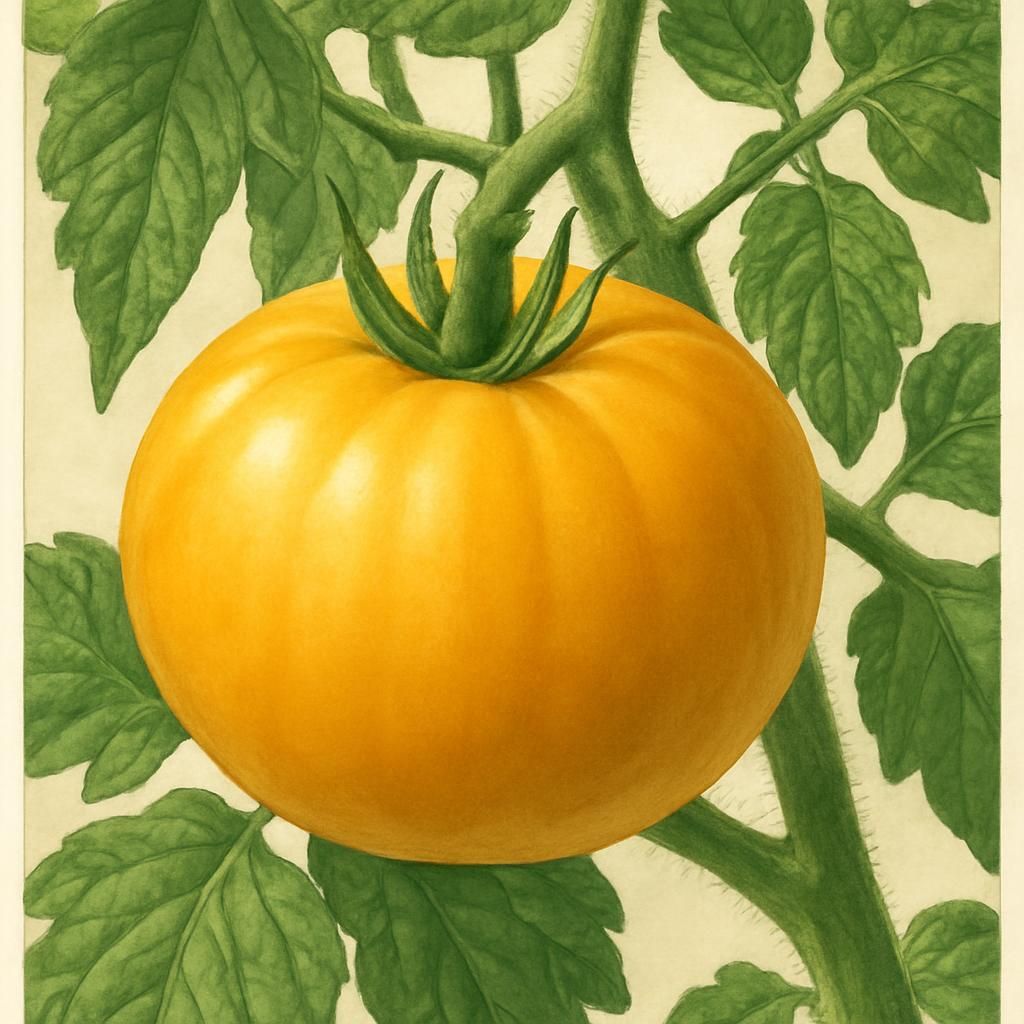
Introduction to Dr. Wyche's Yellow Tomato
Dr. Wyche's Yellow Tomato is a beloved heirloom beefsteak tomato that combines striking appearance with exceptional culinary qualities. Developed by Dr. John Wyche, a passionate collector and Cherokee heritage advocate, this variety has earned a loyal following among home gardeners and small-scale commercial growers for its large, smooth, golden-yellow fruits that often exceed one pound. The tomatoes offer a rich, sweet flavor with notably low acidity, making them ideal for fresh consumption, gourmet sandwiches, and low-acid canning recipes. Its indeterminate growth habit produces long, productive vines that can reach 6–8 feet, delivering a continuous harvest throughout the growing season. The variety also demonstrates strong resistance to many common tomato diseases, making it a reliable choice for organic and low-input growing systems.
Botanical Profile of Dr. Wyche's Yellow Tomato
Dr. Wyche's Yellow Tomato belongs to the species Tomato within the Solanaceae family. It is classified as an indeterminate beefsteak type, producing large, oblate to slightly flattened fruits with smooth, thin skins that ripen to a vibrant golden-yellow. The plants exhibit vigorous vining growth with abundant foliage that provides natural sun protection for developing fruit. Internally, the tomatoes feature meaty, low-seed locules and a balanced sugar-to-acid ratio that contributes to their signature mild sweetness. Flowers are self-pollinating, though bee activity can improve fruit set in cooler conditions. The variety is open-pollinated, allowing growers to save seed from year to year while maintaining genetic integrity.
Soil, pH, and Climate Requirements for Dr. Wyche's Yellow Tomato (MUST INCLUDE A MARKDOWN TABLE OF IDEAL CONDITIONS)
Dr. Wyche's Yellow Tomato performs best in fertile, well-drained loam soils enriched with organic matter. The crop requires consistent warmth and full sun exposure for optimal fruit development and disease resistance.
| Parameter | Ideal Range | Notes |
|---|---|---|
| Soil Type | Loamy, well-drained | Heavy clay requires amendment with compost |
| Soil pH | 6.2–6.8 | Slightly acidic; test and adjust annually |
| Temperature (Day) | 70–85°F (21–29°C) | Optimal for fruit set and ripening |
| Temperature (Night) | 60–70°F (15–21°C) | Below 55°F slows growth and pollination |
| Sunlight | 8+ hours direct | Full sun essential for flavor development |
| Spacing | 24–36 inches between plants | Rows 48–60 inches apart |
| Growing Season | 80–100 days to maturity | Warm-season crop; start indoors 6–8 weeks |
Step-by-Step Planting & Propagation
- Start seeds indoors 6–8 weeks before the last expected frost date in your region. Use sterile seed-starting mix and maintain soil temperature at 75–85°F for rapid germination.
- Transplant seedlings outdoors once soil temperatures reach at least 60°F and all danger of frost has passed. Harden off plants for 7–10 days prior to planting.
- Prepare planting beds by incorporating 2–3 inches of well-rotted compost or aged manure. Dig holes 24–36 inches apart in rows spaced 48–60 inches.
- Plant seedlings deeply, burying the stem up to the first set of true leaves to encourage strong root development.
- Install sturdy cages, stakes, or trellises at planting time to support the heavy indeterminate vines.
- Water thoroughly after transplanting and apply a 2–3 inch layer of organic mulch to conserve moisture and suppress weeds.
Care & Maintenance regimes for Dr. Wyche's Yellow Tomato (MUST INCLUDE A MARKDOWN TABLE OF WATER, FERTILIZER, AND PRUNING SCHEDULES)
Consistent care ensures maximum yields and fruit quality. Focus on steady moisture, balanced nutrition, and proper pruning to maintain airflow.
| Growth Stage | Watering Schedule | Fertilizer Application | Pruning & Training Schedule |
|---|---|---|---|
| Seedling/Transplant | Water daily or every other day | Light compost tea every 2 weeks | Remove lower leaves touching soil |
| Vegetative | 1–1.5 inches per week | Balanced organic fertilizer (NPK 5-5-5) monthly | Remove suckers below first flower cluster |
| Flowering/Fruit Set | Deep watering 2–3× weekly | Side-dress with compost or fish emulsion | Continue sucker removal; tie vines weekly |
| Ripening | Reduce slightly to concentrate flavor | Switch to low-nitrogen, high-potassium | Minimal pruning; focus on airflow |
Pests, Diseases & Organic Management
Dr. Wyche's Yellow Tomato shows good resistance to many common tomato ailments but remains susceptible to certain pests and diseases under stress. Monitor regularly and implement integrated organic strategies.
Common pests include Aphids, Hornworms, Spider mites, and Flea beetles. Handpick hornworms and use Bacillus thuringiensis (Bt) sprays when necessary. Encourage beneficial insects such as ladybugs and lacewings for aphid control. Apply neem oil or insecticidal soap for spider mites and whiteflies.
Diseases of concern include Early blight, Septoria leaf spot, Fusarium wilt, and Tomato spotted wilt virus. Practice crop rotation, avoid overhead watering, and remove infected foliage promptly. Use copper-based fungicides or compost tea as preventive measures. Mulching and proper spacing significantly reduce soil-borne disease pressure.
Harvesting, Curing & Optimal Storage
Harvest Dr. Wyche's Yellow Tomato fruits when they reach full golden-yellow color and yield slightly to gentle pressure. Pick at the breaker stage for longer storage or allow full ripening on the vine for peak flavor. Use clean pruners to avoid damaging vines. For storage, keep ripe tomatoes at room temperature away from direct sunlight; they maintain quality for 4–7 days. Green or breaker-stage fruits can be ripened indoors in a paper bag with an ethylene-producing fruit such as a banana. Avoid refrigeration, which diminishes flavor and texture. Excess harvest can be processed into sauces, salsas, or frozen for later use.
Companion Planting for Dr. Wyche's Yellow Tomato
Strategic companion planting enhances growth, deters pests, and improves soil health. Recommended companions include Basil, Marigold, Nasturtium, Carrot, Parsley, and Borage. Basil and marigolds repel aphids and whiteflies while attracting pollinators. Carrots and parsley improve soil structure without competing for nutrients. Avoid planting near Fennel or Walnut trees, which can inhibit tomato growth through allelopathy. Rotating tomatoes with legumes such as Peas or Beans the following season replenishes soil nitrogen and breaks disease cycles.