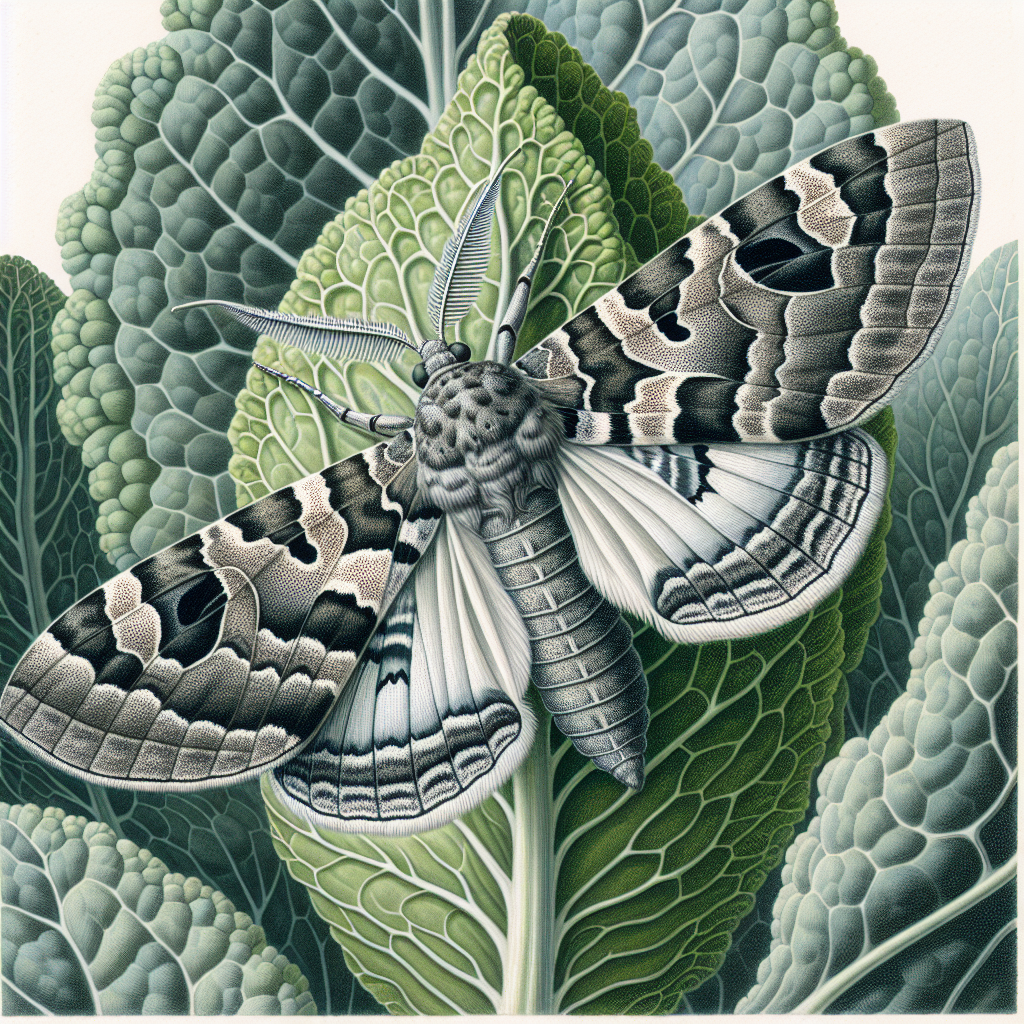
Introduction to diamondback moth
The diamondback moth (Plutella xylostella), often abbreviated as DBM, stands as one of the most destructive pests targeting cruciferous vegetables worldwide. Native to the Mediterranean region but now cosmopolitan, this small moth infests over 40 plant species, primarily in the Brassicaceae family. Its larvae, small green caterpillars, skeletonize leaves, leading to yield losses up to 90% in severe outbreaks. Farmers face unique challenges due to the moth's ability to develop resistance to over 500 insecticides, making chemical reliance ineffective. Understanding its biology is crucial for sustainable control. This definitive guide covers identification, lifecycle, triggers, organic treatments, prevention, and affected crops, empowering growers with professional-grade strategies to protect their harvests.
DBM thrives in temperate and subtropical climates, with populations exploding in warm, humid conditions. Adults are tiny (6-8mm wingspan), grey-brown moths with a distinctive diamond-shaped pattern on their folded wings—hence the name. They are highly mobile, migrating long distances on wind currents, which complicates local management. Eggs are laid singly on leaf undersides, hatching into larvae that mine and chew foliage. Pupation occurs in loose cocoons on leaves. Multiple generations (up to 20 per year in tropics) amplify damage potential. Early detection via scouting is key, as small larvae cause disproportionate harm. For more on caterpillar pests, see our detailed wiki.
Economic impact is staggering: global losses exceed $4-5 billion annually, hitting small farms hardest. In regions like Southeast Asia and North America, DBM devastates cabbage, broccoli, and cauliflower. Organic growers must prioritize cultural, biological, and mechanical controls over synthetics. This guide draws from entomological research and field trials, offering actionable plans.
Identifying Symptoms & Damage
Accurate diagnosis begins with recognizing DBM-specific signs, distinguishing it from similar pests like cabbage loopers or imported cabbageworms. Scout fields weekly, focusing on leaf undersides and new growth. Look for tiny, flattened eggs (0.4mm, ribbed, pale yellow) laid in clusters of 20-100.
Larvae are the primary culprits: pale green, 1-1.5cm long, with a forked tail spine that wiggles when disturbed—a hallmark trait. Unlike loopers, they lack prolegs on the abdomen, appearing inchworm-like. Feeding creates irregular holes, windowpaning (upper epidermis removed, lower intact), and skeletonized leaves with only veins remaining. Severe infestations defoliate plants, stunting heads and reducing marketable yield. Fecal pellets (frass) are small, granular, green-black.
Adults flutter erratically when approached, unlike resting at night. Pupae are open-network cocoons (1-2cm), grey-green, attached by silk to leaves. Secondary signs include sooty mold on honeydew-excreting larvae or viral transmission. Differentiate from cabbage worms by the lack of velvety texture and prolegs. Use a 10x hand lens for confirmation. Damage thresholds: 1-2 larvae per plant for young crops, 5+ for mature. Early symptoms mimic leaf-feeding caterpillars, so thorough inspection prevents misdiagnosis. Photograph suspects for AI identification tools—check our Spring Pest Patrol blog for tech tips.
Lifecycle and Progression of diamondback moth
DBM's lifecycle spans 14-30 days, accelerating in heat (optimal 25-30°C). Eggs hatch in 2-3 days, larvae develop through 4 instars in 10-15 days, pupate for 4-6 days, adults live 7-14 days. In cool climates, diapause overwinters as pupae. Females lay 150-350 eggs over 2-3 nights, favoring tender foliage.
Egg Stage: Laid singly or in groups on abaxial leaf surfaces, near veins. Embryonic development visible as orange head capsule.
Larval Stage: Instars 1-2 mine epidermis; 3-4 chew externally. 'Head flip' defense ejects predators. Peak feeding at dusk.
Pupal Stage: Chrysalis forms on leaf, lasts 5 days at 25°C.
Adult Stage: Moths emerge, mate within hours, seek hosts via visual/chemical cues. Diel flight peaks at dusk.
Generations overlap, with 4-12 in temperate zones, 20+ in tropics. Monitor with pheromone traps (10-20 per hectare) to time interventions. Lifecycle knowledge enables targeting vulnerable stages—e.g., BT sprays at egg hatch. Compare to diamondback moth larvae for visuals.
Environmental Triggers & Risk Factors
DBM outbreaks correlate with mild winters, high humidity (60-80% RH), and temperatures 18-30°C. Drought-stressed crucifers are more susceptible, as larvae prefer turgid leaves. Monoculture fields amplify risk; nearby wild brassicas serve as reservoirs. Wind aids migration—populations surge post-storms.
Soil type matters little, but heavy nitrogen fertilization boosts foliage palatability, increasing damage. Late-planted crops face peak larval pressure. Companion pests like aphids exacerbate via honeydew. Climate change extends seasons, raising generations. Risk assessment: High in brassica-heavy regions (e.g., California, India); scout after 15°C sustained. Mitigate with diverse rotations.
Organic Control & Treatment Plans
Integrated Pest Management (IPM) is paramount for DBM. Cultural: Destroy crop residues, till soil to expose pupae. Rotate with non-hosts like tomato or potato. Reflective mulches deter adults.
Biological: Bacillus thuringiensis (Bt) kurstaki—apply at first instar (0.5-1L/ha, evenings). Parasitic wasps (Diadegma insulare, Cotesia plutellae) released at 5000/ha. Predators: lacewings, ladybugs. Neem oil (azadirachtin 0.03%) disrupts hormones—2-3 sprays, 7-day intervals.
Mechanical: Hand-pick larvae <1m rows. Pheromone traps disrupt mating. Row covers exclude adults.
Treatment Plan: Week 1: Scout, install traps. Threshold hit? Bt spray + neem. Week 2: Release parasitoids. Monitor, reapply Bt if needed. Avoid broad-spectrum sprays to preserve beneficials. Efficacy: 80-95% with IPM vs. 50% chemicals.
Preventing diamondback moth in the Future
Prevention hinges on farm hygiene and resistance-breaking tactics. Plant resistant varieties (e.g., 'Starlight' cabbage). Time planting to avoid peaks—early spring or fall. Intercrop with thyme or marigold for repellency. Yellow sticky traps (20/ha) capture adults. Sanitize tools, rogue volunteers. Cover crops like mustard biofumigate soil. Monitor weather for migrations. Long-term: Breed Bt-resistant populations managed via rotation. Annual IPM audits sustain yields.
Crops Most Affected by diamondback moth
DBM targets Brassicaceae: cabbage, broccoli, cauliflower, kale, kale, Brussels sprouts, collards, Chinese cabbage, radish, turnip, mustard. Secondary: [bok choy], watercress. Rare on non-crucifers. Global hotspots: Asia (pak choi), Americas (broccoli), Europe (cabbage). Yields drop 30-100% untreated.