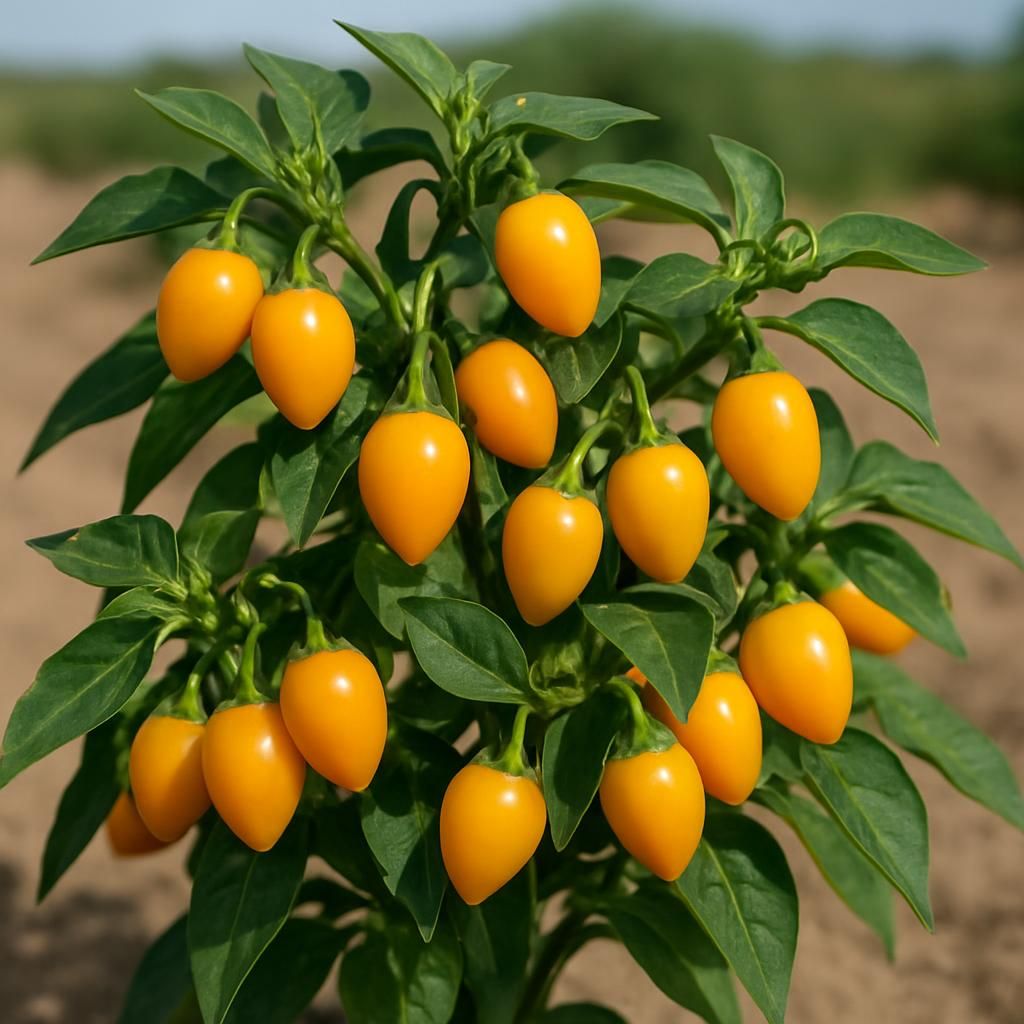
Introduction to Cumari Pepper
Cumari Pepper (Capsicum baccatum var. pendulum) is a compact, high-yielding chili originating from Brazil. The plants produce hundreds of tiny, elongated pods that ripen from green to bright yellow or orange-red. Known for their intense fruity aroma and sharp heat (30,000–50,000 Scoville Heat Units), Cumari peppers are used fresh, dried, and in fermented sauces. Their ornamental appearance and continuous fruiting make them popular in both kitchen gardens and small-scale commercial operations.
Botanical Profile of Cumari Pepper
Cumari Pepper belongs to the Solanaceae family and is classified as Capsicum baccatum var. pendulum. Plants typically reach 60–90 cm in height with a bushy, spreading habit. Leaves are lanceolate, medium green, and slightly pubescent. Flowers are small, white with yellow anthers, and often display purple markings at the base of the corolla. The fruits are 2–4 cm long, thin-walled, and taper to a point. Multiple color forms exist, including yellow, orange, and red at maturity. Seeds are small, tan-colored, and number 20–40 per fruit.
Soil, pH, and Climate Requirements for Cumari Pepper
Cumari Pepper thrives in well-drained, fertile soils with consistent moisture. It performs best in regions with warm days and nights, tolerating brief periods of 35 °C but suffering below 12 °C. Full sun (minimum 6–8 hours) is essential for maximum fruit set and flavor development.
| Parameter | Ideal Range | Notes |
|---|---|---|
| Soil Type | Sandy loam to loam | High organic matter; avoid heavy clays |
| Soil pH | 6.0–6.8 | Slightly acidic to neutral |
| Temperature (Day) | 22–32 °C | Optimal fruit set 24–28 °C |
| Temperature (Night) | 16–20 °C | Below 12 °C reduces flowering |
| Spacing | 45–60 cm between plants | 75–90 cm between rows |
| Sun Exposure | Full sun (6–8+ hours) | Partial shade reduces yield |
| Frost Tolerance | None | Protect below 10 °C |
Step-by-Step Planting & Propagation
Start seeds indoors 8–10 weeks before the last frost. Sow 5 mm deep in sterile seed-starting mix at 24–28 °C. Germination occurs in 7–14 days. Transplant seedlings when they have 4–6 true leaves and soil temperature reaches 18 °C. Harden off plants for 7–10 days. Space 45–60 cm apart in raised beds or containers with excellent drainage. Direct seeding is possible in warm climates once soil temperature exceeds 20 °C.
Care & Maintenance regimes for Cumari Pepper
Consistent care maximizes pod production and prevents stress-related disorders. Mulch with 5–8 cm of organic material to retain moisture and suppress weeds. Provide support stakes for heavy fruit loads. Monitor for nutrient deficiencies, especially calcium and magnesium.
| Task | Frequency | Details |
|---|---|---|
| Watering | 2–3 times per week | Deep watering; keep soil evenly moist |
| Fertilizer | Every 3–4 weeks | Balanced NPK (10-10-10) until flowering; then high-potassium (5-10-20) every 2 weeks |
| Pruning | Once at 30 cm height | Pinch terminal growth to encourage branching; remove lower leaves touching soil |
| Mulching | At planting & mid-season | Maintain 5–8 cm layer of straw or wood chips |
| Weeding | Weekly | Hand-weed or shallow cultivation |
Pests, Diseases & Organic Management
Common pests include Aphids, Thrips, and Spider Mites. Use insecticidal soap or neem oil at first sign of infestation. Whiteflies can be controlled with yellow sticky traps and reflective mulch. Major diseases are Bacterial spot, Anthracnose, and Phytophthora. Practice crop rotation, avoid overhead irrigation, and apply copper-based fungicides or Bacillus subtilis products preventively. Remove and destroy infected plant material immediately.
Harvesting, Curing & Optimal Storage
Harvest Cumari peppers when fully colored for peak flavor and heat. Pick every 3–5 days to encourage continuous production. For drying, spread pods in single layers in a well-ventilated area at 25–30 °C until brittle (7–10 days). Store dried peppers in airtight glass jars away from light. Fresh peppers keep 2–3 weeks at 7–10 °C and 85–90 % relative humidity. Freeze whole pods or make fermented hot sauces for long-term preservation.
Companion Planting for Cumari Pepper
Pair Cumari Pepper with Tomato, Basil, and Marigold to deter pests and improve flavor. Avoid planting near Fennel or Kohlrabi. Nasturtium and Calendula attract beneficial insects while Onion and Garlic help repel aphids. Rotate with legumes such as Beans to restore soil nitrogen between pepper crops.