Introduction to Crucifer flea beetle
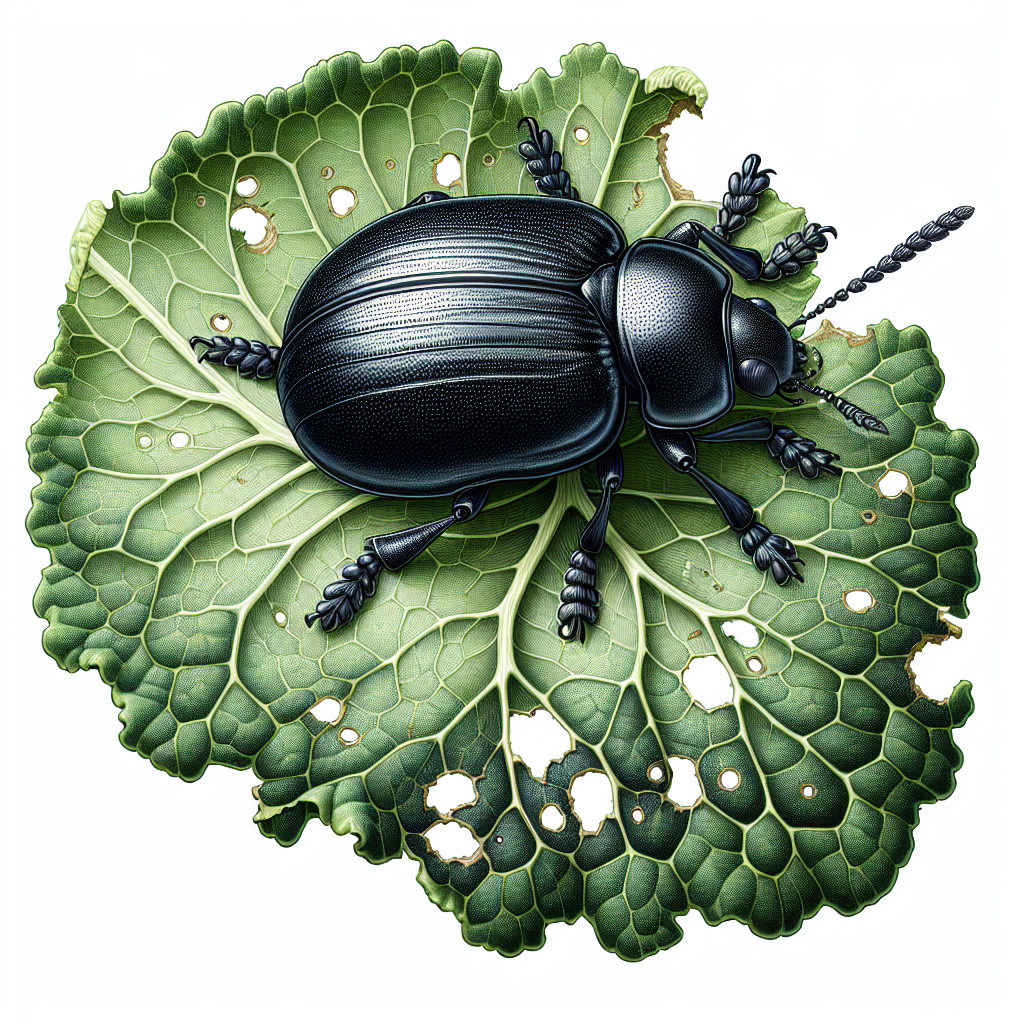
Crucifer flea beetles, scientifically known as Phyllotreta cruciferae, are among the most notorious pests targeting brassica crops worldwide. These small, shiny beetles (2-4 mm long) belong to the Chrysomelidae family and are named for their preference for cruciferous plants like cabbage, broccoli, cauliflower, kale, and radish. Adults are black or metallic bronze with enlarged hind legs that enable their signature jumping behavior, resembling fleas when disturbed.
Native to Europe and Asia, they have spread across North America, posing significant threats to commercial vegetable production and home gardens, especially in temperate regions. A single infestation can reduce seedling stands by up to 80%, leading to substantial economic losses. Early-season damage is particularly devastating as it stunts young plants, making them vulnerable to secondary issues like aphids or powdery mildew. Understanding their biology and implementing timely interventions is crucial for sustainable agriculture. For more on general flea beetle management, check our flea beetles wiki page.
Farmers often first notice these pests in spring when warm weather awakens overwintering adults. They emerge hungry, targeting tender cotyledons and first true leaves. Without prompt action, populations explode, with females laying hundreds of eggs per season. This guide equips you with diagnostic tools, lifecycle knowledge, organic controls, and prevention strategies to safeguard your brassica harvests. By integrating cultural, biological, and minimal chemical tactics, yields can be preserved while maintaining eco-friendly practices.
Identifying Symptoms & Damage
Diagnosing crucifer flea beetle damage is straightforward once you know the signs. The hallmark symptom is 'shot-hole' feeding: small, round holes (1-2 mm) punched through leaves, resembling BB-gun pellets. Seedlings suffer most, with cotyledons riddled and true leaves skeletonized, often leading to plant death. Older plants show pitted, lace-like foliage, reducing photosynthetic area by 30-50%.
Scout by tapping plants over white paper; beetles jump and are easily spotted. Damage appears within days of adult emergence, worsening rapidly in dry, warm conditions. Differentiate from slugs (irregular holes, slime trails) or caterpillars (larger, chewed edges). Yellowing or wilting may indicate severe feeding stress, compounded by bacterial entry through wounds.
Examine stems for feeding scars and check soil for larvae (small, slender, feeding on roots). Economic thresholds: 1-2 beetles per plant for seedlings, 25% defoliation for mature crops. Use a 10x hand lens to confirm beetle presence. Early detection via weekly scouting prevents escalation. For small farms battling multiple pests, see our Spring Pest Patrol: Organic AI Strategies to Shield Your Crops from Common Invaders.
Lifecycle and Progression of Crucifer flea beetle
Crucifer flea beetles complete 1-3 generations per year, depending on climate. Overwintering adults (shiny black, 2.5 mm) emerge in early spring (soil temps >10°C/50°F), feeding immediately on weeds and crop residues. Females lay 200-400 yellow-orange eggs in soil clusters near plants over 4-6 weeks.
Eggs hatch in 7-10 days into larvae: legless, pale yellow grubs (5-7 mm) that burrow into soil, feeding on roots for 2-4 weeks. This subterranean stage causes hidden stunting, mimicking nutrient deficiencies. Pupae form in soil cocoons for 1-2 weeks, yielding new adults by late spring.
Summer generations overlap, with peak activity in June-July. In mild winters, a partial fourth generation occurs. Total lifecycle: 3-6 weeks. Adults live 30-60 days, dispersing via flight. Monitor with yellow sticky traps (20-50 cm above soil) to track flights. Lifecycle knowledge enables timed interventions, like seed treatments before peak egg-lay.
Environmental Triggers & Risk Factors
Crucifer flea beetles thrive in warm (20-30°C/68-86°F), dry conditions with low wind, favoring direct-seeded brassicas. Risk spikes after mild winters, when >50% adults survive. Poor site selection near weedy field margins or previous brassica fields amplifies infestations, as beetles overwinter in debris.
Soil type matters: sandy loams retain fewer larvae than heavy clays. Early planting (before soil >12°C/54°F) dodges peak emergence. Monocultures exceed thresholds faster than diversified rotations. Drought stress weakens plants, boosting beetle preference over resilient varieties.
Weed hosts like shepherd's purse and wild mustard serve as reservoirs. Learn more about general flea beetles for broader context. Risk assessment: High in zones 3-7; moderate in cooler climates with tillage.
Organic Control & Treatment Plans
Organic management emphasizes IPM: prevention first, then layered tactics. Cultural: Delay planting until soil >15°C/59°F; use transplants under row covers (Agribon AG-19) for 3-4 weeks post-emergence. Till post-harvest to expose pupae to predators.
Physical: Yellow sticky traps (1/10m²) reduce adults 40-60%. Collars (toilet paper tubes) around seedlings deter jumping. Biological: Release predators like ground beetles or parasitic wasps (Microtonus spp.). Neem oil (0.5-2%) or spinosad (OMRI-approved, 1-2 apps/week) targets adults; apply evenings to spare bees.
Row covers: Essential for seedlings, removing at flowering. Crop rotation (2-3 years non-brassicas) cuts soil pests. Trap crops (mustard) divert beetles. Bt (Bacillus thuringiensis) ineffective on adults; focus on larvae with beneficial nematodes (Steinernema feltiae).
Treatment plan: Scout weekly; act at 1 beetle/plant. Combine covers + neem for 90% control. Monitor cabbage closely.
Preventing Crucifer flea beetle in the Future
Prevention beats cure. Rotate brassicas with non-hosts like potato or corn (3 years min). Destroy weeds pre-planting. Plant resistant varieties: 'Protector' broccoli, 'Collar' kale.
Mulch heavily (2-4 inches straw) to suppress soil emergence. Encourage predators via hedgerows (yarrow, dill). Fall tillage buries pupae. Seed treatments (OMRI azadirachtin) protect emergence. Monitor forecasts for emergence cues. Long-term: Diversify farms per Soil Health Mastery: 5 Proven Strategies for Small Farms to Build Fertile Ground Without Breaking the Bank.
Crops Most Affected by Crucifer flea beetle
Primarily attacks Brassicaceae: cabbage, broccoli, cauliflower, kale (curly kale), Brussels sprouts, turnip (purple-top-white-globe-turnip), radish (cherry-belle-radish), [mustard], canola (canola-rapeseed). Seedlings hit hardest; mature plants tolerate up to 20% damage. Secondary: arugula, bok choy. Avoid near rapeseed fields.