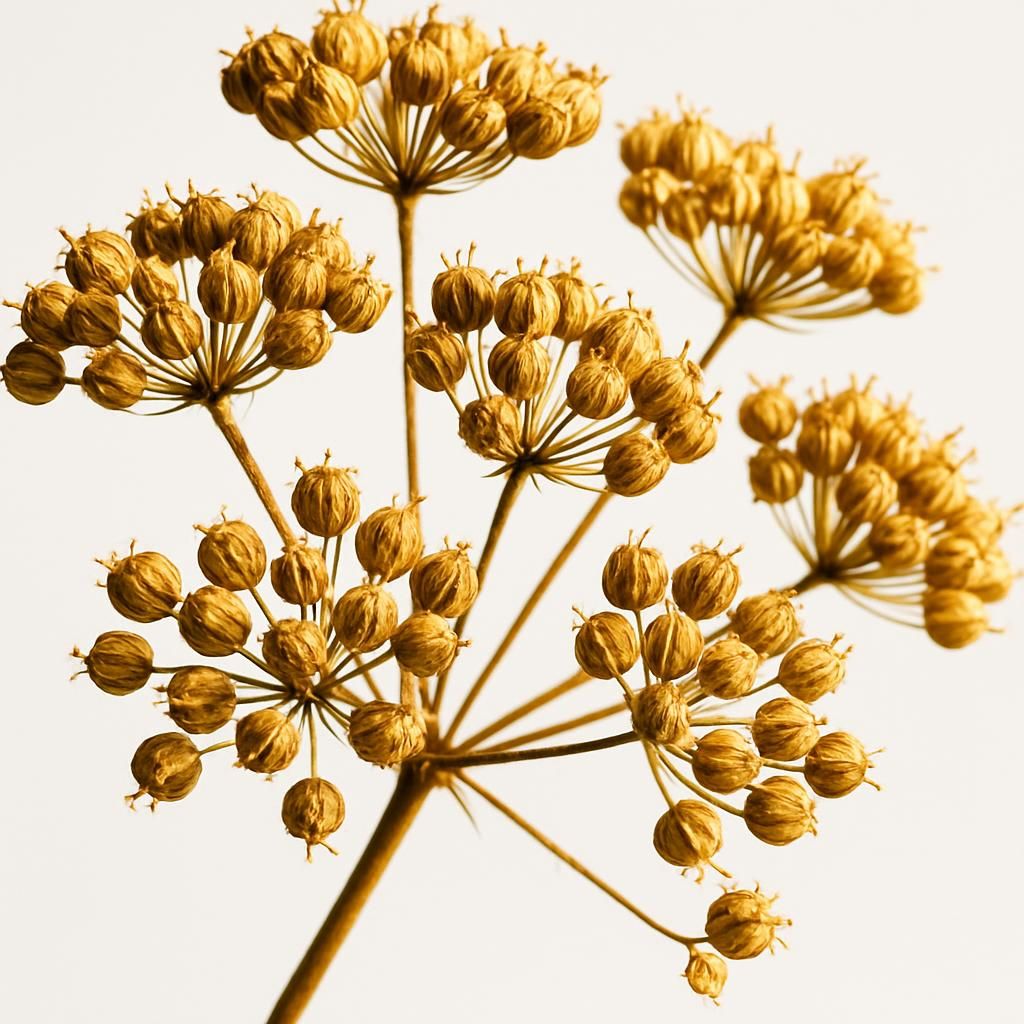
Introduction to Coriander Seed (Indian)
Coriander Seed (Indian) is one of the most economically important spice crops in South Asia, cultivated extensively for its dried fruits that are prized for their warm, citrusy flavor and high essential oil content. Indian varieties are typically taller and produce larger seeds than European types, making them preferred for both domestic consumption and export markets. The crop plays a vital role in crop rotation systems because it improves soil structure and suppresses certain soil-borne pathogens when integrated with cereals such as Wheat or Rice.
Successful commercial production depends on selecting the right variety, timing sowing during the cool season, and implementing precise irrigation and nutrient schedules. With rising global demand for organic spices, many Indian farmers are shifting toward certified organic cultivation of coriander seed, which commands premium prices in international markets.
Botanical Profile of Coriander Seed (Indian)
Coriandrum sativum belongs to the Apiaceae family and is an annual herb that grows 30–120 cm tall. Indian coriander is characterized by its robust, erect stems, deeply lobed basal leaves, and compound umbels bearing white to pale-pink flowers. The fruits (commonly called seeds) are schizocarps that split into two mericarps, each containing one seed with high concentrations of linalool, pinene, and other aromatic compounds.
The plant exhibits two distinct growth phases: a vegetative leafy stage lasting 40–60 days followed by rapid reproductive development. Seed maturity occurs 90–120 days after sowing depending on variety and climate. Indian landraces such as ‘Gujarat Coriander-2’ and ‘Rajendra Swati’ are widely adopted for their high seed yield (1.5–2.2 t/ha) and resistance to lodging.
Soil, pH, and Climate Requirements for Coriander Seed (Indian)
Coriander seed performs best on light to medium loamy soils with good drainage. Heavy clay soils should be avoided as they promote root rot. The ideal soil pH ranges from 6.5 to 7.5. The crop is a cool-season plant; seed germination requires 15–20 °C while vegetative growth thrives at 18–25 °C. Flowering and seed set are optimal at 20–25 °C with low humidity. Excessive rainfall during seed development reduces oil content and increases disease incidence.
| Parameter | Ideal Range | Notes |
|---|---|---|
| Soil Type | Sandy loam to loam | Well-drained; avoid waterlogging |
| Soil pH | 6.5–7.5 | Slightly acidic to neutral |
| Temperature (Germination) | 15–20 °C | Critical for uniform emergence |
| Temperature (Growth) | 18–25 °C | Daytime optimum |
| Temperature (Seed Set) | 20–25 °C | Low humidity preferred |
| Annual Rainfall | 400–600 mm | Supplemental irrigation required |
| Altitude | Up to 1500 m | Higher altitudes may delay maturity |
Step-by-Step Planting & Propagation
- Seed Selection: Choose certified seed of high-yielding Indian varieties with >85% germination.
- Land Preparation: Plough 3–4 times to achieve fine tilth; incorporate 10–15 t/ha well-rotted FYM.
- Sowing Time: October–November in northern India; September–October in southern plains.
- Seed Rate & Spacing: 12–15 kg/ha; row spacing 30 cm, plant spacing 10 cm after thinning.
- Sowing Method: Line sowing at 2–3 cm depth; maintain soil moisture for 7–10 days post-sowing.
- Irrigation at Sowing: Light pre-sowing irrigation followed by light watering 3–4 days after sowing.
Care & Maintenance regimes for Coriander Seed (Indian)
Timely irrigation, balanced nutrition, and weed management are essential for maximizing seed yield and oil quality. The crop is sensitive to both moisture stress and waterlogging.
| Growth Stage | Water Schedule | Fertilizer Application | Pruning / Other Operations |
|---|---|---|---|
| Pre-sowing | 1 light irrigation (if soil dry) | 5 t/ha FYM + 20 kg N, 40 kg P₂O₅, 20 kg K₂O | Incorporate organic matter |
| 20–30 DAS | 1 irrigation (light) | Top-dress 20 kg N | First weeding & thinning |
| 45–55 DAS | 1 irrigation | — | Second weeding |
| Flowering (60–75 DAS) | 1 irrigation (avoid water stress) | Foliar spray 1% urea + micronutrients | Monitor for pests |
| Seed Development | Stop irrigation 10–15 days before harvest | — | Rogue off-types |
Pests, Diseases & Organic Management
Major insect pests include Aphids, Thrips, and capsule borers. Diseases of concern are Powdery mildew, Alternaria leaf spot, and Root rot. Organic control begins with seed treatment using Trichoderma viride (5 g/kg seed) and neem-based sprays at 15-day intervals. Yellow sticky traps and neem oil (3 ml/L) effectively manage aphids and thrips. Crop rotation with non-host crops such as Onion or Garlic reduces soil-borne disease pressure.
Harvesting, Curing & Optimal Storage
Harvest when 60–70% of seeds turn light brown and umbels begin to dry. Cut plants at the base in the early morning and bundle for sun-drying 3–5 days. Thresh by gentle beating or mechanical threshers. Clean seeds and dry to 8–9% moisture content. Store in clean jute bags or airtight containers in a cool, dry place away from direct sunlight. Properly stored seeds retain viability and essential oil for up to 12 months.
Companion Planting for Coriander Seed (Indian)
Coriander seed is an excellent companion crop that repels Aphids and attracts beneficial insects. It pairs well with Tomato, Chili Pepper, and Cabbage. Avoid planting near Fennel as cross-pollination can reduce seed quality. Intercropping with short-duration legumes such as Chickpeas improves nitrogen availability and land-use efficiency. Summer Companion Planting: 10 Organic Pairings to Boost Small Farm Resilience