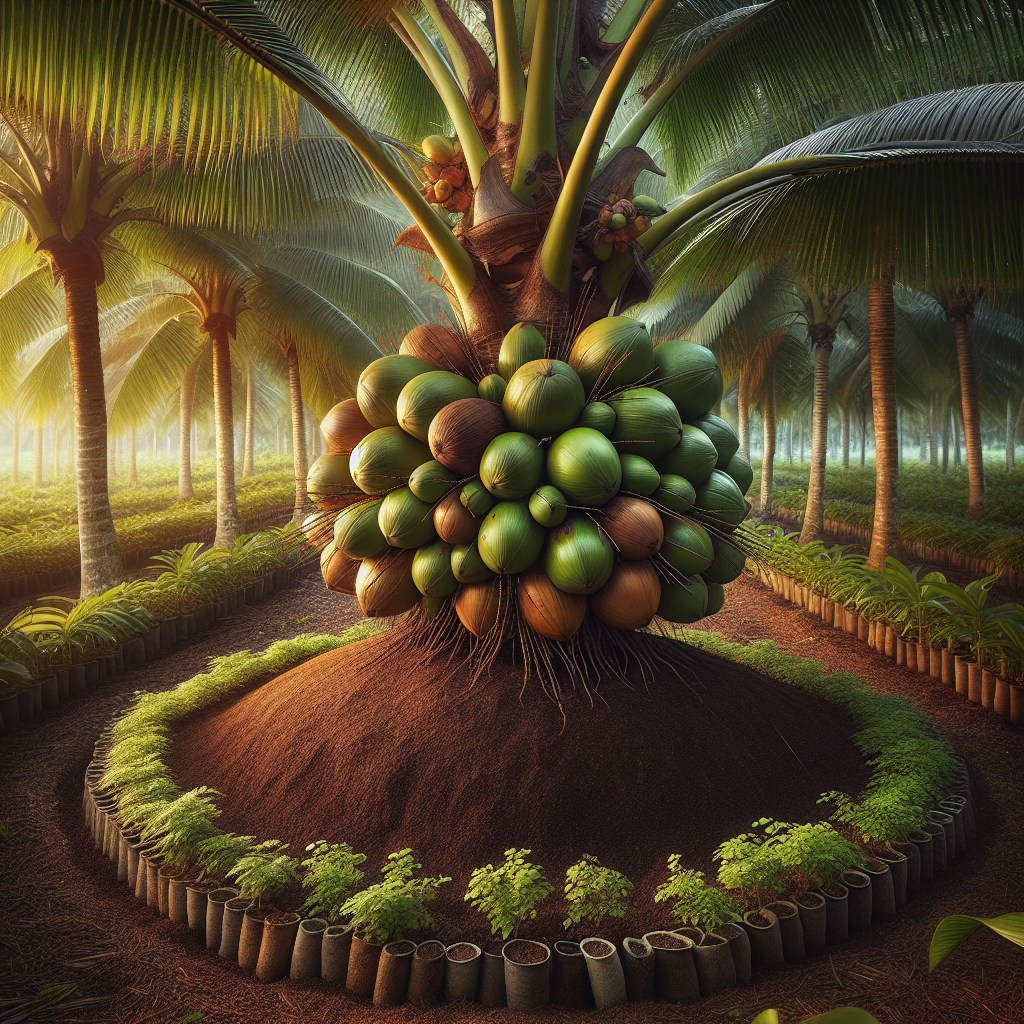
Introduction to Coconut (Macapuno)
A distinctive specialty coconut valued for dessert, confectionery, and processed food markets, Macapuno is not simply a marketing name but a true endosperm abnormality in coconut in which the solid kernel develops as a thick, soft, almost translucent mass with very little free water. In many producing regions, especially the Philippines where it is culturally and commercially important, Macapuno commands a premium price because the texture is uniquely chewy, rich, and custard-like.
From a grower’s perspective, the first thing to understand is that Macapuno is not managed exactly like a standard seedling coconut if your goal is reliable production of Macapuno nuts. The palms themselves largely resemble other coconuts in growth habit and field care, but the trait is genetically unusual and historically difficult to propagate consistently by ordinary seed. Older plantings often relied on chance occurrence among normal palms, while modern production increasingly depends on embryo culture and nursery selection to raise palms with a much higher probability of bearing Macapuno nuts.
This makes the crop especially interesting for small tropical orchards, diversified coconut farms, and high-value agroforestry systems. It combines the ecological durability of coconut with the economics of a niche crop. If you are already familiar with general Coconut production, Macapuno should be viewed as a premium specialty type that rewards better nursery sourcing, closer orchard records, and more disciplined harvest handling.
Botanical Profile of Coconut (Macapuno)
Macapuno belongs to the species Cocos nucifera, a monocotyledonous perennial palm in the family Arecaceae. Like all coconuts, it has a solitary unbranched trunk, fibrous root system, pinnate leaves, and monoecious inflorescences bearing both male and female flowers on the same spadix. The palm may be derived from tall, dwarf, or hybrid coconut backgrounds depending on the source population and propagation method.
The defining trait is in the nut, not primarily in the external appearance of the palm. In a normal coconut, the endosperm differentiates into coconut water and a progressively thickening white kernel. In Macapuno, abnormal endosperm development produces a very thick, soft, viscous kernel that fills much of the cavity, while liquid endosperm is greatly reduced. This characteristic is associated with defective galactomannan metabolism in the developing endosperm. For processors and consumers, that means high spoonable flesh yield and exceptional texture. For seed propagation, it means the embryo often has trouble developing normally under conventional germination conditions.
Key field traits include:
- Height and vigor vary with parent type; tall-derived palms may eventually exceed 20 meters, while dwarf-derived selections remain shorter.
- Leaves are long, arching, and feather-like, typically 4-6 meters in mature palms.
- Roots are adventitious, concentrated mostly in the upper 1-1.5 meters of soil, but spreading widely laterally. This explains why good topsoil aeration and drainage matter more than deep taproot penetration.
- Flowering commonly begins in 4-8 years depending on dwarf versus tall parentage, nutrition, irrigation, and propagation background.
- Fruit set is affected by heat, moisture, potassium status, and pollination conditions.
Macapuno nuts are often harvested at a stage similar to mature coconuts for processing. The husk and shell may look ordinary externally, so selection depends on known orchard source or post-harvest identification rather than obvious visual differences while still on the palm.
Soil, pH, and Climate Requirements for Coconut (Macapuno)
This crop performs best in humid tropical to subhumid tropical lowlands with year-round warmth. Ideal mean temperatures are 24-32°C, and growth slows markedly below 20°C. Prolonged exposure below 15°C reduces vigor, impairs nutrient uptake, and may cause chronic stress symptoms such as yellowing, poor spear leaf emergence, and low flowering intensity. Frost is not tolerated.
Annual rainfall of 1,500-2,500 mm is ideal when well distributed. Where rainfall is lower than about 1,200 mm or has a pronounced dry season longer than 3 months, irrigation becomes important for maintaining nut set and reducing button shedding. Mature palms can survive seasonal dryness, but premium production drops quickly under water deficit. Young palms are far less forgiving.
Full sun is essential. Site shading from buildings, timber trees, or dense intercropping reduces photosynthetic capacity and delays bearing. Choose an open position with at least 8 hours of direct sun daily.
Soils should be:
- Deep and well drained, ideally at least 1 meter before hardpan or impermeable clay.
- Loamy sand, sandy loam, alluvial loam, or well-structured coastal soils.
- Rich in organic matter in the upper rooting zone.
- Free from prolonged waterlogging.
Ideal pH is 5.5-7.0, though coconuts tolerate about 5.0-8.0 if drainage and nutrition are managed carefully. In acidic soils below pH 5.2, phosphorus may become less available and aluminum toxicity can suppress early root growth. In alkaline soils above pH 7.8, deficiencies of iron, manganese, and zinc become more likely, especially on calcareous coastal land.
Salinity tolerance is better than in many fruit crops, but that should not be misread as immunity. Mature palms can handle moderate salt spray and some saline influence, yet nursery plants and newly established transplants are vulnerable to chloride accumulation and osmotic stress. Electrical conductivity above roughly 3-4 dS/m in the active root zone begins to reduce performance, particularly in dry periods when salts concentrate.
Soil moisture should remain consistently moist but aerated. A useful practical standard is that the top 20-30 cm of soil around young palms should never stay saturated for more than 24-48 hours after irrigation or rain. If the planting basin smells sour, if algae forms persistently, or if new leaves emerge slowly with pale coloration despite fertilization, suspect poor aeration or waterlogging. Conversely, if the soil becomes powdery dry to 15 cm depth, leaflets fold inward during the hottest part of the day, or developing nuts abort, moisture is too low.
Wind matters. Moderate coastal airflow is acceptable, but cyclone-prone sites need windbreak planning and wider anchorage establishment time for young palms. In exposed areas, temporary nurse crops and perimeter windbreaks can reduce transplant shock.
For broader fertility planning in perennial systems, see soil health strategies.
Step-by-Step Planting & Propagation
The single most important decision is planting material source. Because Macapuno nuts do not reliably produce normal seedlings by ordinary germination, professional growers should purchase embryo-cultured or otherwise certified Macapuno planting stock from a reputable nursery or research-backed supplier. Buying random nuts from a market and attempting field germination is not a dependable path to a productive orchard.
Select planting stock carefully Use disease-free, well-hardened seedlings 8-12 months old with 4-6 functional leaves, a stout collar, and an active emerging spear leaf. Avoid plants with twisted leaves, blackened roots, yellow mottling, or mechanical damage at the base.
Choose orchard layout Standard spacing is 8 x 8 meters to 9 x 9 meters in square or triangular systems, depending on cultivar vigor and whether intercropping is planned. A triangular layout increases palm population per hectare while still allowing light penetration.
Prepare planting pits Dig pits about 60 x 60 x 60 cm in lighter soils and up to 1 x 1 x 1 meter in poorer or compacted soils. Separate topsoil from subsoil. Refill with topsoil mixed with 20-30 kg well-decomposed compost or farmyard manure. In low-potassium soils, incorporate a moderate basal dose of muriate or sulfate of potash according to local recommendations. Do not place fresh manure directly against roots.
Improve drainage before planting if needed In heavy clay or monsoon zones, plant on mounds or raised platforms 30-50 cm above grade. Macapuno palms will not compensate for chronic root suffocation later.
Transplant correctly Set the seedling so the base sits slightly above surrounding soil level to allow settling. Firm soil gently around the root ball without burying the crown. Water immediately to settle air pockets.
Mulch the basin Apply a 7-10 cm organic mulch layer in a ring 50-100 cm from the stem, keeping 10-15 cm clear from direct trunk contact. Coconut husk, chopped fronds, leaf litter, and composted coir are excellent materials.
Provide establishment irrigation Young palms should receive enough water to moisten the root zone to roughly 30-40 cm depth. In sandy soils this may mean 30-50 liters per palm every 2-3 days at first; in loams, 40-60 liters once or twice weekly may suffice depending on rainfall.
Shade only temporarily if extreme heat follows transplanting In unusually harsh dry-season planting, a light temporary frond shade on the west side can reduce scorch for 2-4 weeks, but permanent shade is undesirable.
Propagation by seed is mainly relevant to breeding or research. If using conventional coconuts as rootstock or parent material in specialized programs, nuts selected for germination should be fully mature, healthy, and sourced from high-performing mother palms. However, for commercial Macapuno orchard establishment, tissue-culture-derived or embryo-rescued plants are strongly preferred.
Care & Maintenance regimes for Coconut (Macapuno)
The management goal is steady vegetative growth during the juvenile phase and uninterrupted flowering, fruit set, and nut filling once palms enter bearing age.
Irrigation Young palms need steady moisture for the first 2-3 years. A good target is to maintain soil moisture in the active root zone near field capacity without creating standing water. In practical terms:
- Sandy soils: irrigate more frequently with smaller doses, often 40-70 liters per palm 2-3 times weekly in dry weather.
- Loamy soils: 60-100 liters per palm once or twice weekly.
- Mature palms in dry seasons: 150-250 liters per irrigation, typically weekly to every 10 days depending on evapotranspiration and rainfall.
Drip or basin irrigation both work, but water should reach a widening circular root zone as the palm ages. Persistent overwatering causes root decline, reduced oxygen diffusion, yellow lower leaves, weak spear emergence, and opportunistic fungal disease. Underwatering shows first as reduced leaflet turgor, smaller crowns, poor spathe production, premature nut drop, and lower copra-equivalent yield.
Fertilization Macapuno palms respond especially well to balanced nutrition with strong emphasis on nitrogen, potassium, chlorine where locally appropriate, magnesium, and boron. Because coconuts remove large amounts of potassium in harvested nuts, K deficiency is common. Typical symptoms are orange-yellow discoloration on older leaves, leaflet necrosis beginning at tips, and small nut size.
A practical annual schedule for bearing palms, adjusted to soil tests, often includes split applications of:
- Nitrogen for canopy growth and leaf production
- Potassium for nut filling and stress tolerance
- Magnesium where leaf yellowing between veins occurs on older fronds
- Boron in very small doses where malformed nuts or distorted young leaves appear
Apply fertilizer in 2-4 split doses per year, broadcast in a circular band under the canopy but away from direct trunk contact, then water in. On sandy soils, smaller and more frequent applications reduce leaching. Organic systems can combine compost, vermicompost, husk burial, ash where appropriate, fish hydrolysate, and approved mineral amendments, but leaf and soil analysis remain valuable because visible symptoms often appear late.
Mulching and basin management Maintain a weed-free ring 1-2 meters around young palms. Use thick mulch to suppress weeds, moderate temperature, and improve moisture retention. Coconut husk buried in trenches can function as a water reservoir in drought-prone sites.
Pruning Only remove completely dead, broken, or disease-infested fronds. Excessive pruning reduces photosynthetic area and can depress yield. Do not remove green leaves just for cosmetic reasons.
Weed control Young palms suffer from competition more than mature palms. Keep grasses from forming a dense mat over the root zone. Hand weeding, shallow hoeing, mulch, and living groundcovers are preferable to repeated deep cultivation, which damages surface roots.
Intercropping phase During the first 5-7 years, wide spacing leaves room for compatible intercrops. Well-managed Pineapple, Banana, and Ginger can generate income while building soil cover, provided irrigation and nutrients are increased to match total system demand.
Pests, Diseases & Organic Management
Coconut pests vary by region, but several are consistently important.
Rhinoceros beetle bores into the crown and damages emerging fronds, leaving characteristic V-shaped cuts once leaves open. Severe attack can destroy the growing point in young palms. Sanitation is critical: remove decaying organic heaps where beetles breed, destroy rotting stumps, and use pheromone traps where available. Filling leaf axils or the crown region with approved biological agents such as Metarhizium-based products may help in integrated systems.
Red palm weevil is among the most dangerous palm pests. Larvae tunnel inside stems and crowns, often unnoticed until wilting, oozing, fermented odor, and crown collapse appear. Avoid trunk wounds, remove severely infested palms promptly, and maintain strict field hygiene. Preventive trapping and monitoring are essential in endemic regions.
Black-headed caterpillar feeds on leaf tissue, causing bronzing and reduced photosynthesis. Biological control with parasitoids is often more sustainable than repeated insecticide use. Remove badly infested fronds only when necessary.
Scale insects and Mealybugs weaken palms by sap feeding and often flare where ants protect them. Control ants, encourage predators, and use horticultural soaps or oils in nurseries and young plantings where coverage is possible.
Common diseases include:
Bud rot, often associated with Phytophthora or related pathogens under wet, poorly drained conditions. Early symptoms include spear leaf discoloration, foul smell, and soft crown tissue. Improve drainage, avoid crown injury, and remove infected tissues only if disease is detected very early. Severely affected palms rarely recover.
Stem bleeding presents as dark reddish-brown exudation from trunk cracks or lesions. Stress reduction, sanitation, and correction of drainage problems help limit spread.
Leaf spot and Blight complexes can appear under humidity and nutritional stress. Good airflow, balanced fertilization, and removal of heavily infected debris reduce pressure.
Organic management principles that matter most are:
- Start with clean nursery stock.
- Avoid waterlogging and trunk injury.
- Maintain potassium and micronutrient sufficiency.
- Keep field sanitation high.
- Monitor the crown regularly, not just the trunk base.
- Encourage biodiversity and beneficial organisms in understory plantings.
Because Macapuno commands high value, routine scouting every 2-4 weeks is justified, especially during warm wet periods when pest and disease pressure spikes.
Harvesting, Curing & Optimal Storage
Harvest timing depends on intended use. For Macapuno, nuts are generally harvested at mature to near-mature stages when the soft endosperm has fully developed. In commercial operations, harvest often occurs 11-12 months after flowering, though exact timing varies by genotype, climate, and market preference.
Signs of maturity include:
- Husk color shifting from bright green to duller green, yellow, bronze, or brown depending on type
- Drying of the floral remnants
- Full nut size with characteristic mature shell hardness
- Reduced sloshing compared with ordinary coconuts because free liquid is lower
Because external appearance alone does not always confirm Macapuno quality, orchard identity and harvest records are vital. Nuts should be cut carefully with minimal husk bruising. In tall palms, trained climbers or pole harvesters are standard. Avoid dropping nuts from excessive height onto hard surfaces if they are destined for fresh specialty markets.
There is no curing process equivalent to onions or sweet potatoes, but a short post-harvest handling phase matters. Keep harvested nuts shaded, dry externally, and protected from cracking. Wash only if necessary, and dry the husk surface before packing.
Storage guidelines:
- Whole unhusked nuts keep longer than dehusked nuts.
- Ideal short-term storage is in a cool, shaded, well-ventilated place at about 12-18°C where available, though many tropical operations store at ambient conditions for shorter periods.
- Avoid very low temperatures that can cause chilling injury in some tropical produce chains.
- High humidity with poor airflow encourages mold on husks.
- Processed Macapuno flesh is highly perishable and should be refrigerated or frozen immediately depending on the product format.
For value addition, Macapuno is often processed into preserves, strings in syrup, bakery fillings, ice cream inclusions, and confectionery. Since the premium lies in texture, gentle handling and fast processing after opening are key quality factors.
Companion Planting for Coconut (Macapuno)
In young orchards, companion planting is mainly about using light, water, and soil surface efficiently before the coconut canopy closes. The best companions are shallow- to medium-rooted crops that tolerate tropical heat, do not aggressively outcompete the palms, and ideally contribute organic matter or additional revenue.
Pineapple is one of the best companions because it thrives in partial to full tropical sun, covers soil effectively, reduces erosion, and gives a commercial return within the juvenile years of the palms. It also leaves the coconut crown area accessible for fertilizer application and inspection.
Banana is useful in wider spacings or high-rainfall systems because it produces fast biomass, wind buffering, and early income. However, it has a heavy water and nutrient demand, so irrigation and fertilization must be increased; otherwise the coconut palms may slow down.
Ginger is well suited in fertile, mulched, partially filtered light conditions under young palms. It helps diversify income and benefits from the humid microclimate, though it requires excellent drainage and close disease monitoring.
Leguminous cover crops can also be used between rows to fix nitrogen, protect soil, and suppress weeds, but they should be managed so they do not climb or smother young palms. In mixed tropical systems, the strongest rule is simple: companion crops should never create chronic shade, standing moisture, or severe nutrient competition near the coconut root zone.