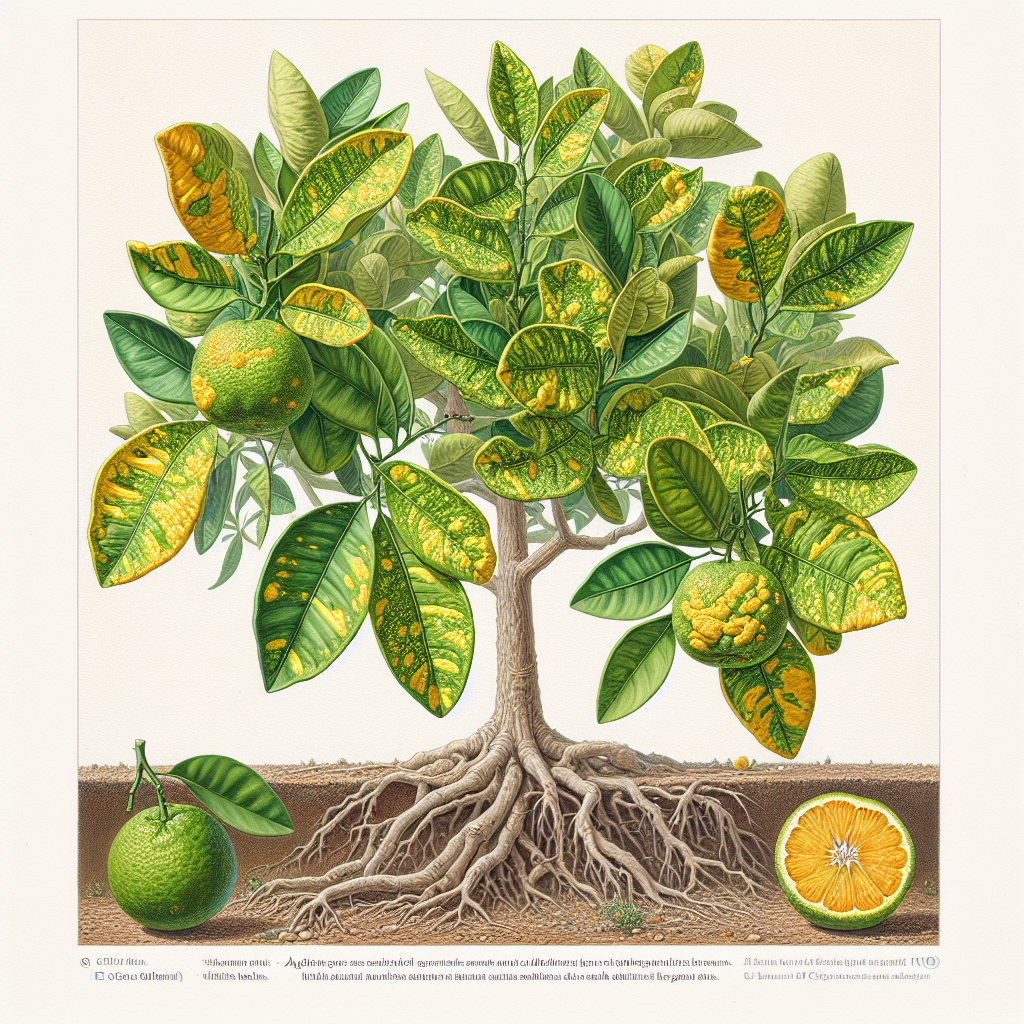
Introduction to Citrus greening (HLB)
Citrus greening, scientifically termed Huanglongbing (HLB) or citrus greening, represents one of the most destructive diseases facing global citrus industries. Caused by the bacterium Candidatus Liberibacter asiaticus (CLas), it is primarily spread by the Asian citrus psyllid, a tiny insect that feeds on citrus phloem tissue. First identified in China in the early 1900s, HLB has since ravaged production in Asia, Africa, and the Americas, leading to billions in economic losses. In Florida alone, over 75% of citrus groves have been impacted since its arrival in 2005, underscoring the urgency for growers to understand and combat this threat.
Unlike many fungal pathogens, HLB is systemic and incurable, plugging the tree's vascular system and disrupting nutrient flow. Symptoms manifest unevenly, often asymmetrically on leaves, making diagnosis tricky without lab confirmation via PCR testing. The disease affects all citrus varieties, from sweet orange to grapefruit, lemon, and lime, rendering entire orchards unproductive within years. This guide provides professional-grade diagnostics, organic management, and prevention tactics tailored for commercial groves and home orchards alike. Early intervention is key—vigilant scouting can preserve yields and extend tree life.
Identifying Symptoms & Damage
Recognizing HLB early is crucial, as symptoms mimic nutrient deficiencies or other stressors like Phytophthora root rot. Key foliar signs include mottling: irregular yellowing or blotchy patterns on leaves, often asymmetrical between leaflets. Mature leaves show vein corking—green veins contrasting pale blade tissue—while new flushes exhibit 'blonding,' a pale, sickly yellow. Fruit symptoms are diagnostic: small, lopsided oranges with green, bitter-tasting rinds and aborted seeds. Infected trees produce fewer, misshapen fruits clustered at branch tips, with aborted seeds visible upon slicing.
Tree-level damage progresses from canopy thinning to dieback, with roots showing decline—stubby, sparse feeder roots susceptible to secondary root rot. Defoliation leads to bare limbs, and severe cases result in tree death within 3-5 years. Differentiate from zinc deficiency (symmetric yellowing) or citrus leafminer damage (serpentine mines). Lab confirmation via PCR on leaf petioles or fruit peduncles is gold standard; field scouts use handheld PCR devices for rapid testing. Yield drops 30-100% in advanced stages, with fruit quality unfit for juice due to bitter flavonoids.
Lifecycle and Progression of Citrus greening (HLB)
HLB's lifecycle hinges on the psyllid vector. Adult psyllids (0.15 inches, mottled brown) lay eggs on new flush; nymphs acquire CLas while feeding, becoming infectious after 1-2 weeks. Latency in trees varies: 3-12 months post-inoculation, symptoms appear on spring flush. Bacteria multiply in phloem, causing callose deposition that blocks transport, leading to starch accumulation in leaves and sugar deficits in roots.
Progression phases: asymptomatic (months), presymptomatic (mottling on 1-10% canopy), symptomatic (20-50% affected, fruit symptoms), and decline (defoliation, death). Trees may survive 5-8 years with management but cease commercial production sooner. Psyllid populations peak in flush cycles (spring/fall), amplifying spread. Bacteria persist lifelong in hosts, with no known natural recovery. Read more on Spring Pest Patrol: Organic AI Strategies to Shield Your Crops from Common Invaders for vector monitoring tips.
Environmental Triggers & Risk Factors
Warm, humid climates (70-95°F, >60% RH) favor psyllid proliferation and bacterial replication; optimal CLas growth at 86°F. High flush production—driven by irrigation, fertilization—boosts psyllid oviposition sites. Poor soil drainage exacerbates root decline, mimicking HLB. Risk factors include proximity to unmanaged citrus, ornamental murraya (psyllid host), and windblown spread up to miles. New plantings from infected nurseries introduce disease; volunteer seedlings act as reservoirs.
Drought-stressed trees show amplified symptoms due to compounded phloem blockage. Regions like Florida, Brazil, and Guangdong suffer most, with HLB absent in cooler citrus areas like California's interior valleys. Integrated pest management (IPM) must address these triggers through flush suppression via balanced nutrition (avoid excess N).
Organic Control & Treatment Plans
No cure exists, so management targets vector suppression and tree support. Organic protocols emphasize citrus psyllids control: Scout weekly with yellow sticky traps (10/acre), apply spinosad or neem oil at nymph thresholds (0.2/10 taps). Kaolin clay barriers deter feeding; release Tamarixia radiata parasitoids (up to 1000/acre). Nutrition: Foliar micronutrients (Zn, Mn, Fe) every 21 days enhance vigor; soil drenches with mycorrhizae bolster roots against secondary Phytophthora.
Remove infected trees promptly (within 1m radius) to curb inoculum. Therapeutic trunk injections of oxytetracycline are non-organic; opt for organic phosphites to induce defenses. Reflective mulches repel psyllids in young groves. For detailed organic IPM, integrate with companion plants like marigold for pest diversion. Yields can stabilize at 50-70% with rigorous execution.
Preventing Citrus greening (HLB) in the Future
Prevention trumps cure: Source certified HLB-free nursery stock, inspected via PCR. Area-wide psyllid control via synchronized sprays reduces inoculum. Plant HLB-tolerant varieties like Sugar Belle mandarin or US-942 rootstock. Maintain orchard sanitation: Destroy cull piles, volunteers. Quarantine new introductions; use windbreaks to limit psyllid drift.
Monitor with AI-driven apps for symptom spotting and psyllid counts. Cover young trees with 50-mesh netting. Long-term: Breed resistant scions/rootstocks; diversify to non-citrus like avocado. Education for small farms prevents backyard reservoirs. See Why Misidentifying Plants Costs Small Farms Thousands - And How AI Camera Diagnosis Fixes It Fast for tech aids.
Crops Most Affected by Citrus greening (HLB)
HLB devastates Rutaceae family, primarily commercial citrus: sweet orange (e.g., Valencia, Navel), grapefruit, tangerines. Trifoliate hybrids show tolerance but still succumb. Ornamentals like calamondin, kumquat serve as reservoirs. Non-citrus like mango unaffected, but close plantings risk psyllid spillover. Global impacts: Brazil lost 35M trees; Florida production halved.