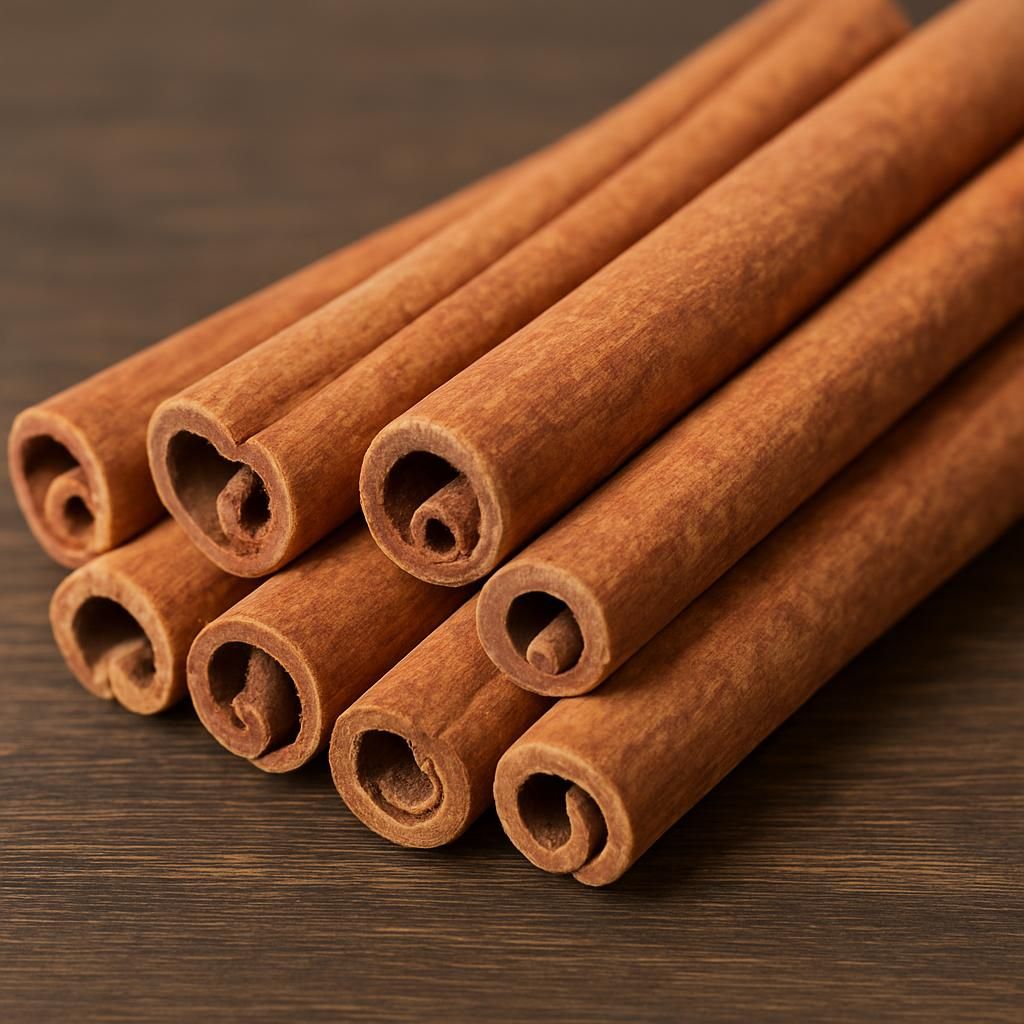
Introduction to Cinnamon (Saigon)
Saigon cinnamon, also known as Vietnamese cinnamon, is derived from the bark of Cinnamomum loureiroi, a species native to Southeast Asia. It is valued by chefs, distillers, and herbalists for its bold, spicy-sweet flavor and exceptionally high essential oil content. Commercial growers target export markets that pay premium prices for thick, reddish-brown quills with strong aroma and low fiber.
Successful production demands a long-term commitment: trees require 5–7 years before the first harvest and can remain productive for 40–60 years with proper management. Because the crop is labor-intensive during harvest and processing, most commercial operations are small to medium scale, often integrated with other tropical spices such as Black Pepper or Cardamom.
Botanical Profile of Cinnamon (Saigon)
Cinnamomum loureiroi is an evergreen tree in the Lauraceae family that reaches 10–15 m at maturity. The bark is rough, gray-brown on the outside and deep reddish-brown inside. Leaves are opposite, leathery, and aromatic when crushed. Small, inconspicuous white flowers appear in axillary panicles, followed by small dark-purple drupes.
The species is distinguished from Ceylon Cinnamon by its thicker bark, higher cinnamaldehyde percentage (often 5–7 %), and more robust growth habit. Saigon cinnamon also differs from Cassia Cinnamon in leaf venation and essential-oil profile, making proper botanical identification critical for nursery stock selection.
Soil, pH, and Climate Requirements for Cinnamon (Saigon)
Saigon cinnamon thrives in deep, well-drained loamy soils rich in organic matter. The plant prefers a slightly acidic pH and consistent moisture without waterlogging. High humidity and protection from strong winds are essential.
| Parameter | Ideal Range | Notes |
|---|---|---|
| Soil Type | Deep sandy loam to clay loam | Good drainage prevents root rot |
| Soil pH | 5.5 – 6.5 | Slightly acidic; lime only if below 5.0 |
| Temperature | 20 – 30 °C (68 – 86 °F) | Minimum 15 °C; frost causes severe damage |
| Annual Rainfall | 1,500 – 2,500 mm | Even distribution preferred |
| Relative Humidity | 70 – 90 % | Critical during flowering and bark peeling |
| Elevation | 0 – 800 m | Higher elevations slow growth |
| Wind Exposure | Sheltered | Windbreaks recommended |
Step-by-Step Planting & Propagation
- Site Preparation: Clear competing vegetation, incorporate 20–30 t/ha well-rotted manure, and install windbreaks using fast-growing species such as Gliricidia.
- Propagation: Use semi-hardwood cuttings 15–20 cm long taken from 2–3-year-old branches. Dip bases in 0.3 % IBA and root in a 1:1 sand-perlite mix under 80 % shade. Rooting occurs in 8–12 weeks.
- Nursery Phase: Transplant rooted cuttings into 25 cm polybags filled with a 2:1:1 soil-sand-compost mix. Maintain 50 % shade for the first 4 months.
- Field Planting: Plant at 2 m × 2 m spacing (2,500 trees/ha) during the onset of the rainy season. Dig 60 cm × 60 cm pits, backfill with topsoil plus 5 kg compost and 100 g rock phosphate.
- Initial Care: Water immediately after planting and apply a 10 cm mulch layer of dried leaves or Coconut husks to conserve moisture.
Care & Maintenance regimes for Cinnamon (Saigon)
Regular weeding, mulching, and balanced nutrition are essential. Pruning shapes the tree for easy bark harvesting and improves light penetration.
| Operation | Frequency | Details |
|---|---|---|
| Watering | Weekly during dry spells | 20–30 L per tree; drip irrigation preferred |
| Fertilizer | Year 1: 3 applications | 100 g NPK 15-15-15 per tree; increase to 500 g by year 5 |
| Fertilizer | Year 3+: 2 applications | 2 kg compost + 200 g ammonium sulfate + 100 g muriate of potash |
| Pruning | Annual (post-harvest) | Remove lower branches to 1 m; thin canopy to 4–6 main stems |
| Weeding | 3–4 times per year | Hand weeding or shallow cultivation; avoid deep hoeing near roots |
| Mulching | Twice yearly | Renew 10 cm organic mulch layer after pruning and before monsoon |
Pests, Diseases & Organic Management
Common insect pests include Aphids, Mealybugs, and Scale insects. Severe infestations are managed with neem oil (0.5 %) or horticultural soap. Spider mites can appear during prolonged dry periods; increasing humidity and releasing predatory mites provides effective biological control.
Fungal issues such as Phytophthora root rot and Collar rot are prevented by ensuring excellent drainage and avoiding over-irrigation. Anthracnose on leaves is suppressed with copper-based sprays and removal of infected debris. Regular sanitation and resistant rootstock selection further reduce disease pressure.
Harvesting, Curing & Optimal Storage
Bark is harvested when trees reach 5–7 years of age. Stems 2–3 cm in diameter are cut at ground level during the rainy season when sap flow is high. Outer bark is scraped away and the inner bark is peeled in long strips. These strips are rolled into quills and shade-dried for 3–5 days until moisture content reaches 12–14 %.
Properly cured quills are stored in cool, dark, well-ventilated rooms inside food-grade jute bags or lined cartons. Avoid stacking more than 1 m high to prevent compression damage. Under optimal conditions (15–20 °C, <65 % RH), Saigon cinnamon retains aroma and color for 18–24 months.
Companion Planting for Cinnamon (Saigon)
Interplanting with leguminous shade trees such as Gliricidia or Pigeon pea improves soil nitrogen and provides wind protection. Low-growing herbs like Thai Basil or Rosemary help repel Aphids and Thrips. Avoid planting near Banana because of shared nematode susceptibility. Strategic companion planting can increase overall system resilience while diversifying farm income.
Learn more about cinnamon cultivation on Wikipedia
Read practical tips on small-farm resilience during weather shifts