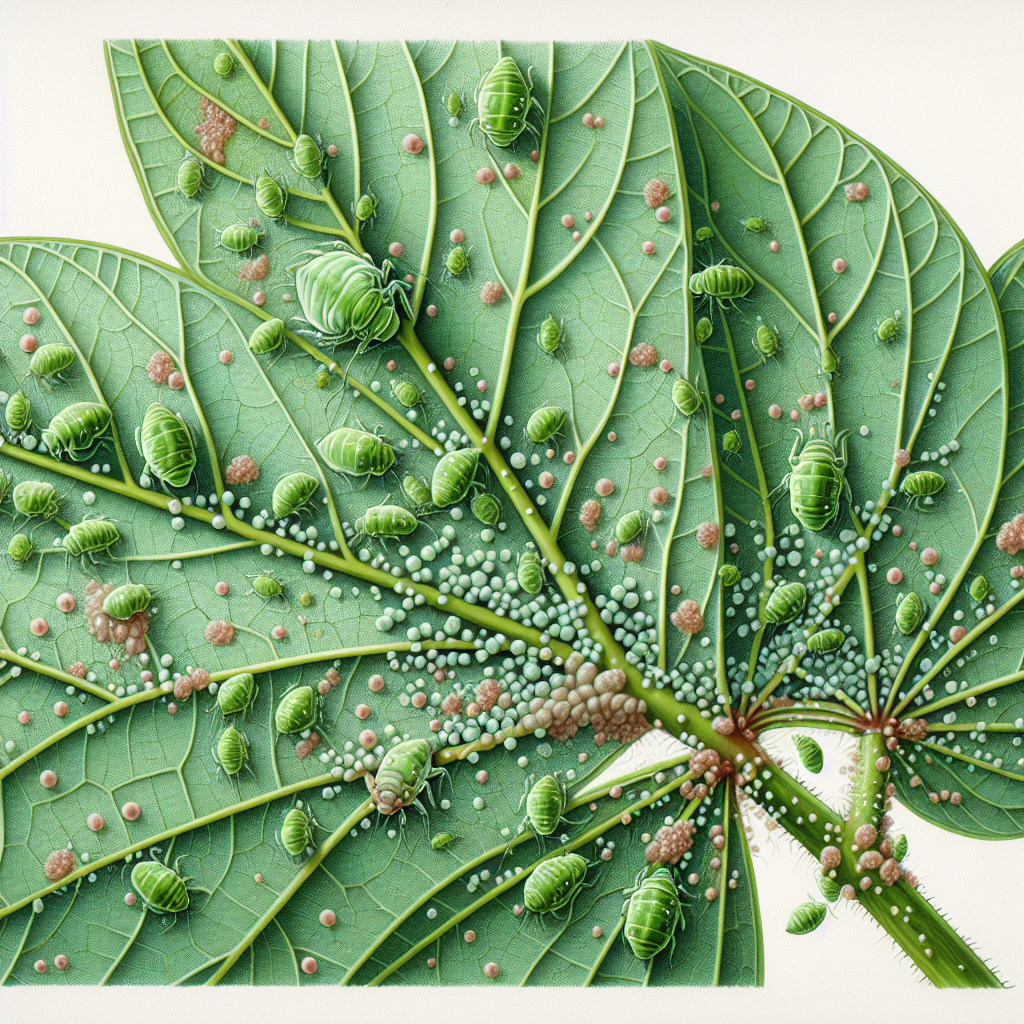
Introduction to Cassava green mite
The cassava green mite, scientifically known as Mononychellus tanajoa, represents one of the most devastating pests affecting Cassava (crop) production worldwide, particularly in sub-Saharan Africa where cassava is a staple food for over 800 million people. First identified in Brazil in the late 19th century, this mite rapidly spread to Africa in the 1970s via contaminated planting material, leading to widespread crop devastation. Adults measure just 0.3-0.5 mm in length, with pale green to yellowish bodies and translucent legs, making them barely visible to the naked eye without magnification.
Infestations reduce leaf area by up to 80%, slashing photosynthetic capacity and tuber yields by 20-100% depending on severity and duration. In Africa alone, annual losses exceed 1.5 million tons of cassava roots, valued at hundreds of millions of dollars, exacerbating food insecurity in vulnerable regions. Unlike spider mites, which produce webbing, cassava green mites colonize the underside of leaves without silk, focusing feeding on the chlorenchyma layer. Climate change, with increasing drought frequency, amplifies outbreaks, underscoring the urgency for integrated pest management (IPM) strategies. This guide provides farmers with diagnostic tools, lifecycle insights, and proven organic controls to safeguard harvests.
Identifying Symptoms & Damage
Early detection hinges on recognizing subtle signs before visible damage escalates. Initial symptoms appear on older, lower leaves as pale green speckling or bronzing on the upper surface, corresponding to dense mite colonies underneath. Use a 10x hand lens to spot the mites: clusters of tiny, greenish-yellow specks moving slowly amid stippled leaf tissue.
As feeding intensifies, leaves exhibit interveinal chlorosis—yellowing between veins—progressing to necrosis where tissue turns brown and brittle. Severely affected leaves curl upwards, become leathery, and drop prematurely, exposing stems and reducing canopy cover. Damage mimics drought stress but diagnostic confirmation comes from underside inspection: heavy mite populations (over 100 mites per cm²) with eggs, nymphs, and adults signal active infestation.
Yield impacts correlate directly with leaf loss: 10-20% foliage damage cuts root yield by 15-30%; over 50% loss halves production. Differentiate from mites or nutrient deficiencies by the absence of webbing and presence of mite feces (tiny black specks). In mixed pest scenarios, monitor for concurrent aphids or whiteflies, which can exacerbate damage through honeydew and sooty mold. Regular scouting—weekly checks on 20-30 plants per field quadrant—enables timely intervention, preventing economic losses exceeding $500 per hectare.
Lifecycle and Progression of Cassava green mite
Mononychellus tanajoa completes its lifecycle in 8-20 days, accelerating under optimal warm, dry conditions. Females lay 20-60 eggs singly on leaf undersides, hatching into larvae within 2-3 days. Larvae pass through protonymph, deutonymph, and adult stages, molting three times; all mobile stages feed voraciously on leaf cells, extracting sap via stylets.
Adults live 15-30 days, with females dispersing via wind or on infested cuttings. Parthenogenetic reproduction—unfertilized eggs developing into females—enables explosive population growth, with densities reaching 10,000 per leaf. Generations overlap continuously in tropics, peaking during dry seasons when up to 50 generations occur annually.
Progression follows a predictable pattern: eggs (transparent, 0.1 mm) first, then larvae (pale, six legs), nymphs (eight legs, green), and adults (females larger, males rare). High humidity (>80%) drowns mites and favors predators; drought (<40% RH) triggers outbreaks. Understanding this rapid cycle justifies frequent monitoring and early controls to disrupt population buildup before exponential phases.
Environmental Triggers & Risk Factors
Cassava green mite thrives in hot, dry climates: optimal at 28-32°C and 20-50% relative humidity, with populations crashing above 90% RH or below 15°C. Drought stress on cassava—common in semi-arid tropics—weakens plant defenses, increasing susceptibility; irrigated fields show 70% lower infestations.
Key risk factors include monoculture plantations (>1 ha continuous cassava), poor variety choice (susceptible cultivars like TMS 30572), and contaminated stem cuttings harboring mites. Wind currents spread mites up to 100 km, while farm tools and livestock facilitate local dispersal. Soil fertility deficits, especially potassium, correlate with higher infestations, as nutrient-stressed plants emit volatiles attracting mites.
Climate variability amplifies risks: El Niño-induced droughts in East Africa spiked outbreaks in 2015-2016, doubling yield losses. Proximity to infested fields (>500m buffer recommended) and lack of refugia (e.g., no intercropping) heighten vulnerability. For more on hyper-local weather impacts, see Why 80% of Small Farms Battle Weather Disasters - And How Hyper-Local AI Forecasts Can Save Your Harvest.
Organic Control & Treatment Plans
Organic management emphasizes IPM, layering biological, cultural, and mechanical tactics for sustainable suppression. Biological control anchors success: release predatory mites like Phytoseiulus longipes or Neoseiulus idaeus at 10 predators per infested leaf; populations establish rapidly, reducing mites by 90% within 4 weeks. Lady beetles (Stethorus spp.) and lacewings devour mites; conserve them by avoiding broad-spectrum sprays.
Cultural practices disrupt lifecycles: prune and destroy lower infested leaves weekly, burying debris >50 cm deep. Intercrop with cowpea or pigeon pea to boost humidity and predators; mulch with 5-10 cm organic matter retains soil moisture, deterring mites. Apply neem oil (2-5 ml/L) or garlic-chili extracts weekly during outbreaks—efficacy reaches 70% by suffocating mites and repelling via azadirachtin.
Resistant varieties like TMS 92B/00061 or NR 87184 yield 30-50% higher under infestation; source from IITA or national programs. Sulfur dust (10-20 kg/ha) provides contact control without residues. Treatment plan: Scout weekly; act at 50 mites/leaf—combine predators + neem; reapply biweekly. Rotate tactics to prevent resistance. For companion planting synergies, check Why Companion Planting Feels Like Guesswork for Small Farms - And How AI Makes It Foolproof. Success rates exceed 80% with consistent IPM.
Preventing Cassava green mite in the Future
Prevention outperforms cure through proactive strategies. Select certified, mite-free stem cuttings; hot-water treat (49°C for 20 min) or inspect under magnification before planting. Plant resistant varieties and diversify fields: space rows 1x1 m, intercropping with marigold or thyme repels mites via allelochemicals.
Maintain vigor with balanced fertilization (100 kg N, 50 kg P, 150 kg K/ha) and irrigation during dry spells—healthy plants tolerate 5x higher mite loads. Establish borders of Eriophyid mites predators or trap crops like okra. Rotate cassava with non-hosts (e.g., corn, soybeans) every 2 years to break cycles.
Farm hygiene: clean tools with 10% bleach; quarantine new plants. Monitor via sticky traps and apps for early warnings. Community action—synchronized planting across farms—curbs spread. Long-term, breed for multi-pest resistance and promote agroforestry for microclimate stability. These measures sustain yields, minimizing future outbreaks to <5% incidence.
Crops Most Affected by Cassava green mite
Primarily targeting cassava, M. tanajoa occasionally infests related Euphorbiaceae like sweet potato and yam, though damage remains minor (5-10% yield loss). In Africa, 90% of cases occur on cassava varieties such as local landraces and improved hybrids. No significant impact on other staples like rice, corn, or potato; host specificity limits spread. In mixed systems, proximity to cassava heightens risks for taro. Global hotspots: Nigeria, Ghana, Thailand. Focus protection on cassava for optimal ROI.