Introduction to Carrot (Tonda di Parigi)
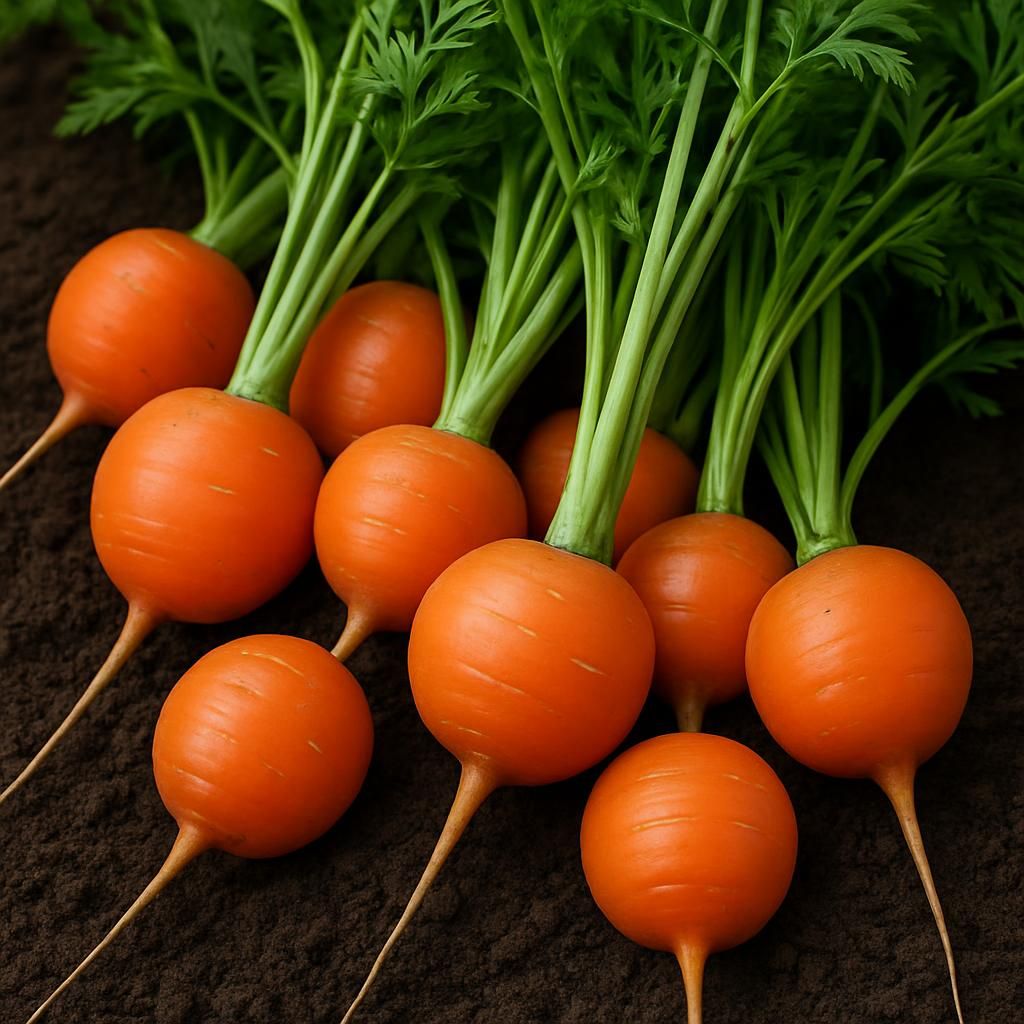
Tonda di Parigi is a French heirloom variety of carrot distinguished by its small, round, globe-shaped roots that typically reach 1.5 to 2 inches in diameter. Developed for early production and suitability in shallow or heavy soils, this cultivar offers exceptional sweetness and a crisp yet tender texture that excels in both fresh eating and cooking applications. Professional growers and home gardeners alike favor Tonda di Parigi for its rapid maturity, typically ready in 50-60 days, and its ability to produce high-quality roots even in conditions where longer, tapered varieties struggle.
The variety's compact growth habit makes it particularly valuable for intensive planting systems, raised beds, and container culture where soil depth may be limited. Its resistance to forking and splitting under variable moisture conditions contributes to consistent market-quality produce. As consumer demand increases for specialty and heirloom vegetables with superior flavor profiles, Tonda di Parigi continues to gain prominence in both small-scale organic operations and larger commercial settings focused on direct-to-consumer sales.
Botanical Profile of Carrot (Tonda di Parigi)
Tonda di Parigi belongs to the Apiaceae family and shares the same botanical characteristics as other cultivated carrots. The plant produces a rosette of finely divided, feathery leaves that emerge from a central crown, with the edible portion consisting of an enlarged taproot that develops its characteristic round shape due to genetic selection for shortened root length and increased diameter.
The root exhibits a bright orange coloration throughout the cortex and core, with minimal green shoulder development when properly hilled. The smooth skin requires minimal cleaning at harvest, and the absence of a pronounced taper reduces breakage during mechanical or hand harvesting. Flowers, when allowed to develop, form typical umbels of small white blossoms that attract beneficial pollinators, though most commercial production focuses on vegetative root harvest before bolting occurs.
Soil, pH, and Climate Requirements for Carrot (Tonda di Parigi)
Successful cultivation of Tonda di Parigi requires well-drained, loose soil free of stones and compaction that could cause root forking or deformation. The variety performs optimally in sandy loam or silt loam textures with high organic matter content that maintains consistent moisture without waterlogging. Raised beds or deep containers with at least 8-10 inches of soil depth provide ideal growing conditions for this globe-shaped cultivar.
| Parameter | Ideal Range | Notes |
|---|---|---|
| Soil pH | 6.0 - 6.8 | Slightly acidic to neutral; avoid lime applications that push pH above 7.0 |
| Soil Texture | Sandy loam to silt loam | Stone-free, loose structure critical for round root development |
| Soil Temperature | 55-75°F (13-24°C) | Optimal germination at 60-70°F (16-21°C) |
| Air Temperature | 60-75°F (16-24°C) | Cool-season crop; tolerates light frost |
| Organic Matter | 3-5% | Well-rotted compost improves structure and moisture retention |
| Drainage | Excellent | Raised beds recommended in heavy soils |
Tonda di Parigi demonstrates good cold tolerance, allowing for early spring planting as soon as soil can be worked and successive plantings through late summer for fall harvests. In warmer climates, partial shade during peak summer heat helps maintain root quality and prevents bitterness development.
Step-by-Step Planting & Propagation
Begin soil preparation 2-3 weeks before planting by incorporating well-aged compost to a depth of 8-10 inches, removing all rocks, clods, and debris that could impede root expansion. Create a fine, level seedbed with good tilth to ensure uniform seed-to-soil contact essential for the small seeds of Tonda di Parigi.
Sow seeds directly in the garden 1/4 to 1/2 inch deep in rows spaced 12-18 inches apart, with seeds placed 1-2 inches apart within the row. Because carrot seeds are slow to germinate (typically 7-14 days), maintain consistent surface moisture during this period using light daily irrigation or row covers. Thin seedlings to 2-3 inches apart once they reach 2 inches in height to allow proper root development without competition.
Successive plantings every 2-3 weeks extend the harvest window from early summer through late fall. In regions with mild winters, fall plantings can overwinter for early spring harvests. Pre-germination techniques such as seed tape or pelleted seed improve spacing accuracy and reduce thinning labor for commercial-scale plantings.
Care & Maintenance regimes for Carrot (Tonda di Parigi)
Consistent moisture management is critical throughout the growing season, particularly during root enlargement, to prevent cracking and maintain sweetness. Apply approximately 1 inch of water per week through drip irrigation or soaker hoses positioned at the soil surface to minimize foliar disease pressure. Mulching with clean straw or shredded leaves helps conserve moisture, suppress weeds, and maintain even soil temperatures.
| Growth Stage | Water Schedule | Fertilizer Application | Pruning/Thinning |
|---|---|---|---|
| Germination (0-14 days) | Light daily misting to keep surface moist | None; avoid high-nitrogen starters | None |
| Seedling (2-4 weeks) | 0.5 inch every 3-4 days | Side-dress with balanced organic fertilizer (NPK 5-5-5) at 1 lb per 100 sq ft | Thin to 2-3 inches spacing |
| Vegetative (4-6 weeks) | 0.75-1 inch per week | Light compost tea application every 3 weeks | Remove weeds; maintain mulch layer |
| Root Development (6+ weeks) | 1 inch per week, consistent moisture | Avoid nitrogen; use low-nitrogen, high-potassium organic amendments if deficiency symptoms appear | No pruning required; remove flower stalks if bolting occurs |
Weed control through shallow cultivation or mulching prevents competition for nutrients and moisture. Avoid high-nitrogen fertilizers after initial establishment, as excess nitrogen promotes excessive foliage at the expense of root quality. Monitor for signs of nutrient deficiency, particularly boron, which can cause internal browning in roots.
Pests, Diseases & Organic Management
Tonda di Parigi faces similar pest pressures as other carrot varieties, with carrot rust fly representing the primary insect threat in many regions. Adult flies lay eggs near the crown, and larvae tunnel into roots causing cosmetic damage and entry points for secondary rots. Floating row covers installed at planting provide effective exclusion, while beneficial nematodes applied to soil can reduce larval populations.
aphids and leafhoppers may colonize foliage, potentially transmitting viral diseases, though Tonda di Parigi shows reasonable tolerance to common carrot viruses. Regular scouting and introduction of predatory insects such as lady beetles and lacewings provide effective biological control. Root-knot nematodes can cause galling on roots in infested soils; solarization, cover cropping with marigold, and long rotations with non-host crops help manage populations.
Common diseases include alternaria leaf spot and powdery mildew, both of which are mitigated through proper spacing for air circulation, drip irrigation to keep foliage dry, and removal of crop debris at season's end. Pythium and other soil-borne pathogens causing damping-off are prevented through sterile seed-starting mixes for transplants (when used) and avoidance of overwatering. Crop rotation away from other Apiaceae family members for 3-4 years reduces disease buildup.
Harvesting, Curing & Optimal Storage
Tonda di Parigi roots reach optimal harvest size at 1.5-2 inches in diameter, typically 50-60 days from sowing. Harvest by loosening soil with a digging fork and pulling gently to avoid breakage. Because of the variety's round shape and shallow rooting depth, mechanical harvest with specialized equipment or careful hand pulling minimizes damage compared to longer carrot types.
Post-harvest, remove tops immediately to prevent moisture loss and wilting, leaving 1/2 inch of stem if desired for bunching. Wash roots gently in cool water to remove soil, then allow to surface-dry before storage. For short-term fresh market sales, bunch in groups of 6-8 roots with tops removed or trimmed.
For long-term storage, maintain roots at 32-38°F (0-3°C) with 95-100% relative humidity. Properly stored Tonda di Parigi roots maintain quality for 4-6 months. Avoid storing near ethylene-producing fruits such as apples, which can induce bitterness. In mild winter climates, mulch-covered in-ground storage provides fresh harvest access throughout the cold season.
Companion Planting for Carrot (Tonda di Parigi)
Strategic companion planting enhances Tonda di Parigi production through pest deterrence, improved soil health, and efficient space utilization. onion and garlic planted in alternating rows repel carrot rust fly through strong aromatic compounds while benefiting from the carrots' ability to loosen soil for bulb development.
lettuce and radish make excellent companions as their shallow root systems do not compete with developing carrot roots, and their rapid maturity allows for succession planting in the same space. tomato planted nearby can provide light shade during hot periods while carrots help aerate soil around tomato root zones.
Avoid planting near dill or other Apiaceae family members that may cross-pollinate or attract shared pests. marigold borders provide season-long nematode suppression and attract beneficial insects. peas and beans contribute nitrogen to the soil when used in rotation, though they should not be interplanted during active carrot growth to avoid shading.
Spring Companion Planting: 8 Organic Pairings to Maximize Small Farm Yields offers additional strategies for integrating Tonda di Parigi into diverse planting schemes that enhance overall farm resilience and productivity.