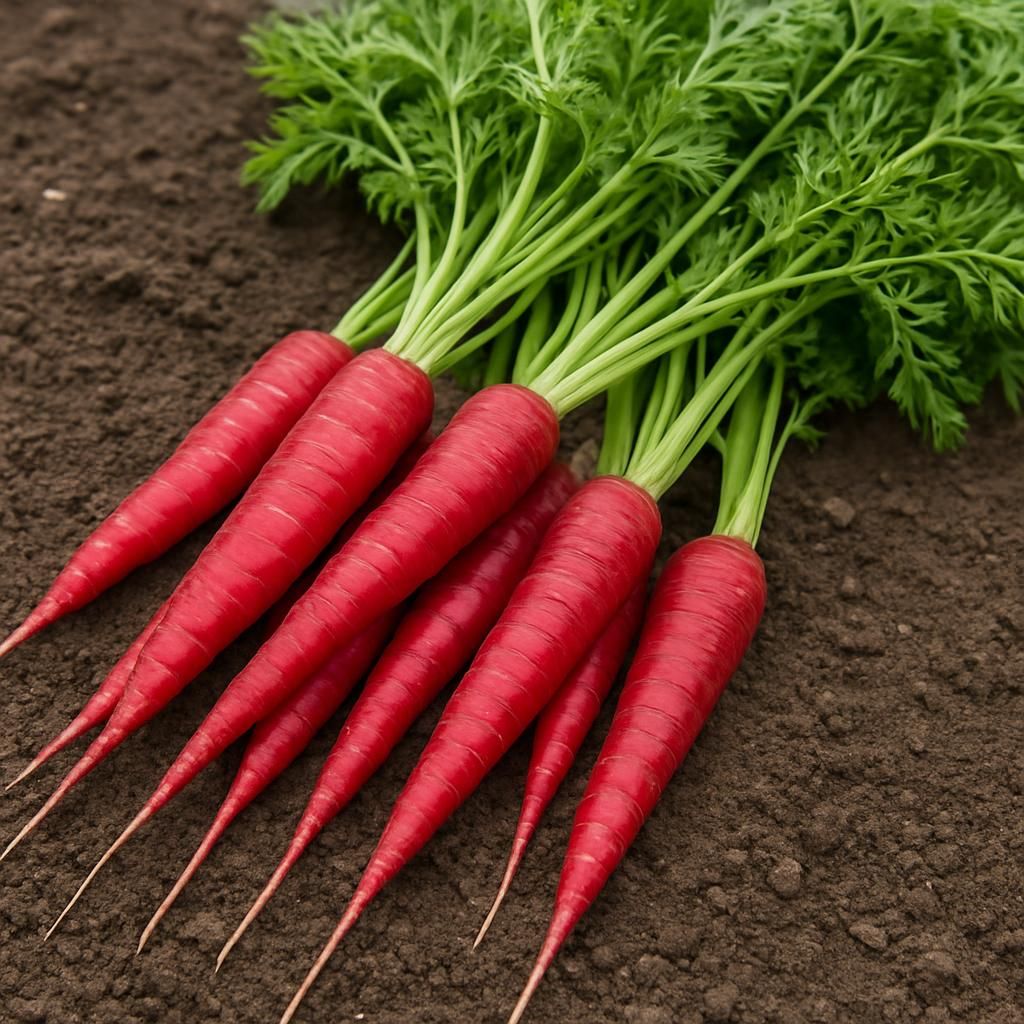
Introduction to Carrot (Atomic Red)
Atomic Red carrots stand out among root vegetables for their striking crimson pigmentation and elevated beta-carotene and lycopene content. Developed through selective breeding programs targeting high-antioxidant cultivars, this variety delivers both visual appeal and nutritional density that appeals to fresh-market and processing buyers. Growers value its reliable performance in temperate climates and its resistance to common bolting issues when sown at appropriate times.
Commercial producers often target Atomic Red for specialty produce boxes and juicing operations because the roots retain color after cooking. Home gardeners appreciate the variety’s sweet flavor and the novelty of harvesting vividly colored roots that also provide higher levels of health-promoting compounds than standard orange carrots. With proper site preparation and consistent moisture management, Atomic Red can yield 25–35 tons per hectare under optimal conditions.
Botanical Profile of Carrot (Atomic Red)
Atomic Red belongs to the Apiaceae family and exhibits the classic biennial life cycle of cultivated carrots. During the first season, the plant develops a fleshy taproot rich in anthocyanins that give the characteristic red hue. The foliage consists of finely divided, feathery leaves arranged in a basal rosette that efficiently captures sunlight for photosynthesis.
The root shape is typically tapered and cylindrical, reaching 15–20 cm in length with a diameter of 3–5 cm at the shoulder. Internally, the core is smaller than many orange varieties, contributing to a crisp texture and concentrated sweetness. Flowering occurs in the second year after vernalization, producing compound umbels of small white flowers that attract pollinators and beneficial insects.
Soil, pH, and Climate Requirements for Carrot (Atomic Red)
Atomic Red performs best in deep, well-drained sandy loam or loam soils free of stones and compaction that could cause forking. Soil should be worked to a fine tilth to a depth of at least 30 cm to accommodate straight root development. Avoid heavy clay soils unless heavily amended with organic matter to improve drainage and structure.
| Parameter | Ideal Range | Notes |
|---|---|---|
| Soil Type | Sandy loam to loam | Deep, stone-free, well-drained |
| Soil pH | 6.0–6.8 | Slightly acidic to neutral; avoid alkaline |
| Soil Temperature | 7–24 °C (45–75 °F) | Optimal germination 10–21 °C |
| Air Temperature | 15–24 °C (59–75 °F) | Cool-season crop; tolerates light frost |
| Spacing (in-row) | 5–8 cm | Thin seedlings to final spacing |
| Row Spacing | 30–45 cm | Allows mechanical cultivation |
| Organic Matter | 3–5 % | Improves water retention and structure |
Step-by-Step Planting & Propagation
Site Selection & Preparation: Choose a location with full sun and previous crops that are not in the Apiaceae family to reduce disease carryover. Incorporate well-rotted compost or aged manure at 20–30 t/ha and perform a soil test to adjust pH if necessary.
Seed Treatment: Atomic Red seed is small; soak in water for 12–24 hours or use a priming treatment to improve uniformity. Avoid chemical treatments unless certified organic standards permit specific seed coatings.
Sowing Time: Direct seed 2–3 weeks before the last expected frost in spring or 8–10 weeks before first frost for fall harvest. In mild climates, successive sowings every 3 weeks extend the harvest window.
Sowing Method: Use precision seeders or pelleted seed for uniform depth of 6–12 mm. Sow in moist soil and cover lightly; avoid burying seed deeper than 1.5 cm.
Thinning: When seedlings reach 5 cm, thin to 5–8 cm in-row spacing. Use thinned seedlings in salads rather than discarding.
Irrigation at Establishment: Maintain consistent moisture for the first 10–14 days to ensure even germination. Light, frequent watering is preferable to heavy applications that can crust the soil surface.
Care & Maintenance regimes for Carrot (Atomic Red)
Consistent moisture and balanced nutrition are critical for straight, sweet roots. Over-fertilization with nitrogen promotes lush tops at the expense of root quality, while insufficient potassium can reduce sweetness and color intensity.
| Growth Stage | Water Schedule | Fertilizer Schedule | Pruning / Thinning Schedule |
|---|---|---|---|
| Germination (0–14 days) | Light daily watering to keep top 2 cm moist | None; pre-plant incorporation only | None |
| Seedling (2–6 weeks) | 2–3 cm per week; maintain even moisture | Side-dress 20 kg N/ha at 4 weeks if needed | Thin to 5–8 cm spacing at 3–4 weeks |
| Vegetative (6–10 weeks) | 2.5–3.5 cm per week; avoid water stress | Apply 40–60 kg K₂O/ha; avoid excess N | Remove weeds; no pruning required |
| Root Bulking (10–14 weeks) | 3–4 cm per week; reduce 1 week before harvest | Optional light compost tea; cease N applications | Monitor for pests; no pruning |
Pests, Diseases & Organic Management
Atomic Red can be affected by several common carrot pests and diseases. Carrot rust fly larvae tunnel into roots, causing cosmetic damage and entry points for secondary rots. Aphids can transmit viruses; regular scouting and releases of lady beetles provide effective biological control.
Fungal issues such as Alternaria leaf spot and powdery mildew are managed through crop rotation, resistant cultivars, and timely applications of approved organic fungicides like copper hydroxide or potassium bicarbonate. Root-knot nematodes are suppressed by solarization, cover cropping with marigolds, and maintaining high organic matter.
Harvesting, Curing & Optimal Storage
Harvest when roots reach market size (typically 15–18 cm) and show deep red coloration at the shoulder. Pull gently in moist soil to avoid breakage. Tops may be trimmed to 1–2 cm or left intact for bunching depending on market requirements.
Curing is minimal; allow roots to air-dry for 2–4 hours in shade before washing. Store washed roots at 0–2 °C and 95–100 % relative humidity for up to 5–6 months. Avoid temperatures below –1 °C to prevent freezing injury. For long-term storage, pack in perforated plastic bags or hydro-cooled bins.
Companion Planting for Carrot (Atomic Red)
Carrots pair well with Onion and Garlic because alliums repel carrot rust fly. Lettuce and Radish mature quickly and provide light shade for young carrot seedlings. Avoid planting near Dill or Parsley as they belong to the same family and may compete for resources or share pests.
Tomato and Cucumber benefit from the deep taproots of carrots that improve soil aeration, while carrots appreciate the partial shade provided by taller tomato plants. Include Nasturtium as a trap crop for aphids and to attract beneficial insects throughout the season.