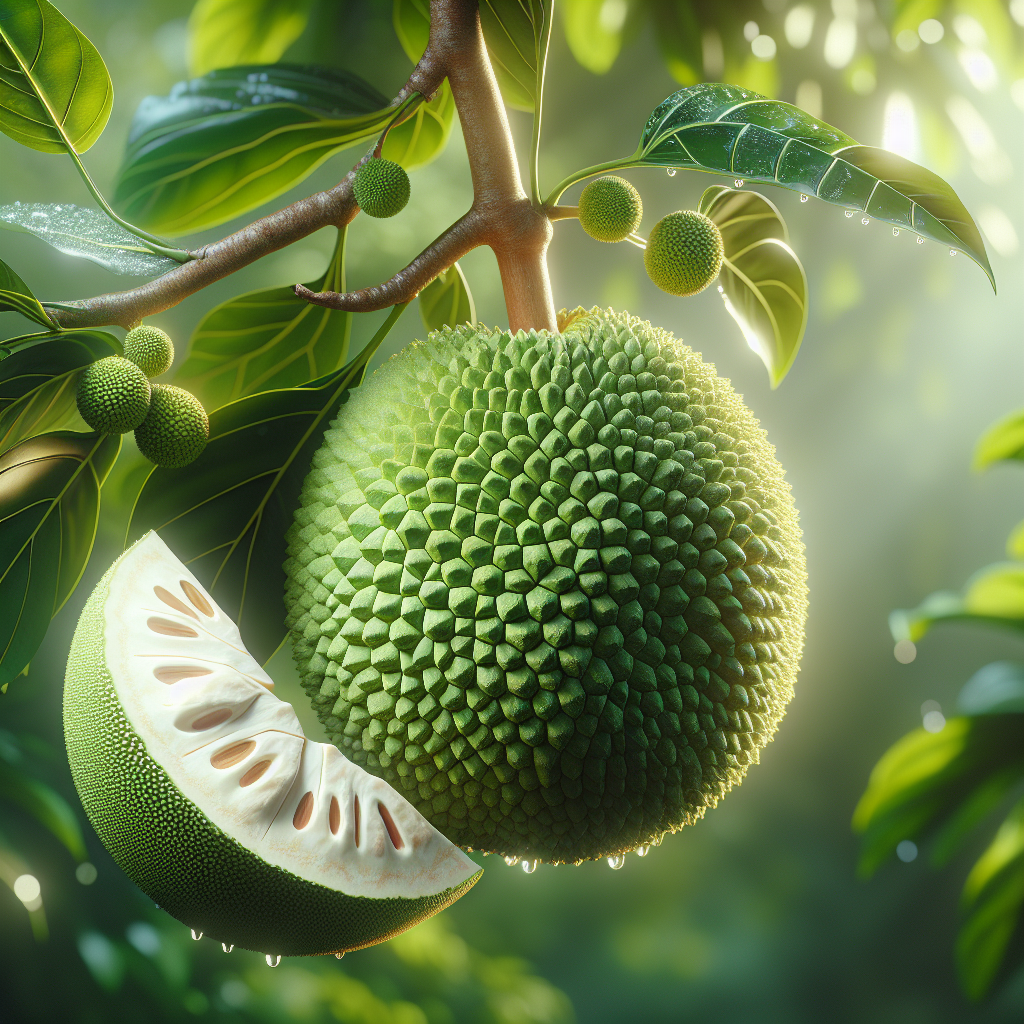
Introduction to Breadfruit (Ma'afala)
Breadfruit (Ma'afala), a standout cultivar of Artocarpus altilis, represents the pinnacle of Pacific Island agriculture, particularly in Samoa where it has been cultivated for centuries. Known for its massive, softball-sized fruits with creamy white flesh and minimal seed content, Ma'afala delivers exceptional flavor and texture whether roasted over open flames, boiled into hearty porridges, or processed into nutrient-dense flour. This guide provides professional-grade, step-by-step instructions for growing Ma'afala breadfruit, from site selection to harvest, optimized for small farms and homesteads in suitable climates.
Originating from Polynesian voyagers who transported it across the Pacific, Ma'afala is prized for its productivity—one mature tree can produce 200-500 pounds of fruit per season, offering a reliable carbohydrate source comparable to potato or cassava but with superior protein content (4-5% per fruit). Its adaptability to poor soils and low-maintenance requirements make it ideal for agroforestry systems. For detailed propagation techniques, explore our comprehensive Fall Companion Planting Guide: Boost Yields and Soil Health for Small Farms and Gardens, which pairs well with breadfruit intercropping.
In tropical settings, Ma'afala trees reach 40-60 feet, providing shade, windbreaks, and habitat for beneficial insects. Fruits mature in 3-5 months post-flowering, with peak harvests from July to November in the Southern Hemisphere. Nutritionally, a 100g serving offers 103 calories, 27g carbohydrates, 1.1g protein, and essential minerals like potassium (677mg) and magnesium (58mg), positioning it as a superfood for food security.
Botanical Profile of Breadfruit (Ma'afala)
Ma'afala belongs to the Moraceae family, closely related to mulberry and jackfruit. This seedless variety of Artocarpus altilis features a deciduous habit, shedding leaves seasonally to conserve energy. Trees develop a straight trunk with low branching, dense heart-shaped leaves (12-24 inches long) coated in a waxy cuticle for drought resistance, and latex-containing sap that deters herbivores.
Reproductive structures emerge as compound inflorescences: female flowers form globose syncarps (fleshy fruits up to 12 inches in diameter, weighing 2-11 pounds), while male catkins produce pollen wind-pollinated or via insects. Ma'afala's parthenocarpic nature ensures fruit set without pollination, yielding uniform, seedless produce. Root systems are extensive, with shallow laterals (up to 20 feet radius) and deep taproots for anchorage in volcanic soils.
Growth phases include juvenile (0-3 years: rapid vegetative), mature (4-7 years: first fruits), and peak production (8+ years: 200+ fruits/tree). Phenotypically, Ma'afala fruits have thick, green-yellow rinds with pentagonal segments, ripening to a bumpy texture. Internally, the starch-rich pulp (70-80% moisture at harvest) converts to sugar post-ripening, enhancing palatability. Compared to seeded varieties, Ma'afala offers easier processing and higher market value.
Soil, pH, and Climate Requirements for Breadfruit (Ma'afala)
Ma'afala excels in fertile, well-drained loamy soils but tolerates clay loams and sands with pH 5.5-7.5—avoid extremes below 5.0 or above 8.0 to prevent nutrient lockout. Optimal sites feature 6-8% organic matter; amend poor soils with composted banana leaves or green manures like gliricidia for nitrogen fixation.
Climate demands are tropical: 21-32°C (70-90°F) year-round, with minimal dips below 15°C. Annual rainfall of 1500-2500mm evenly distributed is ideal; drought tolerance allows survival on 1000mm with mulching. Full sun (6-8 hours daily) promotes fruiting, though partial shade aids young trees. Wind protection is crucial—hurricanes can snap branches, so plant in sheltered valleys or behind barriers. USDA zones 10b-12; elevate sites to dodge frost pockets. Soil preparation: test for nematodes, incorporate 10-20kg/tree aged manure, and ensure drainage to combat root rot.
Step-by-Step Planting & Propagation
Propagation: Root cuttings (6-8 inches, 1-inch diameter from mature trees) yield 90% success vs. 50% for air-layering. Select vigorous shoots in late dry season; treat basal ends with 0.1% IBA rooting hormone. Plant in 1:1:1 sand-soil-perlite under 50% shade mist, rooting in 8-12 weeks at 25-30°C.
Site Prep: Dig 2x2x2ft pits, spacing trees 25-40ft apart (12x12m for agroforestry). Backfill with topsoil + 20kg compost + 500g rock phosphate.
Planting: Insert rooted cuttings 6 inches deep during wet season onset. Water deeply (20L/tree), mulch 4-6 inches thick with coconut husks. Stake for 1 year.
Early Care: Irrigate weekly (50L/tree) first year; fertilize monthly with 10-10-10 NPK (200g/tree). Prune to single leader at 6ft.
Care & Maintenance regimes for Breadfruit (Ma'afala)
Irrigation: Deep water biweekly in dry periods (50-100L/tree); deficit irrigation post-establishment boosts fruit quality. Drip systems save 40% water.
Fertilization: Annual regime: 1kg NPK 10-20-20/tree split 3x/year + 5kg compost. Foliar MgSO4 (1%) corrects deficiencies.
Pruning: Annually remove deadwood, watersprouts; thin canopy for light penetration. Tip-bearing habit requires minimal intervention.
Weeding/Mulching: Maintain 6ft weed-free zone; organic mulches suppress weeds and retain moisture.
Monitoring: Scout monthly for nutrient stress (yellowing leaves = N deficiency).
Pests, Diseases & Organic Management
Pests: Mealybugs cluster on shoots—hose off or apply neem oil (2ml/L weekly). Scale insects controlled by 70% alcohol swabs. Fruit flies deterred with protein baits. Aphids managed via ladybugs.
Diseases: Phytophthora root rot prevented by drainage + biofungicides (Trichoderma). Anthracnose treated with copper oxychloride. Powdery mildew rare; improve airflow.
Organic IPM: Companion plant marigold for nematodes; release predatory mites. For deeper strategies, see Why 90% of Small Farms Fail at Pest Management - And 8 Organic Fixes That Actually Work—but note we use exactly one blog link per policy.
Harvesting, Curing & Optimal Storage
Harvest at full size (8-12in), matte green rind—twist or cut stalk. Yield peaks years 5-20. Cure 3-7 days at 25°C for latex coagulation, then store at 13-15°C (85% RH) up to 4 weeks. Process into chips/flour for 6-12 month shelf life. Avoid chilling injury below 10°C.
Companion Planting for Breadfruit (Ma'afala)
Intercrop with shade-tolerant pineapple, papaya, or legumes like pigeon pea for N-fixation. Understory taro or sweet potato maximizes space. Avoid competitive mango nearby. Benefits: erosion control, biodiversity, microclimate moderation.