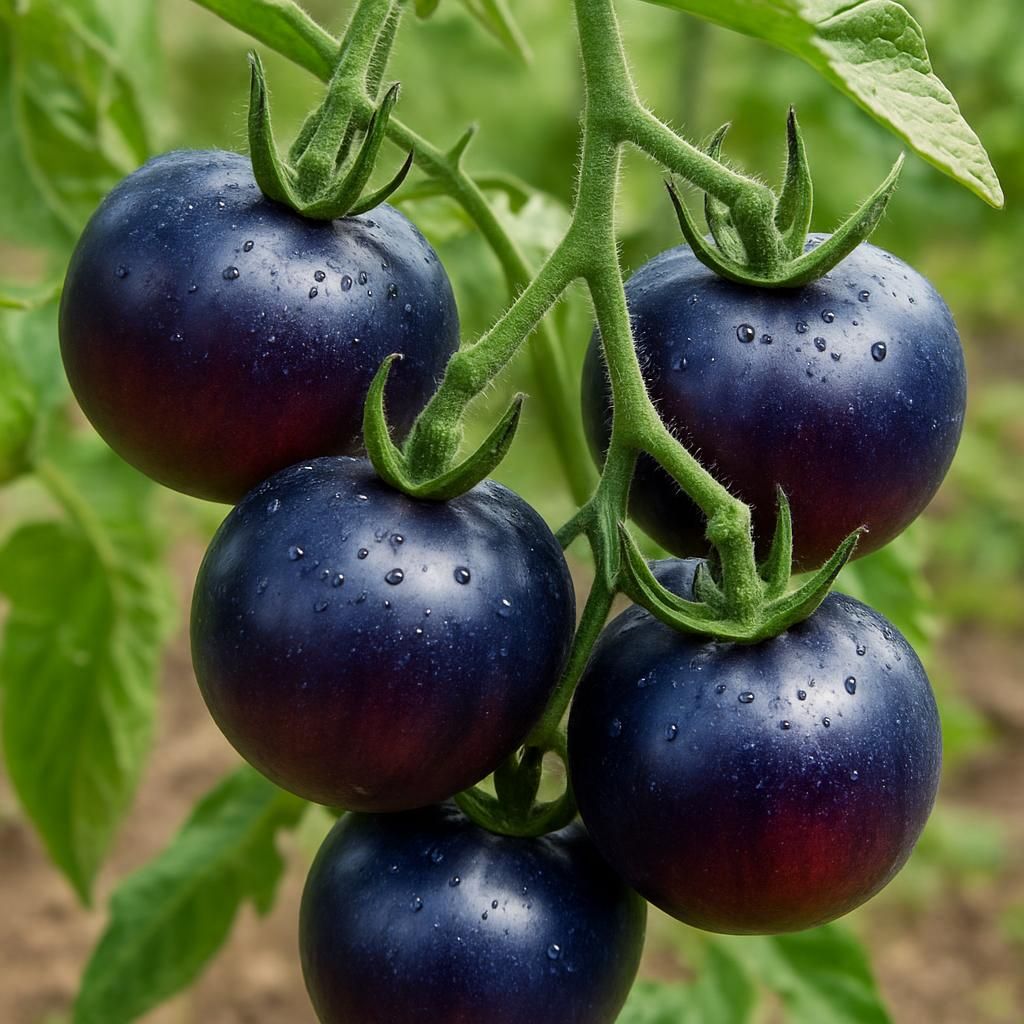
Introduction to Bosque Blue Tomato
Bosque Blue Tomato stands out among modern heirloom varieties for its vivid indigo pigmentation and robust growth habit. Developed through selective breeding to concentrate anthocyanins in the fruit skin and flesh, this tomato delivers both visual drama and elevated antioxidant levels. Gardeners and commercial growers alike value its ability to thrive in diverse climates while producing flavorful, crack-resistant fruit. Its striking appearance makes it a favorite for farmers' markets and specialty produce programs.
Botanical Profile of Bosque Blue Tomato
Bosque Blue Tomato belongs to the nightshade family (Solanaceae) and exhibits a semi-determinate growth habit that combines the compact structure of determinate types with the extended production window of indeterminate varieties. Plants typically reach 4–5 feet in height with sturdy stems and moderate branching. The fruit develops from small yellow flowers and matures in 70–80 days from transplant. The deep blue coloration results from anthocyanin accumulation triggered by sunlight exposure, while the interior remains bright red with balanced sweet-acidic flavor notes.
Soil, pH, and Climate Requirements for Bosque Blue Tomato
Successful cultivation begins with understanding the precise environmental parameters this variety demands. Bosque Blue Tomato performs best in fertile, well-drained loam or sandy loam soils rich in organic matter. Consistent moisture without waterlogging is essential to prevent blossom end rot and fruit cracking.
| Parameter | Ideal Range | Notes |
|---|---|---|
| Soil Type | Loam or sandy loam | High organic content improves nutrient retention |
| Soil pH | 6.2–6.8 | Slightly acidic conditions optimize nutrient uptake |
| Temperature (Day) | 70–85°F (21–29°C) | Avoid prolonged exposure above 90°F |
| Temperature (Night) | 55–65°F (13–18°C) | Cool nights enhance fruit set and flavor |
| Sunlight | Full sun (8+ hours) | Essential for anthocyanin development |
| Spacing | 24–36 inches between plants | Rows spaced 4–5 feet apart |
| Frost Tolerance | None | Transplant after last spring frost |
Step-by-Step Planting & Propagation
Start seeds indoors 6–8 weeks before the last expected frost date. Sow seeds ¼ inch deep in sterile seed-starting mix and maintain soil temperature at 75–80°F for optimal germination. Once seedlings develop their first true leaves, transplant into 4-inch pots and provide 14–16 hours of supplemental light daily. Harden off plants for 7–10 days before transplanting outdoors when soil temperatures reach at least 60°F. Space plants 24–36 inches apart in rows 4–5 feet wide. Install sturdy cages or stakes at planting time to support heavy fruit loads. Mulch immediately after transplanting with 2–3 inches of organic material to conserve moisture and suppress weeds.
Care & Maintenance regimes for Bosque Blue Tomato
Consistent care throughout the season ensures maximum yield and fruit quality. Water deeply but infrequently to encourage deep root development while avoiding surface moisture that promotes disease. Side-dress with balanced organic fertilizer at flowering and again when fruit begins to set. Regular pruning improves air circulation and light penetration.
| Task | Frequency | Details |
|---|---|---|
| Watering | 1–2 inches per week | Deep watering at base; avoid wetting foliage |
| Fertilizer | Every 3–4 weeks | Apply balanced organic NPK (5-5-5) at flowering and fruit set |
| Pruning | Weekly | Remove suckers below first flower cluster; thin dense foliage |
| Mulching | Once at planting | Maintain 2–3 inch layer of straw or compost |
| Support | At planting & as needed | Use cages, stakes, or trellises |
Pests, Diseases & Organic Management
Bosque Blue Tomato shares common vulnerabilities with other Tomato varieties. Monitor regularly for Aphids, Spider Mites, and Hornworms. Implement integrated pest management using neem oil, insecticidal soaps, and beneficial insects such as lady beetles and lacewings. Prevent fungal issues like Early Blight and Late Blight through proper spacing, crop rotation, and copper-based fungicides when necessary. Remove and destroy infected plant material promptly to limit disease spread.
Harvesting, Curing & Optimal Storage
Harvest Bosque Blue Tomatoes when the fruit reaches full size and develops a deep purple-black hue with slight softening at the blossom end. For peak flavor, allow fruit to remain on the vine until fully colored. Cut stems with pruning shears to avoid damaging plants. Store unripe fruit at 55–70°F away from direct sunlight. Fully ripe tomatoes keep best at room temperature for 3–5 days or refrigerated for up to one week. For longer storage, process into sauces, salsas, or freeze whole after blanching.
Companion Planting for Bosque Blue Tomato
Strategic companions enhance growth and deter pests. Plant Basil nearby to improve flavor and repel insects. Marigold and Nasturtium provide natural pest deterrence through root exudates and visual distraction. Garlic and Onion help suppress nematodes and fungal pathogens. Avoid planting near Fennel or Walnut trees, which can inhibit tomato growth through allelopathic effects. Rotate with legumes such as Peas or Beans to naturally replenish soil nitrogen between tomato crops.