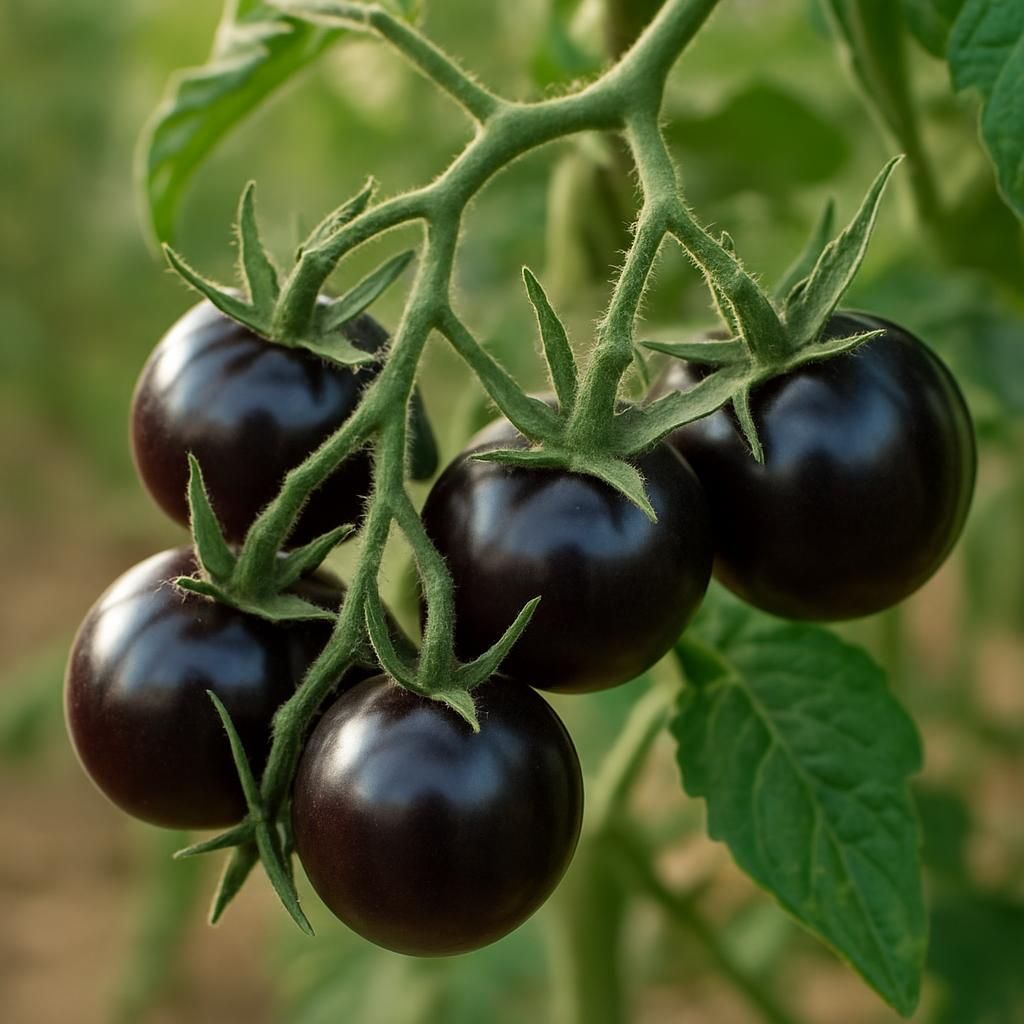
Introduction to Black Cherry Tomato
Black Cherry Tomato (Solanum lycopersicum var. cerasiforme 'Black Cherry') is an indeterminate heirloom cherry tomato renowned for its rich, complex flavor and striking dark-purple skin. The variety produces clusters of 1-inch fruits that ripen to a glossy, almost black hue when fully mature, offering a perfect balance of sweetness and acidity. Gardeners and small-scale growers favor it for both fresh market sales and home consumption because of its high productivity, disease resistance, and visual appeal on the plate.
Originating from open-pollinated selections of traditional cherry tomatoes, Black Cherry has gained popularity among specialty producers seeking unique color profiles without sacrificing taste. The plants are vigorous, reaching 6–8 feet in height when properly supported, and continue producing fruit until frost in most climates. Its anthocyanin-rich skin also provides additional antioxidant value compared to standard red cherry tomatoes.
Successful cultivation requires attention to soil fertility, consistent moisture, and integrated pest management, especially for common tomato challenges such as Early blight and Hornworms. This guide delivers actionable, professional-grade recommendations for every stage of production.
Botanical Profile of Black Cherry Tomato
Black Cherry Tomato belongs to the Solanaceae family and exhibits typical indeterminate growth, meaning the plant continues to elongate and set fruit throughout the season rather than terminating at a predetermined height. Stems are covered in fine hairs and require sturdy trellising or caging to prevent lodging. Leaves are compound, dark green, and emit the characteristic tomato aroma when crushed.
Flowers are small, yellow, and self-pollinating, appearing in trusses of 8–12 blossoms. Fruit set is abundant under warm temperatures (70–85 °F / 21–29 °C) and moderate humidity. The distinctive dark coloration results from elevated anthocyanin and chlorophyll levels in the epidermis, which intensify as the fruit ripens.
Compared with standard Cherry Tomato cultivars, Black Cherry offers slightly larger fruit size and deeper flavor complexity while maintaining similar cultural requirements. It is also more tolerant of cracking than many thin-skinned cherry types.
Soil, pH, and Climate Requirements for Black Cherry Tomato
Black Cherry Tomato performs best in well-drained, fertile loam soils with high organic matter. Raised beds or in-ground plantings amended with aged compost improve both drainage and nutrient retention. Avoid heavy clay without significant amendment, as waterlogging quickly leads to Root rot.
| Parameter | Ideal Range | Notes |
|---|---|---|
| Soil Type | Sandy loam to loam | Well-drained, high organic matter |
| Soil pH | 6.2–6.8 | Slightly acidic; test and adjust annually |
| Temperature (Day) | 70–85 °F (21–29 °C) | Optimal fruit set and flavor development |
| Temperature (Night) | 55–65 °F (13–18 °C) | Below 50 °F slows growth and causes blossom drop |
| Frost Tolerance | None | Protect or transplant after last frost |
| Sunlight | Full sun, 8+ hours daily | Essential for anthocyanin development |
| Spacing | 18–24 in (46–61 cm) between plants | 4–5 ft (1.2–1.5 m) between rows |
Choose a site with good air circulation to reduce humidity-related diseases. In cooler climates, use black plastic mulch or row covers to elevate soil temperature early in the season.
Step-by-Step Planting & Propagation
- Start seeds indoors 6–8 weeks before the last expected frost. Sow ¼ inch deep in sterile seed-starting mix at 75–80 °F (24–27 °C).
- Provide 14–16 hours of supplemental light daily; thin to one seedling per cell once true leaves appear.
- Harden off seedlings for 7–10 days by gradually exposing them to outdoor conditions.
- Transplant outdoors when soil temperature reaches at least 60 °F (16 °C) and night temperatures remain above 50 °F (10 °C).
- Dig holes 18–24 inches apart; incorporate ½ cup of balanced organic fertilizer or well-aged compost per planting hole.
- Plant seedlings deeply, burying the stem up to the first true leaves to encourage adventitious root formation.
- Water thoroughly after transplanting and apply a 2–3 inch layer of organic mulch to conserve moisture and suppress weeds.
Direct seeding is possible in warm climates once soil reaches 65 °F (18 °C), but transplanting remains the most reliable method for uniform stands.
Care & Maintenance regimes for Black Cherry Tomato
Consistent care ensures continuous production and minimizes physiological disorders. Monitor plants weekly for nutrient deficiencies, especially calcium and magnesium, which can trigger Blossom End Rot.
| Task | Frequency | Details |
|---|---|---|
| Watering | 1–1.5 inches per week | Deep, infrequent irrigation; maintain even soil moisture; drip systems preferred |
| Fertilizer | Every 3–4 weeks after fruit set | Side-dress with ½ cup balanced organic fertilizer or fish emulsion tea per plant |
| Pruning | Weekly from week 3 onward | Remove suckers below first flower cluster; maintain 1–2 main leaders |
| Mulching | At transplant and as needed | 2–3 inches organic mulch; replenish mid-season |
| Trellising | Install at transplant | Florida weave or vertical strings; tie every 8–10 inches of growth |
| Weeding | As needed | Hand-pull or shallow cultivate to avoid root damage |
Avoid overhead watering late in the day to reduce foliar disease pressure. Remove lower leaves as they yellow to improve airflow.
Pests, Diseases & Organic Management
Black Cherry Tomato is susceptible to several common tomato pests and pathogens. Early detection and cultural controls are the foundation of organic management.
Major insect pests include Aphids, Spider mites, Hornworms, and Whiteflies. Deploy yellow sticky traps and introduce beneficial insects such as lady beetles and lacewings. For hornworms, handpick larvae or apply Bt (Bacillus thuringiensis) sprays when small.
Key diseases are Early blight, Septoria leaf spot, Late blight, and Fusarium wilt. Practice 3–4 year crop rotation, remove crop debris at season end, and apply copper-based fungicides or neem oil preventively during humid periods. Improve airflow through proper spacing and pruning.
Regular scouting combined with the cultural practices outlined above will keep most issues below economic thresholds without synthetic pesticides.
Harvesting, Curing & Optimal Storage
Harvest Black Cherry Tomatoes when fruits reach full color with slight give when gently squeezed. Pick clusters or individual fruits in the morning for best flavor and shelf life. Avoid pulling; use scissors or pruners to prevent stem damage.
For short-term storage, keep unwashed fruits at room temperature (60–70 °F / 15–21 °C) away from direct sunlight. Refrigerate only fully ripe fruit intended for immediate use; flavor declines below 50 °F (10 °C). Under optimal conditions, ripe fruit maintains quality for 5–7 days.
For extended storage, green fruit can be ripened indoors in single layers at 65–70 °F (18–21 °C). Avoid ethylene-producing fruits if slower ripening is desired.
Companion Planting for Black Cherry Tomato
Strategic companions improve pest suppression, pollination, and soil health. Plant Basil nearby to repel aphids and enhance flavor. Marigold and Nasturtium deter nematodes and whiteflies while attracting beneficial insects.
Alliums such as Garlic and Onion provide additional pest deterrence. Avoid planting near Fennel or walnuts, which can inhibit tomato growth through allelopathy. Include Clover or other living mulches between rows to build soil nitrogen and suppress weeds.
These pairings, combined with the maintenance schedules above, create a resilient, productive system for Black Cherry Tomato cultivation.