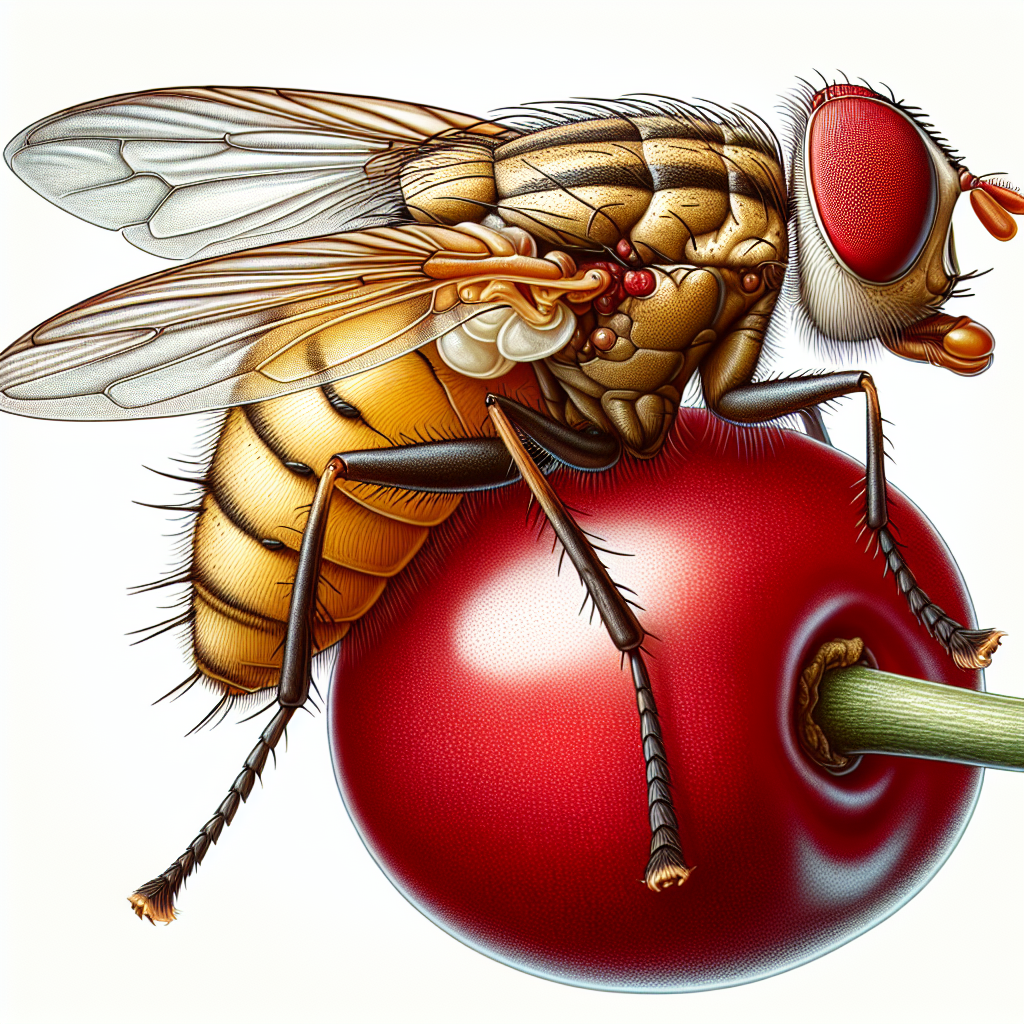
Introduction to Cherry fruit fly
The cherry fruit fly, scientifically known as Rhagoletis cerasi, stands as one of the most notorious pests threatening cherry orchards worldwide, particularly in Europe, North America, and parts of Asia. This small but devastating fly targets ripening cherries, injecting eggs directly into the fruit where larvae develop and devour the flesh from within. Adult flies emerge in late spring, coinciding with cherry bloom and fruit set, leading to severe economic losses if unmanaged—up to 100% crop failure in heavily infested areas. Home gardeners and commercial growers alike dread this pest due to its insidious nature; infested fruits drop prematurely, rot on the ground, and become breeding grounds for secondary infections like fruit rots. Early detection and integrated pest management (IPM) are crucial, blending monitoring, organic controls, and sanitation to safeguard yields. This definitive guide equips you with professional-grade diagnostics, lifecycle insights, and actionable strategies optimized for SEO searches like 'cherry fruit fly control organic' and 'how to identify cherry fruit fly damage.'
Cherry fruit fly adults measure 4-5 mm long with a black body, red eyes, and distinctive white bands on the abdomen. Females use a sharp ovipositor to pierce fruit skin, depositing single eggs per site, often marked by a telltale 'sting' scar. Unlike related species like the apple maggot, R. cerasi shows host specificity to cherries but can occasionally infest Bing Cherry or Rainier Cherry varieties. Climate change exacerbates outbreaks by extending warm periods, aligning fly emergence with fruit susceptibility. For small farms, check out our Spring Pest Patrol blog post for timely monitoring tips. Proactive management not only preserves fruit quality but also complies with organic certification standards.
Identifying Symptoms & Damage
Spotting cherry fruit fly damage early is key to minimizing losses. Look for small, white 'pinprick' oviposition scars on fruit skin—tiny puncture wounds from the female's ovipositor, often with a slight discoloration or resin droplet. These stings appear 7-10 days before harvest on green fruits turning color. Internally, creamy-white maggots (larvae) up to 7 mm long tunnel through the pulp, leaving brown, watery frass trails and a hollowed core. Infested cherries soften prematurely, discolor to dull red or brown, and drop to the ground, where larvae exit to pupate in soil.
Secondary signs include fruit splitting from larval feeding pressure, inviting fungal pathogens like Botrytis. Yield impacts are profound: marketable fruit loss averages 30-80%, with larvae rendering cherries unfit for fresh sales or processing. Differentiate from other pests—plum curculio leaves crescent-shaped scars, while birds peck irregularly. Use a sharp knife to slice open suspect fruits; live maggots wiggle vigorously. Sticky traps capture adults for confirmation. In severe cases, entire branches show 'flagging' from dropped fruit clusters. Regular scouting from petal fall through harvest, inspecting 100 fruits per tree, ensures timely intervention. For visual diagnostics, compare against clean cherry samples.
Lifecycle and Progression of Cherry fruit fly
Understanding the cherry fruit fly lifecycle enables precise timing of controls. Adults overwinter as pupae 5-20 cm deep in orchard soil, emerging in late May to early July when cherries reach 15-20 mm diameter and average temperatures hit 18-22°C (64-72°F). Emergence peaks over 4-6 weeks, with females becoming sexually mature after 10 days of protein feeding on leaf surfaces or honeydew.
Mated females lay 50-150 eggs singly or in clusters, ovipositing 1-3 per fruit over 2-4 weeks. Eggs hatch in 4-7 days into legless maggots that feed voraciously for 20-30 days, molting twice. Mature third-instar larvae exit via the 'shot-hole' exit, drop to soil, and pupate within hours. A partial second generation may occur in warm climates, with pupae diapause until next spring. Full cycle: 40-60 days. Lifecycle aligns with cherry phenology—monitor degree-days (base 10°C) from bloom for predictions. Destroy fallen fruit to break the cycle, as 90% of pupae overwinter near trees.
Environmental Triggers & Risk Factors
Cherry fruit fly thrives in temperate climates with mild winters and warm, humid summers, favoring regions like the Pacific Northwest, Great Lakes, and Central Europe. Key triggers include soil temperatures above 10°C (50°F) for pupal emergence, rainfall during oviposition increasing flight activity, and drought-stressed trees producing softer, more attractive fruits. Proximity to wild hosts like honeysuckle or abandoned orchards spikes infestation rates. Poor orchard hygiene—uncollected drops—harbors 80% of pupae. High-risk factors: dense canopies limiting spray penetration, early-maturing varieties like Bing Cherry, and adjacent apple or pear plantings harboring related tephritids. Climate variability, with earlier springs, advances emergence by 1-2 weeks, outpacing controls. Soil type matters; heavy clays retain pupae longer than sandy loams. Assess risk via trap counts: >5 flies/trap/week demands action.
Organic Control & Treatment Plans
Organic management hinges on IPM: monitoring, cultural, biological, and targeted organics. Deploy yellow sticky traps or McPhail baited with ammonium acetate by petal fall, placing 1-2 per tree (max 50/acre). Threshold: 1-2 flies/trap. Cultural: strip-pick all fruit at harvest, destroy drops via tillage or solarization (black plastic, 50°C/122°F for 4 weeks) to kill 95% pupae. Kaolin clay (Surround WP) at 50-100 lbs/acre coats fruits, deterring oviposition by 70-90%; apply post-bloom, reapply after rain.
Biologicals: release Acerocera musaria parasitoids or encourage ground beetles. Spinosad (Entrust, 0.2 oz/gal) sprays at first trap catch, 7-10 day intervals (max 3 apps), targets adults/larvae organically (OMRI-listed). Neem oil disrupts feeding/oviposition. Protein hydrolysate baits with spinosad lure and kill adults. For soil, apply beneficial nematodes (Heterorhabditis bacteriophora) in fall. Rotate tactics yearly to prevent resistance. In Spring Pest Patrol, we detail trap networks. Integrated plans yield 85-95% control without synthetics.
Preventing Cherry fruit fly in the Future
Long-term prevention disrupts pupation and immigration. Plant fly-resistant varieties like 'Balaton' or late-maturing Rainier Cherry. Maintain 6-8 ft grass alleys mowed short to expose pupae to predators/sun. Border sprays with spinosad bait stations intercept migrants. Destroy wild hosts within 500m. Annual fall tillage (6-8 inches) buries/exposes pupae, reducing emergence 80%. Reflective mulches deter adults. Quarantine infested areas; inspect nursery stock. Degree-day models (start at 200 DD base 10°C) predict flights for preemptive sprays. Companion planting with marigold repels via volatiles. Monitor via apps for hyper-local alerts. Clean tools/equipment to avoid spread. Sustained practices cut populations 90% over 3 years, ensuring bountiful harvests.
Crops Most Affected by Cherry fruit fly
Primarily, sweet and sour cherries (Prunus avium, P. cerasus) bear the brunt, with Bing Cherry, Rainier Cherry, 'Montmorency,' and 'North Star' most vulnerable due to ripening synchrony. European cherries suffer worst in native ranges. Occasionally, R. cerasi attacks plum or pear, but cherries comprise 95% damage. Wild Prunus like black cherry serve reservoirs. No significant impact on stonefruits like peach or berries. Global production losses exceed $100M annually, hitting small orchards hardest.