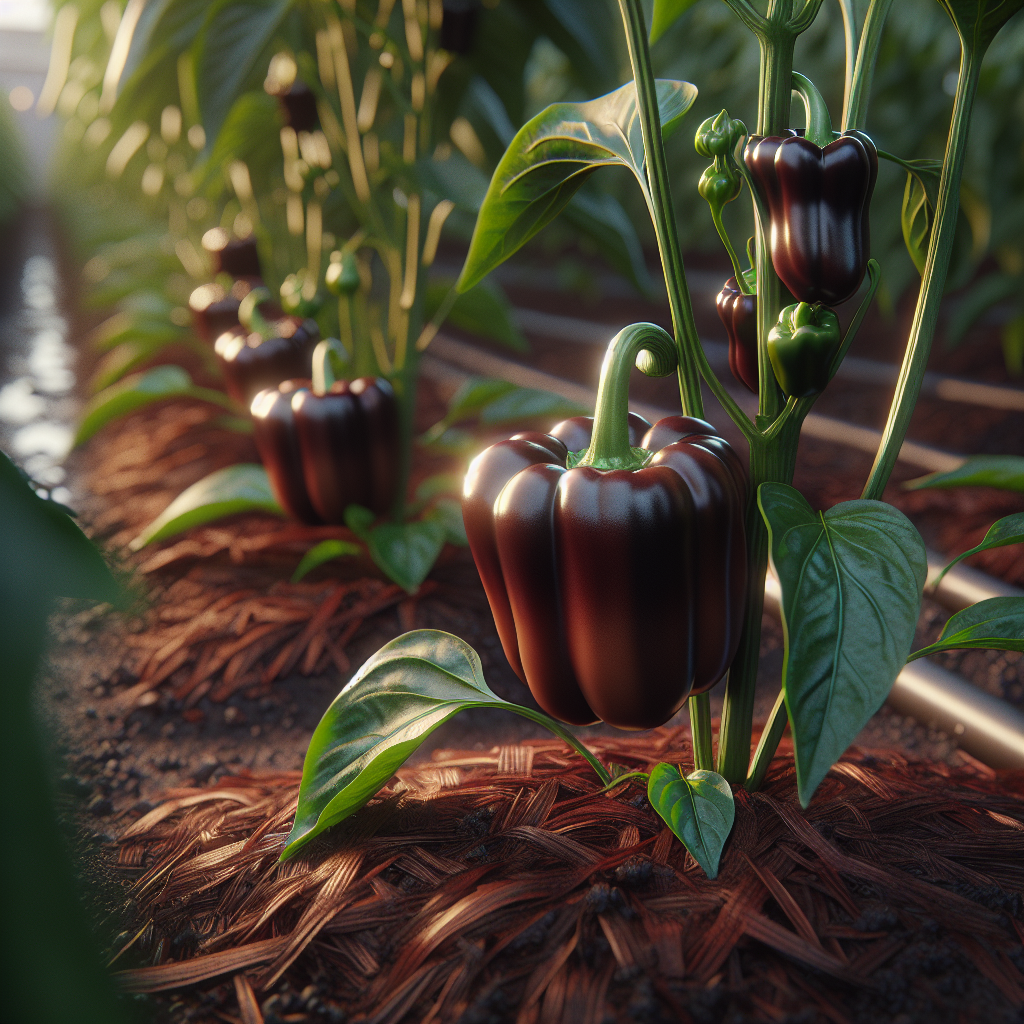
Introduction to Bell Pepper (Chocolate)
This distinctive sweet pepper is a cultivar of Capsicum annuum selected for its ripened brown-to-chocolate skin, blocky bell shape, and mild, sweet flavor with a deeper, more savory finish than many red or yellow bells. Immature fruits are usually green, then transition through reddish or bronzed tones before reaching their mature chocolate color. That ripening pattern matters because fully colored fruits generally have thicker walls, higher sugar content, and better culinary quality than under-ripe fruit harvested too early.
Chocolate bell peppers are especially valued in fresh market production because they stand out visually in mixed pepper displays and gourmet cooking. They are also useful for home and market gardeners wanting diversity beyond standard green, red, and yellow bells. Compared with many hot peppers, they are less forgiving of temperature swings, nutrient imbalances, and inconsistent watering, but under good management they are productive and highly marketable. If you already grow sweet peppers or even Tomato, many cultural principles will feel familiar, especially the need for warm soil, stable moisture, and support during heavy fruit set.
Historically, brown-fruited sweet peppers represent breeding work focused on fruit color novelty without sacrificing the classic bell shape and sweetness consumers expect. The chocolate color is caused by pigment interactions during ripening, combining chlorophyll breakdown with carotenoid development and residual darker pigmentation, rather than the fruit being literally "chocolate flavored." The result is an ornamental and culinary pepper that performs best when treated as a premium warm-season crop rather than a generic vegetable.
Botanical Profile of Bell Pepper (Chocolate)
This crop belongs to the nightshade family, Solanaceae, alongside tomatoes, eggplants, and potatoes. It is botanically a tender perennial in frost-free climates but is grown almost universally as a warm-season annual in temperate regions. Plants are typically compact to medium-sized, often 45-75 cm tall, with branching stems that become brittle when heavily loaded with fruit.
Leaves are simple, smooth-edged, and medium to dark green. Flowers are usually white, star-shaped, and self-fertile, though insect activity and wind can improve pollination under field conditions. Fruit is technically a berry, with a hollow interior, multiple locules, and a thick pericarp when well grown. Good chocolate bell cultivars usually produce 3- to 4-lobed fruits, often broader than long, with firm, crisp flesh.
Unlike pungent chili types, bell peppers generally carry a recessive non-pungency trait associated with low or absent capsaicin production in the placental tissues. That means environmental stress will not make them hot, but stress can make them smaller, thinner-walled, misshapen, or more prone to disorders such as blossom end rot and sunscald.
For growers, the most important biological traits are these:
- Root systems are relatively shallow and sensitive to waterlogging and drying cycles.
- Flower set declines when daytime temperatures consistently exceed about 32-35°C or nighttime temperatures remain above 24°C.
- Growth is fastest when root-zone temperatures stay near 21-27°C.
- Fruit color development lags behind fruit sizing, so patience is required for full chocolate maturity.
Days to maturity vary by seed source, but many chocolate bell peppers reach green harvest in roughly 70-80 days from transplant and full chocolate ripeness in roughly 85-100 days. In cool regions, season extension is often the difference between average and exceptional results.
Soil, pH, and Climate Requirements for Bell Pepper (Chocolate)
This crop performs best in fertile, well-drained loam or sandy loam with strong moisture retention but no standing water. The ideal soil pH is 6.2-6.8. Plants can tolerate about 6.0-7.0, but once pH drifts much below 5.8, calcium and magnesium availability often becomes limiting, while excessively high pH can reduce iron, manganese, and phosphorus uptake. In practical terms, poorly adjusted pH often shows up as stunted plants, pale new growth, weak flowering, or fruit disorders despite adequate fertilization.
Drainage is critical. Peppers do not like anaerobic conditions around the root zone. If water sits longer than 24 hours after irrigation or rain, root stress rises sharply and disease risk increases. Raised beds 15-25 cm high are strongly recommended in heavy soils. Ideal soil organic matter is about 3-5%: enough to buffer moisture and nutrient supply, but not so raw or undecomposed that nitrogen immobilization occurs.
Before planting, work in mature compost and base fertility according to a soil test. As a broad target for field-scale production, peppers often respond well to moderate nitrogen, ample phosphorus at establishment, and strong potassium for fruit development. Avoid excessive pre-plant nitrogen, which encourages lush foliage at the expense of fruit set and can make plants more attractive to Aphids.
Temperature requirements are strict. Seeds germinate best at 26-30°C, and germination becomes slow and erratic below 20°C. Transplants should not go into the ground until soil temperature at 10 cm depth is reliably above 16°C, with 18-24°C preferred. Air temperatures of 21-29°C during the day and 16-21°C at night are close to ideal.
Bell Pepper (Chocolate) needs full sun, meaning at least 8 hours of direct light daily for maximum yield and color development. In very hot climates, light afternoon shade can reduce sunscald and pollen sterility, but too much shade delays ripening and reduces sweetness.
Wind protection improves results. Strong winds can shred foliage, snap branches, and disrupt pollinator activity. A sheltered site with good air circulation is preferable to an exposed one.
For growers focused on soil preparation, this soil health article offers useful background on building resilient vegetable ground.
Step-by-Step Planting & Propagation
Propagation is almost always by seed. Saving seed is possible from open-pollinated strains, but isolation is required if other peppers are flowering nearby because cross-pollination can affect next-generation traits.
Start seed indoors 8-10 weeks before final frost. Use sterile seed-starting mix in trays or modules. Sow seeds 0.5-1 cm deep. Maintain medium warmth at 26-30°C using bottom heat if necessary. Germination usually takes 7-14 days under ideal conditions, but cool media can extend that considerably.
Provide intense light immediately after emergence. Seedlings need 14-16 hours of strong supplemental light or very bright greenhouse conditions. Leggy seedlings result from insufficient light or excessive heat.
Pot up once true leaves form. Move seedlings into larger cells or 7-10 cm pots. Bury only to the original root ball depth; unlike tomatoes, peppers do not reliably produce extensive adventitious roots from deep stem burial.
Fertilize lightly but consistently. A diluted balanced feed, such as one-quarter to one-half strength, can be applied weekly after the first true leaves expand. Avoid high ammonium nitrogen, which can create soft growth.
Harden off for 7-10 days. Gradually expose plants to outdoor light, wind, and temperature variation. Never harden off by severe drought stress; the goal is acclimation, not damage.
Transplant after all frost danger passes. Set plants 40-50 cm apart in rows 60-90 cm apart, depending on management system. High-density greenhouse systems may be tighter; open-field fresh market systems often need wider spacing for airflow.
Plant into warm, moist soil. Water transplant holes before or immediately after setting. Install mulch right away if using plastic mulch, woven landscape fabric, or organic mulch.
Stake or cage early. Even compact bell peppers can lodge under heavy fruit load. A single stake with soft ties or a Florida weave-style system for rows helps keep fruit off the soil and reduces breakage.
Direct sowing is rarely recommended outside very warm, long-season climates because emergence is slow in cool soil and plants lose valuable growing time. In short-season regions, black plastic mulch, low tunnels, or row covers can significantly improve establishment.
Care & Maintenance regimes for Bell Pepper (Chocolate)
Irrigation should aim for uniform soil moisture in the active root zone, generally the top 15-25 cm of soil. A practical target is soil that feels evenly moist but never sticky or swampy. In coarse soils, this often means 2.5-4 cm of water per week split into multiple irrigations; in heavier soils, less frequent but deeper irrigation may be appropriate. Drip irrigation is ideal because it keeps foliage dry and reduces disease pressure.
The most common watering mistake is cycling between drought and saturation. Drought stress causes flower drop, small fruit, thin walls, and blossom end rot. Saturation limits oxygen, leading to dull foliage, slowed growth, root disease, and yellowing lower leaves. Signs of overwatering include persistently drooping plants despite wet soil, edema-like blistering, pale leaves, and a sour smell in poorly drained beds.
Mulching is strongly recommended. Organic mulch 5-8 cm thick helps moderate temperature and moisture, though keep it slightly away from the stem base. Plastic mulch is highly effective in cool climates because it warms soil and suppresses weeds.
Nutrient management should be staged. Early growth needs enough nitrogen for canopy formation, but once flowering begins, a more balanced or slightly potassium-forward feeding pattern helps fruit set and quality. Excess nitrogen late in the season often delays ripening and increases vegetative growth. Calcium is essential for cell wall strength and prevention of blossom end rot, but it is supplied through transpiration, so even good soil calcium cannot compensate for erratic watering.
A professional approach is to side-dress or fertigate lightly every 10-14 days rather than applying large fertilizer doses infrequently. Tissue testing can be helpful for commercial growers, especially where high yields are expected.
Pruning is minimal compared with indeterminate crops. Remove only damaged leaves, low foliage touching wet soil, and occasionally the first crown fruit if the plant is small and establishment is weak. In vigorous transplants, keeping the first fruit is usually acceptable. Over-pruning exposes fruit to sunscald.
Temperature management matters during flowering. Below about 15°C, growth slows sharply and flower initiation may stall. Above about 32°C, pollen viability drops. In protected culture, ventilate aggressively and use shade cloth in hot periods if necessary.
Weed control is essential in the first 6-8 weeks after transplanting because peppers compete poorly early on. Shallow cultivation is safer than deep hoeing because roots are near the surface.
Pests, Diseases & Organic Management
Aphids are common early-season pests. They cluster on tender shoots and leaf undersides, causing curling and sticky honeydew. Control begins with early scouting twice weekly, conservation of beneficial insects, and strong water sprays where appropriate. In heavier infestations, insecticidal soap or neem-based products can help if coverage is thorough.
Thrips are especially important because they damage flowers and can vector Tomato spotted wilt virus. Look for distorted new growth, scarring, and poor fruit set. Blue or yellow sticky traps can aid monitoring, but sanitation, weed management, reflective mulch, and biological controls are more dependable long-term tactics.
Spider mites flourish in hot, dry conditions, causing stippling and bronzing. Increasing humidity in protected systems, reducing dust, and releasing predatory mites can suppress outbreaks. Organic miticides must contact the pest and often require repeat applications.
Pepper weevil is a serious regional pest in some warm areas, causing bud and fruit drop. Infested fruit may show oviposition marks and internal larval feeding. Strict sanitation and regional monitoring are critical because once established, this pest is hard to suppress organically.
Cutworms can clip transplants at soil level. Collars, clean cultivation before planting, and evening scouting reduce losses.
Among diseases, Bacterial leaf spot is a major concern in warm, wet conditions. It appears as small water-soaked lesions that turn dark and may cause defoliation and fruit spotting. Use disease-free seed, resistant genetics where available, drip irrigation, crop rotation, and avoid handling wet plants.
Phytophthora blight is one of the most destructive pepper diseases in poorly drained soils. Plants may wilt suddenly, stems can darken near the crown, and fruit may rot. The best organic management is prevention: raised beds, excellent drainage, long rotation out of susceptible hosts, and water management that prevents ponding.
Anthracnose can affect ripening fruit, producing sunken lesions. Good airflow, mulch, sanitation, and timely harvest help reduce spread.
Blossom end rot is not a pathogen but a physiological disorder linked to irregular calcium movement in the plant. Water stress, salinity, root damage, and excessive nitrogen all increase risk. The fix is consistent irrigation and balanced fertility, not simply spraying calcium.
Sunscald appears as pale, papery, collapsed patches on exposed fruit. It usually follows leaf loss from pruning, disease, or nutrient stress. Preserve canopy health and avoid excessive defoliation.
Organic management works best as an integrated system: resistant seed when possible, wide rotation, mulching, drip irrigation, beneficial insect habitat, and rapid removal of diseased fruit and plant debris. Good hygiene matters more than rescue treatments.
Harvesting, Curing & Optimal Storage
Harvest timing depends on intended market. Green harvest is possible when fruits are full-sized, glossy, and firm, but the signature value of this crop comes from harvesting at full chocolate maturity. Mature fruits should show uniform rich brown or mahogany coloration over most of the surface, feel heavy for size, and have crisp, thick walls.
Use pruners or a sharp knife rather than pulling fruit by hand. Pepper branches are brittle, and tearing fruit off can split stems or dislodge immature fruit nearby. Harvest with a short stem attached to reduce rot at the shoulder.
Frequent picking, usually every 3-7 days in peak season, encourages continued fruit set. Leaving too many overmature fruits on the plant can slow new flowering.
Unlike storage onions or winter squash, bell peppers are not truly cured in the traditional sense. However, harvested fruit benefits from field heat removal and gentle handling. Move fruit quickly into shade after harvest. Wash only if necessary, and dry thoroughly before packing.
Optimal storage is generally 7-10°C with 90-95% relative humidity. At these conditions, quality may hold for 2-3 weeks depending on fruit maturity and handling. Below about 7°C, chilling injury becomes a risk, showing as pitting, water-soaked areas, poor color retention, and rapid decay after removal from storage. At room temperature, peppers keep only a few days before shriveling and softening.
Do not store with high-ethylene fruits for extended periods if avoidable, as senescence can accelerate. Sort out cracked, sunscalded, insect-damaged, or diseased fruit immediately because they reduce pack quality and can spread decay.
For premium culinary use, fully colored chocolate bells are excellent fresh, roasted, stuffed, or grilled. Their darker pigments and sweetness make them especially attractive in mixed pepper sales alongside red, orange, and purple types.
Companion Planting for Bell Pepper (Chocolate)
The most effective companions are those that either repel key pests, attract beneficial insects, or occupy different rooting and canopy layers without competing aggressively. Thai Basil is a particularly useful partner because its aromatic foliage can help confuse pest pressure while attracting pollinators and predatory insects when allowed to flower selectively. Onion and Garlic are also widely valued near peppers for their compact habit and compatibility in intensive beds, while Nasturtium can function as a trap crop for Aphids and a beneficial-insect attractor.
Keep companions close enough to provide ecological benefit but not so dense that airflow drops around the pepper canopy. In humid climates, overcrowding around peppers often increases foliar disease. A good pattern is alternating rows or placing companions on bed edges rather than mixing them directly into every planting hole.
Avoid placing peppers near aggressive heavy feeders that cast significant shade or create root competition during establishment. Also avoid repeating solanaceous crops in the same ground too frequently; peppers, tomatoes, eggplants, and potatoes share several important diseases and should be separated in rotation whenever possible.
Companion planting is most effective when paired with sanitation, irrigation management, and scouting rather than treated as a standalone solution. Thoughtful plant associations can improve field resilience, but they work best inside a broader crop health strategy.