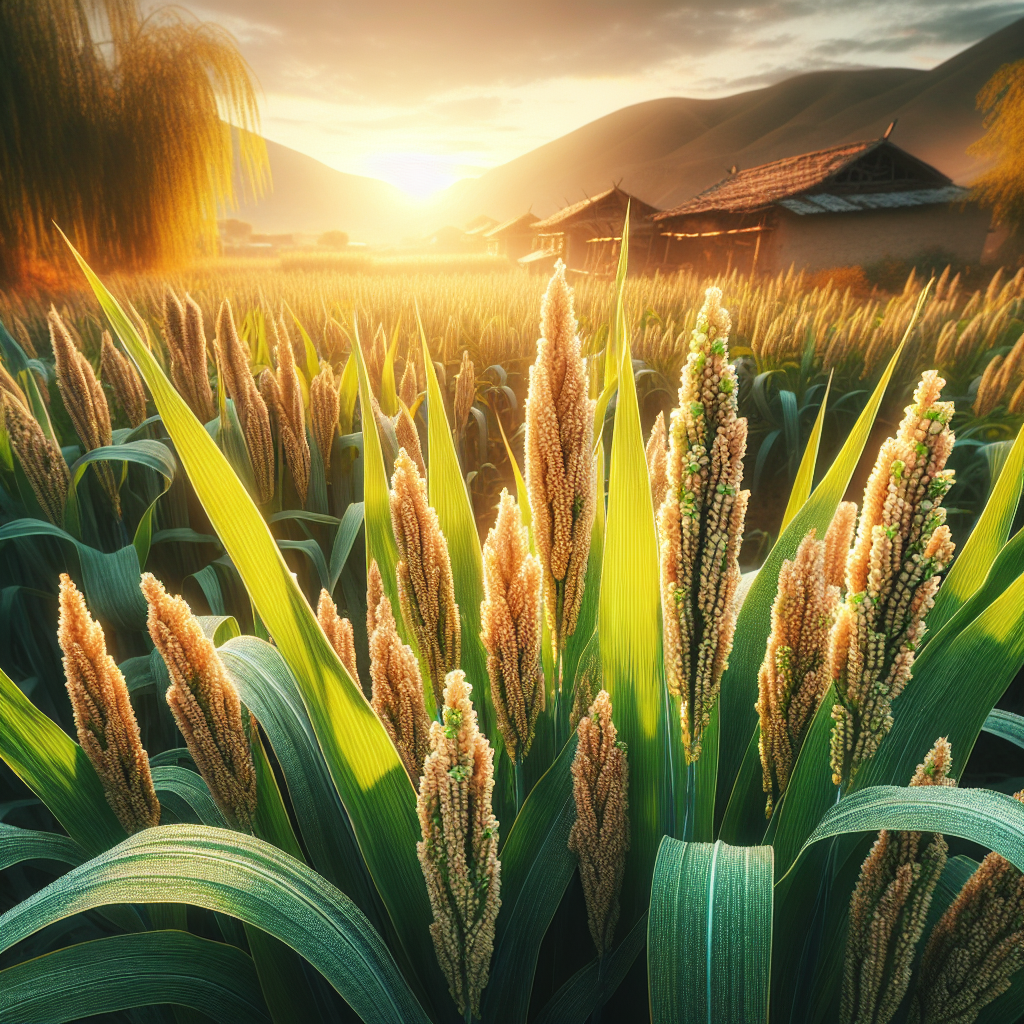
Introduction to Barnyard Millet
A warm-season annual cereal, this crop has earned a reputation as a “famine reserve” grain because it matures quickly and can produce grain where more demanding cereals fail. It has been cultivated for centuries in India, Nepal, and other parts of Asia, often in upland and low-input systems. In some regions it is preferred because it fits into tight crop rotations, recovers well from early dry spells, and reaches harvest in as little as 45 to 90 days depending on cultivar, altitude, and soil moisture.
Botanically and agronomically, barnyard millet should not be confused with the wild barnyard grasses that are common weeds in paddy systems. Cultivated forms have been selected for larger grain, more uniform maturity, and improved threshability. It is especially useful in areas where the rainy season is short or poorly distributed. For growers managing climate risk, it can serve as a substitute or contingency crop when planting windows for rice or maize are missed. If you want a broader cereal comparison, see Rice.
The grain is gluten-free, highly digestible, and often marketed as a health food because of its fiber content and relatively low glycemic response compared with polished rice. Agronomically, the main strengths are earliness, resilience, and modest fertility demand. The main weaknesses are sensitivity to weed competition during the first month after sowing, shattering risk if harvest is delayed, and post-harvest handling challenges caused by the grain’s small size.
Botanical Profile of Barnyard Millet
This species belongs to the Poaceae family. The commonly cultivated Asian barnyard millet is generally identified as Echinochloa frumentacea, while Japanese barnyard millet is often classified as Echinochloa esculenta. In practice, many local landraces are grouped under the common name, and morphology can vary significantly with region.
Plants are tufted annual grasses with erect to semi-erect culms, usually 60 to 150 cm tall, though under fertile, moist conditions some can grow taller. Tillering is moderate to heavy depending on spacing, soil nitrogen, and varietal habit. Leaves are flat, linear, and relatively broad for a millet, with a conspicuous midrib and a sheath that may be smooth or slightly rough. Unlike some cereals, ligule structure and auricle absence can help distinguish it in the field, though farmers more commonly identify it by panicle shape.
The inflorescence is a compact to somewhat open panicle composed of densely packed spikelets. Panicle color ranges from green to purplish or straw-colored as the crop matures. Seeds are tiny, enclosed in hulls, and their color may range from white to light gray or brownish depending on the strain. Rooting is fibrous and relatively efficient in exploiting upper soil layers, which partly explains the crop’s rapid establishment and its ability to respond quickly to rainfall.
Physiologically, barnyard millet is a C4 plant. That matters in the field because C4 cereals use water efficiently, perform well in high light and warm temperatures, and maintain productivity under conditions that stress many cool-season grains. The crop is photoperiod-sensitive in some traditional landraces, but modern selections may be more daylength-neutral and therefore easier to schedule across diverse environments.
Soil, pH, and Climate Requirements for Barnyard Millet
This crop performs best in well-drained loam to sandy loam soils, but one of its defining advantages is its ability to produce under less-than-ideal conditions, including shallow upland soils and lower-fertility fields. It can also be grown on light clay loams if drainage is adequate. Persistent waterlogging is one of the few soil conditions it strongly dislikes, especially during germination and early vegetative growth.
An ideal soil pH is 5.5 to 7.5. It tolerates mild acidity better than many cereals and can remain productive down to around pH 5.0, though phosphorus availability may become limiting in strongly acidic soils. In alkaline soils above pH 8.0, micronutrient issues such as zinc or iron deficiency can appear, especially where organic matter is low. For professional production, a target pH of 6.0 to 7.0 usually offers the best balance of nutrient availability and root activity.
Good physical tilth matters more than high inherent fertility. Seeds are small, so the seedbed should be fine enough for uniform seed-soil contact but not powdery. Crusted soils can reduce emergence sharply. Organic matter in the 1.5% to 3.5% range supports steady moisture availability and reduces the boom-bust wetting cycles that stress seedlings.
Climatically, barnyard millet prefers warm conditions between 25 and 35°C during vegetative growth. Germination is strongest when soil temperatures are above 18°C, and emergence is most rapid near 22 to 30°C. It can tolerate short periods of higher heat, but flowering during extreme hot, dry winds may reduce pollination and grain set. Frost is not tolerated.
Rainfall needs are modest compared with many cereals. Roughly 350 to 500 mm of well-distributed moisture can produce a good crop, though the exact requirement depends on soil depth and evapotranspiration. It is often grown under rainfed conditions and shows strong drought escape because of its short duration. The most moisture-sensitive stages are germination, tillering, booting, flowering, and early grain filling. If irrigation is available, aim to keep the root zone evenly moist but never saturated. In practical terms, the top 5 cm of soil should be slightly moist during establishment; once rooted, allow the top layer to dry lightly between irrigations while maintaining moisture deeper in the profile. Overwatering typically shows up as pale leaves, sluggish growth, reduced tillering, algae or moss on the soil surface, and eventually root decline or lodging.
Step-by-Step Planting & Propagation
Propagation is by seed. Use clean, mature seed with high purity and germination above 80%. Because the seed is small, a low seeding depth and even placement are essential. Seed saved from fields with wild Echinochloa contamination should be avoided, as off-types and weed admixture can become a major management problem.
Choose the planting window. Sow at the onset of reliable warm-season rainfall or when irrigation can support quick germination. In monsoonal systems, sow immediately after the first soaking rains once the field is workable. Delayed sowing often increases weed pressure and can expose flowering to terminal drought.
Prepare the field. Plow or loosen soil to about 10 to 15 cm, then harrow to create a firm, fine seedbed. Remove perennial weeds before planting. A well-leveled field helps achieve uniform planting depth and more even maturity.
Apply basal nutrition. Incorporate compost or well-decomposed farmyard manure at 2 to 5 tons per acre where available. In lower-input systems, even modest organic amendment improves emergence and moisture buffering. If using mineral fertilizer, a moderate basal dose emphasizing phosphorus is useful on poor soils.
Treat seed if needed. Organic growers often use hot water sanitation, Trichoderma-based biological seed dressings, or neem-based protectants where seedling disease pressure is known. This is especially valuable in humid sowing periods.
Sow correctly. Drill in rows 20 to 30 cm apart for better weeding and airflow, or broadcast only if labor is limited. For line sowing, use about 3 to 5 kg seed per acre; broadcasting usually requires more. Sow shallowly, about 1 to 2 cm deep. Going deeper than 3 cm often causes weak, uneven emergence.
Thin or regulate density. After emergence, maintain roughly 8 to 12 cm between plants within the row where hand thinning is feasible. Excessively dense stands create tall, weak plants with smaller panicles and higher disease humidity in the canopy.
First irrigation or rainfall management. If not rainfed, give a light irrigation immediately after sowing to settle the soil without causing crusting. Avoid heavy overhead watering that buries or displaces the seed.
Germination usually occurs within 4 to 8 days in warm soils. Seedlings should appear upright and vigorous, with a healthy medium-green tone. Patchy emergence often indicates crusting, deep sowing, old seed, or seed predation.
Care & Maintenance regimes for Barnyard Millet
The first 30 days determine the success of the crop. Growth is fast once established, but early competition from weeds can reduce yield severely because seedlings are small and initially less competitive than their mature habit suggests.
Water management: In rainfed production, the goal is not constant surface moisture but uninterrupted access to moisture in the upper root zone. During the first two weeks, do not let the seed zone fully dry out. After establishment, irrigation intervals can be widened. A practical schedule on medium loam under dry weather might be one irrigation every 7 to 10 days, adjusted for rainfall and temperature. During booting and flowering, prevent visible stress. Leaf rolling by midday, bluish-gray leaf cast, and slowed panicle exertion are signs the crop is too dry. By contrast, overwatered fields show soft growth, lodging tendency, yellow lower leaves, and sour-smelling soil in severe cases.
Nutrient management: Barnyard millet does not require heavy nitrogen to produce a respectable crop, but it responds well to balanced fertility. Excess nitrogen, especially without adequate potassium, can produce lush vegetative growth and lodging. As a rule of thumb, low-input grain production often benefits from split feeding: one-third to one-half of nitrogen at sowing and the remainder at 20 to 25 days after emergence, just before active tillering. If leaves are uniformly pale green and tillering is weak, mild nitrogen deficiency is likely. Purple-tinged seedlings on cold or phosphorus-poor soils may indicate phosphorus stress. In organic systems, compost, vermicompost, oilseed cakes, and liquid manure teas can support growth if applied early enough to mineralize during the active vegetative phase.
Weed control: Keep the crop weed-free for at least 20 to 35 days after sowing. One shallow hand weeding at 15 to 20 days and a second at 30 days is often sufficient in row-planted fields. Mechanical wheel hoes work well when rows are straight. Avoid deep hoeing that severs shallow feeder roots. Because cultivated barnyard millet resembles weedy grasses early on, accurate field identification is important. Mulching is less common in broadacre production but can help in garden-scale plots.
Canopy management and lodging prevention: In fertile soils or after heavy rain, the crop can become top-heavy. Moderate plant density, restrained nitrogen use, and timely irrigation help keep stems sturdier. Wind-exposed fields benefit from border rows or windbreak planning.
Growth stages: Seedling phase lasts about 2 weeks, active tillering about 2 to 4 weeks, panicle initiation and booting follow rapidly, and grain fill may be completed in another 2 to 3 weeks in early types. This compressed cycle means missed interventions are hard to recover from. For broader fertility planning principles, the ideas in soil health strategies apply well to millet systems.
Pests, Diseases & Organic Management
Barnyard millet is relatively resilient, but no cereal is immune under continuous cultivation or humid conditions.
Insect pests: Shoot fly, Stem borers, Armyworms, Grasshoppers, and Earhead-feeding caterpillars may attack depending on region. Shoot fly damage appears as deadhearts in young plants. Stem borers cause central shoot death or weakened stems. Armyworms can defoliate quickly when outbreaks occur after flushes of rain.
Organic management starts with prevention: timely sowing, field sanitation, destruction of volunteer grasses, balanced nitrogen, and crop rotation. Light traps, pheromone traps where relevant, and bird perches can reduce insect pressure. Neem seed kernel extract or azadirachtin products are often used early in infestations, while Bacillus thuringiensis is useful against caterpillars when larvae are small.
Bird damage: Grain in the milk to dough stage is attractive to birds. Small fields near trees or hedgerows can suffer significant losses. Reflective tape, moving flags, synchronized community planting, and active scaring are more effective than any single tactic.
Diseases: Common problems include Leaf blight, Smut, Grain mold, and Seedling rots in poorly drained fields. Leaf blight appears as elongated necrotic lesions that expand under humid weather. Smut replaces grain tissue with dark fungal masses. Grain mold is most serious when panicles mature during prolonged rain or dew-heavy weather.
Organic disease management depends on clean seed, resistant local cultivars where available, wider row spacing for airflow, and strict avoidance of waterlogging. Seed treatment with biological fungicides such as Trichoderma can reduce damping-off and early root infections. Foliar applications of compost tea are less reliable than sanitation and timing, but silica-rich nutrition and good potassium status often improve tissue strength and disease tolerance.
Weed-related pest ecology: Because wild grasses host many cereal pests and pathogens, border sanitation is especially important. Remove weedy Echinochloa and other volunteer grasses from bunds and field edges before heading.
Harvesting, Curing & Optimal Storage
Harvest timing is critical because the grain is small and some cultivars shatter if left too long. Most crops are ready when panicles turn straw-colored, grains become hard, and moisture drops to roughly 18 to 22% in the field. Lower leaves may begin to dry, and the crop loses its bright green appearance. If harvested too early, grain is shriveled and difficult to thresh cleanly. If harvested too late, bird damage, lodging, and shattering increase.
In small-scale systems, harvest is usually done by cutting whole plants or panicles with a sickle. Tie into small bundles and place upright or on a clean tarp to finish drying. Avoid direct contact with damp soil, which can trigger mold in the panicles. In humid climates, curing under a covered, well-ventilated structure is safer than open-field drying.
Thresh only when panicles are sufficiently dry and grain separates cleanly. Traditional beating, trampling on clean mats, or small mechanical threshers can be used, but machine settings must be gentle enough to reduce grain loss. Winnow carefully because the grain is light and easily blown away with chaff.
For safe storage, dry grain to about 12% moisture for short-term holding and closer to 10% for long-term storage. A practical field test is that fully dried grain feels hard, not waxy, and a bitten grain cracks rather than dents. For professional storage, use a moisture meter if possible. Store in clean, insect-free bins or sealed containers. Jute sacks are acceptable in dry climates if placed on pallets and away from walls, but airtight containers are better where humidity fluctuates.
Storage pests include grain moths and weevils, especially if grain is insufficiently dried. Organic protectants include dried neem leaf layering, diatomaceous earth at labeled grain-safe rates, and hermetic storage. Regularly inspect for caking, off odors, condensation, live insects, or heating. Because barnyard millet grain is small, minor moisture problems can spread quickly through a bulk lot.
Companion Planting for Barnyard Millet
In field-scale production, companion planting usually means intercropping or border cropping rather than mixed backyard-style planting. The best companions are species that either fix nitrogen, attract beneficial insects, or help diversify rooting and canopy structure without overwhelming the millet.
Chickpeas work well in drier systems where the millet is planted at wider spacing or in strip intercrops. As a legume, chickpeas can improve system diversity and leave some residual nitrogen benefit for following crops, though direct in-season nitrogen transfer is limited. Their contrasting canopy also helps interrupt pest movement.
Peas can be useful in cooler upland environments or shoulder seasons where climate permits overlap, especially in mixed smallholder systems focused on family grain and pulse supply. They are less suitable than chickpeas in hot, peak-season conditions.
Sunflower is valuable on borders. It attracts pollinators and beneficial insects, can function as a visual barrier, and may distract some bird pressure from the main cereal, though this is site-dependent. Keep border rows from shading the millet excessively.
Clover is more useful as a living understory or rotation companion than as a dense simultaneous intercrop. In lighter soils and lower-rainfall areas, a sparse clover understory can reduce erosion and support soil biology, but it must be managed carefully so it does not compete for early moisture.
The key principle is to avoid aggressive companions that outgrow the millet during its first month. Maintain enough spacing for light penetration and weeding access, and choose companion crops with similar harvest logistics or clearly separated zones so that cutting and drying remain practical.