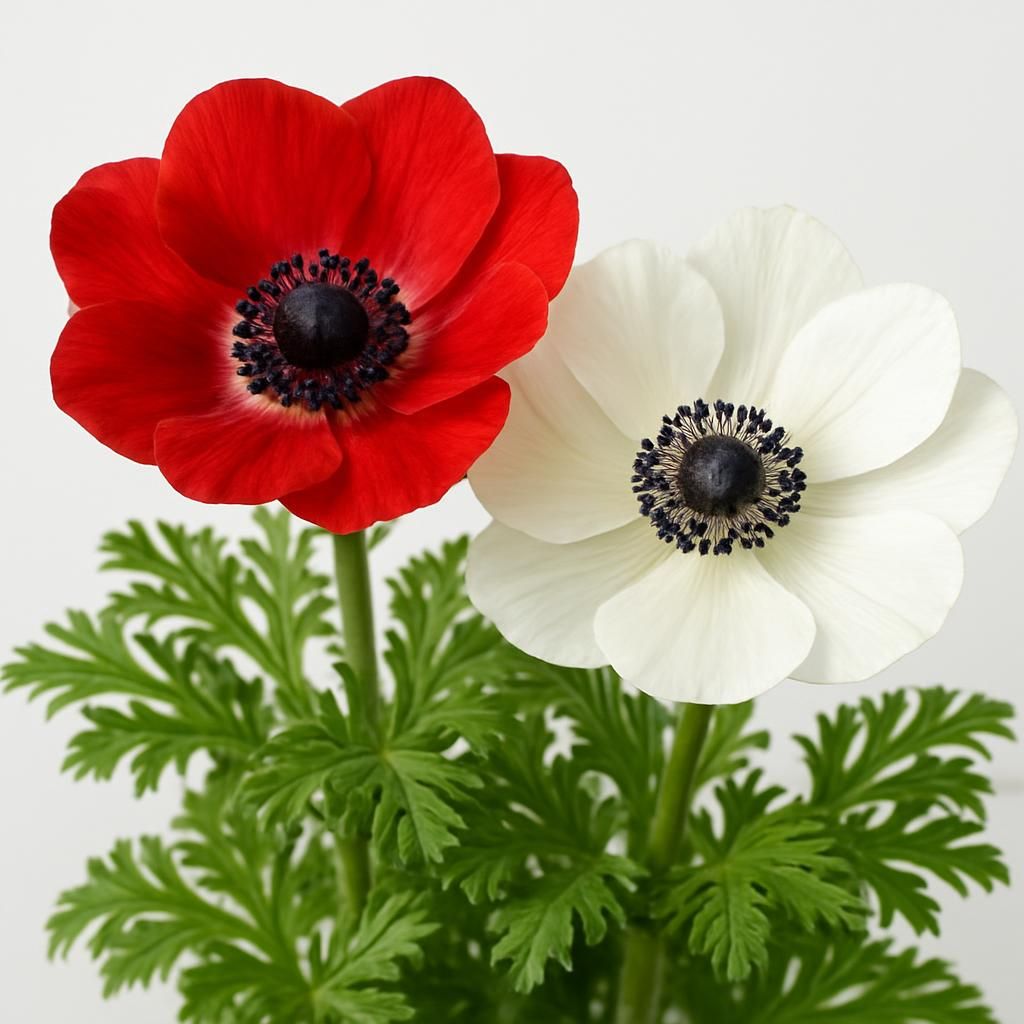
Introduction to Anemone
Anemone coronaria, commonly known as windflower, is a tuberous perennial grown worldwide for cut-flower production and garden display. Its large, brightly colored flowers appear in early to mid-spring and command strong market prices in the specialty cut-flower trade. Commercial growers value anemone for its relatively short production cycle, high stem count per square meter, and excellent post-harvest performance when handled correctly.
Successful anemone production requires cool soil temperatures, precise irrigation management, and protection from excessive summer heat. Whether grown in field tunnels, raised beds, or containers, the crop rewards growers who maintain consistent moisture and provide well-drained, fertile soil. This guide delivers actionable, research-backed recommendations for every stage of the production cycle.
Botanical Profile of Anemone
Anemone coronaria belongs to the Ranunculaceae family. Plants produce basal clumps of deeply lobed, fern-like foliage and hollow flowering stems that reach 25–40 cm in height. Each stem typically bears a single flower with five to eight showy tepals surrounding a central boss of stamens. Tuberous roots store carbohydrates and allow plants to survive summer dormancy in warm climates.
Flower colors range from white, pink, and red to deep purple and bicolor forms. The species is native to the Mediterranean region and exhibits a distinct winter-growing, summer-dormant cycle. Modern cultivars such as ‘Mona Lisa’, ‘Galilee’, and ‘De Caen’ have been selected for uniform stem length, disease resistance, and extended vase life.
Soil, pH, and Climate Requirements for Anemone
Anemone performs best in loose, well-aerated soils with high organic matter content. Heavy clay soils must be amended with coarse sand or perlite to prevent waterlogging and tuber rot. Raised beds 20–30 cm high improve drainage and allow earlier spring warming.
| Parameter | Ideal Range | Notes |
|---|---|---|
| Soil Type | Sandy loam to loam | High organic matter; avoid compacted clay |
| Soil pH | 6.0–7.0 | Slightly acidic to neutral |
| Soil Temperature | 10–15 °C at planting | Critical for rapid root establishment |
| Air Temperature | Day 15–20 °C / Night 5–10 °C | Cool conditions promote strong stems |
| USDA Hardiness Zones | 7–10 | Protect tubers below −10 °C |
| Light | Full sun to light shade | Minimum 6 hours direct sun daily |
Maintain soil electrical conductivity below 1.5 mS/cm to avoid salt stress. Incorporate 5–8 cm of well-rotted compost or aged manure two weeks before planting.
Step-by-Step Planting & Propagation
- Site Preparation: Clear weeds, incorporate compost, and perform a soil test. Adjust pH with lime or sulfur if needed.
- Tuber Selection: Choose firm, disease-free tubers 2–3 cm in diameter. Pre-soak in room-temperature water for 4–6 hours to rehydrate.
- Planting Depth & Spacing: Plant tubers 5 cm deep with the pointed end down. Space 15 cm apart in rows 30 cm apart for field production.
- Timing: Plant in autumn (zones 7–9) or early spring (zones 5–6) when soil reaches 10 °C. Use Saffron Crocus as a companion cool-season crop for staggered harvest.
- Mulching: Apply 5 cm of straw or pine needles immediately after planting to moderate temperature swings and suppress weeds.
For propagation, divide mature clumps every three years in late summer after foliage dies back. Store divisions in dry peat at 15–18 °C until replanting.
Care & Maintenance regimes for Anemone
Consistent moisture without waterlogging is essential. Overwatering leads to Pythium and Phytophthora root rots. Drip irrigation at 2–3 L/m² per day during active growth maintains optimal soil moisture.
| Growth Stage | Watering Frequency | Fertilizer Program | Pruning / Maintenance |
|---|---|---|---|
| Pre-emergence | Light misting to keep moist | None | Remove weeds; maintain mulch |
| Vegetative (4–8 wks) | 2–3 times/week, 1–2 cm | 10-10-10 NPK at 50 g/m² every 3 weeks | Remove yellow leaves; stake tall stems |
| Flowering | Daily drip if <1 cm rain | Switch to 5-10-10 high-K at 40 g/m² | Harvest when buds show color; deadhead |
| Post-harvest | Reduce to 1 cm/week | Stop fertilizer; allow natural senescence | Cut back foliage after yellowing |
Apply a balanced micronutrient spray containing boron and magnesium at bud initiation to improve flower size and stem strength.
Pests, Diseases & Organic Management
Common pests include Aphids, Thrips, and Slugs. Scout weekly and deploy yellow sticky traps at 1 trap per 10 m². Release lady beetles or lacewings for aphid control. For slugs, apply iron-phosphate baits and maintain clean field edges.
Major diseases are Botrytis, Powdery mildew, and tuber rots caused by Fusarium. Space plants adequately, avoid overhead irrigation, and remove infected debris promptly. Rotate with non-host crops such as Lettuce or Onion every two seasons. Organic-approved copper hydroxide sprays provide preventive protection against fungal leaf spots.
Harvesting, Curing & Optimal Storage
Harvest anemone stems when the first petal begins to unfurl and the bud shows full color. Cut stems at the base with sharp shears early in the morning. Immediately place in clean buckets containing 4 °C water with 2 % floral preservative.
For tuber storage, lift clumps after foliage yellows completely. Shake off soil, cure in a shaded, well-ventilated area at 20–22 °C for 5–7 days, then store in mesh bags with dry peat moss at 15–18 °C and 60–70 % relative humidity. Properly cured tubers remain viable for 12–18 months.
Companion Planting for Anemone
Anemone benefits from the presence of Nasturtium and Marigold, which repel aphids and thrips while attracting beneficial insects. Interplant with Garlic or Onion to deter soil-borne nematodes. Avoid planting near Tomato or Potato to reduce shared disease pressure. Tall companions such as Sweet Corn can provide light afternoon shade in warmer climates.
For more insights on microclimate tracking and season extension, see Stop Relying on Calendar Planting: Track Your Own Microclimates Instead.