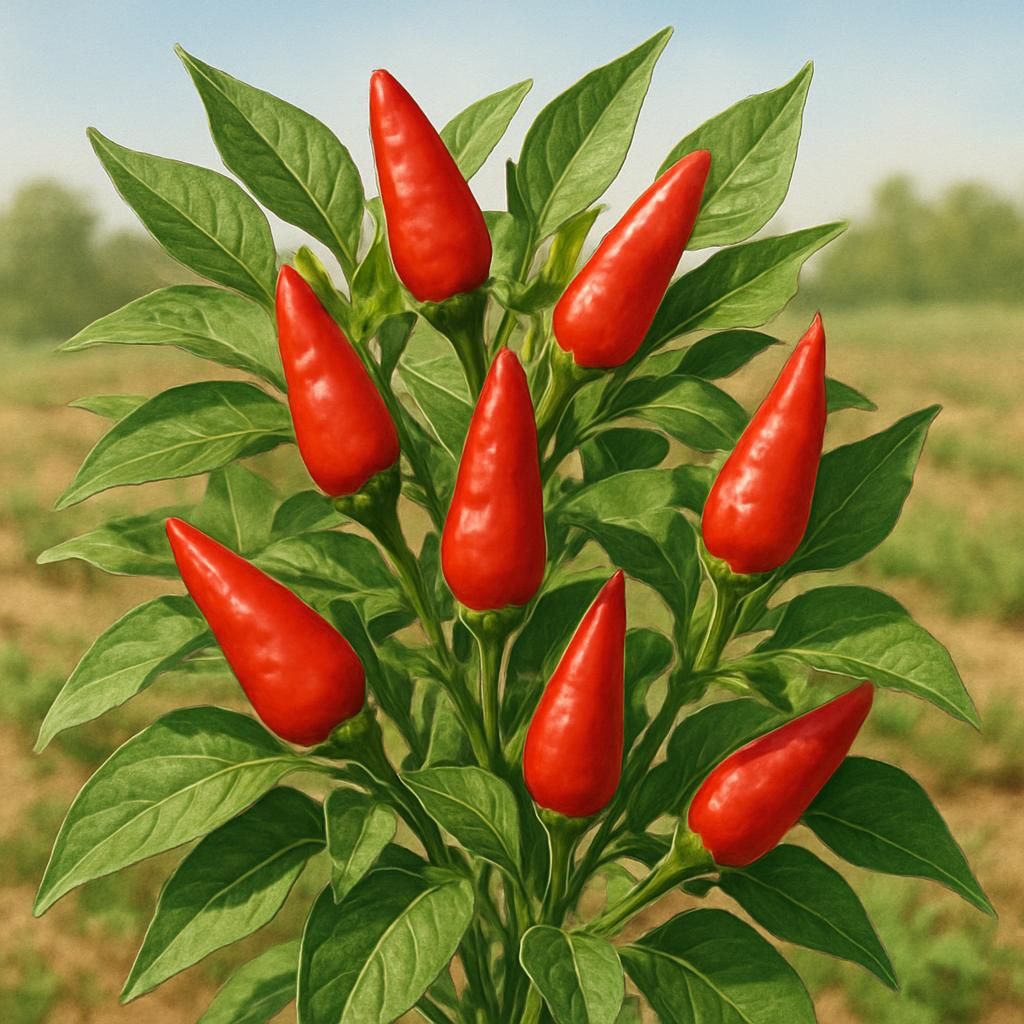
Introduction to African Bird's Eye (Piri Piri)
African Bird's Eye chilies, commonly called Piri Piri, are compact, high-yielding peppers (Capsicum frutescens) that deliver intense heat and bright citrus notes. Originating in southern and eastern Africa, the variety has become a staple in peri-peri sauces and spice blends worldwide. Commercial growers value its short cycle, drought tolerance once established, and consistent market demand for both fresh green and dried red pods.
The plant forms a dense, multi-branched shrub reaching 60–120 cm, producing hundreds of 2–3 cm conical fruits that ripen from green to vivid red. Its adaptability to subtropical and tropical climates makes it suitable for both smallholder plots and larger commercial operations. This guide provides the agronomic detail needed to achieve professional-grade yields while maintaining soil health and minimizing chemical inputs.
Botanical Profile of African Bird's Eye (Piri Piri)
Capsicum frutescens is a perennial in frost-free zones but is typically grown as an annual. It belongs to the Solanaceae family alongside Tomato and Eggplant. The plant exhibits a bushy, upright habit with woody stems at maturity and small, ovate leaves. Flowers are small, white to cream, often appearing in pairs or clusters at leaf axils. Fruits are slender, pointed, and extremely pungent, measuring 50,000–175,000 Scoville Heat Units.
Genetic diversity within the Bird’s Eye group allows selection for pod color, size, and plant architecture. Most commercial seed lines are open-pollinated, permitting seed saving when isolation distances are maintained. The species is largely self-pollinating but benefits from insect activity for maximum fruit set.
Soil, pH, and Climate Requirements for African Bird's Eye (Piri Piri)
Successful cultivation begins with well-drained, fertile soil and a warm, frost-free environment. The crop performs best in loamy or sandy loam soils with high organic matter. Heavy clay soils should be amended with compost and raised beds to improve drainage and root aeration.
| Parameter | Ideal Range | Notes |
|---|---|---|
| Soil Type | Sandy loam to loam | Well-drained; avoid waterlogging |
| Soil pH | 6.0–7.0 | Slightly acidic to neutral |
| Temperature (Day) | 24–32 °C | Optimal fruit set |
| Temperature (Night) | 18–24 °C | Below 15 °C slows growth |
| Annual Rainfall | 600–1,200 mm | Supplemental irrigation in dry periods |
| Frost Tolerance | None | Protect or grow as annual in temperate zones |
| Sunlight | Full sun (6–8+ hours) | Essential for high capsaicin levels |
Elevations up to 1,500 m are viable provided temperatures remain within the stated ranges. In cooler climates, black plastic mulch or low tunnels extend the season and accelerate early growth.
Step-by-Step Planting & Propagation
- Start seeds indoors 6–8 weeks before the last expected frost. Use sterile seed-starting mix and maintain 25–28 °C soil temperature for rapid germination (7–14 days).
- Transplant seedlings when they have 4–6 true leaves and nighttime temperatures consistently exceed 15 °C. Harden off plants for 7–10 days prior to field setting.
- Prepare raised beds or ridges 20–30 cm high. Incorporate 5–8 cm of well-rotted compost or aged manure.
- Space plants 45–60 cm apart in rows 75–90 cm wide. Wider spacing improves airflow and reduces disease pressure.
- Plant at the same depth as the nursery container; firm soil gently around roots and water immediately.
- Direct seeding is possible in warm climates once soil reaches 20 °C; sow 2–3 seeds per station and thin to one seedling.
Care & Maintenance regimes for African Bird's Eye (Piri Piri)
Consistent moisture, balanced nutrition, and timely pruning maximize pod production and plant longevity.
| Growth Stage | Watering Schedule | Fertilizer Application | Pruning / Training |
|---|---|---|---|
| Seedling (0–4 wks) | Keep evenly moist; 2–3× weekly | Light fish emulsion or compost tea weekly | Pinch tip at 4–6 leaves to encourage branching |
| Vegetative (4–8 wks) | 25–35 mm/week; deep infrequent | Side-dress 10-10-10 or equivalent at 4 wks | Remove lower leaves touching soil |
| Flowering & Fruit | 35–50 mm/week; avoid fluctuation | High-K fertilizer (5-10-20) every 3–4 weeks | Light tip pruning after first fruit set |
| Late Season | Reduce to 20 mm/week | Cease nitrogen; maintain potassium | Remove diseased or crossing branches |
Mulch with 5–7 cm of straw or wood chips to suppress weeds and stabilize soil moisture. Monitor leaf color; pale foliage indicates nitrogen deficiency while scorched margins suggest potassium shortage.
Pests, Diseases & Organic Management
Major threats include Aphids, Spider Mites, Thrips, and fungal diseases such as Anthracnose and Phytophthora. Scout weekly, focusing on the underside of leaves and growing tips.
Organic controls begin with cultural practices: crop rotation with non-solanaceous crops, removal of crop debris, and use of reflective mulch to deter Whiteflies. Beneficial insects such as lady beetles, lacewings, and predatory mites provide season-long suppression. For outbreaks, apply neem oil or insecticidal soap at 7–10 day intervals, ensuring thorough coverage.
Fungal issues are managed by improving airflow through proper spacing and pruning, avoiding overhead irrigation, and applying copper-based fungicides or Bacillus subtilis products at the first sign of Powdery Mildew or leaf spots. Resistant varieties and certified disease-free seed reduce initial inoculum.
Harvesting, Curing & Optimal Storage
Harvest green pods at 60–75 days after transplant for fresh markets; allow fruits to turn bright red (85–110 days) for drying and sauce production. Pick every 3–5 days to encourage continuous flowering. Use clean pruners and avoid pulling pods to prevent stem damage.
For drying, spread ripe fruits in a single layer on screens in a shaded, well-ventilated area or use a dehydrator at 45–50 °C until brittle. Store dried chilies in airtight containers away from light and moisture; whole pods retain pungency for 12–18 months. Fresh chilies keep 2–3 weeks at 7–10 °C and 85–90 % relative humidity.
Companion Planting for African Bird's Eye (Piri Piri)
Pairing Piri Piri with aromatic herbs and flowers enhances biodiversity and pest suppression. Thai Basil and Marigold repel aphids and nematodes while attracting pollinators. Nasturtium acts as a trap crop for aphids and provides edible flowers. Avoid planting near Fennel which can inhibit growth. Interplant with Onion or Garlic to reduce thrips pressure. Rotate with legumes such as Cowpea or Pigeon pea to restore soil nitrogen between chili cycles.