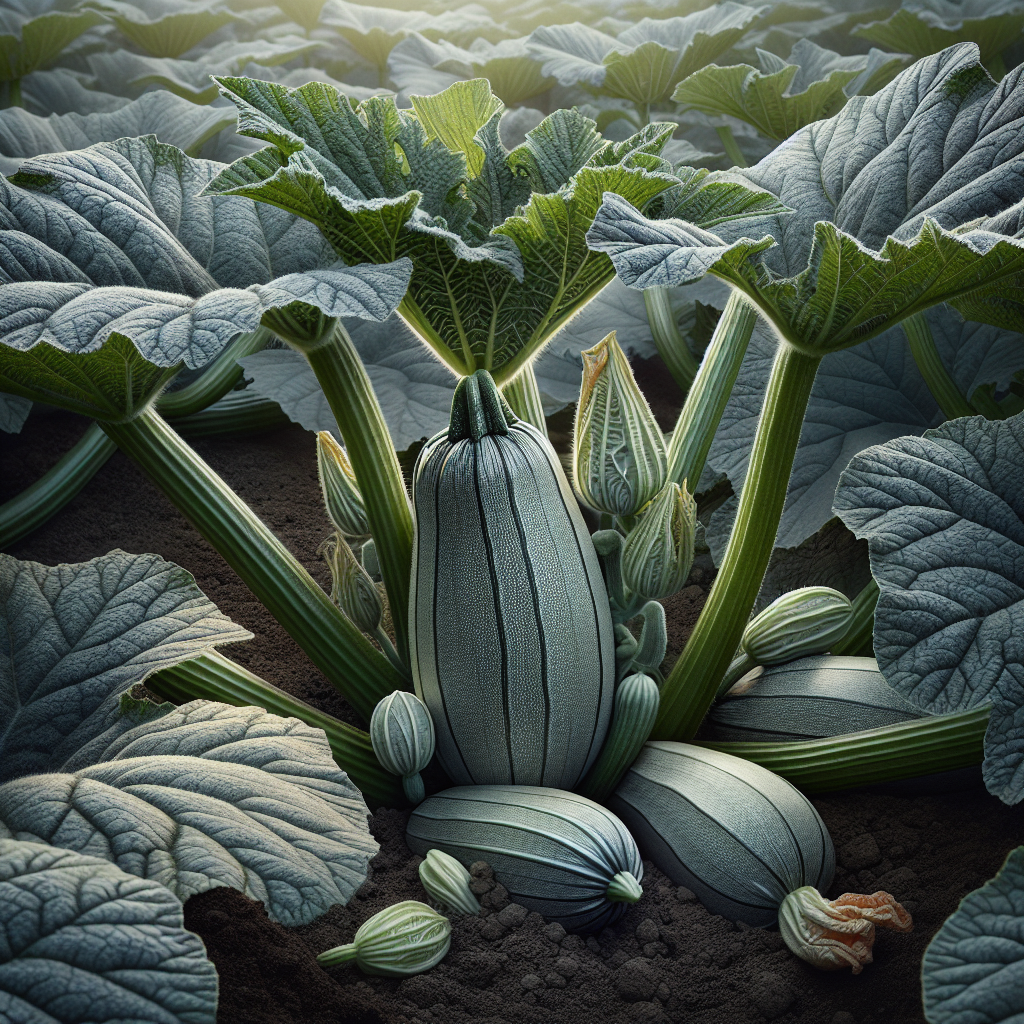
Introduction to Zucchini (Grey)
Grey zucchini is a classic warm-season summer squash valued for its smooth, light gray-green skin, mild flavor, and dependable productivity. In many seed catalogs and regional markets, it may appear under names such as Grey, Gray, Mexican Grey, or various striped gray selections. Compared with dark green types, its fruit is usually slightly paler, often subtly mottled or faintly striped, and especially attractive when harvested young at 15-20 cm long.
This crop belongs to the same species as many other summer squashes and pumpkins, but it is grown for immature fruits rather than mature storage squash. The plant is typically bush-forming rather than vining, making it highly suitable for small farms, market gardens, raised beds, and intensive home production. Grey zucchini is especially appreciated in hot-summer regions because many selections keep producing well under steady heat if irrigation and fertility are consistent.
Historically, zucchini-type squashes were refined from New World Cucurbita genetics and further selected in Europe, especially Italy, into the tender summer squashes widely grown today. Grey forms became especially important in the Americas, where growers favored their soft texture, culinary versatility, and strong adaptation. For growers comparing types, see our Squash guide.
Commercially, the keys to success are rapid establishment in warm soil, uninterrupted growth, even watering, and frequent harvest. Any stress during flowering and fruiting, especially drought, cold soil, or insect pressure, can sharply reduce marketable yield.
Botanical Profile of Zucchini (Grey)
This crop is a frost-sensitive annual in the cucurbit family, Cucurbitaceae. Botanically, it is classified as Cucurbita pepo, the same highly variable species that includes many summer squashes, some pumpkins, gourds, and ornamental forms. Grey zucchini is usually a bush habit cultivar group with short internodes and a broad crown from which large petioles and leaves radiate outward.
Leaves are large, rough-textured, and often deeply lobed, with prickly hairs that can irritate skin during harvest. Silver mottling on leaves is common in many zucchini cultivars and should not automatically be mistaken for disease. Plants produce separate male and female flowers on the same plant. Male flowers appear first in abundance on long slender stalks; female flowers form later and can be identified by the miniature fruit ovary behind the petals.
Pollination biology matters greatly. Each female flower is open for a limited period, usually one morning. Inadequate bee visitation during that window leads to misshapen fruits, partial fruit development, or fruit abortion. Under protected cultivation or in low-pollinator environments, hand pollination may be necessary.
The edible fruit is technically a pepo, a specialized berry with a firm outer rind and fleshy interior. For highest quality, fruit is harvested immature, before rind hardening and seed enlargement. Grey zucchini generally has tender skin, creamy-white flesh, and a delicate, slightly sweet flavor. Because the fruit develops quickly, daily harvest is often justified at peak season.
Typical growth timing under warm conditions is 45-60 days from sowing to first harvest, with continuous picking over several weeks. Plants are shallow- to medium-rooted relative to large vining squash, so they respond strongly to topsoil fertility and irrigation management.
Soil, pH, and Climate Requirements for Zucchini (Grey)
This crop performs best in deep, friable, biologically active soil with strong drainage and high organic matter. Ideal texture is sandy loam to loam, though productive clay loams can work if raised beds or ridges are used to improve aeration. Waterlogging is one of the fastest ways to stunt roots, encourage crown stress, and trigger disease.
The preferred pH range is 6.0-7.0, with an ideal target around 6.3-6.8. Below pH 5.8, nutrient availability, especially calcium and magnesium balance, becomes less reliable, and plant vigor may decline. Above pH 7.2, micronutrient lock-up, especially iron and manganese, can induce pale young growth. If soil tests show low calcium but acceptable pH, gypsum may be preferable to lime.
Grey zucchini is distinctly warm-season. Optimal soil temperature for direct sowing is 21-32°C, with rapid germination often occurring in 4-8 days. Seeds can sprout in slightly cooler soil, but emergence is slower and seedlings are more vulnerable to rot and insects. Air temperatures of 22-30°C produce strong vegetative growth and reliable flowering. Growth slows below 15°C, and even light frost will kill plants.
For best fruit set, warm days and mild nights are ideal. Very high heat, especially above 35°C combined with drought stress, can reduce pollen viability and increase blossom drop. However, grey zucchini often tolerates summer warmth better than many leafy vegetables if root-zone moisture stays consistent.
Moisture management should be precise rather than vague. Aim for evenly moist soil in the top 15-20 cm during establishment, then a deeper wetting profile of roughly 20-30 cm once plants are established. In practical terms, the soil should feel cool and slightly damp when squeezed, not sticky, soupy, or powder-dry. If the top 5 cm becomes dry and crumbly while leaves lose turgor by mid-morning, irrigation is overdue. If leaves remain limp overnight, root stress is already significant.
Signs of overwatering include constantly wet soil, yellowing lower leaves despite adequate fertility, slow growth, edema-like blistering, and increased incidence of damping-off or root disease. Signs of underwatering include dull leaves, midday wilting that persists into evening, aborted small fruit, bitter flavor, and sudden fluctuations in fruit shape. Mulch is extremely helpful in stabilizing soil moisture and reducing splash-borne disease.
A full-sun site is essential. At least 8 hours of direct light is preferred, with 10 or more hours supporting maximum flowering and strong carbohydrate production.
Step-by-Step Planting & Propagation
Propagation is by seed. Like most zucchini, grey types are not propagated vegetatively for production because seed is inexpensive, fast, and reliable.
Prepare the bed thoroughly. Incorporate well-finished compost at 2.5-5 cm across the bed or approximately 5-10 kg per square meter, depending on existing soil organic matter. Avoid undecomposed manure immediately before sowing, as it can promote excessive vegetative growth and disease pressure.
Apply base fertility from a soil test. As a general preplant guideline, zucchini responds well to moderate nitrogen with ample phosphorus and potassium. A balanced organic program might include compost plus a complete vegetable fertilizer. Excess nitrogen early in the season can create huge leafy plants with delayed fruiting.
Wait for warm soil. Direct sow only after frost danger passes and soil is truly warm. In cool climates, use black mulch or low tunnels to raise soil temperature.
Sow at proper depth. Plant seed 2-3 cm deep. In heavier soils, stay closer to 2 cm; in sandy soils, 3 cm is acceptable. Sow 2-3 seeds per station, then thin to the strongest seedling.
Use correct spacing. For bush grey zucchini, space plants 60-90 cm apart in rows 120-180 cm apart. In intensive raised beds, 75 cm between plants is a strong baseline if airflow is excellent. Crowding increases Powdery mildew, poor spray coverage, and harvest difficulty.
Consider transplants cautiously. Start indoors 2-3 weeks before planting out, using biodegradable pots or deep cells to minimize root disturbance. Transplant only when seedlings have 1-2 true leaves. Older transplants often stall after setting out.
Protect seedlings. Row covers can accelerate early growth and exclude Cucumber beetles, but they must be removed at flowering unless hand pollination is planned.
Thin and replant gaps quickly. Uniform stand establishment matters because zucchini is a rapid, short-cycle crop. Missing plants reduce total yield substantially.
For succession planting, sow every 2-3 weeks during the warm growing season. This is one of the best ways to avoid late-season disease collapse and maintain continuous production.
For broader seed-starting principles in cool regions, see winter sowing tips.
Care & Maintenance regimes for Zucchini (Grey)
Once established, this crop rewards consistency. Fast growth means nutrient or water interruptions show up quickly in leaf color, flower production, and fruit quality.
Irrigate deeply rather than frequently and shallowly. A mature planting generally needs about 25-40 mm of water per week from rainfall plus irrigation, but on sandy soils or during hot windy weather, actual demand may be higher. Drip irrigation is strongly preferred because it keeps foliage dry and reduces mildew pressure. Deliver water slowly enough that it infiltrates the root zone instead of running off. In active fruiting, aim to keep soil moisture stable; wide swings from dry to wet can cause growth checks and malformed fruit.
Mulch with clean straw, leaf mold, or biodegradable film after the soil has warmed. Organic mulch conserves moisture, reduces weed competition, keeps fruit cleaner, and lowers soil splash. Keep mulch slightly back from the stem crown to avoid excess humidity at the base.
Nutrient demand rises sharply once flowering begins. If foliage is pale green or growth slows, side-dress with a moderate nitrogen source, but avoid overfeeding. Overly lush canopies trap humidity, shade developing fruits, and attract Aphids. Potassium supports fruit quality and sustained production, while calcium and boron are important for cell integrity and reproductive development, particularly in sandy soils.
Weed control is most important during the first 4-5 weeks. Because the canopy eventually spreads wide, early hoeing or shallow cultivation is usually sufficient. Avoid deep cultivation near mature plants, as feeder roots are easily damaged.
Pollinator management can directly affect yield. If female flowers open but fruits yellow and shrivel within a few days, poor pollination is likely. Hand pollination is simple: pick a freshly opened male flower in the morning, remove petals, and brush pollen onto the female flower stigma. This is especially useful during rainy spells or when insect activity is low.
Pruning is generally unnecessary, but sanitation pruning can help. Remove yellowing diseased lower leaves if airflow is poor, using clean tools and avoiding excessive canopy reduction. Never strip healthy foliage heavily; plants need leaf area to fuel continuous production.
In high-pressure disease climates, succession cropping is often superior to trying to keep a single planting alive indefinitely. Replace old, declining plants with younger sowings before virus and mildew pressure peaks.
Pests, Diseases & Organic Management
Grey zucchini faces the standard cucurbit pest complex, and success depends on early detection. The most damaging insect pests are Cucumber beetles, Squash bugs, Squash vine borers in some regions, Aphids, Whiteflies, and Spider mites.
Cucumber beetles chew cotyledons and young leaves, scar fruit, and more importantly can spread Bacterial wilt. Protect seedlings with insect netting or floating row cover before bloom. Yellow sticky traps can help monitor adults, but physical exclusion and sanitation are more effective than relying on traps alone.
Squash bugs cluster on leaf undersides and stems, causing stippling, wilting, and plant decline. Their copper-colored eggs are often laid in neat groups under leaves. Crush eggs manually, remove adults early in the morning when sluggish, and destroy crop residues promptly after harvest. Keeping mulch too heavy and weedy can create hiding places.
Squash vine borer is more severe in some climates than others. Although bush zucchini can sometimes continue producing after partial damage, infestations can still be devastating. Exclusion netting before flowering is effective. Some growers also use successive sowings to outrun peak borer pressure.
Aphids and Whiteflies weaken plants and vector viruses. Strong water sprays on leaf undersides, insecticidal soap, neem-based products used carefully, and habitat support for beneficial insects can suppress populations. Avoid excessive nitrogen, which encourages soft, pest-prone growth.
The major diseases are Powdery mildew, Downy mildew, Bacterial wilt, and viral diseases such as Zucchini yellow mosaic virus, Cucumber mosaic virus, and Watermelon mosaic virus. Powdery mildew is extremely common late in the season. It begins as white talc-like patches on older leaves and gradually reduces photosynthetic capacity. Good spacing, drip irrigation, resistant genetics where available, and sulfur or potassium bicarbonate sprays used preventively can help.
Downy mildew causes angular yellow lesions and gray-purple sporulation under leaves, especially in humid conditions. It moves fast. Improve airflow, avoid overhead irrigation, and remove severely affected foliage. Copper-based products may offer some suppression in organic systems, though timing is critical.
Bacterial wilt, often spread by Cucumber beetles, causes sudden irreversible wilting despite apparently adequate moisture. A cut stem may show sticky bacterial strands. Infected plants should be removed promptly.
Virus symptoms include mosaic mottling, distorted leaves, shoestring growth, knobby fruit, and severe stunting. There is no cure. Rogue infected plants early, control aphid vectors as much as possible, and remove alternate weed hosts around the field.
Rotation is essential. Do not plant zucchini or related cucurbits in the same ground more than once every 2-3 years if disease pressure is significant. Destroy spent vines immediately after the season rather than letting them linger as pest reservoirs.
Harvesting, Curing & Optimal Storage
Harvest grey zucchini young, glossy, and tender. The prime market stage is usually 15-20 cm long, though baby fruits can be harvested smaller and some markets prefer slightly larger fruit if seeds remain soft. Waiting too long reduces tenderness, enlarges seeds, slows further fruit set, and burdens the plant.
Use a knife or pruners to cut fruit with a short stem stub rather than twisting aggressively, which can tear the plant crown. Harvest every 1-2 days in warm weather. Missing even a few oversized fruits can noticeably reduce new flower initiation.
Quality indicators include smooth skin, even color, firmness without hardness, and no shriveling at the blossom end. Dull, enlarged fruit with thick skin and expanded seed cavity is past prime for fresh market use, though still useful for stuffing, baking, or seed saving if isolation standards were maintained.
Unlike winter squash, grey zucchini is not cured for long storage. It is a high-moisture, immature fruit and should be cooled soon after harvest. Ideal storage conditions are 7-10°C with 85-95% relative humidity. Temperatures much colder than this can cause chilling injury, seen as pitting, water-soaked patches, and rapid breakdown after removal from storage.
Under proper conditions, storage life is usually 1-2 weeks, with best eating quality in the first several days. Do not wash unless necessary before storage; surface moisture encourages decay. If washing for market, dry thoroughly before packing.
Handle fruit gently. Even minor abrasions become entry points for soft rot organisms. Pack in shallow crates, avoid overstacking, and keep harvested produce shaded in the field.
Companion Planting for Zucchini (Grey)
The most useful companion strategy is not folklore but functional crop design: support pollinators, confuse pests, and use space efficiently without increasing disease humidity around the zucchini canopy.
Nasturtium is one of the best companions because it can attract Aphids away from the crop, provide living groundcover, and bring in beneficial insects. It should be placed near but not smothering the zucchini crown.
Radish is a quick intercrop that can occupy bed edges before the zucchini canopy expands. It helps maximize early space use and is harvested before competition becomes serious. Some growers also use radish as part of a trap-crop concept for certain flea beetles, though results vary by region.
Sunflower can help attract pollinators and beneficial insects, but it should be positioned so it does not shade the zucchini during the main production window. Tall companions belong on the north or west side in northern hemisphere layouts.
Peas can be useful in seasonal succession rather than direct co-occupation for long periods. Early peas may finish before zucchini fully spreads, allowing efficient use of bed space while contributing some biological nitrogen through residues, though the main benefit is rotational rather than direct feeding.
Avoid pairing grey zucchini too closely with other heavy-feeding cucurbits such as melons, cucumbers, pumpkins, or sprawling winter squash because they compete for light, nutrients, and airflow while sharing many of the same pests and diseases. Aromatic herbs and flowering insectary plants planted at row ends or borders are usually more beneficial than cramming companions into the plant crown zone.
The best companion layouts preserve three things: sun, air movement, and pollinator access. If a companion reduces any of those, it is helping the system less than it appears.