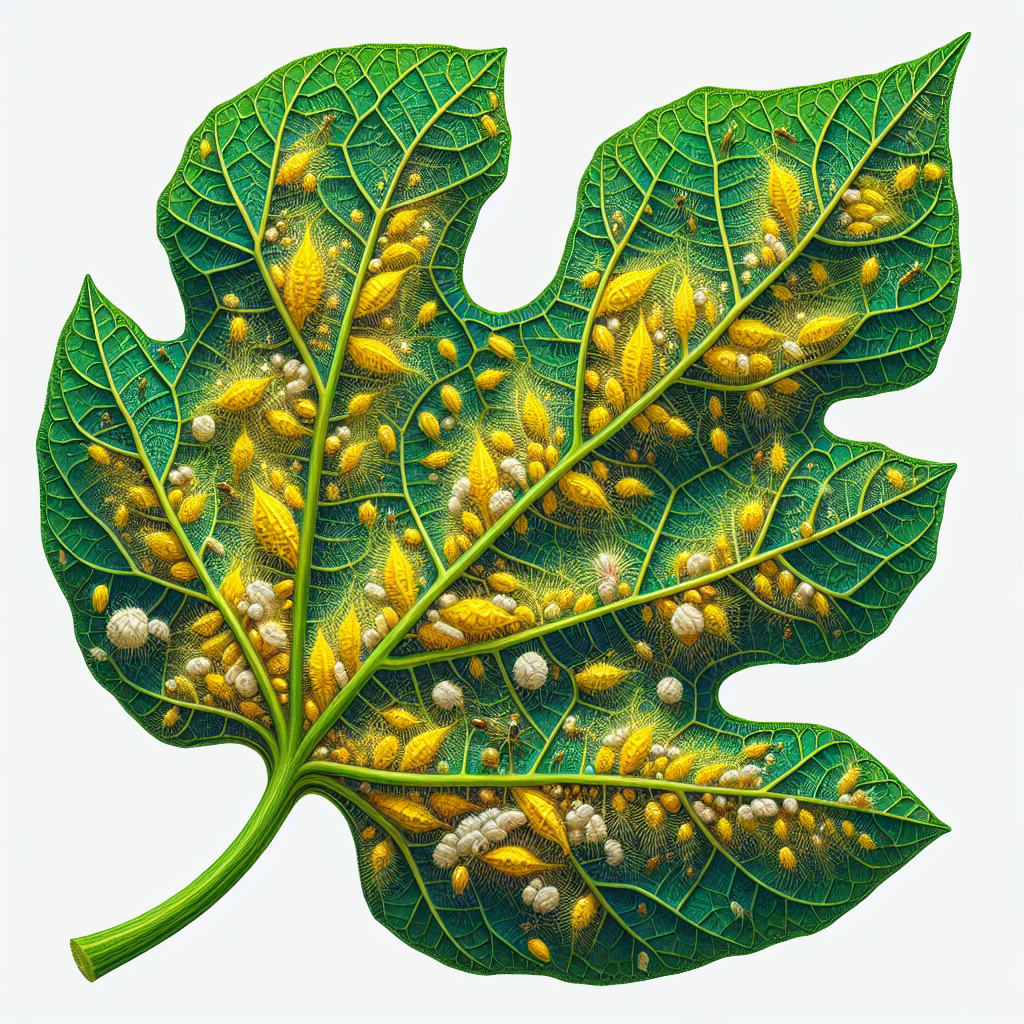
Introduction to yellow vein mosaic
Yellow vein mosaic disease (YVMD) represents one of the most significant viral threats to vegetable production worldwide, particularly in tropical and subtropical regions. Caused primarily by begomoviruses such as the okra yellow vein mosaic virus (OYVMV), a member of the Geminiviridae family, this disease is transmitted efficiently by the whiteflies vector Bemisia tabaci. First identified in India in the early 20th century, YVMD has since spread globally, devastating crops like okra (Abelmoschus esculentus), mung bean, and bhindi varieties.
The disease manifests as prominent yellowing along leaf veins, leading to stunted growth, leaf curling, and up to 90% yield reduction in severe cases. Infected plants become brittle, flowers drop prematurely, and pods develop malformed, reducing market value. Economic impacts are profound for smallholder farmers reliant on these high-value crops. Understanding transmission dynamics—primarily through whitefly vectors feeding on infected plants—is crucial for effective management. This guide equips growers with diagnostic tools, organic treatments, and prevention strategies to combat YVMD sustainably. For hyper-local insights on disease forecasting, check this blog post on AI weather forecasts.
Identifying Symptoms & Damage
Accurate diagnosis begins with recognizing YVMD's hallmark symptoms, which appear 10-20 days post-infection. Initial signs include a clearing or yellowing of tissues along the main and secondary leaf veins, creating a striking mosaic pattern against green interveinal areas. Leaves become thick, leathery, and brittle, often curling upwards or downwards in a spoon-shaped deformity.
As the disease progresses, younger leaves show intensified yellowing, stunting plant height to 30-50% of healthy counterparts. Flowers abort, and pods—if formed—are short, thin, and twisted, with yellow mottling. Severe infections cause enations (bubble-like outgrowths) on leaf undersides and overall chlorosis. Differentiate YVMD from nutrient deficiencies like iron chlorosis (uniform yellowing without vein prominence) or powdery mildew (white powdery coating). Use a hand lens to inspect for whitefly presence: tiny, white winged insects (1-2mm) on leaf undersides.
Damage quantification: Mild infections reduce yields by 20-40%; severe cases exceed 80%. In okra fields, scout 20-30 plants per acre weekly, noting incidence (infected plants/total) and severity (symptom coverage per leaf). Lab confirmation via PCR or ELISA detects begomovirus DNA/ proteins. Early identification prevents spread, as whiteflies acquire the virus in 15-30 minutes and transmit lifelong.
Lifecycle and Progression of yellow vein mosaic
YVMD follows a persistent circulative transmission cycle via whiteflies. The begomovirus has a single-stranded DNA genome, encapsidated in twin icosahedral particles. Whitefly acquires virus during feeding on infected phloem; it multiplies in vector's salivary glands, remaining infective for life (up to 15 days).
Post-inoculation, virus enters plant phloem, moving cell-to-cell and systemically. Symptoms emerge 7-21 days later, coinciding with viral replication peaks. Infected plants serve as reservoirs; pollen and seed transmission is negligible (<1%). Disease progression: Stage 1 (vein clearing, 1-2 weeks); Stage 2 (leaf deformation, 2-4 weeks); Stage 3 (stunting, flower drop, ongoing). Under optimal conditions (25-35°C, high humidity), epidemics build rapidly, with secondary spread via wind-dispersed whiteflies up to 100m.
Perennial weeds like crotalaria and alternate hosts (tomato, chili-pepper) harbor the virus year-round. Lifecycle aligns with whitefly generations (20-30 days), amplifying outbreaks in monsoon seasons.
Environmental Triggers & Risk Factors
YVMD thrives in warm, humid climates (25-40°C, 70-90% RH), peaking during rainy seasons when whitefly populations explode. High nitrogen fertilization promotes lush growth, attracting vectors. Poor field sanitation—leaving infected debris—creates inoculum sources. Close crop spacing (<45cm) facilitates transmission; mixed cropping with susceptible hosts like mung bean heightens risk.
Soil pH extremes (>8.0) stress plants, reducing resistance. Drought followed by irrigation spikes whitefly activity. Risk factors include: whitefly-infested fields nearby, late planting (overlapping with vector peaks), and susceptible varieties (e.g., Pusa Sawani okra). Global warming extends vector seasons, increasing incidence. Monitor with yellow sticky traps (10/acre) targeting 5-10 whiteflies/trap/day as action threshold.
Organic Control & Treatment Plans
No curative treatments exist for YVMD; management focuses on vector suppression and cultural controls. Immediate Actions: Rogue infected plants promptly, burying >50cm deep. Apply neem oil (5ml/L) or insecticidal soap weekly to undersides, targeting nymphs (80% mortality). Introduce biological agents: Encarsia formosa parasitoids (1-2/week) or predatory beetles.
Integrated Plan: 1) Spray azadirachtin (0.03%) at 7-day intervals during scouting peaks. 2) Intercrop with trap crops like marigold to divert whiteflies. 3) Mulch with silver reflective plastic (reduces transmission 50%). 4) Foliar calcium (2g/L) boosts tolerance. For severe outbreaks, prune affected leaves, dispose off-site.
Organic Boosters: Compost teas with Trichoderma (10^6 CFU/ml) enhance plant vigor. Companion plantings of thai-basil repel vectors. Rotate with non-hosts like onion (2 years). Efficacy: Combined approaches reduce incidence 70-90%. Avoid broad-spectrum sprays preserving predators.
Preventing yellow vein mosaic in the Future
Prevention hinges on certified virus-free seeds/seedlings from reputable sources. Plant resistant varieties: Arka Anamika, Parbhani Kranti (okra). Time sowing to evade whitefly peaks (pre-monsoon). Maintain 60cm spacing for airflow. Eradicate weeds; border crops with sorghum barriers.
Yellow sticky traps + mass trapping with pheromone lures cut populations 60%. Soil solarization (6 weeks summer) kills soil inoculum. Boost immunity via balanced nutrition (NPK 100:50:50 kg/ha + micronutrients). Scout rigorously; act at 5% incidence. Long-term: Breed for multivirus resistance. Clean tools/equipment with 10% bleach. These IPM strategies sustain yields >90% disease-free.
Crops Most Affected by yellow vein mosaic
Okra (bhindi) tops the list, with 70-100% incidence in Asia/Africa. Legumes like mung bean, black gram suffer 50-80% losses. Other malvaceae: cotton (cotton), hollyhock. Solanaceae (eggplant, bell-pepper) show milder symptoms. Emerging threats to chickpeas, soybeans. Regional hotspots: India (80% okra fields), Pakistan, Bangladesh.