Introduction to Crotalaria
Crotalaria, often referred to as rattlepod, rattlebox, or showy rattlebox, represents one of the most challenging invasive weeds in tropical and subtropical agriculture. Belonging to the Fabaceae family, this genus comprises over 700 species, with Crotalaria spectabilis, Crotalaria retusa, and Crotalaria pallida being particularly notorious for their rapid spread and toxicity. Native to Africa and Asia, Crotalaria has become a global agricultural pest, thriving in disturbed soils and outcompeting cash crops through aggressive growth and nitrogen-fixing capabilities.
What makes Crotalaria especially dangerous is its production of pyrrolizidine alkaloids (PAs), potent hepatotoxins that render seeds and plant material poisonous to livestock, causing irreversible liver damage known as 'walkabout disease' in cattle. In crop fields, it reduces yields by 30-70% through resource competition and can contaminate harvests, leading to rejection in export markets. Early identification and integrated management are critical, as mature plants produce thousands of seeds per pod that remain viable in soil for decades. This comprehensive guide equips farmers, agronomists, and extension officers with diagnostic tools, lifecycle knowledge, organic control methods, and prevention strategies to eradicate Crotalaria infestations effectively. For more on legume crop vulnerabilities, see our detailed entry on soybeans.
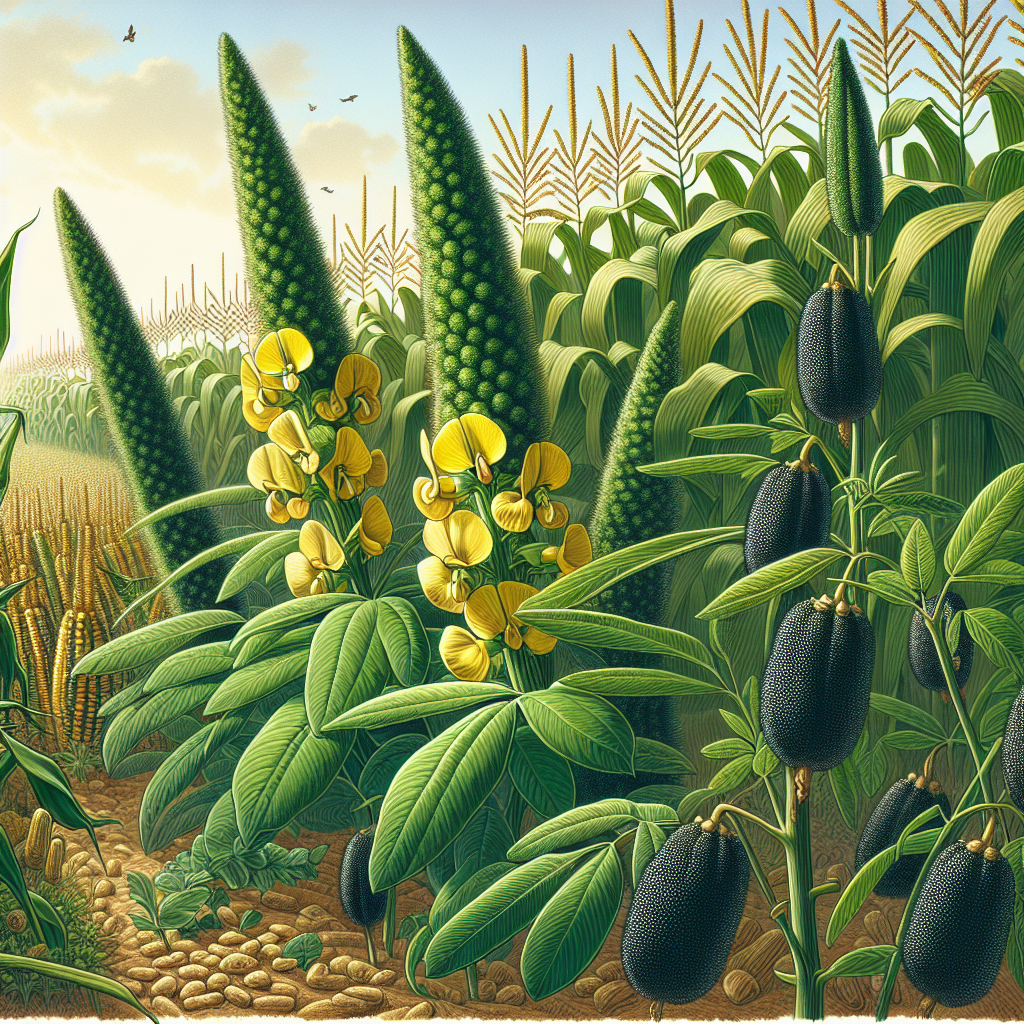
Understanding Crotalaria's biology is key to control. These annual or short-lived perennial herbs grow 1-3 meters tall, featuring trifoliate leaves and striking yellow flowers that mature into inflated, rattling seed pods—hence the 'rattlebox' moniker. In warm climates, a single plant can generate 5,000-20,000 seeds, ensuring long-term soil seedbanks. Economic impacts are severe: in the southeastern U.S., Crotalaria has caused millions in losses to peanut and cotton fields, while in Australia and India, it devastates pastures and grain crops. Proactive management not only protects current yields but also prevents reinfestation, making this guide indispensable for sustainable farming.
Identifying Symptoms & Damage
Diagnosing Crotalaria requires keen observation of its distinctive morphology and the damage it inflicts. Plants emerge rapidly post-rainfall or irrigation, displaying upright stems with alternate, lance-shaped leaflets (5-15 cm long) arranged in threes. Flowers appear in showy racemes, bright yellow with five petals, blooming from summer to fall. The hallmark is the mature seed pods: inflated, 2-5 cm long, turning black and rattling with loose seeds inside—unmistakable in the field.
Damage manifests as intense competition: Crotalaria shades out seedlings, depletes soil moisture and nutrients, and suppresses crop germination. In row crops like corn or cotton, it emerges between rows, reaching 2 meters and smothering young plants. Yield losses average 40% in moderate infestations, escalating to total crop failure at high densities. Visual symptoms include stunted crop growth, pale leaves from nitrogen competition (despite Crotalaria's fixation), and contaminated harvests with toxic seeds.
Livestock poisoning signs include weight loss, photosensitivity, unsteady gait, and jaundice from PA-induced liver failure. Seeds mixed in hay or silage are primary vectors. Differentiate from similar legumes like pigeon pea or sesbania by the rattling pods and toxic profile. Scout fields weekly during wet seasons; a density of 1 plant/m² warrants immediate action. Use this checklist: (1) Yellow flowers in racemes? (2) Inflated black pods? (3) Rapid growth in disturbed soil? Positive matches confirm Crotalaria. For associated pest pressures, refer to root-knot nematodes, which often coincide with weed invasions.
Lifecycle and Progression of Crotalaria
Crotalaria's lifecycle is adapted for invasion: primarily annual but perennating in frost-free zones. Seeds germinate in warm, moist soils (optimal 25-35°C), triggered by summer rains. Seedlings emerge in 7-14 days, developing true leaves by week 2. Vegetative growth accelerates, with branching and height gains of 10 cm/day under ideal conditions.
Flowering commences 6-8 weeks post-emergence, peaking in midsummer. Pollination by bees ensures high seed set; each pod yields 20-50 seeds. Maturation occurs 4-6 weeks later, with pods dehiscing to scatter seeds ballistically up to 3 meters. A single plant produces 10,000+ seeds, 80% viable for 10+ years in soil banks. Dormancy mechanisms include hard seed coats impermeable to water until scarified by tillage or digestion.
Progression phases: (1) Seedling (0-4 weeks: vulnerable to herbicides); (2) Vegetative (4-8 weeks: rapid biomass accumulation); (3) Reproductive (8-16 weeks: seed production peak); (4) Senescence (post-seed set: dieback but seed persistence). Multiple flushes occur in perennials. In tropics, year-round cycling perpetuates infestations. Lifecycle knowledge informs timing: control pre-flowering for maximum efficacy. Learn more about effective timing in Why Timing Kills Small Farm Profits - And How AI Task Scheduling Saves Your Harvests.
Environmental Triggers & Risk Factors
Crotalaria thrives in USDA zones 8-11, preferring sandy, well-drained soils with pH 5.5-7.5. Key triggers: high rainfall (>800 mm/year), temperatures 20-35°C, and disturbed sites like tilled fields, roadsides, or overgrazed pastures. Nitrogen-rich soils from prior legume crops enhance competitiveness.
Risk factors include no-till farming without cover crops, monsoon flooding introducing seeds, and contaminated manure from infested pastures. Crop rotations with peanuts or soybeans heighten vulnerability due to similar growth habits. Livestock movement spreads seeds via fur/hair. Climate change expands range northward. High-risk scenarios: fallow fields post-harvest, irrigation canals, and organic farms avoiding synthetics. Mitigation starts with soil testing for seedbanks via bioassays.
Organic Control & Treatment Plans
Organic management integrates mechanical, cultural, and biological tactics. Immediate Control: Hand-pull or hoe seedlings pre-flowering (<30 cm tall); burn debris to destroy seeds. Mowing at bud stage prevents seed set but repeat 3-4 times/season.
Cultural Practices: Dense crop planting shades out weeds. Solarization (clear plastic over moist soil, 4-6 weeks summer) kills 90% surface seeds. Cover crops like clover or sorghum suppress germination.
Biological: Grazing by goats/sheep pre-flowering (avoid seed stage due to toxicity). Introduce seed-feeding bruchid beetles (Bruchus spp.) where legal.
Treatment Plan: Week 1: Scout/mow. Week 2-4: Solarize hotspots. Ongoing: Rotate with suppressants. Monitor 2 years post-control. For misidentification pitfalls, check Why Misidentifying Plants Costs Small Farms Thousands - And How AI Camera Diagnosis Fixes It Fast. Success rates: 85% with integrated approach.
Preventing Crotalaria in the Future
Prevention hinges on seedbank depletion and barriers. Clean equipment/seeds rigorously. Use certified weed-free manure. Implement 3-year rotations excluding legumes. Mulch heavily (10 cm organic matter) post-emergence. Soil solarization annually in high-risk zones. Monitor with sticky traps for seed rain. Long-term: deep tillage buries seeds beyond germination depth. Community action: coordinate roadside control. Threshold: Zero tolerance in croplands. Track via farm maps.
Crops Most Affected by Crotalaria
Crotalaria devastates tropical/subtropical crops: peanuts (yield loss 50-80%), cotton (fiber contamination), corn (shading), sorghum (competition), and pastures. Also impacts sugarcane, rice, and vegetables like okra. Toxicity risks highest in forage for cattle/horses.