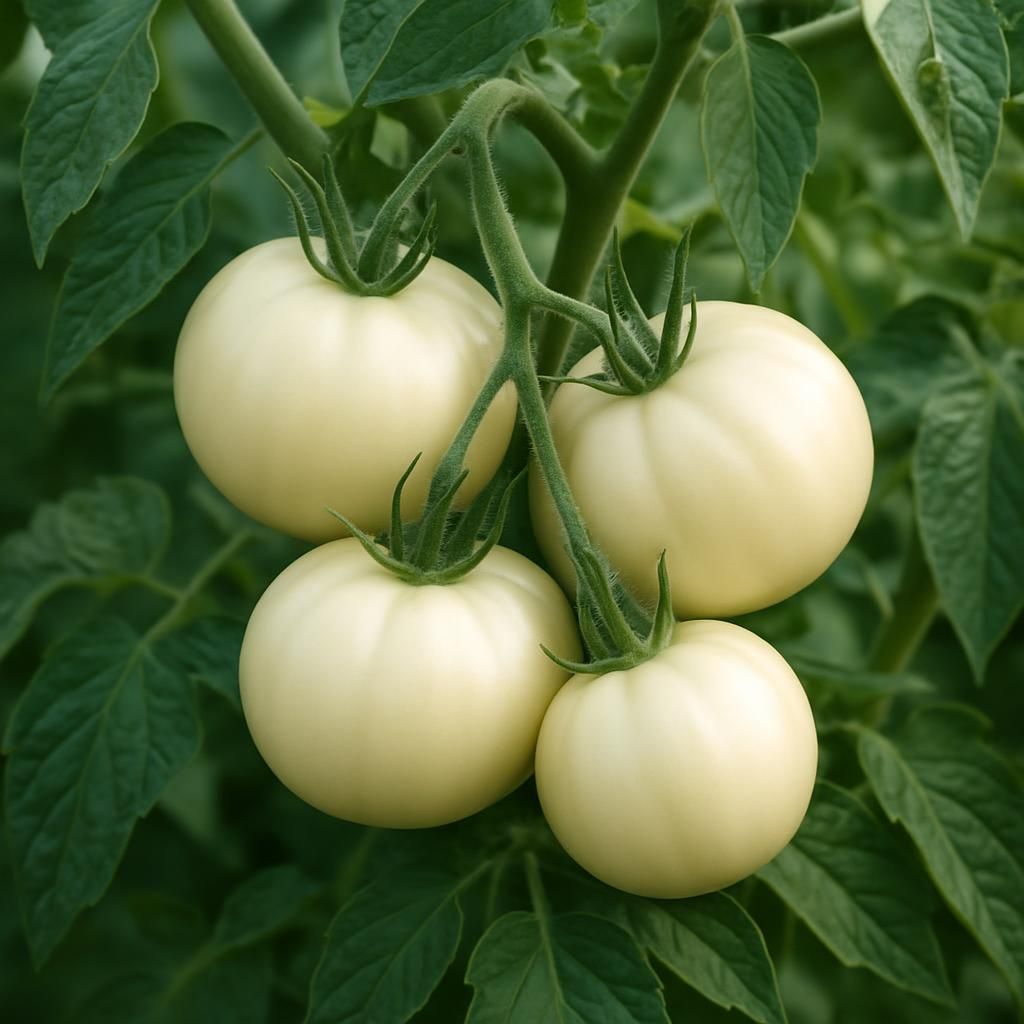
Introduction to White Queen Tomato
The White Queen Tomato (Solanum lycopersicum 'White Queen') is an heirloom variety celebrated for its ivory-white fruits and exceptionally mild, sweet flavor. Unlike typical red tomatoes, this cultivar produces creamy, low-acid fruits that reach 2–3 inches in diameter. Gardeners and small-scale farmers value it for both fresh eating and specialty markets. Its indeterminate growth habit allows continuous production throughout the season when conditions are favorable.
White Queen performs best in regions with long, warm growing seasons. It requires consistent moisture, nutrient-rich soil, and protection from common tomato ailments. While moderately challenging to grow, its unique appearance and taste reward dedicated cultivators.
Botanical Profile of White Queen Tomato
White Queen belongs to the nightshade family (Solanaceae) and exhibits classic indeterminate tomato characteristics. Plants can reach 6–8 feet in height, requiring sturdy staking or caging. The foliage is medium-green with slightly serrated leaflets typical of heirloom varieties. Flowers are bright yellow and self-pollinating, though wind and insect activity improve fruit set.
Fruits develop a smooth, creamy-white skin and pale interior flesh. They contain fewer seeds than many red varieties and exhibit a balanced sugar-to-acid ratio. Maturity occurs in approximately 75–85 days from transplant. The variety shows moderate resistance to cracking but benefits from consistent irrigation.
Soil, pH, and Climate Requirements for White Queen Tomato
Successful cultivation begins with proper soil preparation. White Queen prefers fertile, well-draining loam enriched with organic matter. Heavy clay soils should be amended with compost or aged manure to improve structure and drainage.
| Parameter | Ideal Range | Notes |
|---|---|---|
| Soil Type | Loamy, well-draining | Add compost for heavy soils |
| Soil pH | 6.2 – 6.8 | Test and adjust with lime or sulfur |
| Temperature (Day) | 70–85°F (21–29°C) | Optimal fruit set occurs in this range |
| Temperature (Night) | 55–65°F (13–18°C) | Below 50°F slows growth |
| Sunlight | Full sun, 8+ hours | Afternoon shade in extreme heat |
| Spacing | 24–36 inches between plants | Rows 4–5 feet apart |
| Frost Tolerance | None | Transplant after last frost date |
Step-by-Step Planting & Propagation
Start seeds indoors 6–8 weeks before the last expected frost. Use a sterile seed-starting mix and maintain soil temperature at 70–80°F for best germination. Seedlings emerge in 7–14 days. Harden off plants for 7–10 days before transplanting outdoors.
Transplant into prepared beds once soil has warmed to at least 60°F. Dig holes twice the width of the root ball and incorporate compost. Bury stems up to the first true leaves to encourage strong root development. Water thoroughly after planting and apply mulch to retain moisture.
Care & Maintenance regimes for White Queen Tomato
Consistent care ensures healthy plants and abundant harvests. Monitor soil moisture daily during peak summer heat. Fertilize with a balanced organic formula during vegetative growth, then switch to a phosphorus-rich feed at flowering. Prune suckers regularly to improve airflow and fruit quality.
| Task | Frequency | Details |
|---|---|---|
| Watering | 1–2 inches per week | Deep, infrequent watering; avoid wetting foliage |
| Fertilizer | Every 3–4 weeks | High-nitrogen early; switch to bloom formula |
| Pruning | Weekly | Remove suckers below first flower cluster |
| Mulching | At planting and mid-season | 2–3 inches organic mulch to suppress weeds |
| Staking/Caging | Immediately after transplant | Use 6–8 ft stakes or heavy-duty cages |
Pests, Diseases & Organic Management
White Queen is susceptible to common tomato pests including Aphids, Whiteflies, and Hornworms. Regular scouting and introduction of beneficial insects such as ladybugs and lacewings provide effective control. Neem oil and insecticidal soaps offer organic options when populations exceed thresholds.
Diseases such as Early blight, Septoria leaf spot, and Tomato spotted wilt virus can affect plants. Practice crop rotation, avoid overhead watering, and remove infected foliage promptly. Copper-based fungicides and compost tea sprays help suppress fungal issues.
Harvesting, Curing & Optimal Storage
Harvest fruits when they reach full creamy-white color and yield slightly to gentle pressure. Pick in the morning for best flavor and shelf life. Use pruning shears to avoid damaging stems.
Store unripe fruits at room temperature away from direct sunlight. Ripe tomatoes keep 4–7 days in the refrigerator or up to two weeks in a cool, dark pantry. For longer storage, process into sauces or can whole. Avoid stacking to prevent bruising.
Companion Planting for White Queen Tomato
Pair White Queen with aromatic herbs and flowers that deter pests and improve soil health. Basil planted nearby repels aphids and enhances flavor. Marigold and Nasturtium provide natural pest barriers. Avoid planting near Fennel or Walnut trees, which can inhibit growth.
Legumes such as Peas or Beans fix nitrogen and benefit subsequent tomato crops. Rotate with Lettuce or Carrot in following seasons to break disease cycles. Diverse plantings increase resilience and support beneficial insect populations.