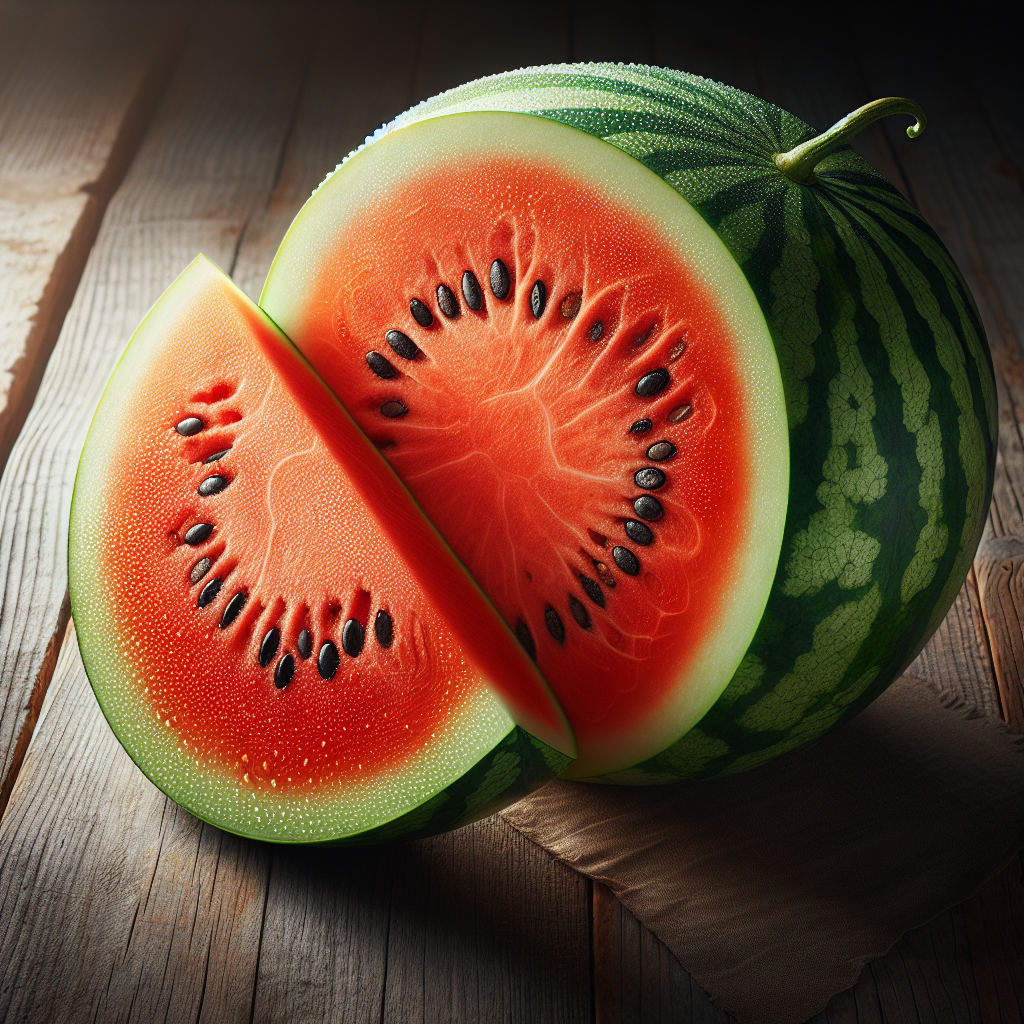
Introduction to Watermelon (Orangeglo)
Watermelon (Orangeglo) stands out as a true gem among heirloom melons, distinguished by its striking orange-red flesh that delivers unparalleled sweetness with Brix levels often exceeding 12-14. Unlike traditional red-fleshed varieties like Crimson Sweet Watermelon, Orangeglo offers a denser texture, fewer seeds, and a flavor profile blending honeyed notes with subtle tropical undertones. Originating from South African seed stock introduced to American growers in the early 20th century, this variety has gained cult status among melon enthusiasts for its productivity and disease resistance.
Growing Orangeglo watermelons rewards patient farmers with fruits averaging 15-25 pounds, ripening in 85-95 days under optimal conditions. Its semi-compact vines, spanning 6-8 feet, make it suitable for smaller plots or even container culture in large pots (20+ gallons). This comprehensive guide draws on botanical expertise, field-tested agricultural practices, and entomological insights to maximize yields while minimizing inputs. Whether you're a backyard gardener or scaling up for market sales, mastering Orangeglo cultivation unlocks a profitable niche in the specialty melon market. For broader context on melon family traits, explore Watermelon (crop).
Botanical Profile of Watermelon (Orangeglo)
Scientific Classification:
- Kingdom: Plantae
- Family: Cucurbitaceae
- Genus: Citrullus
- Species: C. lanatus var. 'Orangeglo'
Orangeglo is an open-pollinated heirloom cultivar of the watermelon, a trailing annual monocot with pentapetalous flowers. Vines exhibit moderate vigor, producing 4-6 fruits per plant under ideal conditions. Leaves are large (6-12 inches), palmately lobed with coarse serrations, and covered in a light pubescence that deters certain aphids. Stems are angular, reaching 1/2-inch diameter at maturity, with tendrils aiding trellising.
Roots form an extensive fibrous system penetrating 3-4 feet deep, with lateral spread up to 10 feet, emphasizing the need for well-drained substrates. Male flowers appear first in racemes, followed by solitary female flowers identifiable by their inferior ovary. Pollination relies on bees and other hymenopterans; hand-pollination boosts set in enclosed spaces. Fruit rind is light green with darker mottling, maturing to a creamy yellow at peak ripeness. Internally, the flesh transitions from vibrant orange at the center to lighter hues near the rind, encasing minimal black seeds. Nutritional highlights include high beta-carotene (vitamin A precursor), lycopene, and antioxidants, surpassing many standard watermelons.
Growth habit is prostrate but trainable vertically, conserving space while improving airflow to combat powdery mildew. Photoperiod neutral, it thrives in long days (14+ hours) for optimal fruit bulking. Seed viability remains high (85-95%) for 4-5 years if stored at 40°F and 40% humidity.
Soil, pH, and Climate Requirements for Watermelon (Orangeglo)
Orangeglo demands sandy loam or loam soils with excellent drainage to prevent root rot. Optimal pH ranges 6.0-6.8; test and amend with dolomite lime if below 5.8 or elemental sulfur above 7.2. Organic matter content should hit 3-5%—incorporate aged compost or well-rotted manure at 2-4 inches pre-planting.
Climate Profile: USDA zones 3-11 as an annual; frost-free season minimum 90 days. Germination occurs at soil temps 70-95°F (optimum 85°F). Daytime highs of 85-95°F accelerate growth, with nights above 65°F preventing fruit set issues. Humidity tolerance is moderate; excessive moisture (>80% RH prolonged) invites fungal foes. Full sun (8+ hours) essential; yields drop 30-50% in partial shade. Drought stress during fruit sizing concentrates sugars but risks blossom-end rot—mulch heavily with straw or black plastic to retain moisture and suppress weeds.
For heatwave-prone areas, reference strategies in Why Summer Heatwaves Are Silently Killing Small Farm Yields - And 7 Organic Strategies to Fight Back. Irrigation: Drip systems delivering 1-1.5 inches/week, avoiding foliage wetting. Soil EC <2.0 dS/m; salinity sensitivity high.
Step-by-Step Planting & Propagation
Seed Starting (4-6 weeks pre-last frost): Sow 1cm deep in 3-inch peat pots at 85°F under grow lights. Use sterile medium (50% vermiculite, 50% coconut coir). Thin to strongest seedling; harden off over 7-10 days.
Direct Sowing (soil >70°F): Hills 6 feet apart, rows 8-10 feet, 3-5 seeds/hill, thin to 2 strongest. Pre-soak seeds 12 hours in 122°F water for vigor boost.
Transplanting: Acclimate 7 days; plant at same depth, evening hours. Black plastic mulch warms soil 5-8°F, advances maturity 10-14 days.
Propagation Alternatives: Stem cuttings root readily in perlite (80% success); save seed from healthiest fruits, ferment pulp 3 days, dry at 85°F.
Spacing: 36-48 inches between plants for vine spread. Trellis varieties save 50% space, support fruits in slings >10 lbs.
Care & Maintenance regimes for Watermelon (Orangeglo)
Fertilization: Side-dress at vine tip 12 inches: 5-10-10 NPK (1 lb/100 sq ft). Foliar calcium (1%) weekly post-fruit set prevents BER. Micronutrients: boron (0.1%) if deficient.
Irrigation: 1-2 inches/week via drip; reduce post-fruit set for sugar accrual. Deficit irrigation (70% ET) from week 8 enhances Brix.
Pruning: Pinch main vine at 5th leaf post-last female flower; remove laterals beyond 3 fruits/plant for sizing.
Weed Control: Mulch 4 inches; shallow cultivate until vines cover. Avoid tillage post-flowering.
Monitoring: Scout weekly for nutrient deficiencies (yellow older leaves = N; interveinal chlorosis = Mg). pH drift checked bi-monthly.
Pests, Diseases & Organic Management
Key Pests: Cucumber Beetles vector wilt—row covers until bloom, kaolin clay barrier. Squash Bugs: eggs under leaves, hand-pick, neem oil. Vine Borers: slit stems, inject Bt. Aphids: insecticidal soap, ladybugs.
Diseases: Powdery Mildew: sulfur dust, 3-5 days spacing. Anthracnose: copper fungicide, resistant spacing. Fusarium Wilt: crop rotation 4 years, grafted plants. Watermelon Mosaic Virus: rogue infected, reflective mulch.
Organic IPM: Beneficials (predatory wasps, nematodes). See Why 90% of Small Farms Fail at Pest Management - And 8 Organic Fixes That Actually Work for protocols. Neem + spinosad rotation, sanitation paramount.
Harvesting, Curing & Optimal Storage
Harvest when rind yellows, tendril nearest dry, underside yellows (ground spot). Thump test: deep hollow sound. Cut with 2-inch stem.
Yield: 2-4 fruits/plant, 15-25 lbs each.
Curing: Field cure 7-10 days (95°F), then 55-60°F/85% RH 2 weeks for sugar migration.
Storage: 50-55°F/85-90% RH, 3-4 weeks. Avoid <45°F chilling injury. Market whole or cut (refrigerate 32-36°F, 7-10 days).
Companion Planting for Watermelon (Orangeglo)
Beneficials: Nasturtium traps beetles; Marigold nematodes; Corn shade/trellis; Thai Basil repels aphids.
Avoid: Potato (blight shared); Cucumber (space competition).
Interplant bush beans for N-fixation. Read Fall Companion Planting Guide: Boost Yields and Soil Health for Small Farms and Gardens for synergies. Spacing ensures airflow.