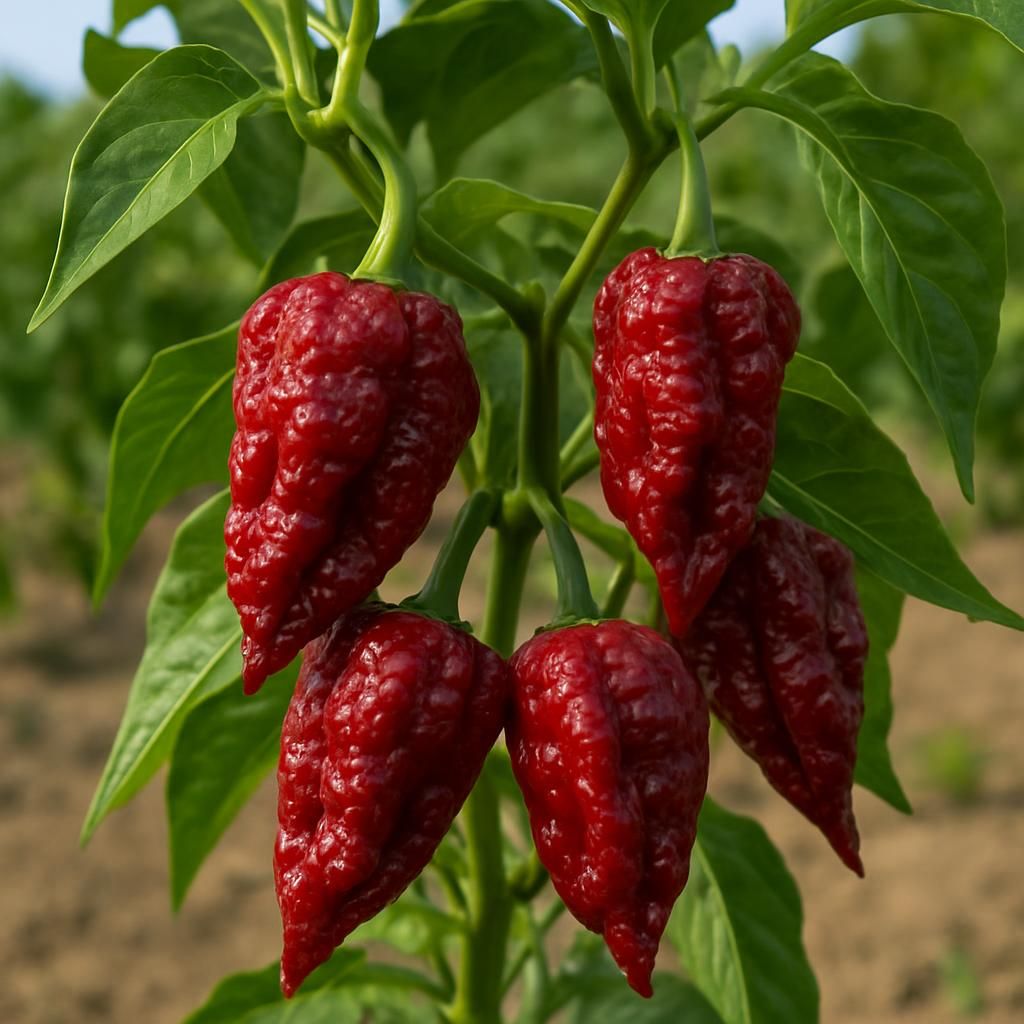
Introduction to Warangal Chappatta Chili
Warangal Chappatta Chili is a regionally celebrated cultivar from Telangana, India, known for its distinctive broad, wrinkled pods and deep scarlet hue when mature. Farmers value it for consistent yields, moderate pungency (40,000–70,000 SHU), and superior drying qualities that produce premium-grade spice powder. The variety supports both fresh-market sales and export-oriented dried chili chains.
Botanical Profile of Warangal Chappatta Chili
This cultivar belongs to the species Capsicum annuum. Plants reach 60–90 cm in height with a semi-spreading habit and dark green, ovate leaves. Flowers are small, white, and self-pollinating. Fruits are 6–9 cm long, 3–4 cm wide, and feature pronounced longitudinal furrows giving the "chappatta" (wrinkled) appearance. The thick pericarp (2.5–3.5 mm) contributes to excellent rehydration properties after drying.
Soil, pH, and Climate Requirements for Warangal Chappatta Chili
Successful cultivation begins with matching soil and climate parameters to the crop’s needs.
| Parameter | Ideal Range | Notes |
|---|---|---|
| Soil Type | Sandy loam to clay loam | Well-drained; avoid waterlogging |
| Soil pH | 6.0–7.0 | Slightly acidic to neutral |
| Temperature (Day) | 25–35 °C | Optimal fruit set occurs at 28–32 °C |
| Temperature (Night) | 18–22 °C | Below 15 °C delays flowering |
| Annual Rainfall | 600–900 mm | Supplemental irrigation required in dry spells |
| Altitude | 0–800 m | Performs well in lowland tropics |
| Relative Humidity | 60–80 % | Higher humidity increases disease pressure |
Step-by-Step Planting & Propagation
- Seed Selection: Source certified, disease-free seed of Warangal Chappatta Chili.
- Nursery Raising: Sow seeds in well-prepared raised beds or pro-trays using sterilized coco-peat mix. Maintain 25–30 °C for 7–10 days until germination.
- Seedling Hardening: Reduce watering and expose seedlings to direct sunlight 7–10 days before transplanting.
- Land Preparation: Plough twice, incorporate 10–12 t/ha well-rotted FYM, and level the field.
- Transplanting: Move 35–45-day-old seedlings at 4–6 leaf stage. Spacing: 60 cm × 45 cm or 75 cm × 45 cm depending on soil fertility.
- Irrigation at Transplant: Apply light irrigation immediately after planting to settle roots.
Care & Maintenance regimes for Warangal Chappatta Chili
| Growth Stage | Watering Schedule | Fertilizer Application | Pruning / Training Schedule |
|---|---|---|---|
| Seedling (0–30 d) | Light daily misting | 10 kg N, 20 kg P₂O₅, 10 kg K₂O per ha basal | Pinch apical bud at 4-leaf stage |
| Vegetative (30–60 d) | 2–3 irrigations/week | 30 kg N, 20 kg K₂O top-dress at 30 DAT | Remove lower leaves touching soil |
| Flowering (60–90 d) | Every 4–5 days | 20 kg N, 10 kg K₂O at 60 DAT | Remove first flower cluster to boost branching |
| Fruiting (90+ d) | Every 5–7 days; avoid water stress | 10 kg N, 15 kg K₂O at 90 DAT | Periodic removal of diseased branches |
Pests, Diseases & Organic Management
Common threats include Aphids, Thrips, Spider Mites, Fruit and shoot borers, and fungal issues such as Anthracnose, Powdery mildew, and Chili leaf curl disease.
Organic strategies:
- Install yellow sticky traps at 15–20 traps/ha for aphids and whiteflies.
- Spray neem oil (3 ml/L) or pongamia oil every 10–12 days.
- Apply Trichoderma viride and Pseudomonas fluorescens as seed treatment and soil drench.
- Rotate with Onion or Garlic to break pest cycles.
- Use pheromone traps for borer moths.
Harvesting, Curing & Optimal Storage
Harvest at full red ripe stage (110–130 days after transplant). Pick every 7–10 days to encourage further fruiting. Sun-dry pods on clean tarpaulins for 4–6 days until moisture drops to 10–12 %. Store in jute bags lined with polythene inside cool, dry warehouses. Vacuum-sealed or hermetic bags extend shelf life up to 12 months. Maintain <65 % RH to prevent mold.
Companion Planting for Warangal Chappatta Chili
Pair Warangal Chappatta Chili with Marigold to repel nematodes and attract beneficial insects. Coriander and Thai Basil improve biodiversity and deter aphids. Avoid planting near Fennel which may stunt chili growth. Intercrop with Onion or short-duration Cowpea for additional income and natural pest suppression. Refer to Summer Companion Planting: 10 Organic Pairings to Boost Small Farm Resilience for detailed layouts.