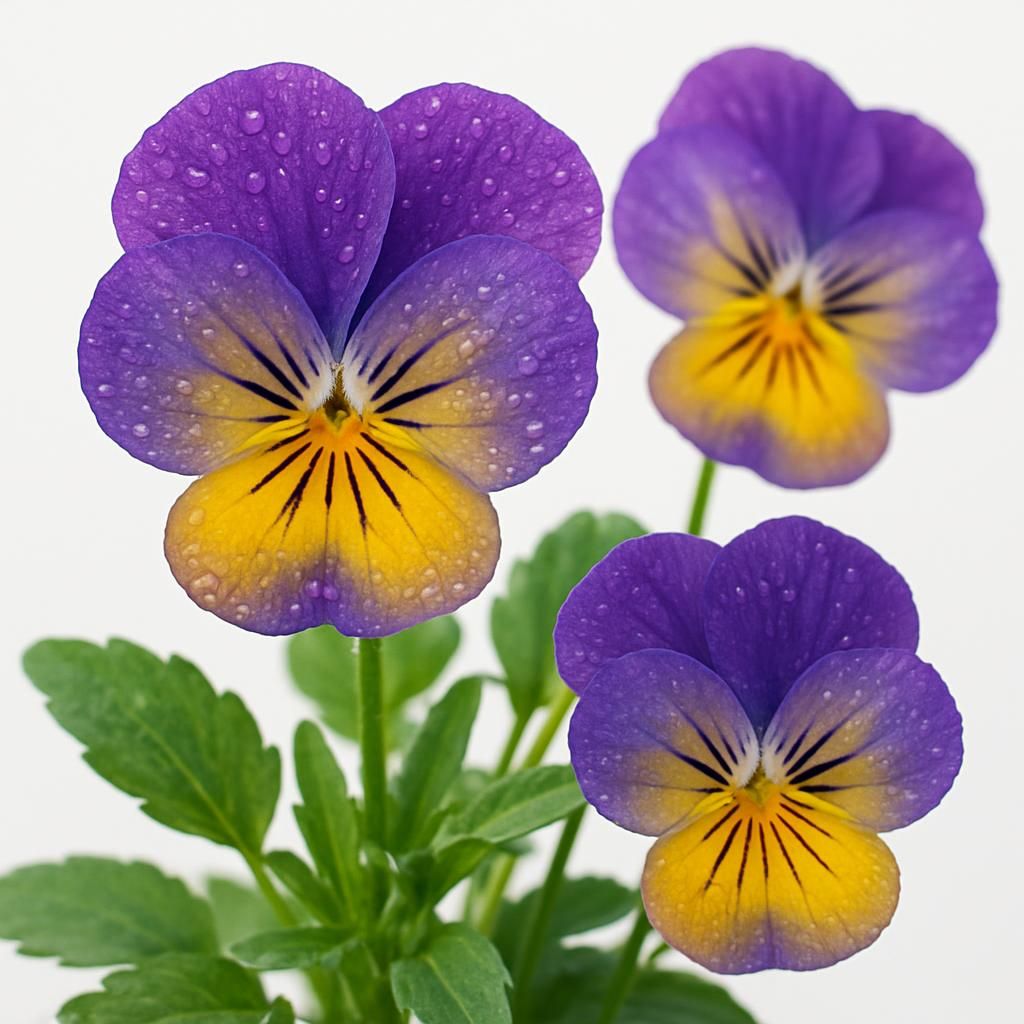
Introduction to Viola
Viola species, commonly known as pansies and violas, are cool-season annuals or short-lived perennials prized for their vibrant edible flowers, compact growth habit, and versatility in both ornamental and culinary applications. Professional growers cultivate violas for cut-flower production, edible garnish markets, and landscape contracts requiring early-season color. Their ability to bloom in temperatures as low as 2 °C makes them an essential crop for extending market windows in temperate climates.
Botanical Profile of Viola
Viola belongs to the Violaceae family. Most commercial cultivars derive from Viola cornuta (horned violet) or the hybrid Viola × wittrockiana (pansy). Plants produce five-petaled zygomorphic flowers 2–10 cm across in nearly every color except true red. Leaves are alternate, simple, and often heart-shaped or lanceolate with crenate margins. The root system is fibrous and relatively shallow, making consistent moisture critical during establishment.
Soil, pH, and Climate Requirements for Viola
| Parameter | Ideal Range | Notes |
|---|---|---|
| Soil Type | Loamy, well-drained | Avoid heavy clay without amendment |
| Soil pH | 5.8–6.5 | Slightly acidic; test before planting |
| Temperature Range | Day 10–18 °C / Night 2–8 °C | Tolerates light frost down to –5 °C |
| Light | Full sun to partial shade | 6+ hours direct sun maximizes blooms |
| Spacing | 15–20 cm between plants | 30 cm between rows for commercial beds |
| Planting Depth | Surface to 3 mm | Light-dependent germination |
Step-by-Step Planting & Propagation
- Start seeds indoors 8–10 weeks before last frost in sterile seed-starting mix at 18–21 °C.
- Transplant seedlings when they have four true leaves and outdoor night temperatures remain above 2 °C.
- Harden off plants for 7–10 days by gradually increasing outdoor exposure.
- Prepare beds with 5–8 cm of well-rotted compost incorporated to 15 cm depth.
- Set transplants at the same depth they were growing in plugs; water thoroughly after planting.
- For direct sowing, scatter seeds on prepared soil in early spring or late summer for fall bloom; keep surface moist until germination (7–14 days).
Care & Maintenance regimes for Viola
| Task | Frequency | Details |
|---|---|---|
| Watering | 2–3 times weekly during active growth | Maintain even moisture; avoid waterlogging. Drip irrigation preferred. |
| Fertilizer | Every 3–4 weeks | Balanced 10-10-10 NPK at 100 ppm nitrogen; switch to low-nitrogen bloom formula after first flowers. |
| Pruning | Weekly deadheading | Remove spent blooms to encourage continuous flowering; shear plants by one-third mid-season if leggy. |
Pests, Diseases & Organic Management
Common pests include Aphids, Slugs and snails, and Spider mites. Monitor weekly and release beneficial insects such as lacewings for aphid control. Use iron-phosphate slug baits and maintain clean cultivation to reduce habitat. Diseases such as Botrytis, Powdery mildew, and Root rot are managed through proper spacing, morning irrigation, and soil drenches with beneficial Trichoderma species. Rotate plantings every two seasons to break disease cycles.
Harvesting, Curing & Optimal Storage
Harvest flowers in the cool morning when 50–75 % open. Use clean floral shears and place stems immediately in 4 °C water with floral preservative. For edible use, pick just before use and rinse gently. Store fresh blooms in a perforated clamshell at 2–4 °C with high humidity for up to 5 days. Dry flowers on screens in a 35 °C dehydrator for 4–6 hours; store in airtight containers away from light for culinary or craft use.
Companion Planting for Viola
Pair violas with cool-season crops such as Lettuce, Spinach, and Radish to maximize bed space and deter pests. Aromatic companions including Thyme and Rosemary mask scents that attract aphids. Avoid planting near Cucumber or Squash to reduce shared disease pressure. Nasturtium provides additional aphid-trapping benefits while adding edible flowers to the mix.