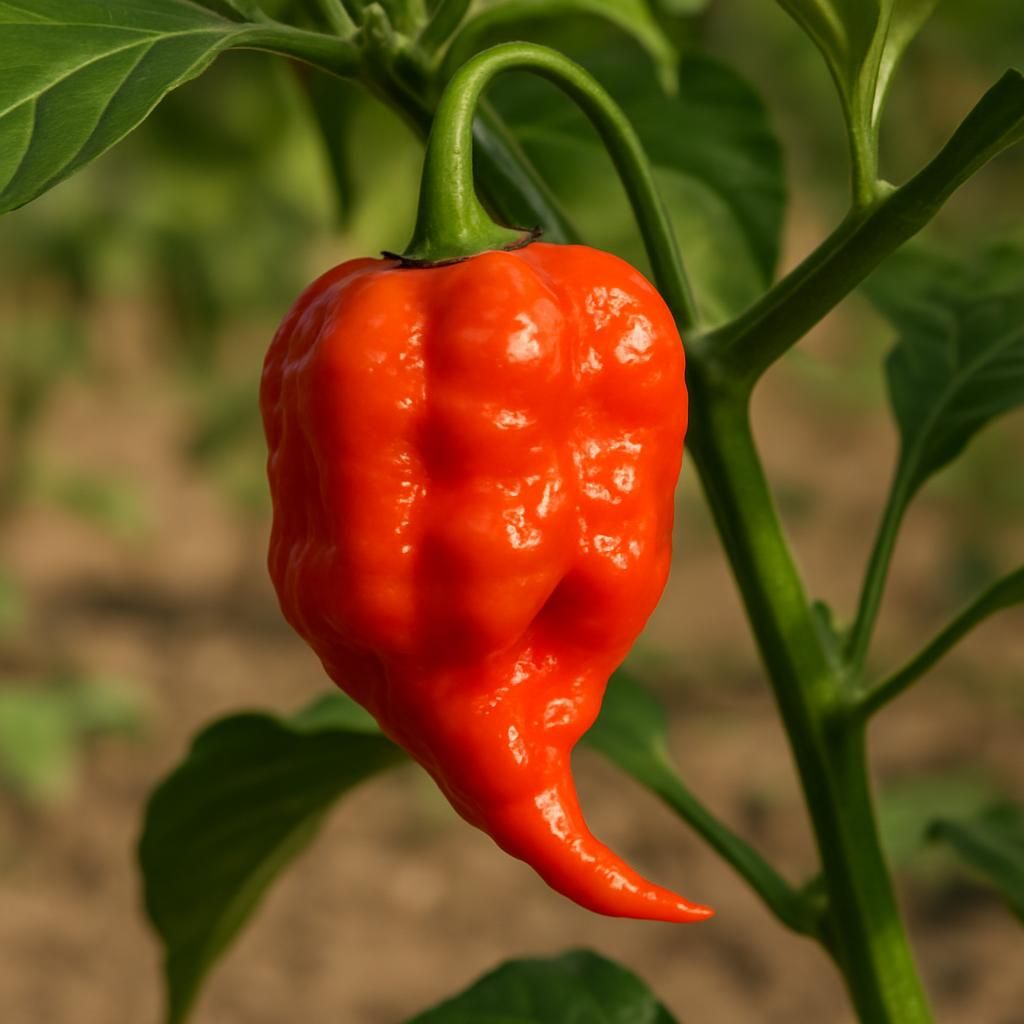
Introduction to Trinidad Scorpion Butch T
The Trinidad Scorpion Butch T (Capsicum chinense) stands among the most potent chili varieties ever cultivated, regularly exceeding 1,000,000 Scoville Heat Units. Originating from Trinidad and Tobago, this cultivar gained global recognition through selective breeding by horticulturist Butch Taylor. Its unique scorpion-like tail and blistering heat make it a prized variety for both commercial hot sauce producers and extreme chili enthusiasts.
Beyond its legendary spiciness, the pepper delivers complex tropical fruit notes that balance its ferocious burn. Professional growers value its high yield potential and disease resistance when managed correctly. This guide delivers professional-grade agricultural advice for successful cultivation from seed to storage.
Botanical Profile of Trinidad Scorpion Butch T
Trinidad Scorpion Butch T belongs to the species Capsicum chinense, characterized by wrinkled, lantern-shaped pods that mature from green to a vibrant red-orange. Mature plants reach 60–90 cm in height with a bushy, multi-branched structure. The distinctive tail appendage is a genetic marker of the Butch T selection.
Flowers are small, white, and self-pollinating, though cross-pollination with nearby Chili Pepper varieties can occur. The plant exhibits a moderate growth rate and responds well to consistent pruning for airflow. Pods measure 5–7 cm long and contain 40–60 seeds each.
Soil, pH, and Climate Requirements for Trinidad Scorpion Butch T
Trinidad Scorpion Butch T demands warm temperatures, well-drained soil, and consistent moisture without waterlogging. The following table outlines ideal growing conditions:
| Parameter | Ideal Range | Notes |
|---|---|---|
| Soil Type | Sandy loam to loam | High organic matter; excellent drainage |
| Soil pH | 6.0 – 6.8 | Slightly acidic to neutral |
| Day Temperature | 24–32 °C | Optimal fruit set and capsaicin production |
| Night Temperature | 18–22 °C | Avoid below 15 °C to prevent blossom drop |
| Sunlight | Full sun (6–8+ hours) | South-facing exposure recommended |
| Spacing | 45–60 cm between plants | Rows 75–90 cm apart |
| Growing Season | 90–120 frost-free days | Start indoors 8–10 weeks before last frost |
Step-by-Step Planting & Propagation
- Start seeds indoors 8–10 weeks before the last expected frost. Sow 0.5 cm deep in sterile seed-starting mix.
- Maintain soil temperature at 26–30 °C using a heat mat for rapid germination (7–14 days).
- Provide 14–16 hours of light daily with full-spectrum grow lights positioned 5–7 cm above seedlings.
- Harden off seedlings for 7–10 days when they develop 4–6 true leaves and outdoor temperatures consistently exceed 18 °C.
- Transplant into prepared beds or large containers (minimum 10 L) after all frost danger has passed.
- Water thoroughly immediately after transplanting and apply a light layer of organic mulch to conserve moisture.
Care & Maintenance regimes for Trinidad Scorpion Butch T
Consistent care maximizes both yield and capsaicin concentration. The following table provides a professional schedule:
| Growth Stage | Watering Schedule | Fertilizer Schedule | Pruning Schedule |
|---|---|---|---|
| Seedling (0–4 wks) | Keep evenly moist; water daily | None until true leaves appear | Pinch tips at 4–6 leaves for bushiness |
| Vegetative | 2–3 times weekly; 2–3 cm/week | High-nitrogen every 14 days (NPK 10-5-5) | Remove lower leaves for airflow |
| Flowering | Deep watering 2× weekly | Switch to balanced (NPK 5-10-10) | Light tipping of new growth |
| Fruiting | Reduce to once weekly; deep soak | Low-nitrogen, high-potassium monthly | Remove suckers and diseased foliage |
Monitor soil moisture at 5 cm depth; irrigate when the top 2 cm feels dry. Over-fertilization reduces heat levels and promotes excessive foliage.
Pests, Diseases & Organic Management
Common threats include Aphids, Spider Mites, and Thrips. Early detection through weekly scouting prevents outbreaks. Introduce beneficial insects such as ladybugs and lacewings at the first sign of infestation.
Prevent fungal issues like Powdery Mildew and Phytophthora with proper spacing, drip irrigation, and neem oil sprays every 10–14 days. Crop rotation with non-solanaceous plants every 3–4 years reduces soil-borne pathogens.
Harvesting, Curing & Optimal Storage
Harvest pods at full color change (deep red-orange) for peak heat and flavor, typically 90–110 days after transplant. Use gloves and pruners to avoid skin and plant damage. For fresh use, store at 7–10 °C with 85–90 % humidity for up to two weeks.
To dry, string whole pods or halve and dehydrate at 40–50 °C until brittle. Store dried peppers in airtight glass jars away from light. For long-term preservation, freeze whole pods or process into hot sauce.
Companion Planting for Trinidad Scorpion Butch T
Pair with Thai Basil to repel pests and improve flavor. Nasturtium acts as a trap crop for aphids, while Marigold deters nematodes. Avoid planting near Tomato or Eggplant to reduce shared disease pressure. Cucumber and Lettuce provide beneficial ground cover that moderates soil temperature.
Strategic companions enhance biodiversity and support the The Overlooked Art of Crop Rotation for Small Farm Resilience principles for sustainable production.