Introduction to top borer
The top borer, scientifically known as Scirpophaga excerptalis, is one of the most notorious pests in rice cultivation, particularly in tropical and subtropical regions of Asia. This pyralid moth larva specifically targets the growing points of young rice plants, tunneling into the central shoot and causing characteristic 'dead heart' symptoms where the top leaves turn yellow and die. First detected in major rice-growing areas like India, Bangladesh, and Southeast Asia, top borer infestations can lead to 20-50% yield reductions in severe cases, making it a critical threat to food security for millions of smallholder farmers.
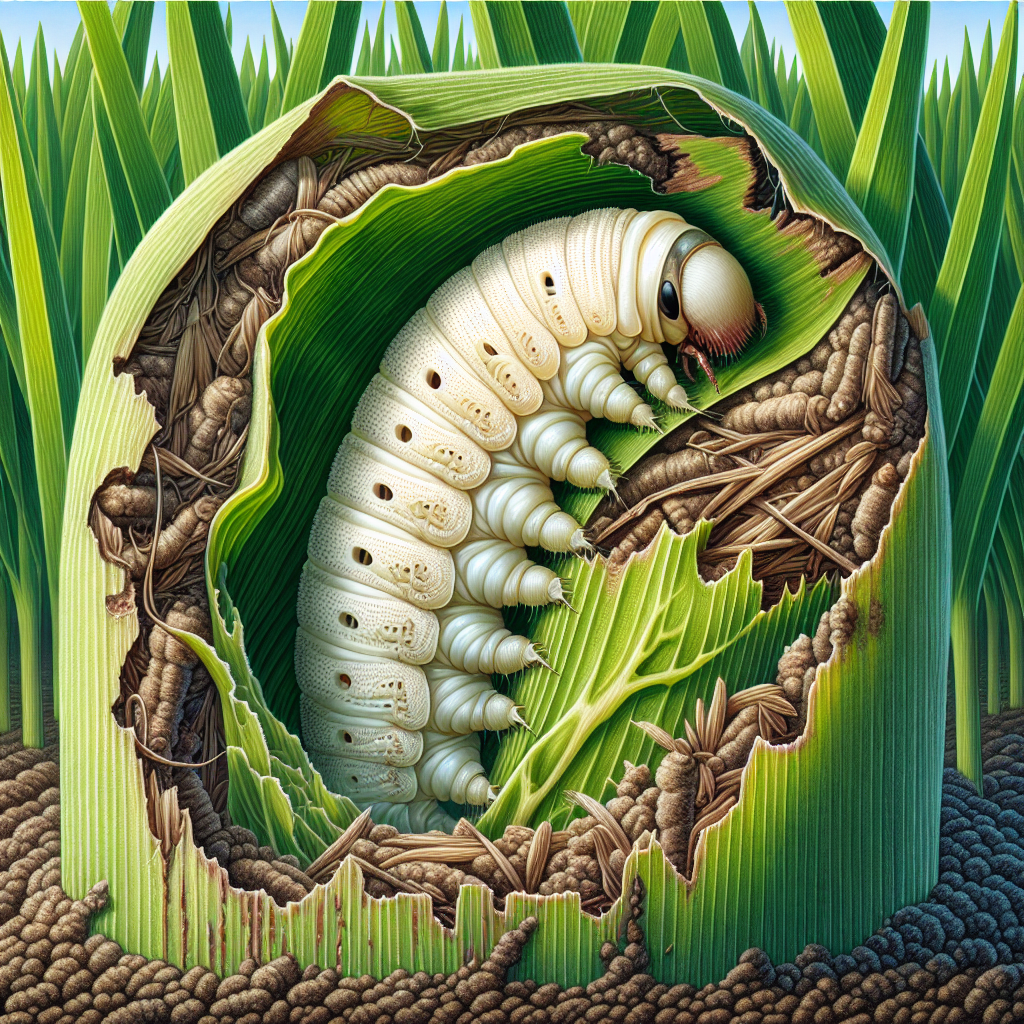
Adult moths are pale yellowish-white with wingspans of 20-30 mm, but the damage is inflicted by their creamy-white larvae, which grow up to 25 mm long. Unlike stem borers, which attack lower stalks, top borers focus on the apical meristem during the vegetative stage (10-30 days after transplanting), stunting growth and forcing tiller production that often fails to compensate for losses. Early detection is vital, as larvae feed internally, hidden from view. This guide equips farmers with diagnostic tools, lifecycle knowledge, and organic management strategies to minimize damage and protect rice crops effectively.
Understanding top borer biology is key to integrated pest management (IPM). Populations build up rapidly in warm, humid conditions, with multiple generations per season syncing with rice phenology. For small farms, combining resistant varieties, natural enemies, and timely interventions can reduce chemical reliance, promoting sustainable yields. Recent studies show IPM adoption cuts losses by 30-40%, underscoring the need for proactive strategies.
Identifying Symptoms & Damage
Top borer damage is unmistakable once established, but early signs are subtle. The primary symptom is the 'dead heart,' where the youngest central leaf yellows, wilts, and dies while surrounding leaves remain green. Gently pulling the dead heart reveals a tiny entry hole at the base, often with frass (larval excrement) resembling sawdust. Affected plants fail to tiller properly, appearing stunted with yellowing bases.
In fields, scout for 5-10% dead hearts in 1-2 m² patches during 15-25 days after transplanting (DAT). Heavily infested plants show multiple dead hearts as larvae move to tillers. Unlike armyworms, which cause defoliation, or leafhoppers, which cause hopperburn, top borer damage is localized to shoot tips. Secondary signs include tiny white moths fluttering at dusk and silk webbing around damaged shoots.
Yield impacts are severe: a 10% infestation at tillering stage can slash yields by 25%, per IRRI data. Differentiate from Fusarium wilt (rotting base, no larva) or shoot fly (sudden drooping). Use a knife to split shoots; presence of live larva confirms top borer. Monitor weekly from 10 DAT, using traps for adults. Early ID prevents spread, as larvae pupate and reinfest nearby plants.
Lifecycle and Progression of top borer
Top borer completes 4-6 generations per rice season, with a lifecycle of 30-45 days at 25-30°C. Eggs (0.8 mm, flat, yellowish) are laid in clusters of 10-50 on lower leaf surfaces near the midrib, hatching in 4-6 days. Neonates (1-2 mm) mine leaves longitudinally before boring into the shoot apex.
Larvae (creamy white, brown head, 25 mm max) feed for 20-30 days, molting 5 times. Mature larvae exit to pupate in leaf folds or soil, forming reddish silk cocoons. Pupae (12-15 mm) last 6-10 days, emerging as nocturnal moths. Overwintering occurs as diapausing larvae in stubble. Peak activity aligns with tillering (15-30 DAT) and panicle initiation.
Progression: Eggs → larvae (shoot boring) → pupae → adults (dispersal, oviposition). One female lays 100-200 eggs. Pheromone traps capture males, aiding timing. Lifecycle accelerates in heat (>30°C), shortening to 25 days. Destroy stubble post-harvest to break cycle. Natural enemies like Trichogramma wasps parasitize 20-40% eggs, Telenomus sp. on eggs, and predatory spiders on larvae.
Environmental Triggers & Risk Factors
Top borer thrives in warm (25-35°C), humid (>80% RH) conditions, peaking during monsoon seasons. High nitrogen fertilizers promote succulent shoots, increasing susceptibility—fields with >120 kg N/ha see 2x infestations. Dense planting (>25 hills/m²) hinders scouting and predator access.
Risk factors: Late transplanting (after mid-June), ratoon crops, and continuous rice monoculture. Weedy fields harbor alternate hosts like wild rice. Drought stress followed by rain triggers emergence from diapause. Proximity to previous season's stubble (<500m) spikes reinfestation. Climate change extends generations, per recent models.
Spring Pest Patrol: Organic AI Strategies to Shield Your Crops from Common Invaders highlights predictive tools for such risks. Monitor weather; avoid excess N at tillering. Crop rotation with wheat or legumes disrupts cycles.
Organic Control & Treatment Plans
Organic management emphasizes IPM: cultural, biological, and botanical controls. Cultural: Plant early (before June), use 20x20 cm spacing, clip tips of seedlings pre-transplant to deter neonates. Destroy dead hearts weekly, plow under stubble. Biological: Release Trichogramma japonicum (2-3/cc/m²) at 10-15 DAT; conserve spiders and birds.
Botanicals: Spray neem oil (5 ml/L) or azadirachtin (0.03%) at 15 DAT, repeat 10 days later—90% larval mortality. NSKE (5%) or garlic-chili extracts repel adults. Pheromone traps (10/ha) disrupt mating. For outbreaks (>10% dead hearts), hand-collect larvae evenings.
Treatment plan: Scout weekly; act at 5% threshold. Integrate with resistant varieties like IR36. Avoid broad-spectrum sprays to protect predators. Trials show IPM reduces damage 70%. For corn, similar borers respond to Bt sprays (organic-approved).
Preventing top borer in the Future
Prevention starts with clean fields: deep summer plowing exposes pupae to sun/predators. Use certified, top borer-free seeds. Rotate with soybeans or potato (1:1). Border crops like maize deter moths. Apply 10 t/ha FYM for balanced nutrition, avoiding N excess.
Plant trap crops (susceptible varieties) at borders. Install yellow sticky traps (20/ha) for adults. Encourage natural enemies via flowering hedges (marigold). Resistant varieties (TKM6, CR Dhan 40) cut damage 50%. Post-harvest, flood fields 15 cm for 20 days to drown residues. Long-term: Scout neighbors, use weather-based forecasts. IPM fields yield 15-20% more sustainably.
Crops Most Affected by top borer
Top borer primarily attacks rice, especially Basmati and rainfed varieties, causing up to 50% losses in vegetative stage. Minor hosts include wild grasses, sorghum, and maize. Hybrids suffer more due to vigor. In Asia, 10-15 million ha affected yearly. Differentiate from European Corn Borer in corn. No major impact on sugarcane or wheat.