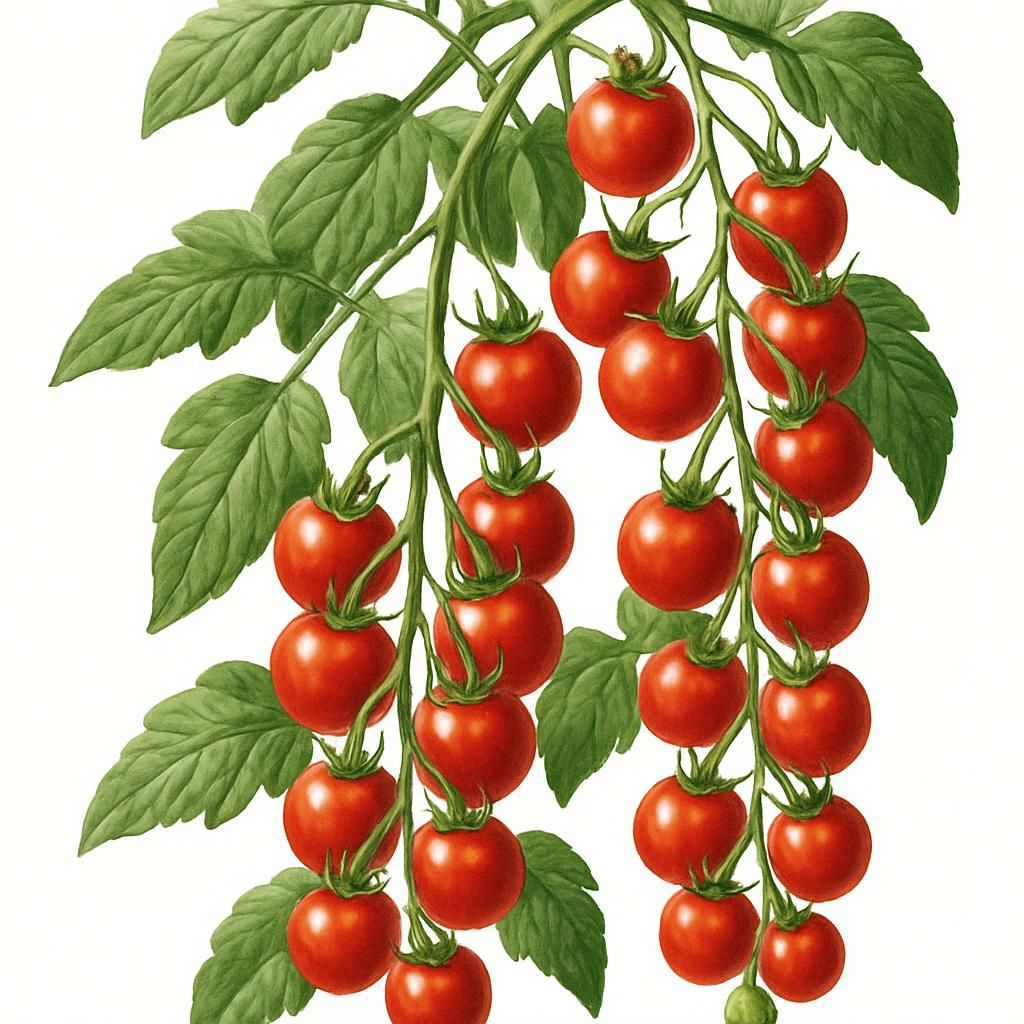
Introduction to Thousand Flower Tomato
The Thousand Flower Tomato stands out among heirloom varieties for its extraordinary fruiting habit. Each plant can produce hundreds of small, cherry-sized fruits in long, cascading trusses that resemble clusters of flowers, hence the evocative name. This tomato combines outstanding flavor with remarkable productivity, delivering sweet, juicy berries over an extended season.
Gardeners prize Thousand Flower Tomato for its reliability in both greenhouse and open-field systems. The compact yet vigorous vines reach 4–6 feet, making them suitable for staking or caging in intensive plantings. Its disease resistance and tolerance to temperature fluctuations further enhance its appeal for sustainable agriculture.
Beyond its culinary value, the variety serves as an attractive ornamental plant. The abundant trusses of bright red fruits create striking visual displays in kitchen gardens and market stands alike.
Botanical Profile of Thousand Flower Tomato
Thousand Flower Tomato belongs to the nightshade family, Solanaceae. It exhibits indeterminate growth, continuously producing flowers and fruit until frost. The leaves are typical tomato foliage—pinnately compound with serrated margins—while the stems are slightly pubescent and require support.
Flowers appear in large, branched inflorescences. Each cluster may contain 20–50 blossoms that set fruit simultaneously, resulting in the signature “thousand flower” appearance. Fruits average 15–25 grams, with thin skins and a balanced sweet-acid profile.
The plant demonstrates moderate resistance to several common tomato pathogens. Its genetic background traces to traditional landraces selected for prolificacy and flavor intensity.
Soil, pH, and Climate Requirements for Thousand Flower Tomato
Successful cultivation begins with understanding the precise environmental parameters required by this variety.
| Parameter | Ideal Range | Notes |
|---|---|---|
| Soil Type | Loamy, well-drained | Incorporate 2–3 inches of compost |
| Soil pH | 6.2–6.8 | Test soil annually; lime if below 6.0 |
| Temperature (Day) | 21–29 °C (70–85 °F) | Optimal fruit set occurs within this range |
| Temperature (Night) | 15–20 °C (59–68 °F) | Avoid nights below 12 °C |
| Spacing | 45–60 cm between plants | Rows 90–120 cm apart |
| Sunlight | Full sun, 6–8+ hours | Supplemental lighting in winter greenhouses |
| Frost Tolerance | None | Transplant after last frost |
Site selection should prioritize wind protection and good air circulation to reduce disease pressure.
Step-by-Step Planting & Propagation
- Start seeds indoors 6–8 weeks before the last expected frost. Sow ¼ inch deep in sterile seed-starting mix.
- Maintain soil temperature at 24–27 °C until germination (7–10 days).
- Provide 14–16 hours of light daily; thin seedlings to one per cell when true leaves appear.
- Harden off transplants for 7–10 days by gradually increasing outdoor exposure.
- Transplant into prepared beds once soil reaches 18 °C and nighttime temperatures remain above 12 °C.
- Install stakes or cages at planting to avoid root disturbance later.
- Water thoroughly after transplanting and apply a light mulch layer to conserve moisture.
Care & Maintenance regimes for Thousand Flower Tomato
Consistent cultural practices maximize both yield and fruit quality.
| Growth Stage | Watering Schedule | Fertilizer Application | Pruning & Training |
|---|---|---|---|
| Seedling (0–4 wks) | Keep evenly moist; avoid waterlogging | Dilute fish emulsion (1:10) weekly | None |
| Vegetative (4–8 wks) | 2.5–3.8 cm/week; morning irrigation | Balanced NPK (10-10-10) every 14 days | Remove lower suckers; tie to support |
| Flowering & Fruit Set | Deep watering 2–3× weekly; mulch to retain moisture | High-potassium formula (5-10-15) every 10–14 days | Continue sucker removal; top at 5–6 ft |
| Ripening | Reduce slightly to concentrate sugars | Side-dress with compost tea monthly | Remove diseased foliage promptly |
Monitor leaf color and adjust nitrogen if foliage becomes excessively dark.
Pests, Diseases & Organic Management
Thousand Flower Tomato faces typical solanaceous challenges. Aphids and whiteflies colonize new growth; deploy yellow sticky traps and introduce lady beetles for biological control.
Early blight and septoria leaf spot appear as concentric lesions. Practice crop rotation, remove lower leaves, and apply copper-based sprays at first sign of infection.
Spider mites thrive in hot, dry conditions; increase humidity and spray with neem oil or insecticidal soap. Root-knot nematodes can be suppressed with marigold borders and solarization.
Harvesting, Curing & Optimal Storage
Harvest fruits when fully colored but still firm. Pick entire trusses for market display or individual fruits for immediate use.
Allow green fruit to ripen at 18–21 °C away from direct sun. For long-term storage, sort sound fruit into single layers in 10–13 °C conditions with 85–90 % humidity.
Avoid refrigeration below 10 °C, which causes chilling injury and flavor loss. Properly stored ripe tomatoes maintain quality for 7–10 days.
Companion Planting for Thousand Flower Tomato
Pair Thousand Flower Tomato with basil to improve flavor and repel pests. Marigold borders deter nematodes while attracting beneficial insects.
Avoid planting near fennel or walnut trees, which can inhibit tomato growth. Nasturtium serves as a trap crop for aphids.
Carrot and onion companions provide ground cover and deter soil pests. Rotate with legumes to replenish soil nitrogen naturally.