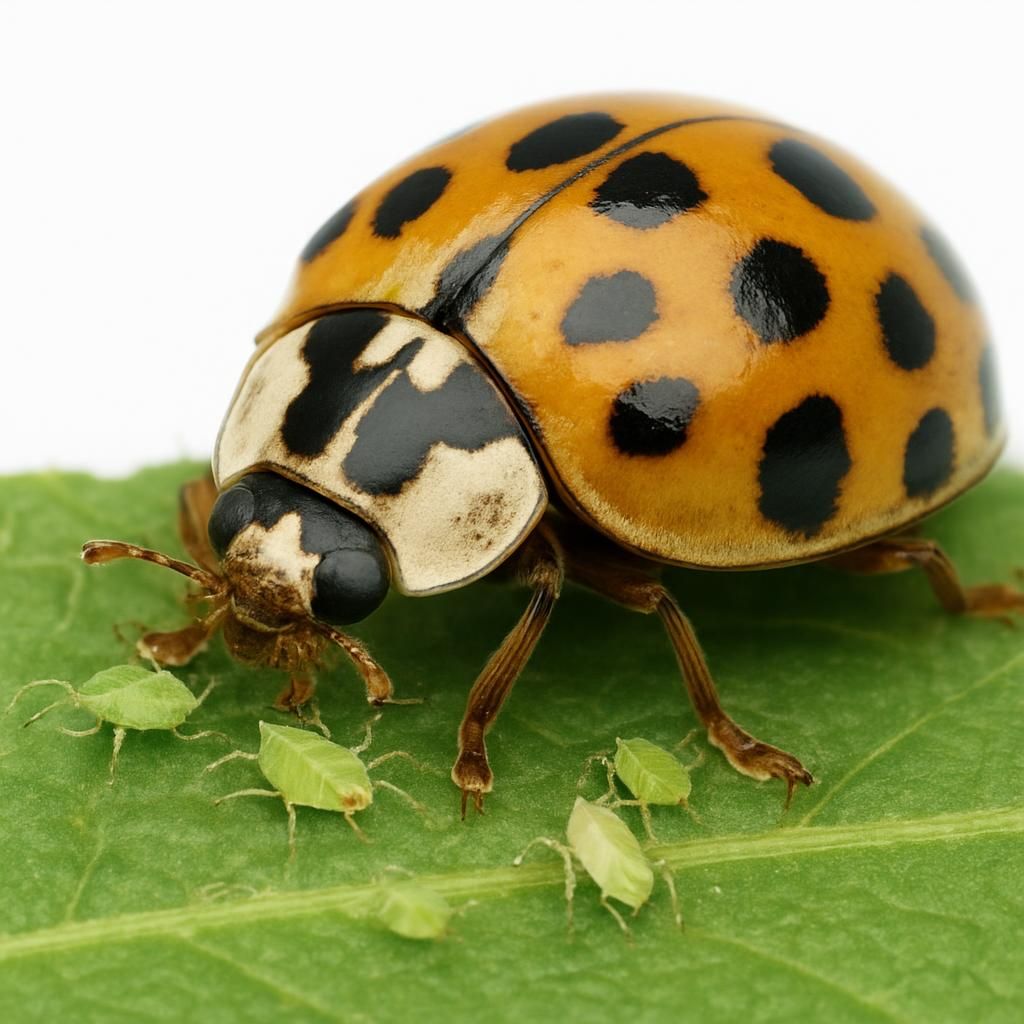
Introduction to lady beetles
Lady beetles, commonly known as ladybugs or ladybirds, belong to the family Coccinellidae and serve as natural biological control agents in agriculture. Both larvae and adults are voracious predators of aphids, scales, mites, and other soft-bodied insects, making them valuable allies for farmers. The multicolored Asian lady beetle (Harmonia axyridis) and the seven-spot lady beetle (Coccinella septempunctata) are the most widespread species in crop systems worldwide. While generally beneficial, large aggregations can become household pests in autumn or occasionally damage soft fruit when prey populations decline.
Identifying Symptoms & Damage
Lady beetle damage is uncommon and usually limited to minor cosmetic feeding on ripening fruit such as Strawberry or Grape clusters when aphid populations crash. Leaves may show small, irregular chew marks, but the primary indicators are the presence of the beetles themselves rather than plant injury. In late summer and fall, adults aggregate on building walls and enter structures seeking overwintering sites, leaving yellow defensive secretions that can stain surfaces. Larvae appear as small, alligator-shaped insects with orange or black markings and are often mistaken for harmful pests.
Lifecycle and Progression of lady beetles (MUST INCLUDE A MARKDOWN TABLE OF LIFECYCLE STAGES)
Lady beetles undergo complete metamorphosis with four distinct stages. Development speed depends heavily on temperature and prey availability, typically completing a generation in 3–6 weeks during the growing season.
| Stage | Duration | Description | Key Characteristics |\n|-------------|-------------------|-----------------------------------------------------------------------------|----------------------------------------------|\n| Egg | 3–7 days | Bright yellow-orange eggs laid in clusters of 10–50 on leaves near prey | Elongated, upright; hatch synchronously |\n| Larva | 10–20 days | Active, spiny, alligator-like predators consuming aphids and soft insects | Black with orange markings; highly mobile |\n| Pupa | 5–10 days | Stationary, attached to leaves or stems; color darkens before adult emerges | Hardened case; non-feeding stage |\n| Adult | Several months | Dome-shaped beetles with varying spot patterns; overwinter in aggregations | Red/orange with black spots; strong fliers |
Environmental Triggers & Risk Factors
Outbreaks of nuisance lady beetle behavior occur when aphid populations collapse rapidly due to heat, drought, or pesticide applications, forcing adults to seek alternative food sources. Cool autumn temperatures (below 15°C) trigger mass migration toward light-colored buildings and south-facing walls for overwintering. High humidity combined with abundant prey early in the season supports multiple generations, increasing adult numbers by late summer. Monoculture systems lacking diverse flowering plants reduce natural enemy populations, indirectly favoring rapid lady beetle population growth.
Organic Control & Treatment Plans (MUST INCLUDE A MARKDOWN TABLE OF TREATMENT OPTIONS AND FREQUENCIES)
When lady beetles become nuisance invaders or cause minor fruit damage, organic strategies focus on exclusion, habitat modification, and targeted removal rather than broad-spectrum insecticides.
| Treatment Option | Application Method | Frequency | Notes |\n|-----------------------------------|---------------------------------------------|----------------------------|-----------------------------------------------------------------------|\n| Physical exclusion | Seal cracks, install door sweeps, use screens | Once before autumn | Most effective long-term prevention |\n| Vacuum removal | Handheld vacuum indoors | As needed during invasion | Release outdoors; avoid crushing beetles |\n| Light traps | Blacklight traps near entry points | Nightly in fall | Reduce indoor numbers; empty traps daily |\n| Companion planting | Sow dill, fennel, yarrow near crops | At planting and succession | Supports alternative prey and reduces migration pressure |\n| Kaolin clay barrier | Spray on ripening fruit clusters | Every 7–10 days | Creates physical deterrent; reapply after heavy rain |\n| Release of native predators | Introduce lacewings or parasitic wasps | Early season | Maintains balanced predator-prey dynamics |
Preventing lady beetles in the Future
Maintain diverse hedgerows and flowering insectary strips to provide continuous prey and reduce mass migrations. Avoid broad-spectrum insecticide applications that eliminate aphid populations and trigger lady beetle dispersal. Monitor aphid levels weekly using yellow sticky cards and intervene with targeted oils or soaps only when thresholds are exceeded. Store harvested produce promptly and remove dropped fruit to eliminate attractive food sources. Seal all exterior cracks and crevices before September to prevent overwintering aggregations inside structures.
Crops Most Affected by lady beetles
While lady beetles rarely cause economic damage, the following crops can experience minor cosmetic injury when prey is scarce: Strawberry, Grape, Tomato, Raspberry, Peach, Apple, Cucumber, and Blueberry. In greenhouse settings, high-value ornamentals and vegetable transplants may also see occasional feeding on tender foliage or fruit.
For additional information on beneficial insect identification, see the Wikipedia entry on Coccinellidae. Learn practical strategies for managing seasonal insect pressure in Fall Pest Siege: 9 Organic Defenses to Shield Small Farms from Invading Armies.