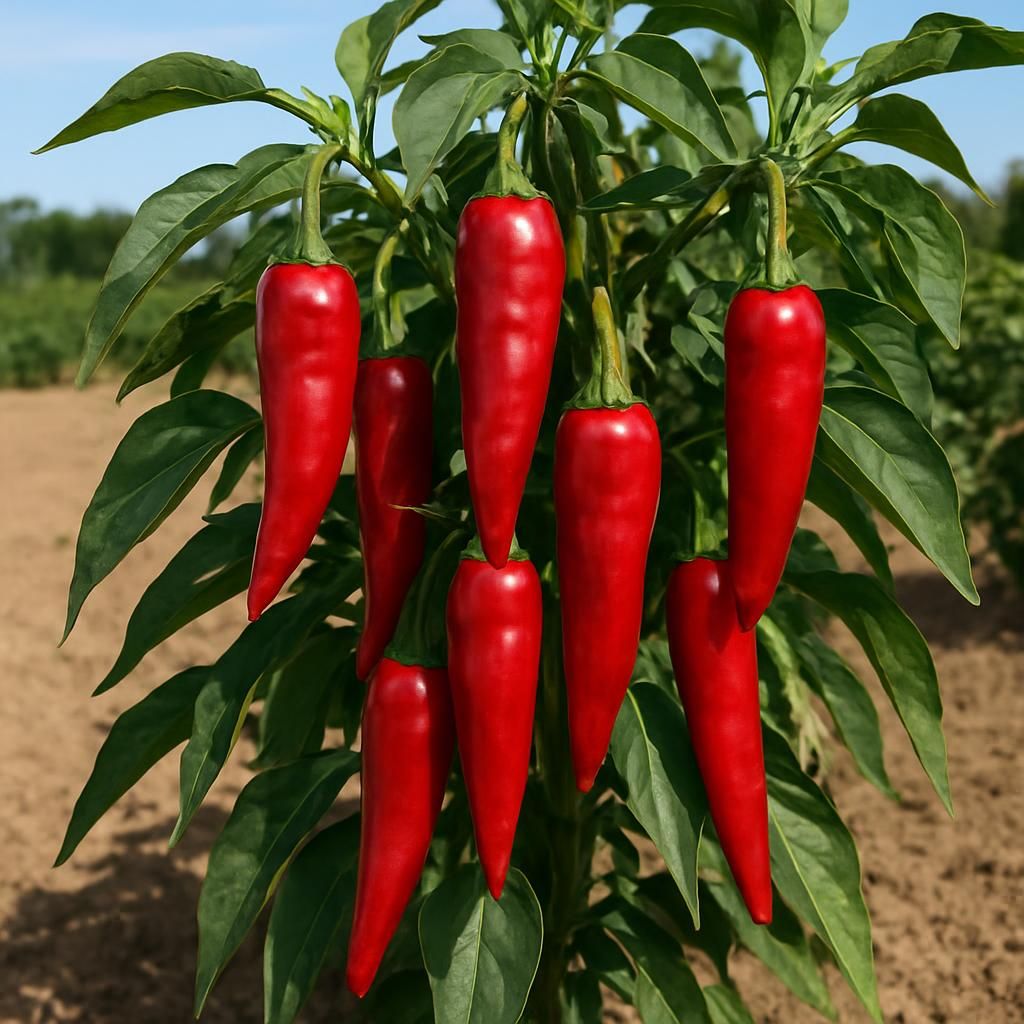
Introduction to Teja Chili
Teja Chili (Capsicum annuum 'Teja') is a popular variety grown extensively across India, particularly in Andhra Pradesh, Telangana, and Karnataka. Known for its vibrant red color, high capsaicin content, and superior drying properties, it is favored by spice processors and exporters. The variety typically reaches 60–90 cm in height and produces slender pods measuring 4–7 cm long. Its consistent yield and adaptability to both rainfed and irrigated systems make it a reliable cash crop for farmers seeking moderate heat levels (Scoville Heat Units: 30,000–50,000).
Botanical Profile of Teja Chili
Teja Chili belongs to the Solanaceae family. The plant exhibits an erect, bushy growth habit with dark green, lanceolate leaves. Flowers are small, white, and bisexual, appearing 45–55 days after sowing. Fruit set occurs rapidly under optimal temperatures of 25–30°C. Pods transition from green to deep scarlet at physiological maturity, containing 60–80 seeds per fruit. The variety shows moderate resistance to Chili Pepper mosaic viruses but requires vigilant management for Aphids and Thrips.
Soil, pH, and Climate Requirements for Teja Chili
Teja Chili performs best in well-drained sandy loam to loam soils rich in organic matter. Heavy clay soils should be amended with compost or raised beds to prevent waterlogging. The crop tolerates a wide pH range but thrives between 6.0 and 7.0.
| Parameter | Ideal Range | Notes |
|---|---|---|
| Soil Type | Sandy loam to loam | Good drainage essential |
| Soil pH | 6.0 – 7.0 | Avoid alkaline or highly acidic soils |
| Temperature (Day) | 25 – 32°C | Optimal fruit set |
| Temperature (Night) | 18 – 22°C | Below 15°C reduces flowering |
| Annual Rainfall | 600 – 1200 mm | Supplemental irrigation required in dry spells |
| Altitude | 0 – 1500 m | Performs well in both plains and hills |
Step-by-Step Planting & Propagation
Teja Chili is primarily propagated from seeds. Select certified, disease-free seed with at least 80% germination. Sow seeds in well-prepared nursery beds or pro-trays 5–6 weeks before transplanting. Use a sterilized mix of cocopeat, vermicompost, and sand (2:1:1). Maintain nursery temperature at 28–30°C and provide 50% shade. Transplant seedlings at the 4–6 true leaf stage, spacing plants 45 cm apart in rows 60 cm wide. For direct seeding in light soils, sow at 1–1.5 cm depth and thin to the recommended spacing after 20 days.
Care & Maintenance regimes for Teja Chili
Consistent moisture, balanced nutrition, and timely pruning are critical for high yields. Apply mulch to conserve soil moisture and suppress weeds. Monitor regularly for nutrient deficiencies and adjust fertigation schedules accordingly.
| Growth Stage | Watering Frequency | Fertilizer Application | Pruning Schedule |
|---|---|---|---|
| Seedling (0–4 wks) | Light daily misting | 10-26-26 NPK @ 2 g/L every 10 days | Remove lower leaves at transplant |
| Vegetative (4–8 wks) | 2–3 times/week | 19-19-19 NPK + micronutrients weekly | Pinch apical bud at 30 cm height |
| Flowering (8–12 wks) | Every 4–5 days | 0-0-50 Potassium nitrate @ 3 g/L | Remove basal suckers weekly |
| Fruiting (12+ wks) | Every 5–7 days | 13-0-45 + Calcium nitrate alternate weeks | Light tipping of branches post-harvest |
Pests, Diseases & Organic Management
Major pests include Aphids, Thrips, Spider Mites, and fruit borers. Common diseases are Anthracnose, Phytophthora, and Chili leaf curl disease. Implement integrated pest management: install yellow sticky traps at 10–15 per acre, release predatory mites, and apply neem oil (3 ml/L) or Beauveria bassiana sprays every 10–12 days. For fungal issues, use copper-based fungicides or Trichoderma harzianum soil drenches at transplanting and 30 days later.
Harvesting, Curing & Optimal Storage
Harvest pods at full red color for the highest capsaicin and color value. Pick every 7–10 days during peak season to encourage continuous production. Sun-dry pods on clean tarpaulins for 4–6 days until moisture content drops below 10%. Store dried chilies in jute bags lined with polythene at 10–12% moisture in a cool, dry, ventilated warehouse. Properly cured Teja Chili retains color and pungency for 12–18 months.
Companion Planting for Teja Chili
Teja Chili benefits from strategic companions that deter pests and improve soil health. Plant Marigold borders to repel nematodes and whiteflies. Intercrop with Onion or Garlic to reduce Thrips pressure. Basil and Thai Basil enhance flavor and attract beneficial insects. Avoid planting near Fennel or other Apiaceae that may inhibit growth. Rotate with legumes such as Cowpea or Chickpeas to restore soil nitrogen between chili cycles.
Teja Chili cultivation calendar and market timing strategies provide additional insights for maximizing returns.