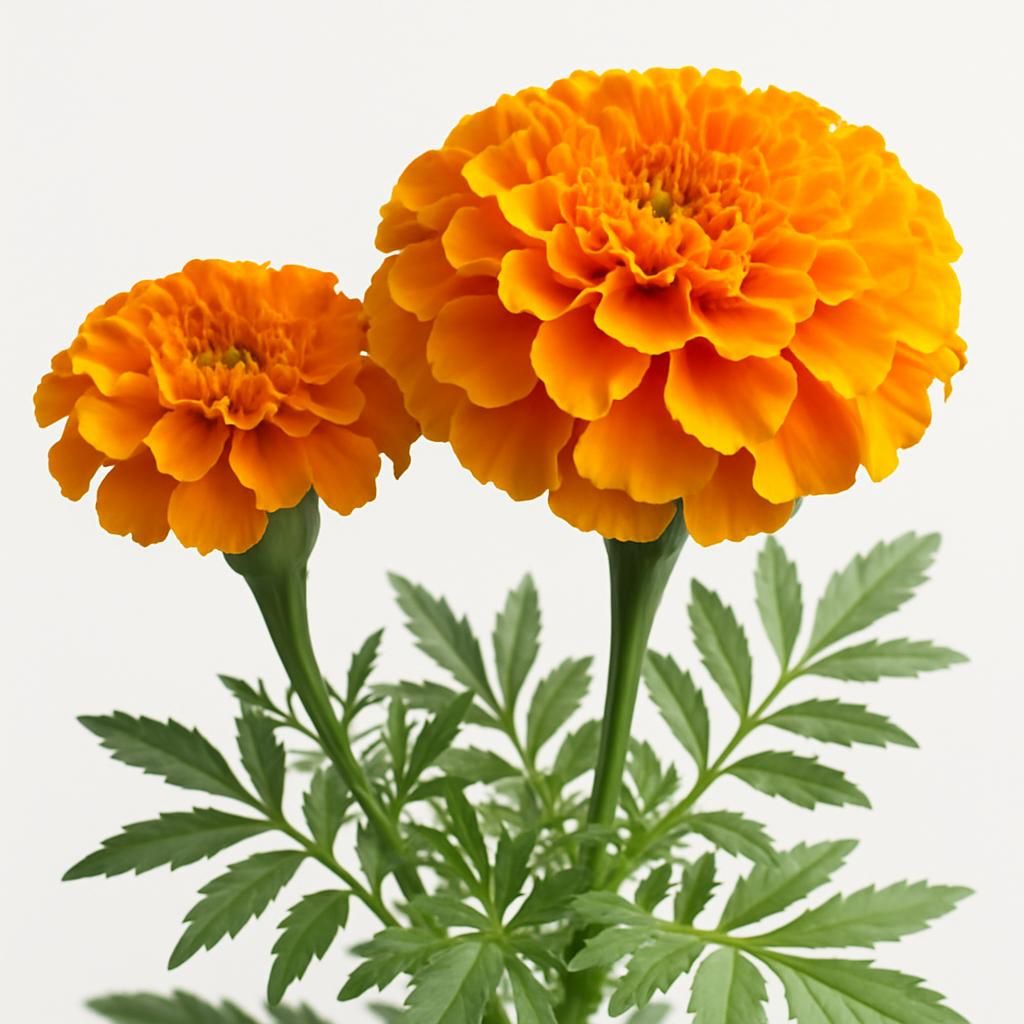
Introduction to Tagetes
Tagetes, better known as marigolds, belong to the Asteraceae family and have been cultivated for centuries across the Americas, Africa, and Asia. Originally native to Mexico and Central America, these annuals were quickly adopted worldwide for their bright yellow, orange, and red flowers and their powerful ability to suppress soil-borne pests. Today, Tagetes is grown both as an ornamental and as a functional companion crop in vegetable production systems. Farmers and gardeners rely on Tagetes to reduce populations of root-knot nematodes and to repel aphids, whiteflies, and other common garden insects. The plant’s fast growth cycle and low maintenance requirements make it ideal for succession planting and cover-cropping between main vegetable rotations.
Beyond pest management, Tagetes improves soil health through its dense root system and by contributing organic matter when incorporated as green manure. The flowers also serve as an excellent nectar source for beneficial insects such as ladybugs, lacewings, and parasitic wasps. Commercial growers often interplant Tagetes with high-value vegetables to reduce pesticide inputs while maintaining marketable produce quality. In addition, the essential oils extracted from Tagetes flowers are used in the fragrance and pharmaceutical industries, adding economic value beyond the field.
Botanical Profile of Tagetes
Tagetes species are erect, branched annual herbs ranging from 15 cm to over 1 meter in height depending on cultivar. Leaves are pinnately divided, aromatic, and often glandular, releasing a distinctive pungent scent when crushed. Flower heads are solitary or in cymes, typically 2–10 cm across, and composed of ray and disc florets in shades of yellow, orange, or mahogany red. The root system is fibrous and shallow, allowing rapid uptake of nutrients and water. Seeds are small, elongated achenes that remain viable for 2–3 years when stored properly.
Common cultivated species include Tagetes erecta (African marigold), Tagetes patula (French marigold), and Tagetes tenuifolia (signet marigold). Tagetes erecta produces larger, pompon-style blooms suited for cut-flower markets, while Tagetes patula offers compact growth ideal for edging and intercropping. All species contain thiophenes and other bioactive compounds in roots and foliage that contribute to nematode suppression. Flowering begins 45–60 days after sowing and continues until frost in temperate regions.
Soil, pH, and Climate Requirements for Tagetes
Tagetes performs best in fertile, well-drained soils with moderate organic matter content. The plant tolerates a wide range of textures but suffers in waterlogged conditions. Ideal soil pH ranges from slightly acidic to neutral. Full sun exposure of at least 6–8 hours daily promotes compact growth and abundant flowering. Tagetes is frost-sensitive and requires warm soil temperatures for germination and establishment.
| Parameter | Ideal Range | Notes |
|---|---|---|
| Soil Type | Loamy to sandy loam | Good drainage essential; avoid heavy clay |
| Soil pH | 6.0–7.5 | Tolerates 5.5–8.0 but optimal in neutral |
| Temperature (Day) | 20–30 °C | Growth slows below 15 °C |
| Temperature (Night) | 15–20 °C | Frost kills plants |
| Sunlight | Full sun (6–8+ hours) | Partial shade reduces bloom density |
| Soil Organic Matter | 2–4 % | Improves moisture retention and fertility |
| Spacing (Bed) | 20–30 cm between plants | 30–45 cm between rows for field production |
Step-by-Step Planting & Propagation
Tagetes is most commonly grown from seed, although rooted cuttings can be used for select cultivars. Begin by preparing a fine seedbed free of large clods and weeds. Sow seeds directly 0.5–1 cm deep when soil temperatures reach a minimum of 18 °C. For transplant production, start seeds indoors 4–6 weeks before the last frost date in cell trays filled with sterile media. Maintain even moisture until germination, which occurs in 5–10 days at 20–25 °C. Harden off seedlings for 7–10 days prior to transplanting.
Field planting should occur after all danger of frost has passed. Space plants 20–30 cm apart in rows 30–45 cm wide, adjusting density based on desired flower size and mechanical cultivation needs. For high-density cut-flower production, reduce in-row spacing to 15 cm. Irrigation immediately after transplanting helps establish root contact with soil. In regions with short growing seasons, succession sowing every 3–4 weeks extends the harvest window through autumn.
Care & Maintenance regimes for Tagetes
Tagetes requires minimal inputs once established but benefits from consistent moisture and periodic nutrient applications. Mulching with organic materials conserves soil moisture, suppresses weeds, and moderates soil temperature. Side-dress with balanced organic fertilizer at the onset of flowering to sustain bloom production. Regular deadheading removes spent flowers, encourages branching, and prolongs the flowering period. Monitor for signs of nutrient deficiency, particularly nitrogen, which manifests as pale foliage.
| Activity | Frequency | Details |
|---|---|---|
| Watering | 2–3 times per week | Provide 25–40 mm per week; increase during flowering and heat waves |
| Fertilizer | Every 3–4 weeks | Apply balanced NPK (e.g., 10-10-10) or compost tea at 1–2 L/m² |
| Pruning | Weekly during bloom | Deadhead spent flowers; pinch tips at 15 cm height for bushier plants |
| Mulching | At planting and mid-season | Maintain 5–7 cm layer of straw or wood chips around base |
| Weeding | As needed | Hand-pull or shallow cultivate to avoid root damage |
Pests, Diseases & Organic Management
While Tagetes is generally resilient, it can host several pests and diseases under stress. Common insect pests include aphids, spider mites, and thrips that feed on foliage and flowers. Slugs and snails may damage young seedlings in moist conditions. Fungal issues such as powdery mildew and Botrytis can occur in crowded, humid plantings. Root and stem rots caused by Pythium or Rhizoctonia are associated with poor drainage.
Organic management begins with cultural practices: proper spacing, crop rotation, and avoidance of overhead irrigation reduce disease pressure. Introduce beneficial insects such as lady beetles and predatory mites for aphid and mite control. Neem oil or insecticidal soaps provide effective contact control when applied at the first sign of infestation. For nematode suppression, incorporate Tagetes residues into soil 4–6 weeks before planting susceptible crops. Remove and destroy heavily infected plants to limit pathogen spread.
Harvesting, Curing & Optimal Storage
Harvest Tagetes flowers when fully open but before pollen shed for maximum vase life and essential oil content. Cut stems early in the morning using clean, sharp shears, placing cut stems immediately into cool water. For dried flower production, hang bunches upside down in a dark, well-ventilated area at 20–25 °C until moisture content drops below 10 %. Store dried flowers in airtight containers away from light to preserve color and aroma.
For seed saving, allow selected plants to mature fully on the plant. Harvest seed heads when they turn brown and dry, then thresh and winnow to remove chaff. Store cleaned seeds in paper envelopes or glass jars at 5–10 °C with low humidity; viability remains high for 2–3 years. Fresh flowers for culinary or extraction use should be processed within 24 hours of harvest to retain volatile compounds.
Companion Planting for Tagetes
Tagetes is one of the most effective companion plants in vegetable systems due to its nematode-suppressing roots and insect-repelling foliage. Interplant with Tomato, pepper, and eggplant to reduce root-knot nematode populations and deter aphids. Pairing with cucumber and squash helps repel cucumber beetles and squash bugs. The bright flowers attract pollinators and predatory insects that benefit nearby crops.
Avoid planting Tagetes near beans or peas in heavy densities, as the allelopathic root exudates may inhibit legume nodulation. In mixed beds, position Tagetes as a border or between rows rather than directly intermingled with legumes. Rotate Tagetes with brassicas and alliums in subsequent seasons to break pest and disease cycles while maintaining soil structure. For more ideas on strategic pairings, see Summer Companion Planting: 10 Organic Pairings to Boost Small Farm Resilience.
Tagetes remains a cornerstone of sustainable agriculture, offering simultaneous pest management, soil improvement, and aesthetic value with minimal inputs.