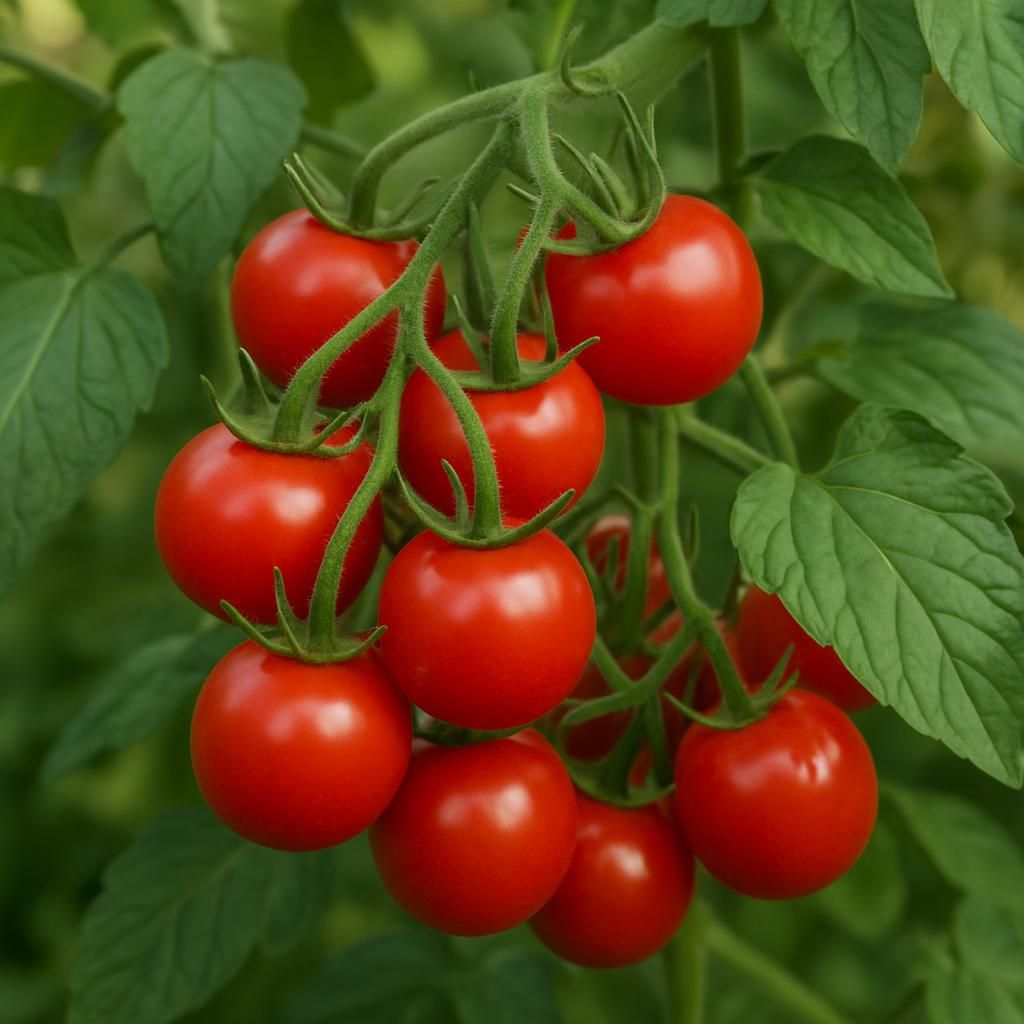
Introduction to Sweet 100 Tomato
Sweet 100 Tomato stands out among cherry tomatoes for its prolific production and intensely sweet flavor profile. Developed as an improvement on the classic Cherry Tomato, this indeterminate cultivar can produce over 1,000 fruits per plant in a single season under optimal conditions. Growers value Sweet 100 for its early maturity, crack resistance, and ability to thrive in both greenhouse and open-field systems. Its small fruit size also reduces the incidence of Blossom End Rot compared to larger tomato types.
Botanical Profile of Sweet 100 Tomato
Sweet 100 belongs to the nightshade family (Solanaceae) and exhibits classic indeterminate growth, continuing vegetative and reproductive phases simultaneously until frost or disease intervenes. Plants reach 6–10 feet in height with compound leaves featuring serrated margins and a slightly fuzzy texture that helps deter certain pests. Flowers are perfect and self-pollinating, forming in racemes of 20–40 blooms. The resulting fruits are bright red, uniformly round, and average 15–20 grams each with thin skins and minimal gel.
Soil, pH, and Climate Requirements for Sweet 100 Tomato
Successful cultivation begins with understanding the precise environmental parameters required by Sweet 100 Tomato. The variety performs best in well-drained loam or sandy loam soils rich in organic matter. Avoid heavy clay without significant amendment. Below is a structured overview of ideal growing conditions:
| Parameter | Ideal Range/Value | Notes |
|---|---|---|
| Soil Type | Loam to sandy loam | High organic matter; avoid compaction |
| Soil pH | 6.2–6.8 | Slightly acidic; test and amend annually |
| Temperature (Day) | 70–85°F (21–29°C) | Optimal fruit set occurs in this range |
| Temperature (Night) | 60–70°F (15–21°C) | Below 55°F reduces pollination |
| USDA Hardiness Zones | 4–11 | Grown as annual in zones 4–7 |
| Sunlight | Full sun (8+ hours) | Supplemental lighting in winter greenhouses |
| Spacing | 18–24 inches between plants | 4–5 feet between rows for indeterminate vines |
Step-by-Step Planting & Propagation
Start seeds indoors 6–8 weeks before the last expected frost. Sow seeds ¼ inch deep in sterile seed-starting mix and maintain soil temperature at 75–80°F for rapid germination (5–10 days). Harden off seedlings for 7–10 days before transplanting. Install sturdy trellises, cages, or vertical strings at planting to support the vigorous vines. Transplant when soil has warmed to at least 60°F and seedlings have 4–6 true leaves. Plant deeply, burying the stem up to the first set of leaves to encourage adventitious roots. Water thoroughly after transplanting and apply a 2–3 inch layer of organic mulch to conserve moisture and suppress weeds.
Care & Maintenance regimes for Sweet 100 Tomato
Consistent care maximizes both yield and fruit quality. Indeterminate vines require regular pruning of suckers and lower foliage to improve airflow and reduce disease pressure. The table below outlines recommended water, fertilizer, and pruning schedules:
| Growth Stage | Watering Frequency | Fertilizer Application | Pruning Action |
|---|---|---|---|
| Transplant to Flowering | 1–1.5 inches/week; keep soil moist but not saturated | Balanced 10-10-10 at planting; side-dress with compost tea at 3 weeks | Remove lower leaves; prune first sucker below first flower cluster |
| Flowering to Fruit Set | Increase to 2 inches/week during heat; drip irrigation preferred | High-phosphorus (5-10-10) every 3 weeks | Continue sucker removal; thin interior foliage for light penetration |
| Fruit Ripening | Reduce slightly to concentrate sugars; maintain even moisture | Switch to potassium-rich (2-5-10) fertilizer | Final leaf pruning 2 weeks before expected first harvest |
Monitor leaf color and adjust nitrogen if plants show excessive vegetative growth at the expense of fruiting.
Pests, Diseases & Organic Management
Sweet 100 Tomato is susceptible to several common tomato pests and diseases. Regular scouting and cultural practices form the foundation of integrated management. Aphids and Whiteflies colonize new growth and can transmit viruses; release beneficial insects such as lady beetles or use insecticidal soap. Spider Mites thrive in hot, dry conditions—maintain humidity and apply neem oil. Fungal threats include Early Blight and Septoria Leaf Spot; rotate crops, remove lower leaves, and apply copper-based fungicides preventively. Tomato Spotted Wilt Virus is vectored by thrips—use reflective mulch and resistant rootstocks when available.
Harvesting, Curing & Optimal Storage
Harvest Sweet 100 fruits when they reach full red color and detach easily from the stem with a gentle twist. Peak flavor occurs when fruits are allowed to ripen on the vine for 2–3 additional days after color break. For extended storage, pick clusters at the breaker stage and ripen at 65–70°F away from direct sunlight. Avoid refrigeration below 55°F, which causes mealy texture. Properly stored fruits maintain quality for 7–10 days. Excess harvest can be dehydrated or frozen whole for later culinary use.
Companion Planting for Sweet 100 Tomato
Strategic companions enhance pest suppression and nutrient cycling. Basil repels Hornworms and improves flavor perception. Marigold roots exude compounds toxic to Root-Knot Nematodes. Nasturtium acts as a trap crop for Aphids. Avoid planting near Fennel or walnuts, which inhibit tomato growth through allelopathy. Interplant with Lettuce or Radish for efficient space use in raised beds.