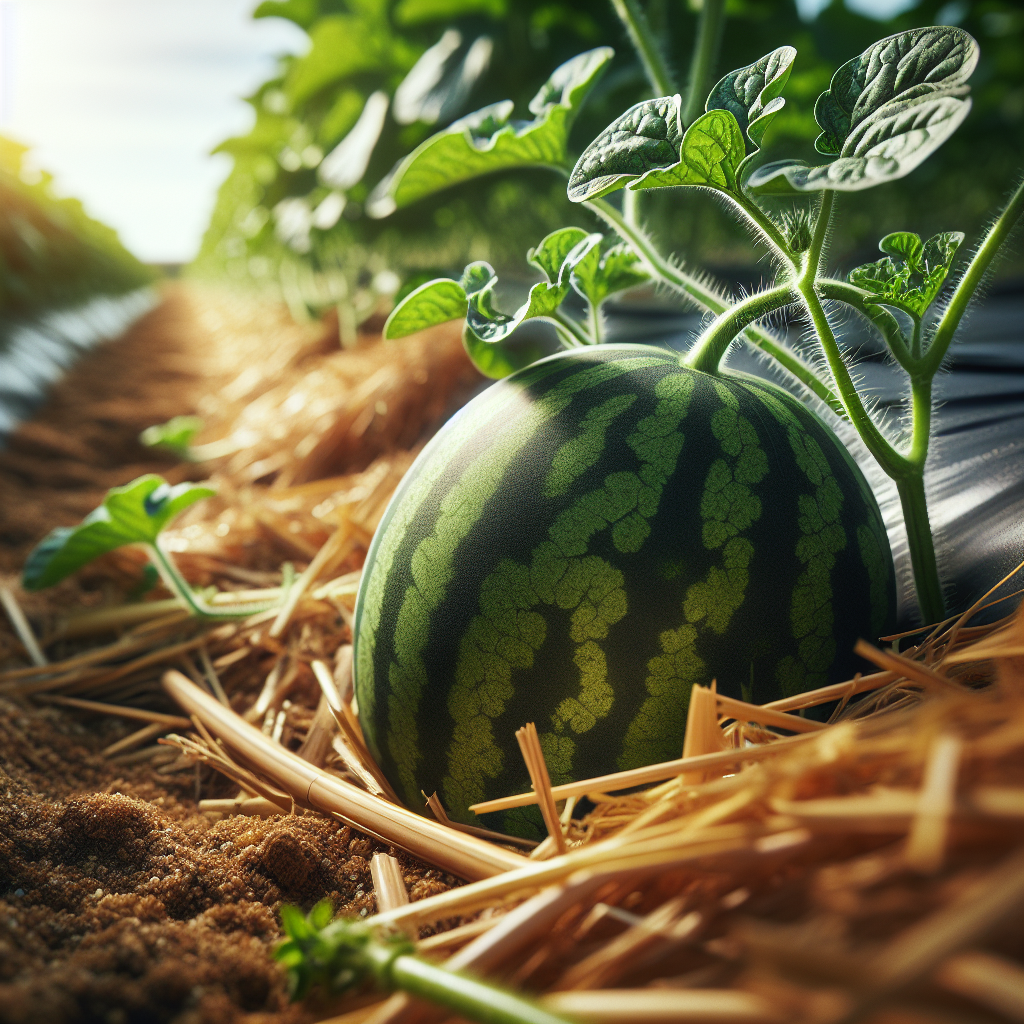
Introduction to Sugar Baby Watermelon
This heirloom-style watermelon has earned its reputation as one of the most practical varieties for growers who want reliable sweetness without the giant footprint of larger melons. Introduced in the mid-20th century and widely adopted for home gardens and small farms, it belongs to the “icebox” class: melons typically small enough to chill whole in a refrigerator. Fruits are usually round, dark green to nearly black at maturity, and weigh about 6-10 pounds, though excellent culture can push some larger.
Its popularity comes from three key traits: relatively early maturity, compact-to-moderate vine length compared with standard main-season watermelons, and consistently rich, red flesh with high eating quality. In warm climates, this variety can fit into tighter production windows than larger melons. In cooler temperate areas, it is often one of the safest watermelon choices because it needs fewer frost-free days than many long-season types.
Sugar Baby is still a true watermelon with all the biological needs of the species: intense sun, sustained warmth, loose well-drained soil, and careful moisture management. It is not drought-proof, and it does not tolerate cold soil. Growers who treat it like a tough field crop often get oversized vines and undersized fruit, bland flavor, or disease pressure. Growers who manage heat, fertility, and irrigation precisely are rewarded with excellent sugar accumulation and concentrated flavor. For broader species-level context, see Watermelon.
Botanical Profile of Sugar Baby Watermelon
Sugar Baby belongs to the cucurbit family, Cucurbitaceae, the same family as cucumber, squash, and melon. Botanically, watermelon is a warm-season annual vine with a deep taproot and wide-spreading lateral roots that quickly exploit warm, oxygen-rich soil. The plant produces rough, lobed leaves on trailing vines and bears separate male and female flowers on the same plant, meaning it is monoecious.
Male flowers usually appear first and in greater numbers. Female flowers are identifiable by the miniature swollen ovary behind the petals, which later becomes the fruit if pollination is successful. Pollination is primarily insect-mediated, especially by bees. Poor pollination can lead to misshapen fruit, blossom drop, or fruits that begin development and then abort.
Sugar Baby differs from many larger picnic watermelons in several practical ways:
- vines are shorter and somewhat more manageable, often around 6-10 feet rather than extremely sprawling lengths under average garden culture
- fruit size is smaller and more uniform
- maturity is commonly around 75-85 days from transplanting or direct seeding under favorable warmth
- rind is thin to medium, making fruits excellent for fresh use but somewhat less durable under rough handling than thick-rinded shipping melons
- flesh is bright red, fine-textured, and notably sweet when harvested at full maturity
Like many heirloom or open-pollinated lines, Sugar Baby can show slight variation depending on seed source, especially in days to maturity, fruit size, and disease tolerance. It is best grown away from other watermelons if seed saving is intended, because cross-pollination affects the next generation rather than the current fruit.
Soil, pH, and Climate Requirements for Sugar Baby Watermelon
This variety performs best in sandy loam or loamy soil with rapid drainage, high biological activity, and good moisture-holding capacity. The ideal soil texture is one that crumbles easily in the hand, drains after heavy rain within 24 hours, yet still stays evenly moist in the root zone between irrigations. Heavy clay soils can work only if substantially amended with organic matter over time and formed into raised beds or broad mounds to improve drainage and root aeration.
Target a soil pH of 6.0-6.8, with 6.3-6.7 being especially favorable for nutrient availability. Below pH 5.8, calcium and magnesium uptake may become less efficient, and manganese or aluminum issues can increase depending on soil type. Above pH 7.2, micronutrient deficiencies, especially iron, manganese, and zinc, become more likely. A pre-plant soil test is strongly recommended.
Sugar Baby demands heat. Germination is best when soil temperatures are 80-95°F (27-35°C), though seeds will germinate more slowly at 70°F (21°C). Below 65°F (18°C), emergence becomes poor and uneven, and seedlings become vulnerable to damping off and root stress. Vegetative growth is strongest with daytime temperatures of 80-90°F (27-32°C) and nighttime temperatures above 60°F (16°C). Fruit set and sugar development are reduced by prolonged cool weather, especially nights below 55°F (13°C).
This crop needs full sun, meaning at least 8 hours of direct light, but 10 or more hours is ideal for top fruit quality. Even light afternoon shade can reduce sweetness and slow rind maturity. Wind exposure matters as well: strong drying winds increase water stress, interfere with pollinator activity, and can physically whip vines, damaging leaves and young fruit.
Moisture management is where many growers either excel or fail. The root zone should stay consistently moist but never saturated. In practical terms, aim for soil that feels cool and lightly damp 2-4 inches deep, not sticky, slimy, or anaerobic. If you squeeze a handful of soil from the root zone, it should hold briefly together then crumble with light pressure. Signs of overwatering include yellowing older leaves without wilting from heat, slow growth despite adequate fertility, water-soaked stems at the crown, persistent fungus gnat activity in starts, and fruits with diluted flavor. Underwatering shows up as midday wilting that does not recover by evening, leaf edge scorch, reduced fruit size, blossom drop, and hollow heart risk in rapidly enlarging fruits.
Raised beds covered with black plastic or biodegradable mulch are especially effective in cool spring soils because they warm the root zone, suppress weeds, and keep fruit cleaner. Drip irrigation under mulch is superior to overhead watering because it reduces foliar disease and delivers precise moisture.
For soil-building strategies that benefit cucurbits, see soil health tips.
Step-by-Step Planting & Propagation
Direct seeding is the standard and often the best method in warm regions. Transplanting is useful in cooler climates with short seasons, but watermelon roots dislike disturbance, so seedlings must be handled gently.
Prepare the bed 2-3 weeks before planting. Incorporate well-finished compost rather than raw manure. Raw nitrogen-rich material can stimulate excessive vine growth and contribute to fruit quality problems. Form mounded hills 8-12 inches high if drainage is marginal, or broad raised rows if planting at scale.
Warm the soil before sowing. Wait until soil at 3-4 inches deep is at least 70°F (21°C), preferably warmer. In marginal climates, pre-warm beds with black plastic for 7-14 days.
Direct sow correctly. Plant 2-3 seeds per station, 1/2 to 1 inch deep in lighter soils and closer to 1/2 inch in heavier soils. Space stations 24-36 inches apart in rows 6-8 feet apart, depending on how much vine run you can allow. Thin to the strongest plant after the first true leaves expand.
Start indoors only if necessary. Sow seeds in 3-4 inch biodegradable pots or deep cells 2-4 weeks before outdoor planting. Maintain air temperatures around 80-85°F (27-29°C) for fast germination. Give intense light immediately after emergence. Transplant when seedlings have 1-2 true leaves, before becoming root-bound.
Harden off gradually. Acclimate seedlings over 5-7 days, but do not expose them to chilling temperatures. Watermelons can be stunted for weeks by one cold night.
Transplant carefully. Disturb roots as little as possible. Set plants at the same depth they grew in their pots. Water in thoroughly but avoid leaving the root ball in a soggy pocket.
Protect early growth. Use floating row cover until flowering begins if Cucumber Beetles or cool winds are an issue. Remove covers at first female bloom to allow pollination unless hand-pollinating.
For growers using mounds, 2 plants per mound with 5-6 feet between mounds can work. For intensive gardens, one plant every 2-3 feet on plastic-mulched rows is often more manageable. In all systems, resist overcrowding. Restricted airflow increases foliar disease and makes harvest timing harder to judge.
Care & Maintenance regimes for Sugar Baby Watermelon
Fertilization should be staged, not front-loaded. Before planting, apply moderate fertility based on soil test results. A common target is balanced pre-plant nutrition with enough phosphorus and potassium for root development and fruiting, but not excessive nitrogen. Too much early nitrogen produces lush vines that delay flowering and reduce sweetness.
As a general practical framework:
- before planting: compost plus a balanced organic or conventional fertilizer
- early vine growth: modest nitrogen support if leaves are pale or growth is slow
- flowering and fruit set: shift emphasis toward potassium and adequate calcium
- fruit enlargement: maintain nutrition but avoid heavy late nitrogen applications
Leaf color is a useful field indicator. Healthy Sugar Baby foliage should be medium to moderately deep green, not yellow-green from hunger and not unnaturally dark, soft, and overgrown from excess nitrogen.
Irrigation should change by growth stage:
- Seedling establishment: keep the top 3-4 inches uniformly moist. Light, frequent watering may be needed on sandy soils.
- Vining phase: water deeply to encourage rooting, generally supplying 1-1.5 inches of water per week depending on rainfall, temperature, and soil type.
- Fruit set and enlargement: this is the critical stage. Irregular watering now can cause blossom-end weakness, slowed growth, cracking, or poor flesh texture. Sandy soils may need irrigation every 1-3 days; loams may need every 3-5 days.
- Final ripening: reduce irrigation modestly 7-10 days before harvest if vines are healthy and fruits are near maturity. Do not completely drought-stress the plants, but slightly drier conditions often improve sweetness and reduce rind splitting.
A professional rule of thumb is to wet soil to 8-12 inches deep, then allow the top inch to dry slightly before watering again. Tensiometers or moisture probes are ideal for precision. In sandy beds, avoid cycles of saturation followed by severe drying.
Mulching is highly beneficial. Organic mulch should only be applied once soil is warm; otherwise it can delay growth. Plastic mulch is often better for heat-demanding cucurbits. Keep a clean zone around the crown to reduce stem rot.
Pruning is usually unnecessary, but can be useful in very small gardens. Remove only damaged or diseased growth. Heavy pruning reduces leaf area and therefore sugar production. Some growers limit each plant to 2-4 fruits for maximum size and sweetness, but Sugar Baby usually sizes well without aggressive thinning.
Pollination is essential. Encourage bee activity by avoiding insecticide sprays during bloom and by maintaining flowering companions nearby. Poor pollination results in small fruit that yellow and abort after a few days. If pollinator activity is low, hand pollinate in the morning by transferring pollen from freshly opened male flowers to female flowers.
Weed control is most important in the first 4-6 weeks. Once vines spread, they shade much of the soil. Early competition, however, can permanently reduce yield. Use shallow cultivation only before vines run widely, because watermelon roots are easily damaged near the surface.
Pests, Diseases & Organic Management
The most significant insect pests include Cucumber Beetles, Aphids, Squash Bugs in some regions, Rind-feeding Beetles, and Spider Mites under hot dry conditions. Cucumber Beetles are especially serious because they feed on seedlings, scar fruit, and may spread bacterial wilt in cucurbits. Use row covers early, remove them at flowering, and maintain field sanitation. Yellow sticky traps can help monitor pressure, though they will not control infestations alone.
Aphids often colonize leaf undersides and growing tips. Light infestations may be tolerated, but heavy pressure curls leaves, excretes honeydew, and can vector viruses. Strong water sprays, insecticidal soap, neem-based products used carefully, and conservation of beneficial insects are useful organic tools.
Spider Mites become problematic in dusty, drought-stressed conditions. Symptoms begin as fine stippling, bronzing, and eventual leaf collapse. Keep plants evenly watered and reduce dust around plantings. Miticides approved for organic systems may be necessary in severe outbreaks.
Major diseases include Powdery Mildew, Downy Mildew, Anthracnose, Gummy Stem Blight, Fusarium Wilt, Alternaria Leaf Blight, and various viruses such as Watermelon Mosaic Virus and Zucchini Yellow Mosaic Virus. Disease management is most effective when layered:
- rotate away from cucurbits for at least 3 years where soilborne diseases are present
- avoid overhead irrigation late in the day
- space plants for airflow
- sanitize tools and remove badly infected vines
- choose clean seed and disease-free transplants
- control insect vectors, especially Aphids and Cucumber Beetles
Fusarium Wilt is particularly frustrating because it lives in soil for years and causes one-sided vine collapse, yellowing, and plant death despite adequate moisture. If suspected, do not keep planting watermelons in the same area. Grafting onto resistant rootstocks is more common in commercial systems but can be effective.
Gummy Stem Blight causes tan to brown lesions on stems and leaves, often with black fruiting bodies in humid conditions. Prompt sanitation and protective organic fungicides such as copper or biologicals may help, but prevention through airflow and rotation is better.
Fruit rots often originate from prolonged contact with wet soil, wounds, or poor airflow. Place ripening fruits on straw, cardboard, or a breathable support if soil stays damp. Avoid handling fruits when vines are wet.
Harvesting, Curing & Optimal Storage
Watermelon does not continue to ripen after harvest, so timing is critical. Sugar Baby fruits are best picked fully mature, not early. The most reliable field indicators are a combination of signs rather than one cue alone.
Look for these maturity markers:
- the tendril closest to the fruit stem turns brown and dry
- the small leaf node near that tendril often dries down as well
- the ground spot changes from pale white to creamy yellow
- rind loses some of its glossy sheen and appears more matte
- the fruit reaches its expected size and feels heavy for its dimensions
The old “thump test” can help experienced growers, but it is less reliable than vine and ground-spot indicators. Immature fruits often sound sharp and metallic; mature fruits sound deeper and duller, but this varies with fruit size and moisture.
Harvest with pruners or a sharp knife, leaving a short stem attached. Do not yank fruits from the vine, as this tears tissue and invites decay. Handle gently; Sugar Baby has good eating quality but is not a long-haul shipping type.
Unlike winter squash, watermelon is not cured in the traditional sense. However, harvested fruit benefits from being kept in shade and allowed to dry externally before storage. Never leave harvested melons in direct hot sun for hours, as sunscald and internal quality decline can occur.
Optimal storage conditions are around 50-60°F (10-16°C) with moderate relative humidity, roughly 85-90%. Below about 50°F (10°C), chilling injury may develop, leading to pitting, poor texture, and reduced flavor. At room temperature, quality is usually best within 1-2 weeks, though exact shelf life depends on harvest maturity and handling. Once cut, refrigerate immediately and use within 3-4 days for best texture and sweetness.
For local market sales, pick early in the morning when fruit temperature is lower, keep melons shaded, and avoid stacking that bruises the rind. Sugar Baby is excellent for direct sales because its small size matches household use and reduces waste for consumers.
Companion Planting for Sugar Baby Watermelon
Companion planting around watermelon works best when the goal is clearly defined: pollinator support, pest distraction, ground management, or spatial efficiency. The most useful companions are low-competition species that do not heavily shade vines or rob the bed of moisture.
Radish can be planted early around the margins before watermelon vines spread. It is often used as a quick crop and may help distract some flea beetles and break crusted soil near the bed edge. Because it matures fast, it is usually harvested before the watermelon canopy closes.
Onion is another strong companion because its upright habit occupies little horizontal space and it competes less directly with the vines than sprawling crops. Border rows of onion can help make better use of bed edges while maintaining airflow.
Thyme is especially useful near pathway edges or at the ends of rows. Its flowers attract beneficial insects and pollinators, while the plant itself remains low and does not overwhelm the vines.
Clover can function as a managed living mulch in wider pathways or between widely spaced rows, especially in larger systems. It helps protect soil structure and supports beneficial insects, but it must be kept from competing aggressively with young watermelon plants. Mow or suppress it during establishment.
Avoid pairing Sugar Baby with large, heavy-feeding cucurbits such as pumpkins or sprawling squash in the same tight bed. They share pests and diseases and quickly create a dense canopy that traps humidity. Also avoid tall shading companions on the south side of the planting.
A professional companion strategy is to keep the watermelon root zone clean and competition-free, while using beneficial insect plants and quick crops along edges, row ends, or pathways rather than directly in the vine run. That approach preserves yield while still capturing the ecological benefits of companion planting.