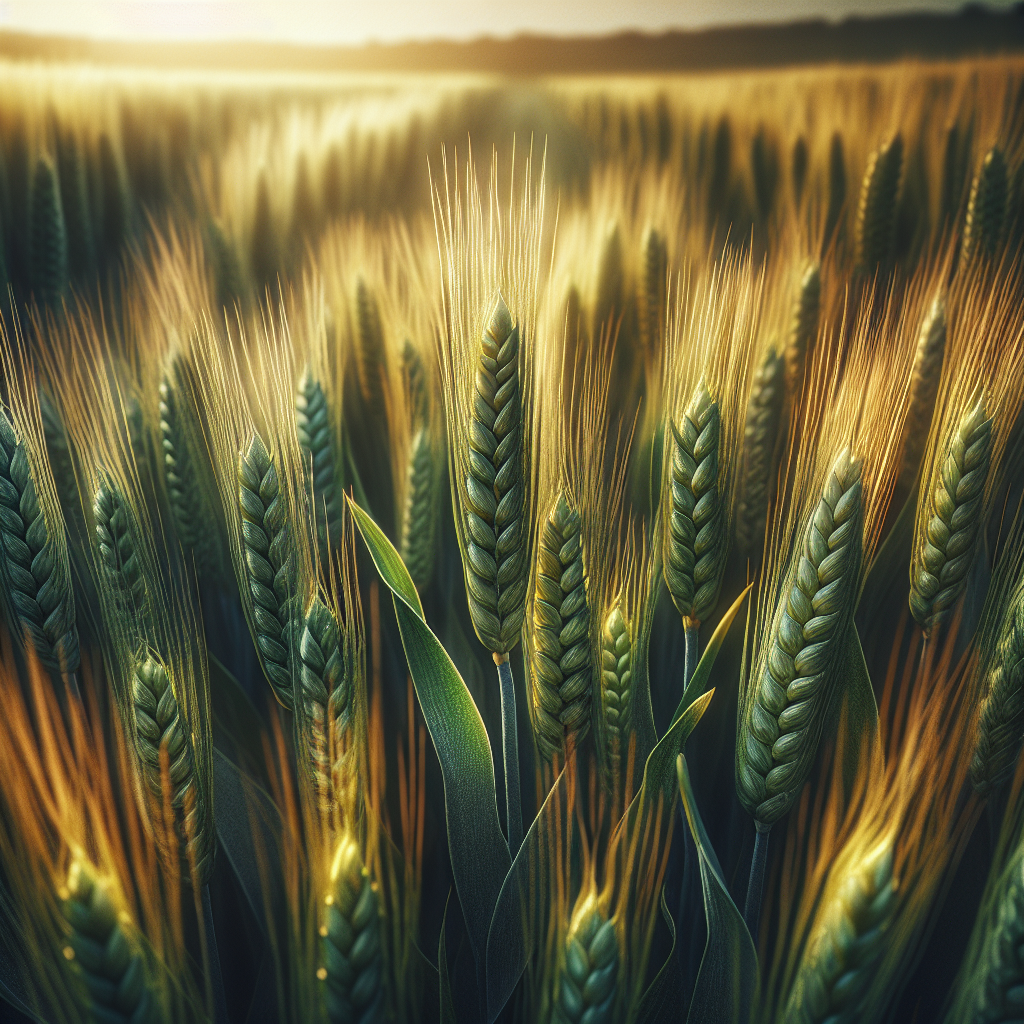
Introduction to Spring Triticale
A spring-sown form of triticale, this crop represents one of agriculture’s most successful wide hybrids: a man-made cross between wheat and rye. The aim of breeding triticale was to combine the yield potential and grain traits of wheat with the vigor, nutrient-scavenging ability, and marginal-soil tolerance of rye. Spring types are specifically selected to complete their life cycle without prolonged winter vernalization, making them suitable for planting after frost leaves the soil and for short-season grain or forage systems.
In practical farming, spring triticale fills several roles. It can be grown as a high-biomass forage cut at boot to early heading, ensiled as whole-crop silage at soft dough, harvested for grain, or used as a nurse crop and erosion-control cover. Compared with many spring cereals, it often performs better on lower-fertility soils, tolerates mildly acidic conditions, and competes well with weeds because of early vigor and dense canopy development. For growers familiar with wheat, spring triticale often feels similar in management, but it usually shows greater tolerance of stress and stronger vegetative growth.
Historically, stable triticale lines only became agronomically useful after chromosome-doubling and modern breeding solved early fertility and shriveled-seed problems. Today’s spring cultivars are much more uniform, better standing, and more productive than the early generations. Even so, cultivar choice remains important because some lines are clearly better for forage biomass, while others are selected for grain test weight, disease tolerance, or early maturity.
Botanical Profile of Spring Triticale
This cereal belongs to the hybrid genus × Triticosecale and is typically represented by octoploid or hexaploid breeding backgrounds, though modern commercial types are most often hexaploid. As a cool-season annual grass in the family Poaceae, it shares many structural traits with wheat and rye: fibrous roots, hollow culms except at nodes, linear leaves with parallel venation, and a terminal spike inflorescence.
Seedlings emerge with a narrow first leaf and quickly begin tillering when temperatures remain cool and soil moisture is adequate. Leaves are generally broader and darker green than rye, and many spring triticale cultivars show strong seedling vigor. The root system is one of its agronomic advantages: deeper and more exploratory than many wheat types, allowing better capture of residual nitrogen and improved drought buffering once established.
Plant height varies by cultivar and fertility regime, but many spring types range from 90 to 140 cm at maturity. Excess nitrogen, high moisture, and dense seeding can increase lodging risk, especially in forage-oriented cultivars with lush vegetative growth. The inflorescence is a spike, usually more robust than wheat, with multi-flowered spikelets attached directly to the rachis. Pollination is primarily self-fertile, though floral biology reflects its hybrid ancestry.
Phenologically, spring triticale progresses through germination, seedling establishment, tillering, stem elongation, booting, heading, anthesis, grain fill, and physiological maturity. The crop typically requires 90 to 130 days from planting to grain harvest, depending on latitude, temperature accumulation, and cultivar maturity class. For forage, the crop is often used much earlier, before full grain development.
The grain itself is elongated and somewhat wheat-like but often larger and softer depending on cultivar. Test weight can be more variable than in elite wheat classes, especially under stress during grain fill or where disease affects leaf area. Protein content is influenced strongly by nitrogen supply and yield level. Grain is used in feed rations, some milling blends, and niche food or distilling markets, but its greatest value in many regions is livestock forage and whole-farm resilience.
Soil, pH, and Climate Requirements for Spring Triticale
This crop performs best in well-drained loams, silt loams, clay loams with good structure, and fertile sandy loams that retain moisture without becoming waterlogged. It is more tolerant of imperfect soils than many spring cereals, but do not mistake tolerance for indifference: the best yields still come from friable, well-aerated soils with good aggregate stability and moderate organic matter.
Ideal soil pH is 6.0 to 7.2. It can still perform reasonably at pH 5.5 to 5.8, often better than wheat under the same acidity, but phosphorus availability declines and aluminum or manganese issues can appear on strongly acidic fields below about 5.3. In alkaline soils above pH 7.8, micronutrient deficiencies, especially zinc or manganese, may limit vigor. A pre-plant soil test is strongly advised, particularly if the field is intended for grain rather than forage.
Drainage is critical. Spring triticale germinates well in moist seedbeds, but saturated soils for more than 48 to 72 hours during emergence can reduce stand density and encourage seedling diseases. At the root zone, the target is consistently moist but oxygenated soil. In practical terms, soil should hold together when pressed in the hand yet crumble easily with light pressure, not smear into a sticky mass. Standing water, gray anaerobic soil odor, and yellowing lower leaves in young plants indicate excess moisture. Conversely, dry topsoil that prevents even emergence or causes shallow roots to stall during tillering will limit yield potential very early.
Temperature requirements fit cool temperate production. Germination begins at roughly 2 to 4°C, but uniform emergence is much faster at 8 to 18°C. Vegetative growth is strongest under cool conditions of 10 to 20°C. Once temperatures repeatedly exceed 27 to 30°C during heading and grain fill, yield loss, pollen stress, and shortened grain-filling duration become more likely. This is why spring triticale is usually planted as early as field conditions allow.
The crop prefers full sun and does not perform well in shaded systems. It is well adapted to temperate and continental climates with cool springs and moderate summer heat. Compared with many cereals, it shows strong resilience under low-fertility and moderate drought conditions thanks to rye ancestry, but the highest grain yields still require reliable moisture from establishment through flowering.
A seasonal water requirement of roughly 300 to 500 mm is common, depending on soil type, evaporative demand, and whether the goal is forage or grain. The most moisture-sensitive stages are emergence, early tillering, stem elongation, heading, and early grain fill. Moisture stress at tillering reduces head-bearing stems; stress at boot or anthesis reduces kernels per spike; stress at milk stage reduces kernel size.
For growers interested in whole-system fertility planning, the principles in soil health strategies are particularly relevant because spring triticale responds strongly to good soil structure and active nutrient cycling.
Step-by-Step Planting & Propagation
This crop is propagated by seed, and nearly all successful plantings begin with high-quality, cleaned, tested seed. Use certified seed whenever possible, especially if grain harvest is the goal, because varietal purity, germination percentage, and disease screening matter.
Select a suitable field. Choose land with good drainage, low perennial weed pressure, and no recent severe cereal disease history. Avoid compacted headlands or zones with prolonged spring saturation.
Test and prepare the soil. Soil test for pH, phosphorus, potassium, sulfur, and where relevant, micronutrients. Correct pH before planting if lime is needed; spring-applied lime works slowly, so major pH correction is better done in the preceding season. Prepare a firm, fine seedbed if conventional tillage is used. In no-till systems, ensure residue is evenly distributed and seed-slot closure is reliable.
Time planting early. Sow as soon as the soil is workable in spring and the top 5 to 7 cm has dried enough to avoid sidewall smearing. In many temperate regions this means very early spring, often before many broadleaf crops are considered. Delayed sowing sharply reduces tillering and usually lowers grain yield.
Calibrate seeding rate carefully. Typical grain-oriented rates range from 250 to 400 viable seeds per square meter, which often translates to about 100 to 180 kg/ha depending on thousand-kernel weight and germination. Lower rates suit early planting with strong tillering potential; higher rates are used for late sowing, colder soils, or weedy fields. For forage or silage, some growers seed more heavily to maximize stem density and suppress weeds.
Plant at proper depth. Standard seeding depth is 2.5 to 4 cm in moist, medium-textured soils. In lighter or drying seedbeds, depth may extend to 5 cm if needed to reach moisture. Planting deeper than 5 to 6 cm often delays emergence and weakens seedlings.
Use row spacing appropriate to purpose. Narrow rows of 15 to 20 cm are standard for grain and excellent weed competition. Wider rows may be used in low-input systems but usually reduce canopy closure.
Roll or firm if necessary. On loose seedbeds, light packing improves seed-soil contact and more uniform emergence.
Monitor emergence. A healthy stand should emerge evenly within about 7 to 14 days depending on temperature. Patchy emergence usually points to inconsistent depth, residue hair-pinning, crusting, seedling disease, or uneven moisture.
Spring triticale is not vegetatively propagated. Seed saving is possible from open commercial lines, but farm-saved seed should be tested for germination, seedborne disease, and purity before reuse.
Care & Maintenance regimes for Spring Triticale
Nutrient management should reflect end use. For grain, total nitrogen often falls in the range of 60 to 120 kg/ha, depending on soil organic matter, previous crop, manure history, and yield target. For forage or silage, rates may be similar or somewhat higher where biomass is the priority, but overly aggressive nitrogen can increase lodging, nitrate accumulation risk in drought-stressed forage, and delayed maturity. Split application is often beneficial: a modest base amount at planting, then the remainder at early tillering to first node if rainfall is likely and stand potential is strong.
Phosphorus is especially important for early root growth and tillering. Where soil tests are low, banding starter phosphorus near but not touching the seed can improve establishment in cold soils. Potassium supports water regulation and stalk strength; low-K fields are more prone to weak stems and poorer stress tolerance. Sulfur deficiency is increasingly common in low-organic-matter soils and high-rainfall regions; symptoms include uniform pale green new growth and poor protein formation.
Water management is straightforward but should be precise. During establishment, keep the upper rooting zone consistently moist, ideally around 60 to 80% of field capacity. In practical terms, the topsoil should not become powder-dry between irrigation or rain events. Once plants are tillering well, allow mild drying between waterings to encourage deeper rooting, but avoid prolonged deficits during stem elongation and heading. If irrigated, a common strategy is lighter applications early and deeper applications later, with the aim of wetting the active root zone rather than repeatedly wetting only the top few centimeters.
Signs of under-watering include bluish-green foliage, rolled leaves during the warmest part of the day that does not recover by evening, shortened internodes, and reduced tiller survival. Signs of overwatering include persistent soil saturation, yellow lower leaves, reduced root mass, foul-smelling anaerobic soil, and eventually lodging from shallow anchorage.
Weed management depends heavily on early establishment. Spring triticale is naturally competitive when planted early into a clean seedbed at adequate density. The first 30 to 45 days are crucial. Mechanical harrowing is sometimes possible at very early growth stages in organic systems, but timing must be exact to avoid stand damage. Rotation, stale seedbeds, and dense stands are the most dependable non-chemical tools.
Lodging prevention requires balance. Excess nitrogen, very lush canopies, wind exposure, and high rainfall can flatten the crop near heading or grain fill. Avoid over-seeding and over-fertilizing, particularly with forage-biased cultivars. If manure is used, calculate its available nitrogen realistically rather than assuming a low contribution.
Growth stages should be scouted weekly. Count tillers, inspect lower stems, and split stems to identify first node timing. Disease management and nutrient rescue decisions are much more effective when tied to crop stage rather than calendar date.
Pests, Diseases & Organic Management
Spring triticale generally has strong vigor, but it is not immune to pest and disease pressure. Problems vary by region, weather, residue level, and surrounding cereal acreage.
Among insects, aphids are common and may directly reduce vigor or vector barley yellow dwarf virus. Scout field margins and interior zones from early tillering onward. Economic damage is most likely when aphid populations build early and remain unchecked under mild weather. Organic management includes encouraging beneficial insects, avoiding excess soluble nitrogen that promotes lush, aphid-attractive tissue, and maintaining field diversity nearby. In small plantings, strong water sprays are rarely practical, but edge monitoring and early intervention matter.
wireworms and seedcorn maggots may injure germinating seed in cool, wet soils, especially after sod or heavy residue. The best prevention is rapid emergence through good seedbed preparation and early but not mudded-in planting. armyworms and cutworms can occasionally feed on leaves and stems; field scouting at dusk or early morning helps confirm activity.
Disease pressure often centers on fungal leaf diseases and root issues. rusts, powdery mildew, Septoria-type blotches, ergot, Fusarium head blight, and common root rots can all occur. Triticale often shows useful tolerance to some diseases, but susceptibility is highly cultivar-specific.
Rust diseases typically appear as orange to brown pustules on leaves and sometimes stems, especially under humid conditions with moderate temperatures. powdery mildew begins as white, floury patches on leaves in dense, lush stands. Septoria-like lesions show as elongated necrotic blotches that reduce green leaf area. Fusarium head blight risk rises with wet weather around flowering, especially after corn residues. This disease can reduce grain fill and contaminate grain with mycotoxins.
Organic management starts long before symptoms appear. Use crop rotation of at least two years away from cereals when disease has been severe. Avoid planting after heavily infected cereal stubble. Promote airflow by avoiding excessive nitrogen and overly dense stands. Select adapted cultivars with known disease tolerance. Seed cleaning and, where permitted, approved biological or organic seed treatments can reduce seedling disease losses.
For ergot management, mow grassy weeds on field borders before they head, because alternate hosts help carry inoculum. For Fusarium risk, avoid cereal-after-cereal sequences and manage residue carefully. Harvest promptly when mature, because delayed harvest increases exposure to weathering and head diseases.
Bird damage is usually minor in broadacre plantings but can be notable in small plots during the milk stage. Deer may graze young stands, especially where green forage is scarce.
Harvesting, Curing & Optimal Storage
Harvest timing depends entirely on intended use. For grazing, the crop is often entered once roots are anchored and plants are well tillered, but avoid overgrazing below the growing point before stem elongation. For hay, cut around boot to very early heading for the best compromise between quality and tonnage, though drying thick cereal forage can be difficult. For silage, harvest from late milk to soft dough; moisture is commonly targeted around 60 to 70% for bunker or pile silage and somewhat lower for wrapped baleage depending on system.
For grain, harvest at full maturity when kernels are hard and plant color has turned from green to golden tan. Grain moisture at combining is ideally around 13 to 16%, though some growers begin slightly higher and then dry grain mechanically. If harvested too wet without drying, spoilage risk rises sharply. If left too long in the field, lodging, sprouting in the head, and weather staining can reduce value.
A simple maturity check is to bite a kernel: at full maturity it should be hard, not dent like soft dough. Another indicator is the black layer or physiological maturity signal at the kernel base, though field color and moisture testing are more practical for most growers.
Combine settings usually need adjustment from wheat because triticale grain can thresh differently depending on plumpness and hull adherence. Start with conservative cylinder or rotor speed and moderate concave clearance, then adjust to minimize cracked grain and unthreshed heads. Because straw volume can be heavy, ensure the machine has enough residue-handling capacity.
Postharvest drying is critical. For safe medium-term storage, dry grain to 13% moisture or lower. For long-term storage in warm conditions, 12% is safer. Aerate bins immediately after filling to remove field heat and equalize moisture. Grain stored above safe moisture may heat, cake, and develop mold. Warning signs include musty odor, condensation under bin roofs, hot spots, and insect activity.
Clean storage bins before filling, remove old grain residues, and monitor every 1 to 2 weeks initially. If storing seed for replanting, maintain cool, dry conditions and protect from rodents. Straw can be baled after grain harvest, but quality declines quickly after repeated rain.
Companion Planting for Spring Triticale
In broadacre cereal production, companion planting usually means intercrops, underseedings, or beneficial border species rather than close mixed garden-style pairing. The most useful companions are species that improve nitrogen cycling, support pollinators and beneficial insects nearby, protect soil, or provide a second harvest without overwhelming the cereal.
Clover is one of the best companions or underseeded partners. It can be frost-seeded or established with the cereal in suitable systems, providing ground cover after grain harvest, biological nitrogen contribution for the following crop, and improved soil aggregation. Management matters: if moisture is limited, underseeded clover can compete with the cereal, so it is best used where rainfall or irrigation is adequate.
Peas can function as an intercrop in forage systems, improving forage protein and supporting a more balanced silage feed. The cereal provides structural support to the pea vines, while the legume contributes quality and some nitrogen economy. Mixed harvest timing is best managed for silage rather than clean grain separation.
Flax is occasionally paired in diversified systems because it occupies a somewhat different canopy niche and can help break disease cycles associated with continuous cereals. It is more often used in rotation than direct mixture, but in some low-input systems it serves as a useful biological diversification crop.
Sunflower is less of an in-row companion and more of a beneficial border species. Planted on edges, it can attract pollinators and beneficial insects, create habitat diversity, and act as a visual windbreak in small farm layouts. Keep borders far enough from the cereal to avoid shading and harvest interference.
In practical terms, the best companion strategy for spring triticale is usually not crowding the crop with many species at once, but choosing one compatible partner matched to the production goal: clover for soil building after harvest, peas for high-quality forage mixtures, or diverse border plantings for beneficial insect support.