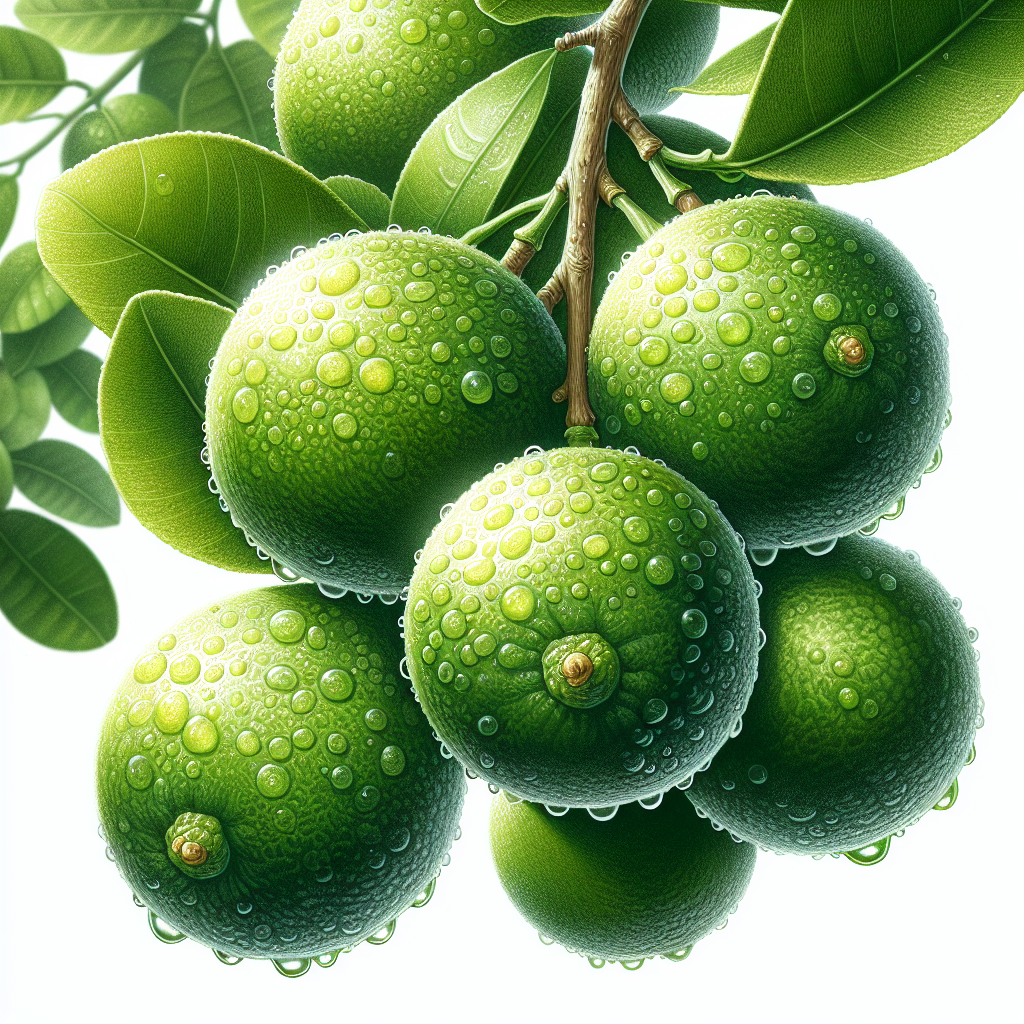
Introduction to Spanish Lime (Key West)
Spanish Lime (Key West), scientifically known as Melicoccus bijugatus, is a standout tropical fruit tree celebrated for its unique, grape-like clusters of translucent, honey-sweet fruits encased in a thin, brittle green skin. Often called mamoncillo, quenepa, or honeyberry in various regions, the Key West strain is particularly adapted to Florida's subtropical conditions, making it a favorite among home gardeners and small-scale farmers in USDA zones 10-11. This variety gained prominence in Key West due to its resilience to salty coastal winds and humid conditions, yielding fruits from late spring through summer.
The fruit's appeal lies in its refreshing, citrusy flavor with subtle pineapple notes, high juiciness, and nutritional profile rich in vitamin C, antioxidants, and fiber. Trees can reach 30-50 feet tall but are often pruned to 15-20 feet for manageability. With proper care, a single mature tree can produce 100-300 pounds of fruit annually, offering excellent returns for fresh markets, juices, or preserves. Growers appreciate its low maintenance once established, though success hinges on matching its specific environmental needs. For those in marginal climates, container culture or greenhouse protection extends its viability. Key Lime (crop) shares similar subtropical traits but differs in fruit type and growth habit.
Botanical Profile of Spanish Lime (Key West)
Spanish Lime (Key West) belongs to the Soapberry family (Sapindaceae), closely related to lychee and longan. It features pinnate leaves up to 12 inches long, with 4-6 glossy, leathery leaflets that remain evergreen year-round. The tree's wood is hard and durable, often used locally for tool handles.
Flowers are small, greenish-white, and dioecious—meaning separate male and female trees—necessitating cross-pollination for fruit set. However, many Key West cultivars are hermaphroditic or parthenocarpic, producing fruit without pollination, which simplifies cultivation. Fruits mature in dense panicles of 20-40 drupes, each 1-1.5 inches in diameter, with a single large seed surrounded by sweet, gelatinous aril.
Growth is moderately vigorous, with a spreading canopy and shallow, fibrous roots that demand well-drained sites to avoid rot. The Key West variety exhibits enhanced salt tolerance and wind resistance compared to mainland strains, making it ideal for coastal plantings. Phenologically, vegetative flush occurs post-harvest, followed by flowering in early spring. Full production begins at 5-7 years, with peak yields at 15-20 years. Compared to Mango (crop), Spanish lime has a more compact form and faster fruiting cycle.
Soil, pH, and Climate Requirements for Spanish Lime (Key West)
Thriving in USDA zones 10b-11, Spanish Lime (Key West) demands full sun (8+ hours daily) and protection from frost below 28°F (-2°C). Ideal temperatures range 70-95°F (21-35°C), with high humidity above 60%. It tolerates brief droughts but excels in consistent moisture without waterlogging.
Soil preferences lean toward sandy loams or well-drained clay loams with organic matter content of 3-5%. pH should be 6.0-7.5; amend acidic soils with dolomite lime and alkaline ones with sulfur. Salinity tolerance up to 4,000 ppm allows seaside planting, but avoid heavy clays prone to root rot. Mulch with 4-6 inches of organic material to retain moisture and suppress weeds.
In suboptimal climates, use microclimates or high tunnels. For heatwaves, reference strategies in Why Summer Heatwaves Are Silently Killing Small Farm Yields - And 7 Organic Strategies to Fight Back. Windbreaks of native shrubs enhance establishment.
Step-by-Step Planting & Propagation
Propagation
Primary methods include air-layering (most reliable, 80-90% success) and grafting onto M. bijugatus rootstock for vigor. Seeds germinate in 2-4 weeks at 80-85°F but result in variable offspring; stratify in moist sphagnum for 30 days.
Air-Layering: Select 1-inch diameter branches in spring. Girdle 2 inches, apply rooting hormone (IBA 0.3%), wrap in moist sphagnum moss and plastic. Roots form in 6-8 weeks; sever and pot.
Grafting: Cleft or veneer graft in late winter. Use scions from disease-free trees.
Planting
Plant in early spring or fall during dormancy.
Dig holes 3x wider than root ball, 2 feet deep. Incorporate 50% compost, 2 lbs bone meal, and micronutrients (Zn, Mn).
Space trees 20-25 feet apart for canopy spread. Orient for south-facing exposure.
Plant at soil line; stake if windy. Water deeply (20-30 gallons) post-planting.
Apply 4-inch mulch ring, excluding trunk. Fertilize lightly with 6-6-6 NPK at 1 lb/tree.
Expect 1-2 years for establishment. Guava (crop) offers similar propagation techniques adaptable here.
Care & Maintenance regimes for Spanish Lime (Key West)
Water young trees weekly (1-2 inches); mature ones biweekly, increasing during fruit swell. Drip irrigation optimizes efficiency.
Fertilization: Annual schedule—January: 8-3-9 (1 lb/foot height); May: 6-6-6 + Mg; September: micronutrient foliar spray. Avoid excess N to prevent vegetative overgrowth.
Pruning: Annually post-harvest—remove deadwood, watersprouts, and crossing branches. Open canopy for light penetration; tip-prune to encourage fruiting spurs. Dwarf to 12-15 feet for harvesting ease.
Weed Control: Mulch and shallow cultivation; cover crops like clover suppress competition.
Monitor for nutrient deficiencies: yellowing leaves indicate iron chlorosis; interveinal mottling signals zinc shortage. Soil tests guide amendments. Mature trees yield reliably with minimal intervention.
Pests, Diseases & Organic Management
Common pests include scale insects, mealybugs, and aphids—treat with neem oil (2% solution, weekly) or insecticidal soap. Horticultural oil smothers overwintering stages.
Diseases: Anthracnose causes fruit rot (copper fungicide at bud break); Phytophthora root rot from poor drainage (improve aeration, use biofungicides like Trichoderma). Leaf spots (Alternaria leaf spot) managed via sanitation and potassium phosphite sprays.
Organic IPM: Introduce ladybugs for aphids; use kaolin clay for fruit protection. Reflective mulches deter flies. For detailed fixes, see Why 90% of Small Farms Fail at Pest Management - And 8 Organic Fixes That Actually Work. Scout weekly; thresholds: 5% leaf infestation triggers action.
Harvesting, Curing & Optimal Storage
Harvest when fruits turn dull green and clusters loosen (June-July in Florida). Pick entire panicles by hand to avoid skin tears; yield peaks over 4-6 weeks.
No curing needed; rinse gently. Fresh storage: 45-50°F (7-10°C), 85-90% RH for 3-4 weeks. Fruits sweeten post-harvest; refrigerate to retard spoilage.
Process into juices, sorbets, or jams—freeze arils for year-round use. Market as clusters for premium pricing. Avoid bruising; use ventilated crates.
Companion Planting for Spanish Lime (Key West)
Enhance growth with nitrogen-fixers like pigeon pea or gliricidia for shade and soil enrichment. Underplant with thai-basil, marigolds (marigold), or nasturtiums (nasturtium) to repel pests.
Avoid deep-rooted competitors like cassava. Legumes improve soil; herbs deter whiteflies. Intercrop with low Lime (crop) bushes for pollinator attraction. Benefits include 15-20% yield boosts and reduced disease pressure. Learn more in Why Companion Planting Feels Like Guesswork for Small Farms - And How AI Makes It Foolproof.