Introduction to Sweet Sorghum
Sweet sorghum (Sorghum bicolor var. saccharatum) stands out as a multi-purpose crop cultivated primarily for its juicy, sugar-rich stalks, which yield a delicious syrup alternative to cane sugar or molasses. Originating from Africa where sorghum has been domesticated for over 5,000 years, sweet sorghum was selectively bred in the 19th-century American South as a backyard syrup source during sugarcane shortages. Unlike grain sorghum, this variety prioritizes stalk sweetness—often reaching 14-20% soluble sugars like sucrose, glucose, and fructose—making it ideal for artisanal syrup, ethanol production, and livestock fodder. Historically, it fueled rural economies from Appalachia to the Midwest, with cultivars like 'Sugar Drip' and 'Rox Orange' still popular today for their robust flavor and high brix levels. Modern hybrids such as 'M81E' or 'Wray' push yields to 50-60 tons per acre under optimal management, offering drought resilience unmatched by corn or sugarcane. This guide equips growers with precise, science-backed methods to cultivate sweet sorghum successfully, from seed selection to syrup pressing.
Botanical Profile of Sweet Sorghum
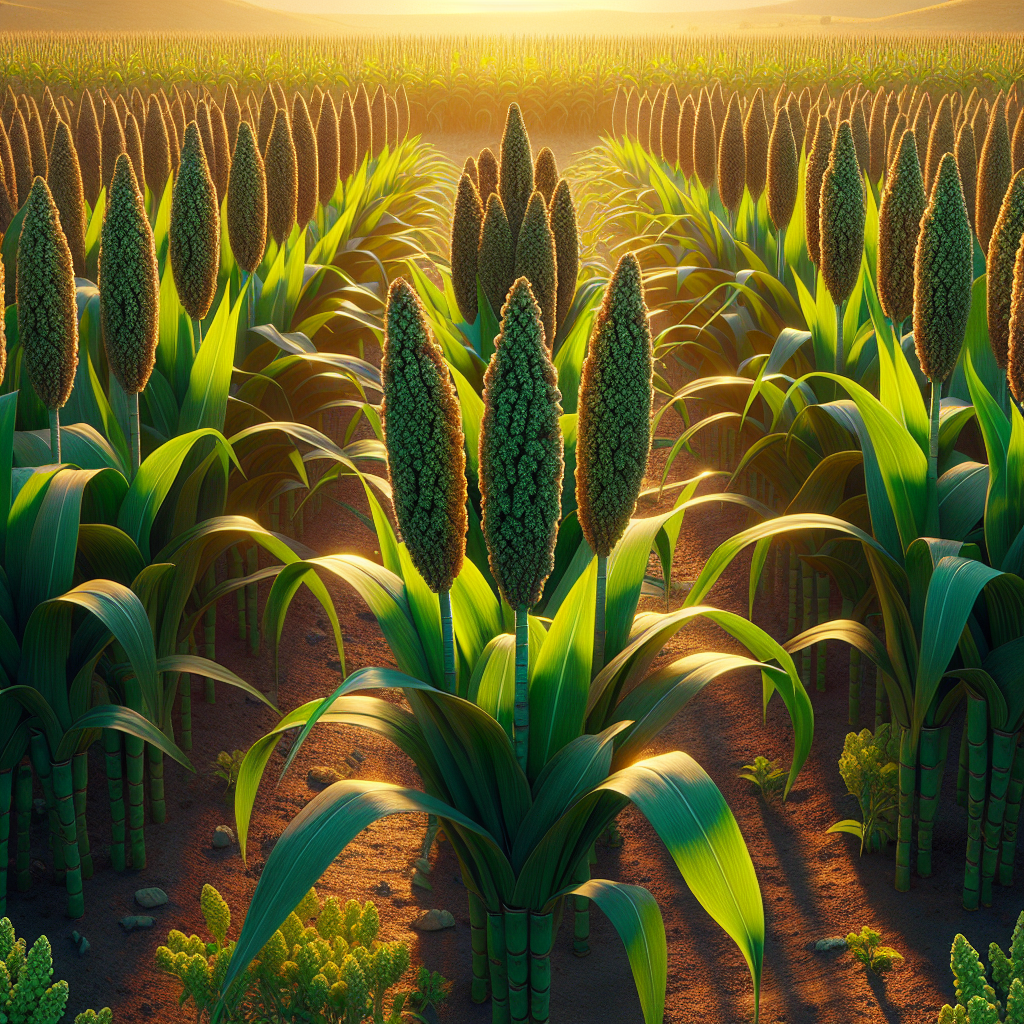
Sweet sorghum is an annual C4 grass in the Poaceae family, classified as Sorghum bicolor (L.) Moench var. saccharatum, distinguishing it from grain types (var. bicolor) or forage types (var. sudanense). Plants grow 8-15 feet tall with thick, pithy stalks up to 2 inches in diameter, filled with sweet juice rather than fibrous lignin dominant in grain varieties. Leaves are broad, glabrous, and glaucous, measuring 2-3 feet long by 2-4 inches wide, arranged alternately on a sturdy tillering stem that branches minimally to focus energy on stalk development. The inflorescence is a semi-compact panicle, 1-2 feet long, bearing perfect florets that produce small, hard grains (300-500 per panicle) as a bonus crop. Roots form a deep, fibrous system extending 6-10 feet, with extensive lateral spread for superior drought tolerance via efficient water-use efficiency (WUE) of 9-12 kg/m³. Key botanical nuances include photoperiod sensitivity in some cultivars—short-day types flower under 12-hour days—while day-neutral hybrids like 'Merit' suit diverse latitudes. Stalk Brix (sugar content) peaks at soft-dough stage, measured via refractometer; top varieties hit 18-22° Brix. Genetically, it's a tetraploid (2n=40) with high heterozygosity, enabling hybrid vigor but requiring isolation (1/4 mile) for seed saving to prevent cross-pollination with johnsongrass or shattercane.
Soil, pH, and Climate Requirements for Sweet Sorghum
Sweet sorghum excels in well-drained, fertile loams or sandy loams with 1-2% organic matter, tolerating marginal soils where corn fails—clay content up to 40% is acceptable if not waterlogged. Optimal pH is 5.5-7.5; below 5.0, aluminum toxicity stunts roots, while above 8.0, iron deficiency yellows leaves. Conduct a soil test targeting 40-60 ppm phosphorus (P), 150-250 ppm potassium (K), and 1-2% nitrogen (N) pre-plant; avoid high-salt soils (>2 dS/m) as it reduces juice quality. Full sun (8+ hours) and temperatures of 75-95°F (24-35°C) drive growth; it withstands brief dips to 50°F but dies below 28°F. Rainfall needs are 20-30 inches total, with drought tolerance via stomatal closure and deep roots allowing 40-60 day dry spells—irrigate only if soil moisture drops below 50% field capacity (measure via tensiometer at 12-18 inches depth). Heat units (base 50°F) required: 2,500-3,000 GDD to maturity. USDA zones 7-11; in cooler climates, select early-maturing hybrids. For more on similar grasses, see our Sugarcane guide. Rotate with legumes to rebuild soil nitrogen, as sweet sorghum depletes 100-150 lbs N/acre.
Step-by-Step Planting & Propagation
- Seed Selection: Choose certified hybrids like 'M81E' (high Brix, 100-day maturity) or heirlooms like 'Japanese Sugar' for flavor; aim for 10,000-15,000 seeds/lb, 85%+ germination. Treat with thiram for smut prevention.
- Timing: Plant after soil warms to 65°F (late spring/early summer; 2 weeks post-corn planting). Row spacing 30-40 inches, plant spacing 6-12 inches (80,000-120,000 plants/acre).
- Preparation: Till to 8 inches, incorporate 50-100 lbs N/acre (urea or compost). Bed rows if heavy soils.
- Planting: Drill 1-2 inches deep at 10-20 lbs/acre; press soil firmly. For transplants, start indoors 3 weeks early in plugs, harden off, and set 4-6 inches deep.
- Propagation Alternatives: Stem cuttings root readily in moist sand (80% success); divide ratoon clumps post-harvest for 2-3 cycles. Avoid seed saving near grain sorghum to prevent outcrossing. Emergence in 7-10 days; thin to singles at V4 stage if overcrowded. Check Soil Health Mastery for prep tips.
Care & Maintenance regimes for Sweet Sorghum
Irrigate to maintain 60-80% soil moisture (field capacity) during vegetative phase (V1-V8); reduce post-boot to concentrate sugars—overwatering (>90% moisture) dilutes Brix by 20%. Signs of underwatering: rolled leaves, purple stems; overwatering: yellowing bases, root rot. Fertilize at planting (40N-60P-80K), sidedress 60N at V6 (knee-high). Scout weekly: tiller count should reach 3-5/plant. Weed control: pre-emerge atrazine (1 lb/acre) or cultivate shallowly until 12 inches tall; mulch suppresses 90% weeds. Growth stages: VE (emergence), V (vegetative, 10-20 leaves), R1 (boot), R2 (half-bloom), R3 (dough), R4 (dent), R5 (maturity). Thin tillers if >5 to boost stalk diameter. For drought, deficit irrigate post-R2. Monitor Brix weekly from R2; peak at 16-20% signals harvest.
Pests, Diseases & Organic Management
Pests: Chinch bugs (Blissus leucopterus) suck sap, causing wilting—scout borders, release beneficials like big-eyed bugs or apply spinosad (OMRI). Sorghum midge (Contarinia sorghicola) infests panicles; early planting evades; traps show 1/midgeless head threshold. Armyworms: BT spray at <20% defoliation. Diseases: Anthracnose (Colletotrichum graminicola): gray lesions on stalks; rotate 3 years, resistant hybrids. Head smut (Sporisorium reilianum): boil galls; hot-water seed treat (122°F/20min). Dwarf mosaic virus: rogue infected (stunted, mosaic leaves); control johnsongrass. Organic: Neem oil for Aphids, kaolin clay for Chinch bugs. Companion with Sunflower deters pests. Maintain 20% ground cover to foster predators.
Harvesting, Curing & Optimal Storage
Harvest at 28-35% dry matter (soft-dough, 16-20° Brix) for max sugar; cut 6-8 inches above ground with sorghum knife or forage chopper. For syrup: strip leaves, press within 24 hours (yield 40-60 gal/ton stalks). Juice ferments fast—add lime (pH 5.5), filter, boil to 220° Brix soft-ball stage. Store syrup in glass at 60-70°F (1+ year shelf life). For silage: chop, pack anaerobically (65% moisture), inoculate lactobacillus. Grain: combine at 25% moisture. Cure stalks upright in shade 1-2 days to evaporate excess water. Dry seed to 12% moisture for 2-year storage in cool, dry bins.
Companion Planting for Sweet Sorghum
Pair sweet sorghum with nitrogen-fixers like Soybeans (interplant 20 inches away; boosts N by 50 lbs/acre) or Cowpeas for weed suppression and dual harvest. Sunflower shades weeds, attracts pollinators; plant 10 feet apart. Pumpkin as groundcover conserves moisture, deters Chinch bugs. Avoid corn (competes for water) or cotton (shared pests). These combos enhance biodiversity, yields by 15-25%.