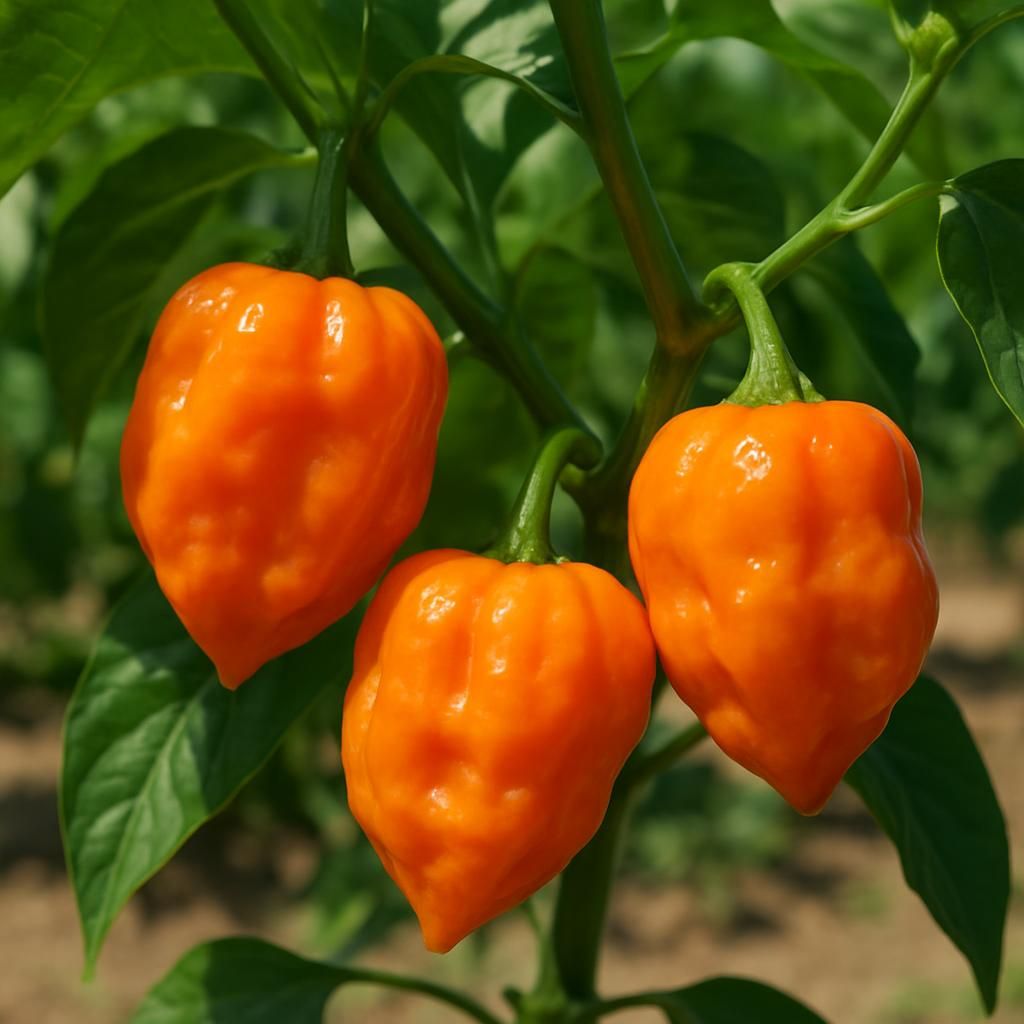
Introduction to Scotch Bonnet Freeport Orange
Scotch Bonnet Freeport Orange is a distinctive cultivar of Chili Pepper originating from the Freeport region of the Bahamas. It combines the classic lantern shape of traditional Scotch Bonnet peppers with a vivid orange hue and complex tropical-fruit flavor profile. Growers value this variety for both fresh market sales and value-added hot sauce production due to its consistent heat (150,000–250,000 Scoville Heat Units) and excellent post-harvest shelf life.
The pepper thrives in tropical and subtropical climates but can be successfully cultivated in temperate zones using season extension techniques. Its compact bush habit and high fruit set make it suitable for both open-field and protected-culture systems.
Botanical Profile of Scotch Bonnet Freeport Orange
Capsicum chinense 'Freeport Orange' belongs to the Solanaceae family. Plants reach 60–90 cm in height with a spreading habit and dark green, ovate leaves. Flowers are small, white with greenish-yellow anthers. Fruits are 3–5 cm wide, distinctly lobed, and ripen from green to brilliant orange. The cultivar exhibits moderate drought tolerance once established and responds well to pruning for increased branching and yield.
Soil, pH, and Climate Requirements for Scotch Bonnet Freeport Orange
Successful production begins with precise environmental matching. The following table summarizes ideal growing conditions:
| Parameter | Ideal Range | Notes |
|---|---|---|
| Soil Type | Sandy loam to loam, well-drained | Avoid heavy clay without amendment |
| Soil pH | 6.0–6.8 | Maintain with dolomitic lime if needed |
| Temperature (Day) | 24–32 °C | Optimal fruit set occurs above 21 °C |
| Temperature (Night) | 18–24 °C | Below 15 °C slows growth and pollination |
| Relative Humidity | 60–80 % | Higher humidity increases disease pressure |
| Sunlight | Full sun, minimum 8 hours | Supplemental lighting in winter greenhouses |
| Elevation | 0–800 m | Performs well at low to mid elevations |
Step-by-Step Planting & Propagation
- Start seeds indoors 8–10 weeks before the last frost. Use sterile seed-starting mix and maintain 27–30 °C bottom heat for rapid germination (7–14 days).
- Transplant seedlings at the 4–6 true-leaf stage into 10 cm pots. Harden off for 7–10 days before field planting.
- Space plants 45–60 cm apart in rows 75–90 cm wide. Raised beds improve drainage and soil warming.
- Install drip irrigation at planting and apply 5–7 cm of organic mulch to suppress weeds and moderate soil temperature.
- In cooler climates, use row covers or low tunnels until nighttime temperatures remain above 18 °C.
Care & Maintenance regimes for Scotch Bonnet Freeport Orange
Consistent cultural practices maximize yield and fruit quality. The schedule below provides a practical framework for commercial and serious home growers:
| Growth Stage | Watering Schedule | Fertilizer Program | Pruning & Training Schedule |
|---|---|---|---|
| Seedling (0–4 wks) | Keep evenly moist; avoid waterlogging | Weekly 100 ppm N liquid feed (balanced 10-10-10) | Pinch growing tip at 4–6 leaves to promote bushiness |
| Vegetative (4–8 wks) | 2.5–3.5 cm/week; drip irrigation preferred | Side-dress with 5-10-10 at 4 weeks; repeat at 6 weeks | Remove lower leaves touching soil; stake if needed |
| Flowering/Fruiting | Reduce to 2 cm/week once fruit set | Switch to high-K formula (5-10-20) every 14 days | Prune interior suckers; top plants at 60 cm to control height |
| Late Season | Taper water to encourage ripening | Cease nitrogen applications 3 weeks before final harvest | Remove diseased foliage and spent fruit weekly |
Pests, Diseases & Organic Management
Key threats include Aphids, Thrips, Spider Mites, Whiteflies, and Broad Mites. Fungal issues such as Phytophthora and Powdery Mildew are common in humid environments. Implement an integrated approach:
- Scout weekly and use yellow sticky traps for early detection.
- Release beneficial insects (lady beetles, lacewings, predatory mites) at first sign of infestation.
- Apply neem oil or insecticidal soap as needed; rotate modes of action to prevent resistance.
- Maintain strict sanitation: remove crop debris, avoid overhead irrigation, and space plants for airflow.
- Use copper-based fungicides or Bacillus subtilis products for bacterial and fungal pressure.
Harvesting, Curing & Optimal Storage
Harvest when fruits reach full orange color and firm texture, typically 70–85 days after transplant. Use clean pruners to cut stems, leaving a short calyx attached. For fresh market, cool immediately to 10–13 °C at 85–90 % relative humidity. For drying, spread in single layers at 35–40 °C with good airflow until brittle. Store dried peppers in airtight containers away from light. Properly handled fruit retains quality for 4–6 weeks fresh or up to 12 months dried.
Companion Planting for Scotch Bonnet Freeport Orange
Strategic pairings enhance biodiversity and reduce pest pressure. Recommended companions include Basil, Marigold, Nasturtium, and Garlic. These aromatic plants deter Aphids and Whiteflies while attracting pollinators. Avoid planting near Fennel or other members of the Apiaceae family that may inhibit growth. Rotate with legumes such as Cowpea in subsequent seasons to restore soil nitrogen.
For additional guidance on timing harvests for peak market value, consult The Overlooked Art of Seasonal Harvest Timing for Small Farm Profit.