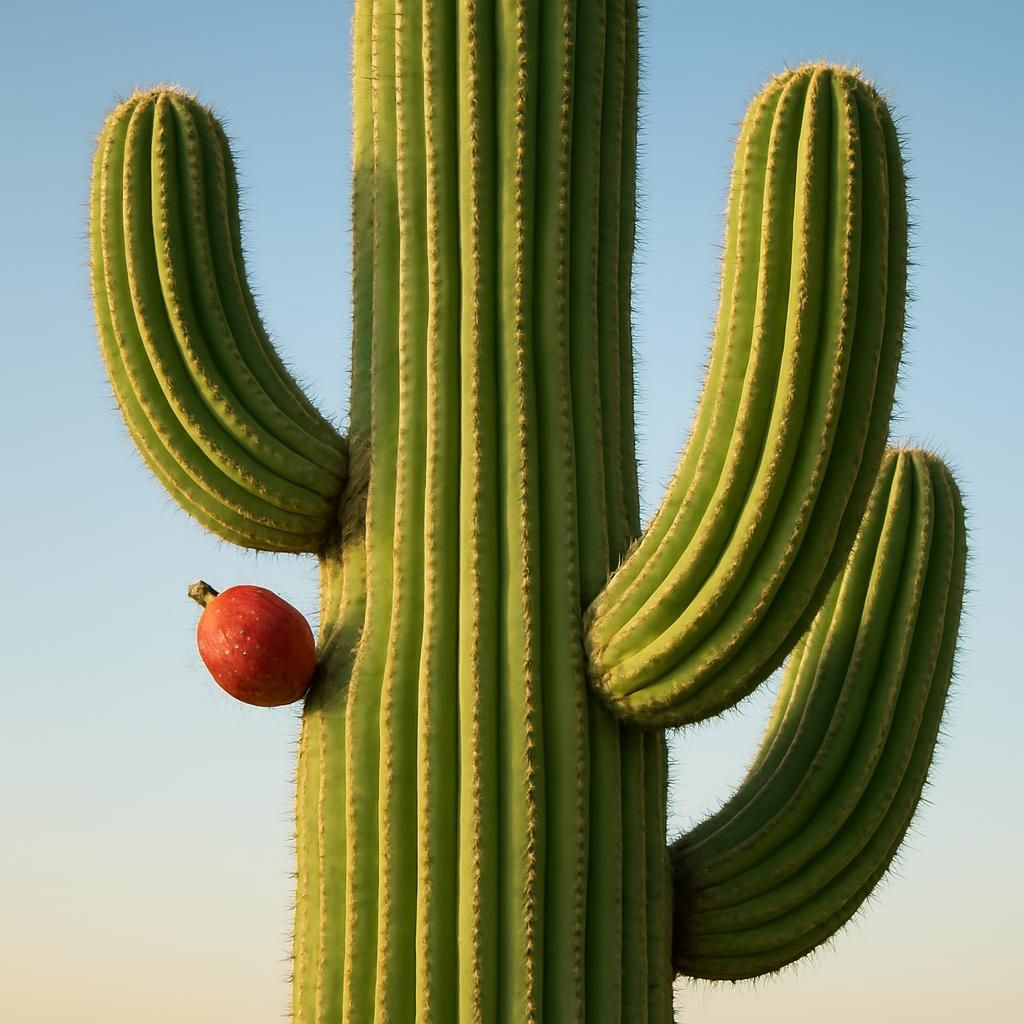
Introduction to Saguaro
The saguaro (Carnegiea gigantea) stands as the quintessential symbol of the American Southwest and one of the most culturally significant plants in arid agriculture. Reaching heights of 40–60 feet over 150–200 years, this slow-growing giant produces edible fruit, provides critical wildlife habitat, and serves as a keystone species in desert agroecosystems. Modern growers cultivate saguaros for specialty fruit markets, xeriscape landscaping, and conservation plantings where water scarcity demands resilient, long-lived crops.
Commercial interest in saguaro has grown with demand for unique desert superfoods and sustainable landscaping. Unlike faster-maturing crops such as Dragon Fruit, saguaro requires decades to reach productive size, making it a generational investment crop suited to arid and semi-arid regions.
Botanical Profile of Saguaro
Carnegiea gigantea belongs to the Cactaceae family and is the sole species in its genus. Mature plants develop a thick, ribbed, photosynthetic stem capable of expanding and contracting with water availability. Arms typically emerge after 50–75 years, dramatically increasing fruiting surface area. White, nocturnal flowers bloom in late spring, followed by sweet red fruit containing thousands of tiny black seeds. The plant’s CAM photosynthesis enables exceptional water-use efficiency, storing up to 1 ton of water in its tissues.
Soil, pH, and Climate Requirements for Saguaro
Saguaro demands extremely well-drained, mineral soils with minimal organic matter. Native stands occur on decomposed granite, volcanic cinder, and sandy loam with rapid percolation. Soil pH should remain slightly alkaline. The plant is extremely sensitive to prolonged moisture and frost.
| Parameter | Ideal Range/Value | Notes |
|---|---|---|
| Soil Type | Sandy loam, decomposed granite, volcanic cinder | Must drain within 30 minutes after irrigation |
| Soil pH | 7.0–8.5 | Slightly alkaline; avoid acidic amendments |
| Temperature Range | 25–110 °F (-4–43 °C) | Protect seedlings from frost below 25 °F |
| Annual Rainfall | 4–12 inches (100–300 mm) | Supplemental irrigation required in cultivation |
| USDA Hardiness Zones | 8b–11 | Minimum winter temp 15–20 °F |
| Sun Exposure | Full sun (6–10+ hours) | Essential for stem development and flowering |
| Elevation | Sea level–4,000 ft | Avoid cold air drainage pockets |
Step-by-Step Planting & Propagation
Saguaro is almost exclusively propagated from seed. Collect ripe fruit in June–July, ferment pulp 48 hours, and rinse seeds clean. Sow in sterile, fast-draining cactus mix (50% pumice, 30% coarse sand, 20% composted bark) at 70–85 °F. Germination occurs in 7–21 days under bright indirect light. Transplant seedlings at 6–12 months into 1-gallon containers with the same mineral mix. Field planting occurs at 3–5 years when plants reach 12–18 inches. Space mature specimens 15–25 feet apart. Dig planting holes twice the root ball width and amend only with coarse mineral material—no organic matter at planting. Water lightly at transplant and provide shade cloth for the first summer.
Care & Maintenance regimes for Saguaro
Established saguaros require minimal intervention. Focus on preventing soil saturation and mechanical injury. Young plants benefit from light fertilization and winter protection.
| Growth Stage | Watering Frequency | Fertilizer Schedule | Pruning / Maintenance |
|---|---|---|---|
| Seedlings (0–2 yr) | Every 7–10 days when soil is dry | Dilute balanced liquid (10-10-10) monthly April–September | None; remove damaged tissue only |
| Juveniles (2–15 yr) | Every 3–4 weeks in summer; none in winter | Low-nitrogen slow-release once annually in spring | Remove basal pups if desired |
| Mature (15+ yr) | Deep soak every 4–6 weeks in extreme drought only | None required; optional micronutrient spray every 3 years | Remove dead arms with sterilized saw; avoid trunk damage |
Pests, Diseases & Organic Management
Saguaro faces few serious pests in well-managed plantings. Primary threats include scale insects, mealybugs, and spider mites on stressed plants. Root and stem rots caused by Phytophthora and Pythium occur with overwatering. Organic controls include horticultural oil sprays, predatory mites, and strict irrigation discipline. Monitor for bacterial necrosis (Erwinia) during monsoon seasons; excise and dispose of infected tissue immediately. Rodents and birds may damage fruit—netting provides effective protection.
Harvesting, Curing & Optimal Storage
Harvest ripe fruit when it splits and turns deep red, typically June–August. Use long-handled fruit pickers or gloves to avoid spines. Fresh fruit keeps 3–5 days refrigerated. For longer storage, split fruit, remove seeds, and dehydrate at 135 °F for 8–12 hours. Dried saguaro fruit stores 12+ months in airtight containers. Seeds remain viable for 5–10 years when kept cool and dry.
Companion Planting for Saguaro
Saguaro pairs well with other desert-adapted species that share similar water and soil requirements. Recommended companions include Oyster Mushroom spawn inoculated into nurse logs for soil biology, drought-tolerant herbs such as Thyme, and nitrogen-fixing Clover used as living mulch between young plants. Avoid planting high-water-demand crops like Tomato or Corn nearby. Strategic placement near Dragon Fruit or Pineapple creates microclimates that moderate temperature extremes for both species.
For more on building resilient desert systems, read The Truth About Weather Patterns and Small Farm Resilience.