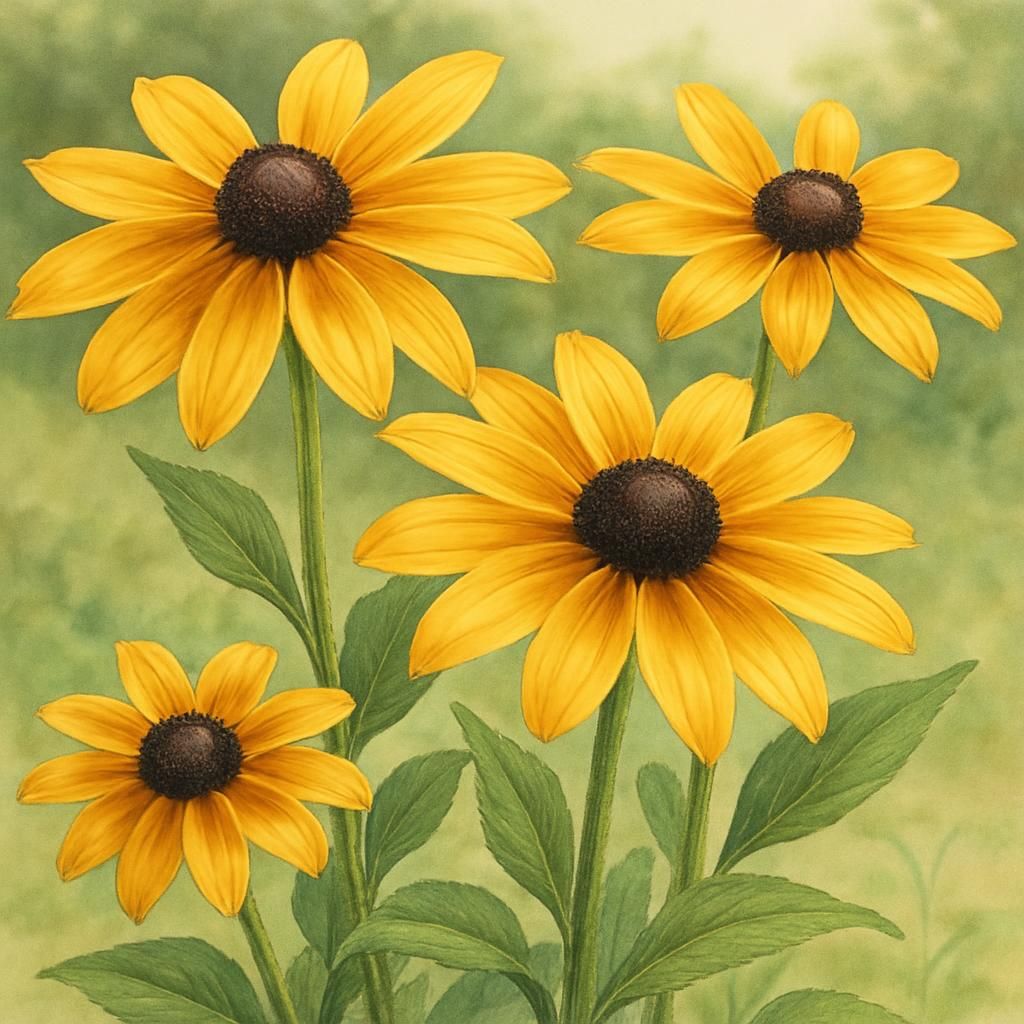
Introduction to rudbeckia
Rudbeckia, commonly referred to as black-eyed Susan, is one of the most reliable and visually striking perennials for home gardens and small-scale cut-flower production. With its golden-yellow ray petals surrounding a dark central cone, this North American native brings extended seasonal color from midsummer well into autumn. Its exceptional drought tolerance, pollinator appeal, and low-maintenance nature make it a staple in sustainable landscapes and professional cut-flower rotations.
Beyond its ornamental value, rudbeckia plays an important ecological role by supporting native bees, butterflies, and beneficial insects. Its deep taproot helps stabilize soil on slopes, while its seed heads provide winter forage for songbirds. Commercial growers appreciate its long vase life and ability to thrive in marginal soils where more demanding crops fail.
This comprehensive guide delivers professional-grade, field-tested recommendations for soil, climate, planting, irrigation, fertility, pruning, harvesting, and companion strategies so both novice and experienced growers can achieve consistent, high-quality yields.
Botanical Profile of rudbeckia
Rudbeckia hirta belongs to the Asteraceae family and is characterized by its upright, branching habit reaching 18–36 inches in height. The plant produces lance-shaped, slightly hairy leaves and solitary flower heads 2–3 inches across. Each bloom features 10–20 bright yellow to orange ray florets surrounding a prominent, dark brown to black central cone composed of disk florets.
The species is technically a short-lived perennial or biennial, but many modern cultivars behave as reliable perennials in USDA zones 3–9. Rudbeckia spreads slowly via rhizomes and readily self-seeds, allowing naturalized stands to form over several seasons. Its fibrous yet deep root system confers excellent drought resistance once established.
Popular cultivars include 'Indian Summer', 'Autumn Colors', 'Goldsturm' (actually Rudbeckia fulgida var. sullivantii), and the compact 'Toto' series. Flower color ranges from classic gold to mahogany, russet, and bicolor forms. All share the characteristic dark central cone that gives the plant its common name.
Soil, pH, and Climate Requirements for rudbeckia (MUST INCLUDE A MARKDOWN TABLE OF IDEAL CONDITIONS)
Rudbeckia performs best in well-drained, moderately fertile soils. It tolerates poor or sandy soils once established but dislikes heavy, waterlogged clay. Raised beds or amended native soil with 2–3 inches of compost improve drainage and root development.
The plant thrives in full sun (minimum 6–8 hours) but tolerates light afternoon shade in extremely hot climates. It is cold-hardy to zone 3 and heat-tolerant into zone 9, making it suitable for a wide geographic range.
| Parameter | Ideal Range | Notes |
|---|---|---|
| Soil Type | Loamy to sandy loam | Well-drained; avoid heavy clay |
| Soil pH | 6.0 – 7.5 | Slightly acidic to neutral |
| Temperature Range | 60–85°F (15–29°C) day | Tolerates 20°F (-6°C) once established |
| Sunlight | Full sun (6–8+ hours) | Light afternoon shade in extreme heat |
| Spacing | 12–18 inches (30–46 cm) | 18–24 inches for taller cultivars |
| USDA Hardiness | Zones 3–9 | Mulch in zones 3–4 for winter protection |
Step-by-Step Planting & Propagation
Site Preparation: Choose a location receiving at least six hours of direct sun. Remove weeds and incorporate 2–3 inches of well-rotted compost or aged manure. Conduct a soil test and adjust pH if below 5.8 with dolomitic lime.
Direct Seeding: Sow seeds outdoors after the last frost when soil temperatures reach 60°F (15°C). Press seeds lightly into the surface; they require light for germination. Keep consistently moist for 14–21 days. Thin seedlings to 12–18 inches apart once they develop true leaves.
Transplanting Seedlings: Start seeds indoors 6–8 weeks before the last frost. Harden off for 7–10 days. Plant at the same depth as the container, spacing 12–18 inches. Water thoroughly after planting and apply a 2-inch mulch layer to conserve moisture.
Division: Established clumps can be divided in early spring or fall every 3–4 years. Dig the clump, separate healthy sections with roots and shoots, and replant immediately. This method produces the fastest flowering plants.
Cuttings: Softwood stem cuttings taken in late spring root readily in moist perlite or sand under high humidity. This technique is useful for maintaining specific cultivars.
Care & Maintenance regimes for rudbeckia (MUST INCLUDE A MARKDOWN TABLE OF WATER, FERTILIZER, AND PRUNING SCHEDULES)
Rudbeckia is remarkably low-maintenance once established. Focus irrigation on the first growing season and during prolonged drought. Fertilization should be minimal to avoid excessive foliage at the expense of flowers. Deadheading extends bloom time, while late-season seed heads support wildlife.
| Season | Watering Schedule | Fertilizer Application | Pruning / Maintenance Tasks |
|---|---|---|---|
| Spring | 1 inch per week if rainfall insufficient | Apply balanced 5-5-5 at 1 lb per 100 sq ft | Cut back dead foliage; divide overcrowded clumps |
| Summer | Deep soak every 7–10 days during drought | Side-dress with compost tea monthly | Deadhead spent blooms weekly for rebloom |
| Fall | Reduce to every 10–14 days | Light top-dress with aged manure | Leave seed heads for birds; cut back to 6 inches after hard frost |
| Winter | None required once dormant | None | Apply 2–3 inches mulch in zones 3–5 |
Pests, Diseases & Organic Management
Rudbeckia is generally pest-resistant but can encounter occasional issues. Aphids may cluster on tender new growth in spring; blast them off with water or apply insecticidal soap. Spider mites can appear during hot, dry spells—increase humidity and use neem oil sprays.
Powdery mildew occasionally develops in humid conditions with poor air circulation. Improve spacing, avoid overhead watering, and apply a baking-soda spray (1 tsp per quart of water) at first sign. Root rot from Phytophthora or Pythium occurs in poorly drained soils; raised beds and proper spacing are the best preventatives.
Slugs and snails may damage young seedlings; use beer traps or iron-phosphate baits. Japanese beetles occasionally skeletonize foliage—handpick or apply milky spore to lawns for long-term control. Maintain plant vigor through proper spacing and soil health to minimize disease pressure.
Harvesting, Curing & Optimal Storage
For cut flowers, harvest when 50–75% of the petals are open and the central cone is firm. Cut stems in early morning, place immediately in cool water, and recut underwater. Vase life averages 7–10 days with floral preservative.
For seed saving, allow central cones to dry completely on the plant until brown and brittle. Cut entire heads, place in paper bags, and hang in a warm, dry location for two weeks. Thresh seeds by rubbing cones between gloved hands. Store cleaned seeds in labeled envelopes at 40°F (4°C) with low humidity; viability remains high for 3–5 years.
Dried flower heads can be used in everlasting arrangements. Hang small bunches upside down in a dark, well-ventilated space for 2–3 weeks. Once fully dry, store in airtight containers away from direct light.
Companion Planting for rudbeckia
Rudbeckia pairs beautifully with other sun-loving perennials and annuals. Plant alongside Echinacea and Coreopsis for extended color and pollinator support. Marigold and Nasturtium deter aphids and provide ground cover that suppresses weeds.
In vegetable gardens, interplant with Tomato and Pepper rows to attract beneficial insects while adding visual appeal. Avoid planting near shade-tolerant crops such as Lettuce that may suffer from competition. Tall cultivars can serve as a backdrop for shorter herbs like Thyme and Rosemary.
Crop rotation with legumes such as Clover every third year helps maintain soil nitrogen and breaks potential disease cycles. Avoid planting near Cucumber if downy mildew has been an issue in previous seasons.