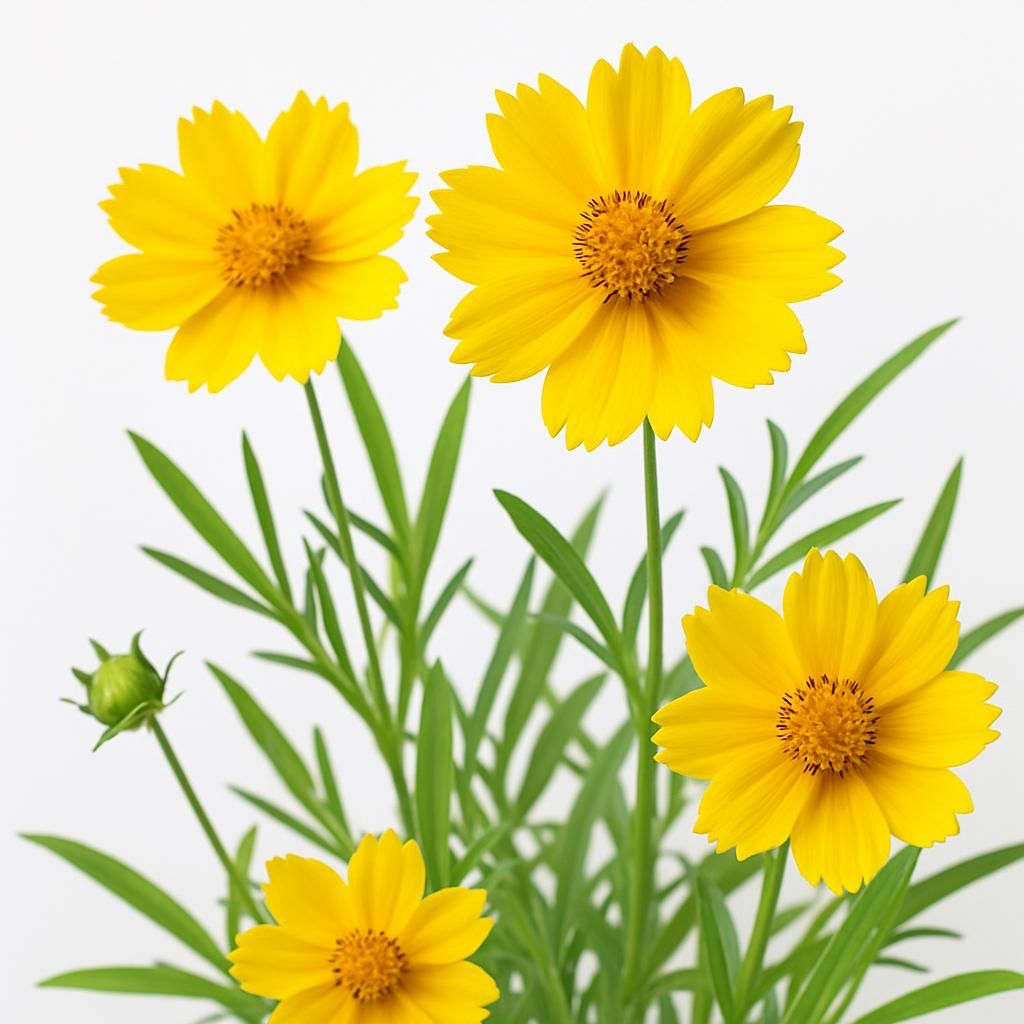
Introduction to Coreopsis
Coreopsis, often called tickseed, encompasses over 100 species of flowering perennials and annuals belonging to the Asteraceae family. Native primarily to North America, these plants have become staples in commercial landscapes, pollinator gardens, and cut-flower operations due to their prolific blooming, vibrant colors, and exceptional heat and drought tolerance. Professional growers value Coreopsis for its ability to produce continuous color from late spring through early fall with minimal inputs.
Modern cultivars offer improved disease resistance, compact growth habits, and extended bloom times compared to wild species. The genus supports beneficial insect populations while providing reliable performance across diverse soil types and climate conditions. Commercial production focuses on both field-grown cut stems and container-grown nursery stock for landscape markets.
Botanical Profile of Coreopsis
Coreopsis species exhibit characteristic daisy-like inflorescences with ray florets surrounding central disk flowers. Most commercial varieties reach 12-36 inches in height with fine-textured, opposite or whorled foliage. The plants develop fibrous root systems that anchor well in well-drained soils while tolerating periodic drought once established.
Popular species include C. grandiflora, C. lanceolata, C. verticillata, and C. tinctoria. Breeding programs have produced sterile hybrids that focus energy on continuous flowering rather than seed production. Flower colors range from bright yellow and gold to pink, red, and bicolor patterns. The plants demonstrate strong photoperiod response, initiating flowering under long-day conditions typical of summer months.
Soil, pH, and Climate Requirements for Coreopsis
Successful commercial production requires well-drained soils with moderate fertility. Coreopsis performs poorly in heavy clay or waterlogged conditions that promote root diseases. The plants tolerate a wide pH range but achieve optimal nutrient uptake in slightly acidic to neutral conditions.
| Parameter | Ideal Range | Notes |
|---|---|---|
| Soil Type | Sandy loam to loam | Excellent drainage essential |
| Soil pH | 6.0-7.0 | Tolerates 5.5-7.5 with reduced vigor |
| USDA Hardiness Zones | 4-9 | Species-dependent cold tolerance |
| Temperature Range | 60-85°F (15-29°C) daytime | Tolerates brief periods to 95°F |
| Annual Rainfall | 20-40 inches | Supplemental irrigation in dry periods |
| Sun Exposure | Full sun (6+ hours) | Partial shade reduces bloom density |
| Spacing | 12-18 inches | 18-24 inches for tall cultivars |
Step-by-Step Planting & Propagation
Commercial propagation begins with seed or division of established clumps. Direct seeding in prepared beds occurs in early spring after soil temperatures reach 55°F. Seed should be surface-sown or lightly covered, as many species require light for germination. Germination typically occurs within 7-21 days at 65-70°F.
Division provides the most reliable method for maintaining cultivar characteristics. Established plants are divided in early spring or fall when temperatures are moderate. Each division should contain 3-5 shoots with healthy roots. Container production utilizes vegetative cuttings taken in late spring from non-flowering shoots, treated with 0.1% IBA rooting hormone, and maintained under intermittent mist until rooted.
Field planting occurs after danger of frost passes. Transplant hardened seedlings or divisions at recommended spacing, ensuring crown level matches surrounding soil grade. Irrigation immediately after planting establishes root-soil contact and reduces transplant shock.
Care & Maintenance regimes for Coreopsis
Professional maintenance focuses on consistent moisture during establishment, moderate fertility, and regular deadheading to extend bloom periods. Established plantings require minimal intervention beyond seasonal cleanup and division every 3-4 years to maintain vigor.
| Activity | Schedule | Details |
|---|---|---|
| Watering | Establishment: 1 inch/week | Mature plants: deep watering every 10-14 days |
| Fertilizer | Early spring & post-bloom | 10-10-10 NPK at 1 lb/100 sq ft or compost tea |
| Pruning/Deadheading | Weekly during bloom | Remove spent flowers to base of stem |
| Division | Every 3-4 years | Early spring or fall when clumps show decline |
| Mulching | Spring & fall renewal | 2-3 inch organic mulch, keep away from crowns |
| Winter Cleanup | Late fall after frost | Cut back to 2-3 inches above soil level |
Pests, Diseases & Organic Management
Coreopsis experiences relatively few serious pest problems when grown in appropriate conditions. Common issues include aphids, which cluster on new growth during cool spring weather, and spider mites during hot, dry periods. Both are effectively managed with strong water sprays and insecticidal soap applications.
Fungal diseases such as powdery mildew and leaf spot occur in humid environments with poor air circulation. Cultural prevention through proper spacing and morning irrigation reduces disease pressure significantly. Root rot becomes problematic in poorly drained soils, particularly during extended wet periods. Organic management emphasizes resistant cultivars, crop rotation, and soil improvement rather than chemical interventions.
Harvesting, Curing & Optimal Storage
Cut-flower harvest occurs when 50-75% of florets are open but before pollen shed begins. Morning harvest after dew dries preserves vase life. Stems should be cut at the base, immediately placed in clean water with floral preservative, and held in cool conditions (34-38°F) for 2-4 hours before bunching.
For seed production, allow flower heads to dry completely on the plant before harvesting. Seeds are collected when the central disk turns brown and seeds detach easily. Cleaned seeds store in cool, dry conditions for 2-3 years with maintained viability. Commercial seed lots require testing for germination percentage before sale or planting.
Companion Planting for Coreopsis
Coreopsis integrates effectively with other sun-loving perennials in mixed plantings. Compatible companions include Yarrow, Echinacea, and ornamental grasses that share similar cultural requirements. The fine-textured foliage contrasts well with bold-leaved plants while the bright flowers complement cool-toned companions.
In vegetable systems, Coreopsis attracts beneficial insects that help control aphids on nearby crops. Pairings with Tomato and Pepper benefit from increased pollinator activity and natural pest suppression. Avoid planting near heavy feeders that compete for nutrients, and maintain adequate spacing to prevent disease transmission between species.