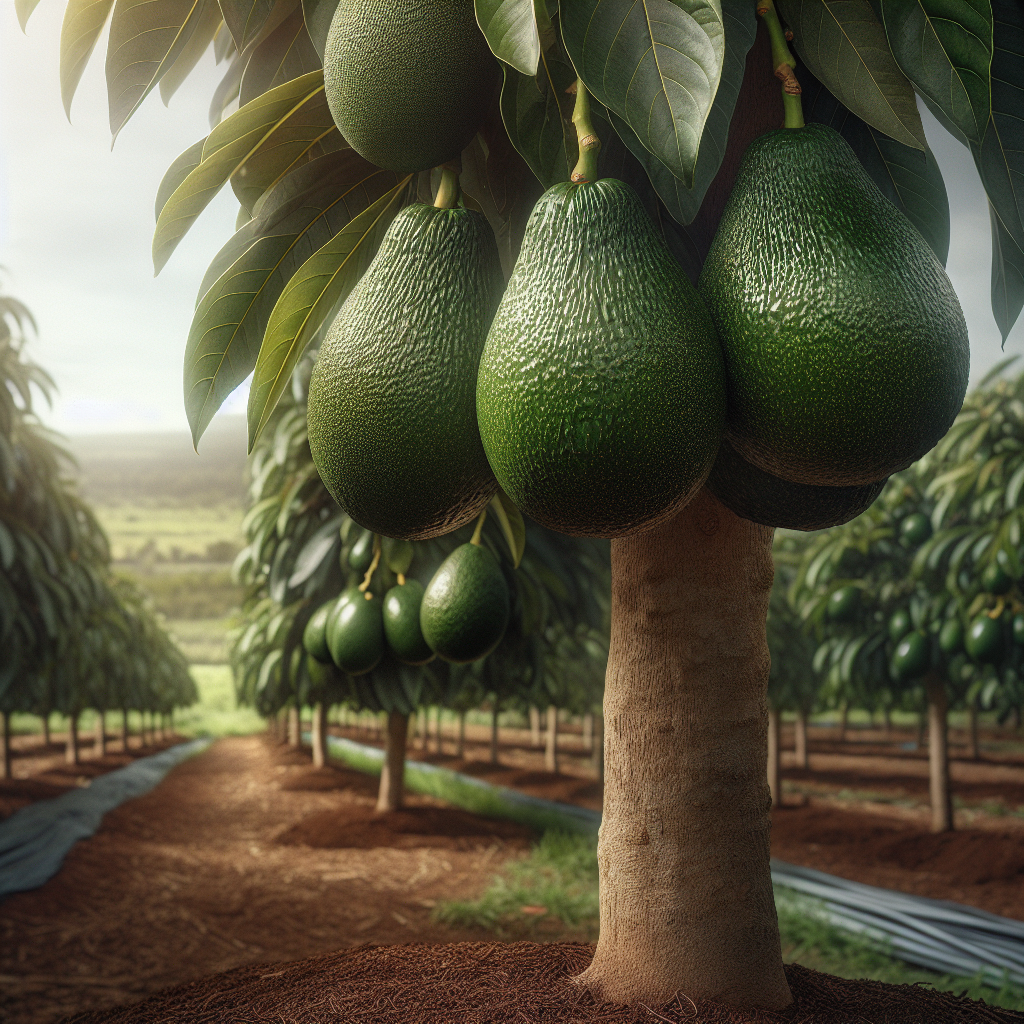
Introduction to Reed Avocado
Developed in California and named after James S. Reed, this cultivar became popular because it fills an important seasonal window when many other avocados are tapering off. Its fruit is unusually round for an avocado, often large, with a pebbled green skin that stays green even when mature. That trait alone makes harvest timing more technical than in darkening cultivars, because growers must judge maturity by calendar, dry matter, and picking samples rather than skin color.
Reed is widely appreciated for dense, buttery flesh with a high oil content once fully mature. The seed is relatively small compared with the fruit size, giving an excellent flesh-to-seed ratio. In warm Mediterranean and subtropical districts, the tree is vigorous, upright to slightly spreading, and capable of good production when protected from waterlogging, salinity, and severe frost. For general avocado background, see Avocado.
From a commercial and home-orchard perspective, Reed is especially valuable as a premium fresh-eating variety. It tends to hold on the tree well, extending the harvest period, but this also requires discipline: fruit held too long can become overmature, reducing quality and increasing alternate bearing pressure on the tree.
Botanical Profile of Reed Avocado
This cultivar belongs to the species Persea americana and is typically classified as Guatemalan-race dominant in character. That matters agronomically because Guatemalan-derived cultivars usually have thicker skins, somewhat better cool tolerance than West Indian types, and a long fruit development period. Reed fruit commonly takes about 12 to 18 months from bloom to harvest maturity depending on climate, heat accumulation, crop load, and local management.
The tree is generally vigorous and can become medium to large if left unpruned, often reaching 20 to 30 feet or more in favorable conditions. Young shoots are tender and susceptible to sunburn and wind damage. Leaves are glossy, medium to large, and evergreen, though older leaves are periodically shed during spring flush. Flowering is profuse under good nutrition and light exposure.
Reed is a Type A flowering avocado. Avocados exhibit protogynous dichogamy, meaning flowers open first as female and later as male, usually on the next day. In practice, temperature can blur these timing patterns, so even single-cultivar trees can set fruit, but cross-pollination often improves fruit set in some environments. A nearby Type B avocado may help, especially in cooler bloom conditions. Among green-skinned cultivars, Reed is often compared with Fuerte Avocado, though Reed is generally rounder, later, and richer when mature.
Key cultivar traits include:
- Fruit shape: nearly spherical to slightly oval
- Skin: thick, green, slightly pebbled, remains green at maturity
- Flesh: pale green to yellow near the seed, smooth, buttery, low fiber
- Seed: relatively small to medium
- Harvest season: late spring through summer in many California-like climates, but local timing varies
- Bearing habit: productive, though crop swings can occur if nutrition, irrigation, or harvest timing are mismanaged
Soil, pH, and Climate Requirements for Reed Avocado
Few fruit trees are as intolerant of poor soil aeration as avocado. Reed must be planted in exceptionally well-drained soil. The ideal texture is a sandy loam or decomposed granite-based loam with rapid internal drainage but enough organic matter to buffer moisture. Heavy clay is not automatically disqualifying, but it becomes risky unless trees are planted on substantial mounds or berms 12 to 24 inches high and wide enough to keep the root crown above saturated soil.
The root system of avocado is shallow and oxygen-hungry. Most active feeder roots occupy the top 6 to 12 inches of soil, often extending well beyond the canopy dripline. If that zone stays waterlogged for even a few days in warm weather, root rot pressure rises sharply. Soil should feel moist but never sour, swampy, or sticky for long periods. A practical target is to maintain even moisture in the upper root zone while allowing enough air-filled pore space for respiration.
Preferred soil pH is about 5.5 to 7.0, with an ideal range near 6.0 to 6.5. Reed can survive slightly more alkaline conditions, but iron, zinc, and manganese deficiencies become more common above pH 7.5, especially in calcareous soils. In high-pH ground, leaf chlorosis often shows as yellowing between veins on newer leaves. Organic matter additions, mulching, gypsum in sodic situations, and chelated micronutrient programs may be needed.
Climate requirements are best described as mild subtropical to warm Mediterranean. Reed performs very well where winters are cool enough to encourage flowering but not cold enough to cause repeated freeze injury. Mature trees may withstand brief dips to around 28 to 30°F (-2 to -1°C) with minor damage, but young trees are much more tender. New flush, flowers, and small fruit are damaged well above that threshold. Prolonged heat above 95°F (35°C), especially with dry wind, can cause tip burn, flower drop, and fruit sunburn if soil moisture is inconsistent.
Optimal conditions include:
- Full sun for at least 8 hours daily
- Low to moderate wind exposure
- Annual rainfall that is not concentrated in prolonged saturated periods unless drainage is excellent
- Relative humidity moderate enough to reduce desiccation but not so stagnant that disease pressure escalates
Salinity is a major constraint. Avocados are salt-sensitive, and Reed is no exception. Irrigation water with high sodium, chloride, or bicarbonate can lead to leaf tip burn, marginal necrosis, reduced vigor, and poor fruit sizing. If using marginal-quality water, leaching is helpful only where drainage is very good; otherwise salts accumulate in the root zone and worsen stress.
For deeper orchard floor and fertility concepts, see Soil health basics.
Step-by-Step Planting & Propagation
Commercial Reed trees are almost always propagated by grafting onto selected rootstocks rather than grown true-to-type from seed. Seedling-grown Reed fruit may vary substantially in vigor, fruit quality, productivity, and disease tolerance. For reliable performance, buy a certified grafted tree from a reputable nursery.
Site selection Choose the warmest, sunniest part of the property with air drainage and protection from strong prevailing wind. Avoid low pockets where cold settles. Do not plant where water stands after rain for more than 24 hours.
Soil testing and preparation Test pH, electrical conductivity, sodium hazard, and basic fertility before planting. If soil is heavy, build a broad mound 3 to 5 feet across and 12 to 24 inches high. Do not create a narrow volcano-like mound that dries too fast. Broad raised planting improves aeration while still supporting lateral root spread.
Spacing For home orchards, 15 to 20 feet from buildings or other trees is a reasonable minimum. In larger plantings, spacing depends on pruning intensity and rootstock vigor, but 15 x 20 feet to 20 x 20 feet is common for manageable canopies. Reed becomes large if ignored, so under-spacing creates shade, poor air movement, and difficult harvest.
Planting hole Dig only as deep as the nursery root ball and two to three times as wide. The top of the root ball should sit slightly above surrounding grade, especially in heavier soils. Never bury the graft union or trunk flare.
Handling the root ball Avocado roots are brittle and dislike disturbance. Slide the container off carefully. If roots are circling densely, loosen only the outermost few without tearing apart the ball. Set the tree gently, backfill with native soil, and avoid loading the planting hole with rich compost that can create a bathtub effect.
Mulching Apply 3 to 6 inches of coarse wood-chip mulch over a wide circle, starting several inches away from the trunk. Avocados respond extremely well to arborist chip mulches because they moderate soil temperature, reduce evaporation, feed microbial activity, and mimic the litter layer these roots prefer. Keep mulch 6 to 8 inches from the trunk to prevent collar rot and rodent issues.
Initial irrigation Water immediately after planting to settle soil. The goal is full root-ball wetting plus adjacent soil moisture, not continuous saturation. In warm weather, newly planted trees often need light, frequent irrigation at first because the root system is confined.
Staking and protection Stake only if wind is a problem, and allow slight movement to strengthen the trunk. Paint exposed trunk and major limbs with diluted white interior latex paint, typically 1:1 with water, to reduce sunburn.
Propagation details:
- Seed propagation is useful mainly for rootstock production.
- Veneer grafting, cleft grafting, and budding are standard nursery methods.
- Rootstock choice strongly affects tolerance to Phytophthora root rot, salinity, vigor, and soil adaptation.
Care & Maintenance regimes for Reed Avocado
Irrigation is the most critical management variable. Reed needs uniformly moist but aerated soil. The top few inches may dry slightly between irrigations, but the active root zone should not swing from bone dry to soggy. In practical terms, soil 4 to 8 inches deep should feel cool and slightly damp, not muddy, and should hold together weakly when squeezed rather than releasing free water.
Young tree watering:
- First 2 to 8 weeks: irrigate often enough to prevent root-ball drying, sometimes 2 to 4 times weekly in hot, sandy soil
- Months 2 to 12: transition to deeper, less frequent irrigation as roots expand
- Signs of underwatering: limp new leaves during morning hours, leaf edge browning, stalled flush, marble-sized fruit drop
- Signs of overwatering: persistent wilt despite wet soil, yellow leaves, sour soil smell, blackening fine roots, slowed growth
Mature tree watering: Deep irrigation is better than shallow sprinkling. In warm seasons, irrigate when roughly 30% to 50% of the available moisture in the top root zone has been depleted. In orchards, tensiometers or capacitance probes are ideal. For skilled home growers, a soil probe or hand trowel check is sufficient. During fruit sizing, erratic watering can cause stress-induced drop and reduced oil accumulation.
Nutrition should be steady, not excessive. Avocados respond well to split applications of nitrogen during active growth. Young trees benefit from small, frequent feedings rather than heavy doses. Mature trees often need nitrogen, potassium, zinc, and sometimes boron depending on leaf analysis.
General fertility principles:
- Nitrogen drives canopy and yield, but excess promotes rank growth, weak flowering, and pest susceptibility
- Zinc deficiency shows as small leaves, rosetting, and interveinal chlorosis on newer growth
- Potassium supports fruit size and stress tolerance
- Boron is needed in tiny amounts for flowering and fruit set, but overapplication is dangerous
Organic nutrient sources may include composted poultry manure in modest amounts, fish hydrolysate, feather meal, kelp products, and well-aged compost, but they should be integrated with actual observation and preferably leaf testing. Over-fertilizing near the trunk can burn shallow roots.
Pruning is mainly for structure, size control, light penetration, and harvest access. Reed naturally becomes dense if left alone. During the first 2 to 3 years, establish a balanced scaffold structure and remove narrow crotch angles, damaged wood, and overly dominant vertical shoots. Later pruning should focus on height control and opening the canopy enough to maintain interior leaf function without exposing major limbs suddenly to sunburn.
Good pruning practice includes:
- Prune after major harvest or during mild weather
- Avoid severe topping in peak heat
- Whitewash newly exposed limbs
- Remove dead twigs promptly
- Keep canopy low enough for harvest and pest scouting
Weed control should prioritize shallow-root protection. Do not cultivate aggressively under the canopy. Maintain a mulched basin and remove competitive grasses, which can intercept water and nutrients.
Cold protection for young trees is essential in marginal areas. Use frost cloth, trunk wraps, mulch, and temporary frames during freeze events. Avoid late summer nitrogen surges that force tender growth before winter.
Pests, Diseases & Organic Management
The most serious disease threat is Phytophthora cinnamomi root rot. It thrives in poorly drained, warm, wet soils and causes feeder root collapse. Early symptoms include pale foliage, smaller leaves, branch dieback, weak flushes, and reduced fruit size. Because above-ground symptoms mimic nutrient or irrigation problems, root inspection is important. Healthy feeder roots are creamy white inside; infected roots are dark, brittle, and sparse.
Organic and low-input prevention focuses on:
- Excellent drainage
- Clean nursery stock
- Thick coarse mulch, kept away from the trunk
- Avoiding over-irrigation
- Preventing movement of contaminated soil and water
- Building biologically active soil
Anthracnose may affect fruit and twigs, especially under humid conditions or poor canopy airflow. Sunblotch viroid, though less common, is devastating and spread through infected propagation material or tools. Always source clean trees.
Common pests include Avocado thrips, Persea mite, Spider mites, Scale insects, Mealybugs, and occasionally Caterpillars or Borers depending on region. Avocado thrips can scar young fruit, while Persea mite causes necrotic spots and leaf drop, often on the underside of leaves during hot, dusty periods.
Organic management principles:
- Monitor regularly, especially new flush and fruit set periods
- Encourage beneficial insects with flowering habitat nearby
- Reduce dust on orchard roads and tree rows
- Avoid broad-spectrum insecticides that trigger mite outbreaks
- Use horticultural oils carefully and never during extreme heat or drought stress
Scale and mealybug problems often intensify in dense canopies or where ants protect them. Ant exclusion using trunk barriers and baiting can indirectly improve biological control. Good companions for beneficial insect support include Clover, Thyme, Yarrow, and Nasturtium, planted outside the immediate trunk zone so they do not compete heavily with young roots.
Rodents can chew bark and damage irrigation lines under deep mulch, so inspect regularly. Birds may peck softening fruit in some areas, though Reed's thicker skin provides some protection.
Harvesting, Curing & Optimal Storage
Unlike many fruits, avocados do not soften properly on the tree; they mature on the tree and ripen after harvest. Reed's green skin stays green, so external color is a poor indicator. Harvest timing depends on region, bloom date, and maturity testing. Commercially, dry matter and oil content are preferred indicators. Home growers can begin sample picking in the expected season and test ripening quality indoors.
A mature Reed fruit should soften evenly after harvest over several days at room temperature and develop rich flavor without rubbery flesh or watery texture. Immature fruit may shrivel, remain hard, or soften unevenly with poor taste. Overmature fruit may develop internal browning, stringiness, seed coat adherence issues, or rancid notes if left too long on the tree.
Harvest method:
- Clip fruit with pruners rather than pulling
- Leave a short stem stub to reduce stem-end rot risk
- Handle gently to avoid bruising
- Harvest during cool morning hours when possible
Reed often holds well on the tree, which is one of its advantages for staggered harvest. However, do not treat the tree as permanent storage. Heavy retained crop can suppress the next bloom and contribute to alternate bearing.
After harvest, cure is minimal compared with onions or potatoes, but fruit benefits from being kept dry, shaded, and well ventilated. Do not leave harvested fruit in direct sun or hot vehicles.
Storage guidance:
- Ripen at 65 to 75°F (18 to 24°C)
- Once soft, refrigerate and use within 2 to 4 days
- For slower ripening, store mature hard fruit at cool room temperatures, not chilling temperatures low enough to cause injury if fruit is immature
- Ethylene from bananas or apples can accelerate ripening in a paper bag
Quality markers at peak eating stage include slight yield to gentle pressure near the stem end, nutty aroma, and creamy flesh with no watery pockets.
Companion Planting for Reed Avocado
Companion planting around avocado should support pollinators, beneficial insects, and soil cover without creating dense root competition at the trunk. The best strategy is a ring system: keep the first 2 to 3 feet around young trees mulched and mostly clear, then place low-growing companions beyond that zone.
Clover is especially useful as a living mulch in wider orchard alleys or outer basins because it helps cover soil, supports beneficial insects, and can contribute some nitrogen cycling when managed well. Keep it mowed low and away from the trunk in the first years.
Thyme works well in dry orchard margins where a low aromatic groundcover is desired. It attracts pollinators and predatory insects while tolerating lean soils and moderate drought once established.
Yarrow is valuable for insectary plantings. Its umbels attract hoverflies, parasitic wasps, and other beneficials that help regulate soft-bodied pests. Plant it where it gets sun but does not crowd the avocado root flare.
Nasturtium can serve as a seasonal trap and nectar plant in mixed gardens and small orchards. It is most useful on the perimeter, not directly against the trunk, because lush annual growth can hold moisture where you do not want it.
Avoid aggressive, thirsty companions such as large grasses, sprawling vines, or heavy feeders directly under the canopy of young trees. The main objective is to preserve root-zone oxygen, reduce weed pressure, and increase biological diversity without sacrificing irrigation control. In dry climates, companion plantings should be grouped on compatible irrigation zones so the avocado's deep but carefully timed watering schedule is not disrupted.