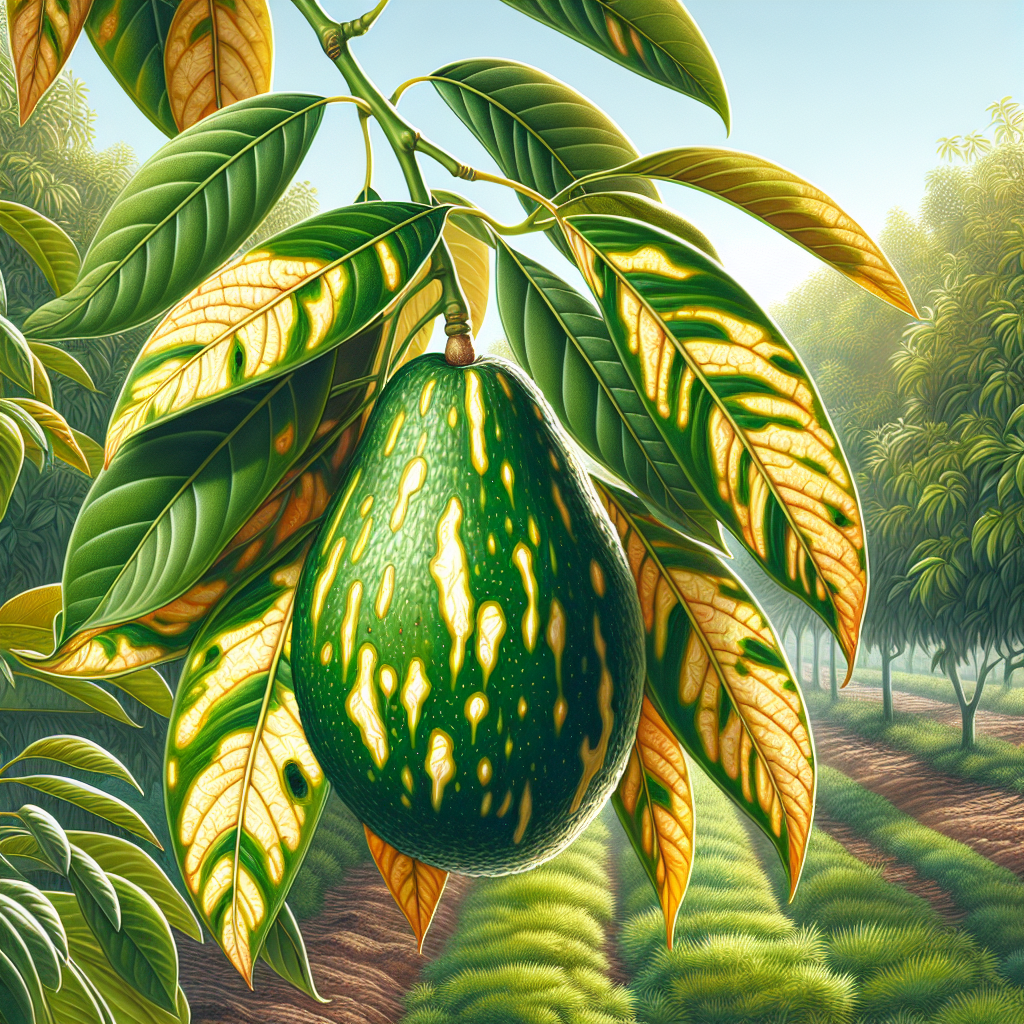
Introduction to Sunblotch viroid
Sunblotch viroid, scientifically known as Avocado sunblotch viroid (ASBVd), represents one of the most persistent and economically damaging diseases in avocado production worldwide. First identified in the 1920s in California, this viroid has since spread to major avocado-growing regions including Florida, Australia, Israel, South Africa, and parts of Latin America. Unlike typical viruses, viroids are naked, circular RNA molecules lacking a protein coat, making them exceptionally stable and resistant to environmental degradation.
Avocado sunblotch viroid infects Hass Avocado and other commercial cultivars, leading to yield losses of up to 50% in severe cases. Infected trees exhibit albinism-like symptoms on leaves, fruits, and bark, drastically reducing photosynthetic efficiency and marketable fruit quality. The disease's insidious nature lies in its latency; many trees remain symptomless carriers, silently spreading the viroid through propagation and cultural practices. This guide provides professional-grade diagnostic criteria, lifecycle insights, and organic management strategies tailored for commercial growers and small-scale avocado farmers. Early detection through visual scouting and lab confirmation is critical, as eradication post-infection proves nearly impossible without tree removal.
Global trade in nursery stock has accelerated ASBVd dissemination, underscoring the need for international certification programs. In high-value avocado orchards, sunblotch can render entire blocks unprofitable within 3-5 years. Understanding transmission vectors—primarily pruning tools, budding knives, and infected scions—empowers growers to implement barrier strategies. For more on small farm optimization challenges, see Why Zoning Your Small Farm Chaos into Profit Zones Feels Impossible - And How AI Changes Everything.
Identifying Symptoms & Damage
Recognizing sunblotch viroid symptoms requires keen observation across growth stages. Foliar symptoms appear as irregular, elongated yellow or white streaks along leaf veins, often resembling sunscald but persisting year-round. In advanced cases, entire leaves bleach white, curling and dropping prematurely. On fruits, sunken, cream-colored blotches mar the skin, reducing grade and shelf life; internal quality remains unaffected, but cosmetic damage slashes market value by 70-90%.
Tree-level indicators include stunted growth, sparse canopy, and dieback of terminal shoots. Bark on young stems shows longitudinal white streaks, while mature trees develop cracked, discolored fissures. Yield declines progressively: first-year infections reduce fruit set by 20-30%, escalating to total failure in chronic cases. Differentiate from nutrient deficiencies like zinc shortage (zinc deficiency not listed, but similar to leaf spot diseases) or powdery mildew by the vein-following pattern and lack of powdery residue.
Diagnostic confirmation demands molecular testing: reverse transcription polymerase chain reaction (RT-PCR) on leaf petioles detects ASBVd RNA with 99% accuracy. Symptomless carriers—up to 20% in some orchards—necessitate indexing all propagation material. Economic impact hits hardest in premium markets; a single infected Fuerte Avocado tree can contaminate neighboring grafts, amplifying losses exponentially. Scout monthly during flush periods, focusing on scaffold branches and new growth.
Lifecycle and Progression of Sunblotch viroid
ASBVd exhibits no true lifecycle like fungi or insects; as a viroid, it replicates autonomously within host chloroplasts using the plant's polymerase enzymes. Infection initiates via mechanical inoculation, with viroid RNA entering cells through wounds. Systemic spread occurs via the phloem, reaching all tissues within 4-6 weeks. Latency periods vary: symptoms emerge in 1-2 years on juvenile tissue, but mature trees may harbor the pathogen asymptomatically for decades.
Progression unfolds in phases. Acute phase (year 1-2): localized bleaching on expanding leaves. Chronic phase (year 3+): canopy thinning, reduced vigor, and fruit deformities. Viroid titer fluctuates seasonally, peaking in summer flushes when temperatures exceed 25°C (77°F). Pollen transmission, though inefficient (1-5% rate), perpetuates infection in seed orchards. Unlike phytophthora root rot, sunblotch persists indefinitely without host death, turning elite cultivars into symptomless reservoirs.
Overwintering poses no barrier; ASBVd RNA withstands desiccation, freezing, and UV exposure, surviving on contaminated tools for months. In mixed orchards, proximity to infected mango or banana plantings heightens risk via shared equipment, though host range remains avocado-exclusive. Progression modeling aids forecasting: infectivity doubles every grafting cycle without sanitation.
Environmental Triggers & Risk Factors
Warm, humid climates accelerate sunblotch expression, with optimal temperatures of 24-30°C (75-86°F) enhancing replication. High light intensity exacerbates bleaching, mimicking sun damage—hence the name. Drought-stressed trees show amplified symptoms, as reduced turgor facilitates viroid movement. Poor air circulation in dense plantings traps moisture, promoting wound susceptibility during pruning.
Key risk factors include contaminated propagation: 80% of outbreaks trace to infected budwood. Mechanical injury from hedging, topping, or girdling creates entry portals; even sterile tools retain viable RNA if improperly cleaned. Nursery practices amplify spread—top-working infected rootstocks infects scions at 100% rate. Regions with year-round avocado production, like subtropical Florida or Queensland, face chronic pressure. Co-infection with mites or aphids indirectly worsens damage by stressing hosts.
Soil type matters little, but calcareous soils delay symptom onset. Global warming extends flush periods, prolonging exposure windows. Risk assessment: farms using uncertified stock face 40% annual infection rate.
Organic Control & Treatment Plans
No curative organic treatments eradicate ASBVd; management emphasizes exclusion and containment. Core strategy: source certified viroid-free nursery stock from registered programs like California's Avocado Nursery Certification. Implement tool sanitation protocols—10% bleach dips or quaternary ammonium (1:200) between trees, followed by ethanol rinse. Flame sterilization suits remote sites but risks phytotoxicity.
For infected orchards, rogue severely symptomatic trees promptly, removing root systems to 1m depth. Heat therapy (38-40°C for 1 month) cures 70-90% of budwood in labs, viable for elite clones. Biological controls lack efficacy against viroids. Nutritional bolstering—balanced NPK with micronutrients—masks mild symptoms but doesn't halt spread. Prune lightly during dry periods, avoiding flush induction.
Integrated plan: (1) Annual indexing of mother blocks via RT-PCR. (2) Buffer zones (10m) around clean orchards. (3) Worker training on hygiene. (4) Pollen traps in seed production. Monitor via remote sensing for early blotch detection. Success rates exceed 95% in compliant farms. Refer to Spring Pest Patrol: Organic AI Strategies to Shield Your Crops from Common Invaders for complementary tactics, though viroids demand unique vigilance.
Preventing Sunblotch viroid in the Future
Prevention hinges on certification and biosecurity. Establish foundation blocks from tissue-culture-derived, heat-treated plants, indexed negative thrice over 2 years. Quarantine new introductions for 12 months with destructive sampling. Dedicate tools per block, color-coded for traceability. Train crews on one-cut-one-wipe protocol.
Farm-level barriers: footbaths at entries, disposable gloves, and boot scrubs. Avoid overhead irrigation to minimize splash. Register with national schemes (e.g., USDA or AUSVEG) for traceability. Rotate rootstocks—Mexican types show tolerance. Long-term: breed resistant cultivars via marker-assisted selection. Community action—regional eradications succeed when 90% compliance achieved. Annual audits prevent reintroduction.
Crops Most Affected by Sunblotch viroid
Sunblotch viroid displays extreme host specificity, infecting only Persea species, primarily commercial avocado (Persea americana). West Indian, Guatemalan, and Mexican races succumb, with Hass and Fuerte most vulnerable due to intensive propagation. Rare reports in Reed Avocado confirm genus limitation. No crossover to mango, citrus, or banana despite proximity. Global production losses exceed $100M annually, concentrated in 10 key countries.