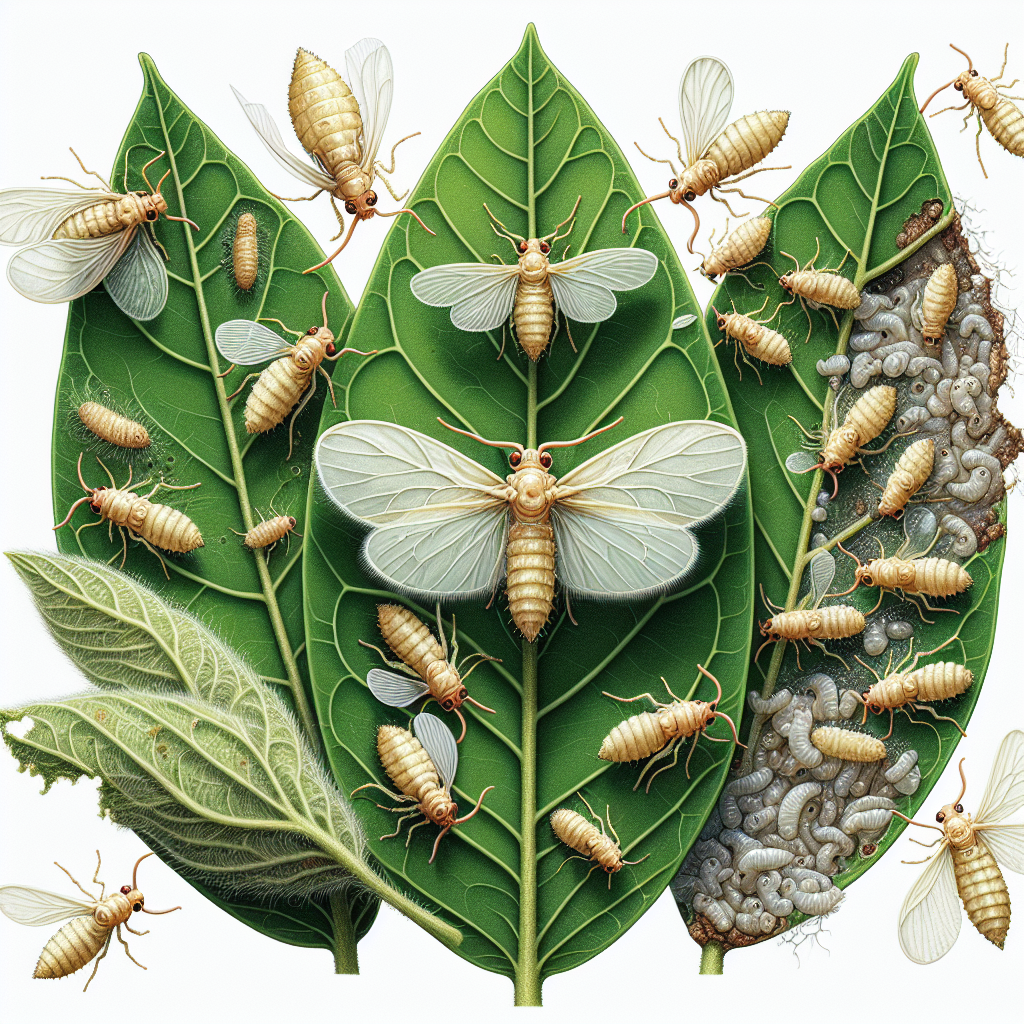
Introduction to Avocado thrips
Avocado thrips, scientifically known as Scirtothrips perseae, represent one of the most significant pests threatening avocado orchards worldwide, particularly in major production regions like California, Mexico, and parts of Central America. First identified in the U.S. in 1990 in Escondido, California, this invasive species rapidly spread, causing substantial economic losses estimated at millions annually due to fruit scarring and defoliation. Unlike generalist thrips, avocado thrips specialize in feeding on tender avocado tissues, making them a persistent challenge for growers.
These minuscule insects, measuring just 1-1.5 mm in length, are pale yellowish with dark stripes and fringed wings, allowing them to evade casual detection. Adult females lay eggs inside leaf tissues, where larvae emerge to rasp and suck plant juices, leading to characteristic damage. Understanding their biology is crucial for timely intervention, as uncontrolled infestations can reduce photosynthesis by up to 50%, stunt tree growth, and render fruit unmarketable due to russeting scars. This guide provides professional-grade diagnostics, organic management strategies, and prevention tactics tailored for commercial and small-scale avocado farmers seeking sustainable control.
Identifying Symptoms & Damage
Early detection of avocado thrips hinges on recognizing subtle symptoms before severe damage sets in. Initial signs appear on new flush leaves: silvery-white patches from rasping feeding, where thrips puncture epidermal cells and extract contents. Affected leaves curl, bronze, or turn necrotic, often dropping prematurely, which weakens trees and exposes fruit to sunburn.
On fruit, damage manifests as shallow, reddish-brown or black scars forming an 'alligator skin' pattern, especially on Hass varieties during the rapid fruit sizing stage from May to July. Severe scarring can reduce fruit grade by 20-50%, directly impacting revenue. Use a hand lens (10-20x) to spot the pests: adults have setose wings, while larvae are creamy-white and legless, congregating along veins or midribs.
Differentiate from mites (dusty webs, stippling) or leafminers (serpentine tunnels). Sticky traps coated with 70% mineral oil capture flying adults for confirmation. Regular scouting—weekly during spring flush—is essential; thresholds include 5-10 thrips per leaf or visible fruit scarring. In young orchards, populations explode without natural enemies, amplifying damage.
Lifecycle and Progression of Avocado thrips
Avocado thrips complete their lifecycle in 2-4 weeks, depending on temperature, with up to 20-30 generations per year in subtropical climates. Adults (0.8-1.3 mm) are active fliers, dispersing via wind. Females insert 20-100 eggs singly into leaf stomata or tender tissues using their ovipositor; eggs hatch in 4-6 days at 75°F (24°C).
Larvae (instars 1-2) feed voraciously for 7-10 days, then drop to the soil as non-feeding prepupae (1-2 days), pupating 1-5 cm underground for 3-5 days. Emergence coincides with avocado flush cycles, peaking March-June and September-October. Overwintering occurs as adults in leaf litter or bark crevices.
Temperature drives progression: optimal at 70-85°F (21-29°C), slowing below 60°F (15°C). High humidity favors egg survival. Monitoring with beat sheets or alcohol washes quantifies larvae density. Understanding this rapid cycle underscores the need for early, repeated interventions to disrupt populations before fruit set.
Environmental Triggers & Risk Factors
Avocado thrips thrive in warm, dry conditions (70-90°F, low humidity <60%), common during California’s spring flush. Wind currents from infested areas accelerate spread; young, vigorously growing trees on Hass Avocado rootstocks like Dusa or VC 801 are most susceptible due to abundant flush. Poor canopy management—excessive nitrogen causing dense foliage—creates microclimates ideal for thrips.
Dust from nearby roads or construction suppresses natural predators like pirate bugs. Overlapping generations in mild winters allow year-round pressure. Risk spikes post-irrigation dry-down or after pruning, exposing new growth. Climate change extends flush periods, prolonging vulnerability. Integrated monitoring via degree-day models (base 52°F) predicts peaks.
Organic Control & Treatment Plans
Organic management emphasizes biological, cultural, and minimal chemical inputs for sustainable control. Biological Controls: Encourage native predators like [Orius trispinus] (minute pirate bugs), lacewings, and predaceous mites (e.g., Amblyseius spp.). Release rates: 1,000-2,000 Orius/ha weekly during peaks. Neem oil (azadirachtin 0.03-0.1%) disrupts feeding/oviposition; apply evenings to spare bees, 7-10 day intervals, 3x max.
Cultural Practices: Prune for open canopies, irrigate to maintain humidity >50%, and disk orchard floors to expose pupae to predators/sun. Reflective mulches deter adults. Soaps/Oils: Potassium salts of fatty acids (2%) or horticultural oils smother all stages; tank-mix with spinosad (Entrust, 0.45 oz/gal) for larvae, PHI 1 day. Scout-triggered sprays: act at 5 thrips/leaf.
Treatment Plan: Week 1: Scout + oil drench. Week 2: Neem + release predators. Monitor; repeat if >threshold. Avoid broad-spectrum sprays preserving IPM. For severe cases, kaolin clay (Surround) creates physical barriers. Success rates: 70-90% reduction with consistent application. See Spring Pest Patrol for timing tips.
Preventing Avocado thrips in the Future
Prevention integrates sanitation, monitoring, and resistant practices. Plant thrips-resistant cultivars like GEM or certified clean nursery stock. Establish border sprays with spinosad before flush. Use yellow sticky traps (20/acre) for early detection, removing when 10 thrips/trap/week.
Maintain ground covers like vetch to harbor predators and reduce dust. Avoid excess N-fertilizer; balance with K/Ca for tougher leaves. Quarantine new plantings 6 months. Annual soil solarization kills pupae. IPM programs in California cut populations 80% via predator conservation. Long-term: scout grids, degree-day apps, and neighbor coordination curb invasions.
Crops Most Affected by Avocado thrips
Primarily Avocado, especially Hass (90% U.S. production), Fuerte, and Reed Avocado. Larvae target flush; fruit scarring hits export markets hard. Minor hosts: citrus, mango. Non-hosts: tomatoes, grains. Global impact: California loses $10-20M/year; Mexico monitors spreads.