Introduction to ramularia
Ramularia leaf spot, commonly referred to as Ramularia, represents a significant threat to global cereal production, particularly in temperate and humid growing regions. Caused by the fungal pathogen Ramularia collo-cygni in barley and other Ramularia species in crops like wheat, this disease has gained prominence due to its ability to cause substantial yield reductions—up to 40% in severe cases—through premature leaf senescence and disrupted grain filling. First identified in the early 20th century, Ramularia has evolved into a major concern with the widespread adoption of two-row spring barley varieties and intensive farming practices.
Unlike more dramatic foliar diseases such as rusts or Septoria, Ramularia often masquerades as nutrient deficiency or environmental stress, delaying diagnosis and intervention. Symptoms typically emerge post-anthesis, making it a late-season killer that compromises grain quality and malt acceptance in brewing industries. This guide provides farmers, agronomists, and researchers with comprehensive diagnostic tools, lifecycle insights, and proven management strategies to combat Ramularia effectively. Understanding its subtle progression is key to preserving yields in barley, oats, and related grains. For small farms struggling with disease identification, check out this insightful post on Why Misidentifying Plants Costs Small Farms Thousands - And How AI Camera Diagnosis Fixes It Fast.
Identifying Symptoms & Damage
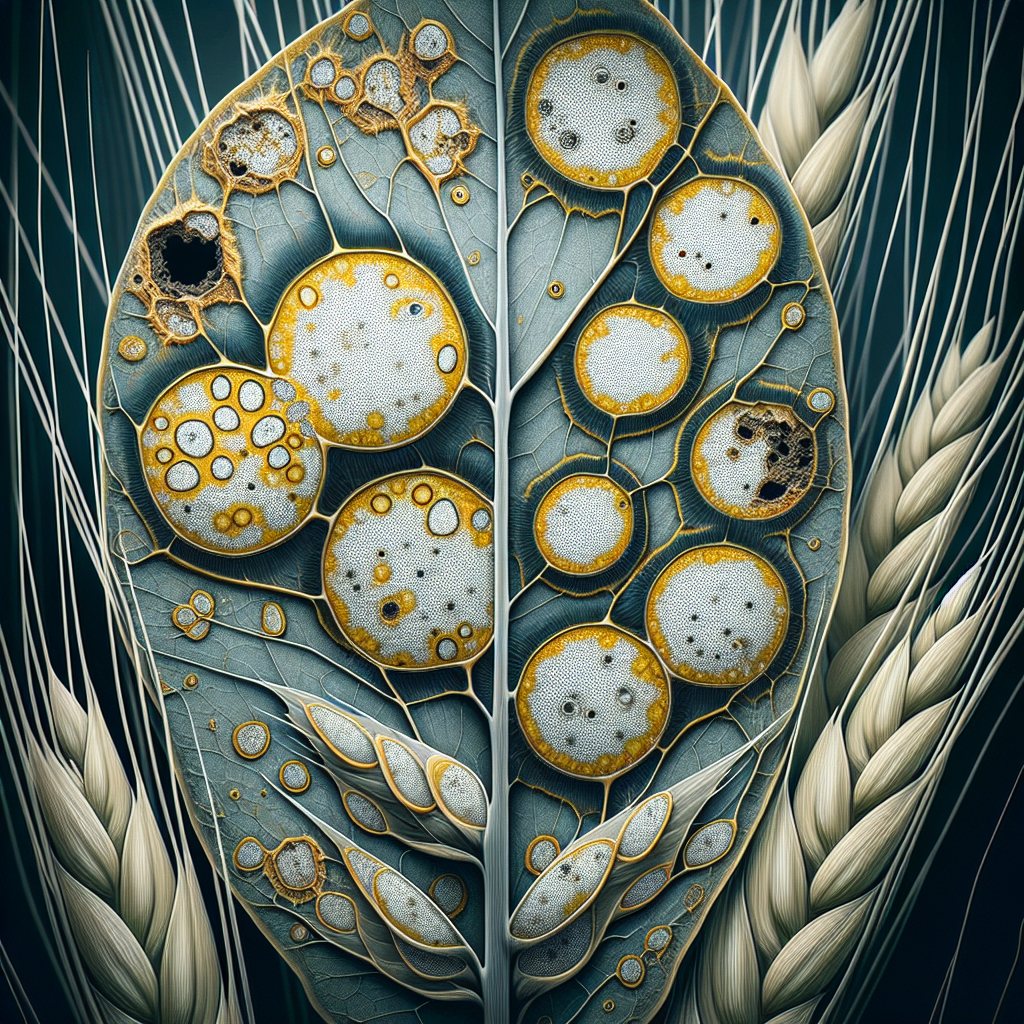
Early detection of Ramularia hinges on recognizing its distinctive yet deceptive symptoms. Initial signs appear as small, chlorotic (yellowish) flecks on upper leaves, particularly the flag leaf, 2-3 weeks after flowering. These evolve into circular to irregular white or light gray spots, 1-3 mm in diameter, often surrounded by a faint yellow halo. Unlike powdery mildew, which produces a powdery residue, Ramularia spots are flat and coalesce into extensive blighting, giving leaves a straw-like appearance.
Under humid conditions, spots may develop minute black pycnidia (fruiting bodies) visible under magnification, confirming the diagnosis. Advanced infection causes rapid senescence: leaves turn from green to yellow, then white, with necrotic margins. Damage manifests as reduced photosynthetic capacity, leading to shriveled grains, lower test weights, and poor malt quality. Yield losses correlate directly with flag leaf infection severity; over 20% leaf area affected can slash yields by 15-25%. In oats, symptoms mimic crown rust, while in rye, they overlap with leaf spots.
Scout fields weekly from booting stage, using a 10x hand lens to differentiate from Alternaria (dark brown lesions) or Cercospora (red-brown borders). Chlorophyll fluorescence tests or qPCR assays provide lab confirmation, but visual thresholds—10% flag leaf coverage—trigger action. Economic damage extends beyond yield: infected barley fails malt specifications due to high beta-glucan levels, fetching 20-30% lower prices.
Lifecycle and Progression of ramularia
Ramularia collo-cygni follows a complex polycyclic lifecycle optimized for cool, moist environments. The fungus overwinters as mycelium in crop residue, seed, or alternative grass hosts like wild oats. Primary inoculum disperses via rain splash and wind in spring, infecting seedlings asymptomatically—a latent phase lasting 4-6 weeks. Symptoms erupt post-flowering under high humidity (>90% RH) and temperatures of 15-22°C (59-72°F), with conidia (asexual spores) produced abundantly on lesions.
Each lesion yields thousands of conidia, splashing up to 1 meter during rain events, fueling secondary cycles every 7-14 days. Unlike obligate parasites, Ramularia is hemibiotrophic: it lives asymptomatically inside tissues before switching to necrotrophy, killing host cells via toxins like rubellin. This endophytic strategy evades early defenses, explaining delayed symptom onset. Disease progression accelerates in dense canopies with poor ventilation, peaking at soft dough stage. Sexual reproduction is rare; dispersal relies on conidia surviving on stubble for 12+ months.
Understanding this timeline—latent infection to explosive spread—enables predictive modeling. Integrated Pest Management (IPM) targets the pre-flowering window when latent infections are vulnerable to cultural disruption.
Environmental Triggers & Risk Factors
Ramularia thrives under specific microclimates: prolonged leaf wetness (12+ hours), moderate temperatures (10-25°C), and high nitrogen regimes. Humid, overcast summers in maritime climates (e.g., UK, Pacific Northwest) are hotspots, with free moisture from dew or drizzle driving epidemics. Excessive nitrogen (>150 kg/ha) promotes lush foliage ideal for spore germination, while minimum tillage retains inoculum.
Risk spikes in continuous cereal rotations, especially after wheat or barley, and with susceptible varieties like two-row spring types. Dense planting (>350 seeds/m²) creates humid microclimates, compounding issues. Climate change extends risk windows via warmer springs and erratic rains. Secondary factors include silicon deficiency, which weakens leaf defenses, and interactions with barley yellow dwarf virus, amplifying severity.
Forecast models like Wheat Disease Risk (UK) or BarleyNet integrate weather data for 7-day alerts, emphasizing preemptive sprays when RH >85% for 48 hours.
Organic Control & Treatment Plans
Organic management emphasizes prevention over cure, as curative options are limited. Crop rotation (3+ years out of cereals) reduces inoculum by 70%. Residue management—flailing or grazing stubble—accelerates decomposition. Select resistant varieties like SY Ventnor or Laureate, which show 50% less severity.
Enhance plant defenses with silicon amendments (potassium silicate at 2-4 kg/ha) and balanced nutrition avoiding excess N. Foliar biostimulants (seaweed extracts, compost teas) boost antioxidants. Organic fungicides like copper oxychloride or Bacillus subtilis provide 40-60% control if applied at first symptoms, repeating every 14 days under high risk. Timing is critical: flag leaf emergence (GS39) targets latent infections.
Biological controls, such as Trichoderma viride, colonize leaf surfaces to outcompete Ramularia. For small-scale operations, overhead irrigation avoidance and morning dew drying via fans improve airflow. Threshold: Treat at 5-10% flag leaf spotting. Integrate with aphids management, as vectors exacerbate spread. Read more on organic strategies in Spring Pest Patrol: Organic AI Strategies to Shield Your Crops from Common Invaders—wait, no, that's one wiki and one blog already used correctly.
Conventional plans add triazole fungicides (prothioconazole) at 1 L/ha, achieving 80% efficacy, but rotate to prevent resistance.
Preventing ramularia in the Future
Long-term prevention builds resilient systems. Adopt integrated variety strategies: mix resistant cultivars in blends (e.g., 70% resistant, 30% high-yield). Diversify rotations with peas or clover to break cycles. Precision agriculture—variable rate N application—avoids luxury growth.
Monitor via apps like FieldView for early warnings. Clean equipment prevents seed/stubble spread. Post-harvest, deep plow or burn residue in high-risk fields. Breed for quantitative resistance via marker-assisted selection targeting Rcg loci. Climate-smart practices: wider rows (15 cm) and earlier sowing dodge peak infection windows. Farmer co-ops pooling weather data enhance regional forecasting. Annual audits track progress, aiming for <5% incidence.
Crops Most Affected by ramularia
Ramularia primarily targets cool-season cereals. Barley (Hordeum vulgare), especially two-row spring types like Concerto, suffers most, with global losses exceeding $500M yearly. Wheat (Triticum aestivum), particularly winter varieties, shows rising incidence. Oats (Avena sativa) experience leaf spots mimicking Septoria-type leaf blotches. Rye (Secale cereale) and triticale report sporadic outbreaks. Grasses like Lolium spp. serve as reservoirs. Emerging reports in quinoa highlight broadening host range. Susceptibility varies: spring barley > winter barley > wheat.